Professional Asbestos Testing and Inspection
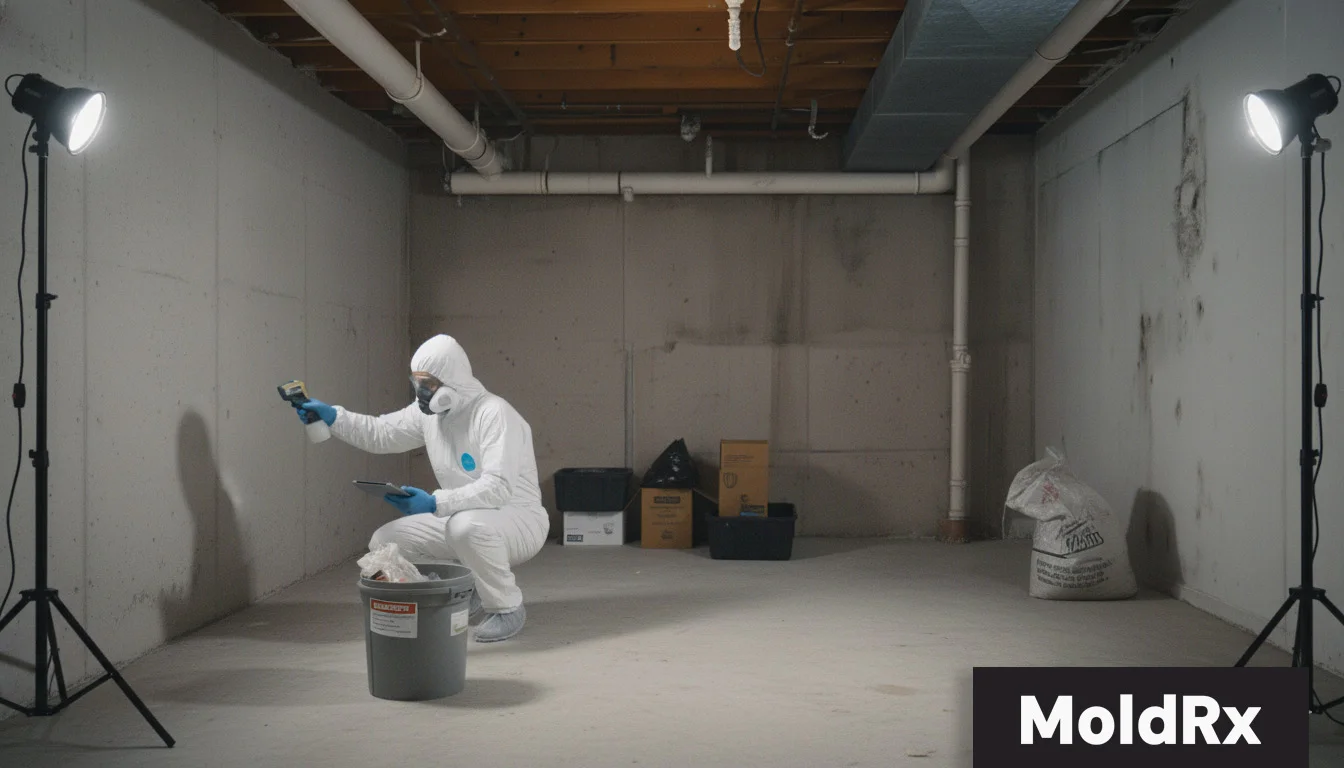
Asbestos testing is the process of collecting samples from suspect building materials and sending them to an accredited laboratory for analysis — because you cannot identify asbestos by looking at it. No one can. Laboratory analysis is the only way to confirm whether a material contains asbestos fibers. MoldRx connects you with licensed, vetted asbestos inspection professionals across Orange County, Riverside County, and San Bernardino County who follow EPA sampling protocols on every project and use NVLAP-accredited laboratories for every analysis.
If you're planning a renovation, buying or selling an older property, or looking at damaged materials and wondering whether they're safe to touch — the answer is always the same: test first, decide after. Disturbing asbestos-containing materials without knowing what they are can release microscopic fibers that cause serious, irreversible disease. That risk is entirely avoidable with proper testing.
Call (888) 609-8907 to talk to a real person about your situation. No scripts, no pressure — just honest guidance from a family-owned company that takes this seriously. Learn more about what asbestos is and whether it's dangerous.
What Asbestos Testing Actually Involves
Asbestos testing is a controlled, methodical process — not a quick visual check. No inspector, no matter how experienced, can tell you whether a material contains asbestos by looking at it. The fibers are microscopic, embedded within the material matrix, and invisible to the naked eye. Anyone who claims they can identify asbestos by sight is either uninformed or dishonest. Laboratory analysis is the only confirmation method.
Professional asbestos testing addresses two things:
- Accurate identification — determining which materials in your property contain asbestos, what type, and at what concentration
- Safe collection — gathering samples without releasing fibers into your living or working space
If either of these is mishandled — if materials are missed during the survey or if sampling contaminates your air — the testing creates more problems than it solves. That's why this work requires a licensed professional, not a homeowner with a DIY test kit.
What It Includes
- Comprehensive visual survey — A licensed inspector walks every accessible area of the property, identifying all suspect materials based on age, location, appearance, and knowledge of historical construction practices
- Safe sample collection — Small samples are carefully extracted from suspect materials using wet methods and containment procedures designed to minimize fiber release. Each sample point is documented with exact location and material description
- Chain-of-custody documentation — Every sample is labeled, sealed, and tracked from the moment it leaves your property to the moment it reaches the lab. This documentation is legally defensible and required for regulatory compliance
- NVLAP-accredited laboratory analysis — Samples are analyzed using polarized light microscopy (PLM), the EPA-recommended method for bulk building material analysis. PLM identifies whether asbestos is present, what type (chrysotile, amosite, crocidolite, tremolite, actinolite, or anthophyllite), and at what percentage within the material
- Detailed results report — You receive a complete report in plain language: what was tested, where each sample came from, what the lab found, and what it means for your specific situation
- Next-steps guidance — If asbestos is found, your inspector explains your options: professional removal before any planned work, encapsulation for materials in good condition, or ongoing management for undisturbed materials that pose no immediate risk
What It Does Not Include
- Visual-only assessments that skip laboratory analysis (these have no diagnostic value — you cannot identify asbestos by sight)
- DIY sample collection by untrained individuals (improper technique risks fiber release and unreliable results)
- Sampling without proper containment and wet methods (this can contaminate your air)
- Air monitoring during active disturbance (that's a separate service associated with asbestos removal projects, not pre-work testing)
When You Need Asbestos Testing
Not every property requires asbestos testing. Homes built after 1980 are significantly less likely to contain asbestos-containing materials, though some products containing asbestos were manufactured and installed into the early 1990s. The general rule: if your property was built before 1980, assume that any original building material could contain asbestos until laboratory testing proves otherwise.
Testing becomes necessary when:
You're Planning Any Work That Disturbs Building Materials
- Renovation or remodeling — kitchen updates, bathroom remodels, flooring replacement, wall removal, or any project that involves cutting, drilling, sanding, or demolishing materials in a pre-1980 building
- Demolition — most California jurisdictions require a pre-demolition asbestos survey before issuing permits. This is not optional
- HVAC, plumbing, or electrical work — mechanical trades regularly disturb insulation, drywall, flooring, and ceiling materials. If those materials contain asbestos, disturbance releases fibers
- Insulation removal or replacement — attic insulation, pipe wrap, duct insulation, and wall insulation in older buildings are among the most common asbestos-containing materials
A Real Estate Transaction Is Involved
- You're buying an older property and want to know what you're inheriting before closing — not after
- You're selling and want to address asbestos questions proactively rather than watching a deal fall apart during inspection
- A lender or insurance carrier is requiring an asbestos assessment as a condition of financing or coverage
Materials Are Damaged or Deteriorating
- Crumbling pipe insulation, cracked floor tiles, water-damaged ceiling texture, or deteriorating siding in a pre-1980 building — damaged materials are more likely to release fibers than intact ones
- Water damage has compromised ceiling materials, wall surfaces, or flooring that may contain asbestos
- Materials have been accidentally disturbed during maintenance or minor repairs
You've Identified Suspect Materials
- Learn about the common indicators: What are some indicators I may have asbestos?
- You've found 9"x9" floor tiles, textured ceilings, pipe insulation, or other materials that match common asbestos-containing products — and you want answers before making any decisions
Documentation Is Required
- Permit applications that require a pre-work asbestos survey
- OSHA compliance for commercial or industrial properties where workers may encounter asbestos-containing materials
- Regulatory audits, building management plans, or tenant disclosure requirements
- Insurance claims involving damaged building materials in older properties
Common Materials That Contain Asbestos
Asbestos was used in thousands of building products from the 1920s through the late 1970s because of its heat resistance, tensile strength, and insulating properties. In Southern California, the most frequently encountered asbestos-containing materials include:
Flooring
- Vinyl floor tiles (especially 9"x9") — the single most common asbestos-containing material in residential and commercial buildings. Black, dark gray, and brown tiles from this era are especially likely to contain asbestos, but any color can
- Sheet vinyl flooring — both the flooring itself and the paper backing frequently contain asbestos
- Mastic and adhesive — the black or dark brown adhesive used to install floor tiles often contains asbestos even when the tiles themselves do not
Ceilings and Walls
- Popcorn/acoustic ceiling texture — spray-on textured ceilings applied before 1980 are one of the highest-probability asbestos materials. Some manufacturers continued using asbestos in texture products into the early 1980s
- Joint compound and drywall mud — used at every seam, corner, and screw hole in drywall construction. Asbestos-containing joint compound is impossible to distinguish from non-asbestos compound without lab analysis
- Plaster and stucco — both interior plaster and exterior stucco in older buildings may contain asbestos fibers
Insulation
- Pipe and duct insulation — white or gray corrugated or smooth insulation wrapping pipes, boilers, and ductwork is among the most dangerous asbestos-containing materials because of its friable (easily crumbled) nature
- Attic and wall insulation — vermiculite insulation (sold under the brand name Zonolite, among others) is frequently contaminated with asbestos from the Libby, Montana mine that supplied much of the U.S. market
- HVAC duct connectors and insulation — flexible fabric connectors and insulation on older ductwork often contain asbestos
Roofing and Exterior
- Roofing felt and shingles — asbestos was added to roofing products for fire resistance and durability
- Cement siding and panels — fiber-cement products (often called "transite") frequently contain asbestos. Common on mid-century residential and commercial buildings throughout Southern California
- Window glazing and caulk — older window putty and caulking compounds often contain asbestos fibers
Mechanical and Specialty
- Fireproofing spray — applied to structural steel in commercial buildings
- Electrical panel components — backing boards and arc chutes in older electrical panels
- Fire doors and fire blankets — fire-rated products commonly used asbestos for thermal resistance
This is not an exhaustive list. If your building was constructed before 1980, any original material is a candidate until laboratory testing rules it out.
Why DIY Asbestos Test Kits Fall Short
Home asbestos test kits are available at hardware stores and online. They include a sample bag, instructions, and prepaid shipping to a lab. On the surface, they seem reasonable. In practice, they have serious problems:
They require you to disturb suspect materials. Collecting a sample means cutting, scraping, or breaking into a material that may contain asbestos — without the training, equipment, or containment protocols that licensed inspectors use. If the material does contain asbestos, you've just released fibers into your breathing space. The EPA explicitly recommends against homeowner sampling for this reason.
You won't know what to sample. A licensed inspector understands where asbestos is likely to hide — in adhesives beneath tiles, in joint compound at drywall seams, in insulation inside wall cavities. A homeowner typically samples the obvious materials and misses the less visible ones. An incomplete survey is dangerous because it can give you false confidence to proceed with work that disturbs untested materials.
One sample isn't enough. Asbestos content can vary within the same material depending on the manufacturing batch and installation date. EPA guidelines recommend multiple samples from homogeneous material areas. A single sample can produce a false negative if the asbestos-containing portion of the material wasn't captured.
The results lack legal standing. DIY test results may not satisfy permit requirements, OSHA regulations, buyer/seller disclosure obligations, or insurance documentation needs. Professional testing with chain-of-custody documentation does.
Licensed professionals are required for a reason. Asbestos inspection and sampling is regulated work in California. Licensed professionals carry the training, insurance, and equipment to collect samples safely — protecting you, your family, your tenants, or your workers from exposure during the testing process itself.
How MoldRx Handles Asbestos Testing
1. You Call — and Talk to a Real Person
When you call (888) 609-8907, you reach someone who listens to your situation, asks the right questions, and gives you straightforward guidance — not a call center, not a script, not a scare pitch. We'll help you understand whether testing is warranted, what it involves for your specific property, and what to expect.
2. On-Site Inspection and Survey
A licensed asbestos inspector evaluates your property in person — walking every accessible area, identifying all suspect materials based on age, type, location, and condition. The inspector documents everything before a single sample is collected so you understand the full scope of what needs to be tested and why.
3. Safe Sample Collection
Samples are collected using EPA-recommended wet methods and containment procedures that minimize fiber release. Each sample is labeled with its exact location and material description, sealed in a proper container, and entered into chain-of-custody documentation that tracks it from your property to the lab.
4. NVLAP-Accredited Laboratory Analysis
Every sample is analyzed at an NVLAP-accredited laboratory using polarized light microscopy (PLM). PLM identifies asbestos fiber type (chrysotile, amosite, crocidolite, etc.) and quantifies the percentage present in the material. Results typically return within a few business days. Rush analysis is available when project timelines demand it.
5. Clear Results Report
You receive a detailed report written in language you can actually understand — not lab jargon. The report includes: every material tested, the exact location of each sample, laboratory results for each, photographs, and a plain-language summary of what was found and what it means.
6. Next-Steps Guidance
If all results come back negative, you have documented clearance to proceed with your planned work. If asbestos is confirmed, your inspector explains your options clearly:
- Professional asbestos removal — required before any work that would disturb the material
- Encapsulation — sealing intact materials in place when removal isn't necessary
- Management in place — for undisturbed materials in good condition that don't require immediate action, with a monitoring plan
- No action needed — if the asbestos-containing material is in good condition, undisturbed, and your plans don't involve disturbing it
Every recommendation is based on your specific situation, the condition and location of the materials, and what you're planning to do with the property. No upselling. No pressure.
Who We Serve
Homeowners
Whether you're planning a kitchen remodel in a 1960s ranch, replacing flooring in a mid-century bungalow, or wondering about the popcorn ceiling texture you've lived under for years — we handle residential asbestos testing of all scopes. From a single-material spot check to a whole-house pre-renovation survey, every project gets the same licensed inspectors, accredited labs, and thorough documentation.
Commercial and Industrial Properties
Office buildings, retail spaces, warehouses, manufacturing facilities, schools, and medical buildings all face asbestos obligations — and the regulatory stakes are higher. OSHA requirements, tenant notification protocols, permit prerequisites, and liability documentation add layers that residential projects don't have. We adjust our process for commercial timelines, after-hours access, multi-building surveys, and the compliance documentation packages commercial property owners need.
Property Managers and Landlords
Tenant questions about suspect materials require prompt, professional answers — both for tenant safety and your liability protection. We provide the documentation you need: comprehensive survey reports, laboratory certifications, and clear next-steps recommendations. When a tenant raises a concern, a professional test result ends the uncertainty for everyone.
Real Estate Professionals
Asbestos discovered — or even suspected — during a real estate transaction can delay or derail a deal. Whether you represent the buyer or the seller, we provide objective testing, fast turnaround, and clearance documentation that gives both parties the information they need to move forward with confidence. We understand transaction timelines and prioritize accordingly.
Contractors and Construction Professionals
Pre-work asbestos surveys are a permit requirement in many jurisdictions and an OSHA obligation everywhere. We provide the survey documentation you need to bid accurately, pull permits, and protect your workers. Fast turnaround so your project timeline stays on track.
Where We Work
MoldRx provides asbestos testing and inspection services throughout Southern California:
- Orange County — Irvine, Anaheim, Santa Ana, Huntington Beach, Costa Mesa, Newport Beach, Fullerton, Orange, Mission Viejo, Lake Forest, and 30+ more cities
- Riverside County — Riverside, Corona, Temecula, Murrieta, Palm Springs, Palm Desert, Hemet, Moreno Valley, and 20+ more cities
- San Bernardino County — San Bernardino, Ontario, Rancho Cucamonga, Fontana, Redlands, Victorville, Upland, and 15+ more cities
Asbestos Testing FAQs
Can I identify asbestos just by looking at a material?
No. This is the most important thing to understand about asbestos. The fibers are microscopic — far too small to see with the naked eye — and they're embedded within the material matrix. No inspector, no contractor, no homeowner can tell whether a material contains asbestos by its appearance, texture, color, or age alone. Laboratory analysis using polarized light microscopy (PLM) is the only reliable confirmation method. Anyone who tells you they can identify asbestos by sight is wrong.
Is it safe to collect my own asbestos samples?
The EPA recommends against it. Collecting a sample requires physically disturbing a material that may contain asbestos, which can release fibers into your breathing space. Licensed inspectors use wet methods, containment procedures, and personal protective equipment specifically to prevent fiber release during sampling. If you've already disturbed a suspect material, stop, leave the area, and call a professional.
How many samples are needed for accurate testing?
It depends on the size of the area and the number of distinct materials present. EPA guidelines call for multiple samples from each homogeneous material area — typically 3 samples for areas up to 1,000 square feet, and additional samples for larger areas. Different materials (floor tile vs. mastic vs. joint compound) each require separate samples. Your inspector determines the correct sampling plan based on your specific property.
How long does it take to get results?
Standard turnaround from NVLAP-accredited laboratories is typically 3 to 5 business days from the date samples arrive. Rush analysis (24-hour or same-day) is available for time-sensitive projects — real estate transactions with closing deadlines, renovation schedules that can't slip, or emergency situations involving damaged materials. Your inspector can arrange the appropriate turnaround time.
What happens if asbestos is found?
A positive result doesn't automatically mean you need to remove it. The next step depends on the material's condition and your plans. If the material is intact and undisturbed and you have no plans to disturb it, management in place with periodic monitoring may be appropriate. If you need to renovate, demolish, or repair in the area of the asbestos-containing material, professional removal by a licensed abatement contractor is required before work begins. Your inspector will explain every option based on your specific situation.
Do I need asbestos testing if my home was built after 1980?
The risk drops significantly, but it doesn't disappear entirely. Some asbestos-containing products were manufactured and installed into the early 1990s. If your home was built between 1980 and 1990 and you're planning work that will disturb original materials — especially textured ceilings, floor tiles, or insulation — testing is a reasonable precaution. For homes built after 1990, testing is generally not necessary unless the building incorporated salvaged or surplus materials from an earlier era.
What types of asbestos might be found in my property?
The three most common types found in building materials are chrysotile (white asbestos, accounting for roughly 95% of asbestos used in U.S. construction), amosite (brown asbestos, common in insulation products and cement sheets), and crocidolite (blue asbestos, the most hazardous type, found in some spray-on insulation and pipe insulation). Less common types include tremolite, actinolite, and anthophyllite. Your lab report will identify exactly which type is present and at what concentration.
Is asbestos testing required by law before renovation?
In California, yes — in most circumstances. SCAQMD (South Coast Air Quality Management District) Rule 1403 requires a survey for asbestos-containing materials before renovation or demolition of commercial and industrial buildings. Many local jurisdictions extend similar requirements to residential properties, particularly for demolition permits. Even where testing isn't technically mandated for residential renovations, OSHA requires employers (including general contractors) to identify asbestos hazards before workers are exposed. Testing protects you legally regardless of specific local requirements.
What's the difference between asbestos testing and asbestos inspection?
The terms are often used interchangeably. Technically, an asbestos inspection is the broader process — the on-site survey, material identification, sample collection, and documentation. Asbestos testing refers specifically to the laboratory analysis of collected samples. When MoldRx provides asbestos testing, we mean the full process: inspection, sampling, lab analysis, reporting, and next-steps guidance. You get everything you need to make an informed decision.
How is asbestos testing different from asbestos air monitoring?
Asbestos testing (bulk sample analysis) tells you whether specific building materials contain asbestos. Air monitoring measures the concentration of airborne asbestos fibers in the breathing zone. Testing happens before work begins — it tells you what you're dealing with. Air monitoring happens during and after asbestos removal work — it verifies that the removal process isn't contaminating occupied spaces and that the area is safe for reoccupation. They serve different purposes at different stages.
Get Your Asbestos Testing Scheduled
Don't guess about asbestos — and never disturb a suspect material without answers. Call (888) 609-8907 or request a free estimate online. You'll talk to a real person who will listen to your situation, answer your questions honestly, and help you understand whether testing is needed and what it involves.
Asbestos Removal → · Mold Removal → · Mold Testing → · All Services → · Service Areas → · Contact Us →