Water Damage Restoration in Banning, CA -- Emergency 24/7 Response
Vetted Water Damage Restoration Specialists Serving Banning and the San Gorgonio Pass -- Call Now
Water is in your Banning home right now and it is not going to stop destroying things on its own. A burst pipe in a 1960s-era wall. Flash flooding from a monsoon thunderstorm that hit faster than anyone predicted. A water heater that failed silently while you were at work, dumping 50 gallons onto your floors and then running from the supply line for hours. Whatever brought you here, the situation is urgent and the clock is working against you.
Banning is not a typical Riverside County city. Sitting at 2,350 feet in the San Gorgonio Pass -- the narrow wind corridor between Mount San Gorgonio and Mount San Jacinto -- your home endures temperature extremes, ferocious wind events, and weather patterns that stress building materials in ways that lowland homes never experience. The aging housing stock that defines much of Banning makes every water damage event more dangerous and more complicated than it would be elsewhere. You need restoration professionals who understand this specific environment.
Do not wait. Do not assume it will dry on its own. The San Gorgonio Pass climate will deceive you. Contact MoldRx now for emergency water damage restoration in Banning.
Why Water Damage in Banning Is a Genuine Emergency
Every water damage event is time-sensitive, but Banning's unique geography and climate create conditions that make delays particularly devastating. Understanding why matters -- because it explains why what worked for your cousin's water damage in Riverside or Temecula will not work here.
The San Gorgonio Pass Climate Problem
The San Gorgonio Pass creates a Venturi effect -- the narrow corridor between the two tallest peaks in Southern California funnels air at extraordinary speeds, making this one of the windiest locations in the entire United States. Wind gusts regularly reach 40 to 60 mph during wind events, and sustained winds of 25 to 35 mph are commonplace throughout the year. This constant wind exposure does several things to Banning homes that directly increase water damage risk:
- Roof integrity degrades faster. Repeated high-wind exposure loosens flashing, lifts shingle edges, and compromises roof sealants years before they would fail in calmer locations. When winter rains arrive, these compromised roofs allow water intrusion that can go undetected for days or weeks.
- Exterior seals and caulking fail prematurely. Window seals, door weatherstripping, and exterior caulking around penetrations dry out and crack under constant wind exposure. During storms, wind-driven rain penetrates these gaps and enters wall cavities.
- Foundation exposure increases. Wind strips soil from around foundations, creating gaps where rainwater channels directly against foundation walls and footings.
Add temperature extremes to this equation -- summer highs exceeding 100 degrees, winter lows dropping into the 30s -- and you have plumbing systems that expand and contract repeatedly throughout the year. Copper joints fatigue. Galvanized connections corrode. Solder joints weaken. The pipe that finally bursts in January was being slowly killed by thermal cycling for years.
Banning's Aging Housing Stock
Banning was incorporated in 1913, but the bulk of its residential development occurred between the 1950s and 1980s. Approximately 80% of housing units in Banning are single-family detached homes, and a significant portion of these feature construction and plumbing systems that are now 40 to 70 years old. Many homes still have original galvanized steel supply lines -- pipes that corrode from the inside, reducing flow and building up scale until a section thins enough to fail catastrophically.
The city's population has grown significantly -- from roughly 20,500 in 1990 to over 32,000 today -- but much of that growth occurred through the development of new communities on the city's edges while the older core neighborhoods retained their aging infrastructure. Homes in the established areas near downtown Banning, along Banning Bench, and throughout the older residential streets feature:
- Original galvanized steel or early copper plumbing approaching or exceeding its designed lifespan
- Water heaters that may not have been replaced in 20+ years
- Slab foundations with no moisture barriers beneath them
- Older roofing materials that have endured decades of San Gorgonio Pass wind exposure
- Single-pane windows with degraded seals and weatherstripping
Each of these represents a potential water intrusion point. In many older Banning homes, multiple systems are approaching failure simultaneously.
The Dangerous Drying Deception
This is the single most important thing Banning homeowners need to understand about water damage, and it is counterintuitive: the dry San Gorgonio Pass air that makes water damage seem less serious is actually making it worse.
When water enters your home, the low ambient humidity typical of the pass -- often below 20% during Santa Ana events -- dries surface materials quickly. Drywall surfaces feel dry to the touch within a day. Carpet feels merely damp. You might think the problem is resolving itself. It is not.
While surfaces dry, moisture remains trapped inside wall cavities, beneath flooring, within insulation, and in the gap between your slab and your flooring materials. This trapped moisture has nowhere to go. The surface drying actually seals it in, creating a warm, dark, enclosed environment that is ideal for mold colonization. By the time you discover the mold -- weeks or months later, often when a musty smell develops or someone in your household starts experiencing respiratory symptoms -- the contamination has spread extensively through hidden spaces.
Professional drying with commercial-grade equipment targets this hidden moisture specifically. Consumer fans and dehumidifiers cannot reach it.
Monsoon Season and Flash Flooding
Between July and September, Banning experiences monsoon-influenced weather as moisture from the Gulf of California pushes into Southern California. These summer thunderstorms can drop significant rainfall in concentrated bursts -- sometimes an inch or more within an hour. The San Gorgonio River corridor, drainage washes, and low-lying areas near the center of town are particularly vulnerable to flash flooding during these events.
Flash flood water is almost always Category 3 -- black water. It carries sewage, chemicals, soil contaminants, and biological hazards. Any material this water contacts requires specialized handling. Attempting to clean up flash flood damage without proper equipment and training creates genuine health risks for your family.
Emergency Water Damage Restoration Process in Banning
When you call MoldRx, vetted water damage restoration specialists deploy to your Banning property with the equipment, training, and local knowledge required to handle the specific challenges of San Gorgonio Pass properties.
Immediate Emergency Response (Hours 0-4)
The first hours determine whether your water damage remains a manageable restoration project or escalates into a major structural and mold remediation event.
-
Source identification and control. The water source is located and stopped. For plumbing failures, supply lines are shut off. For storm intrusion, emergency barriers and water diversion are deployed. For ongoing leaks from damaged roofing, temporary weatherproofing is installed.
-
Water classification. The water is categorized immediately. Clean water (Category 1) from supply lines is handled with standard extraction protocols. Gray water (Category 2) from appliance failures requires antimicrobial treatment. Black water (Category 3) from sewage backups or flood intrusion triggers hazmat-level protocols including protective equipment, contaminated material removal, and biohazard disposal.
-
Rapid extraction. Professional-grade truck-mounted extractors and portable pumps remove standing water from your home. In Banning homes with older subfloor construction or pier-and-beam foundations, extraction includes accessing crawl spaces and subfloor cavities where water collects.
-
Comprehensive documentation. Every affected area is photographed, moisture readings are recorded, and the scope of damage is documented in detail. This documentation is essential for insurance claims and serves as the baseline against which drying progress is measured.
Structural Drying Calibrated for Pass Conditions (Days 1-5)
Drying a Banning home is not the same as drying a home in Riverside, Corona, or Palm Springs. The San Gorgonio Pass environment requires calibrated equipment settings and monitoring protocols that account for:
- Low ambient humidity that accelerates surface drying but masks hidden moisture retention
- Temperature fluctuations between daytime and nighttime that affect drying rates and equipment performance
- Wind exposure that can interfere with controlled drying environments if exterior openings are compromised
- Altitude effects on dehumidifier performance and evaporation rates at 2,350 feet
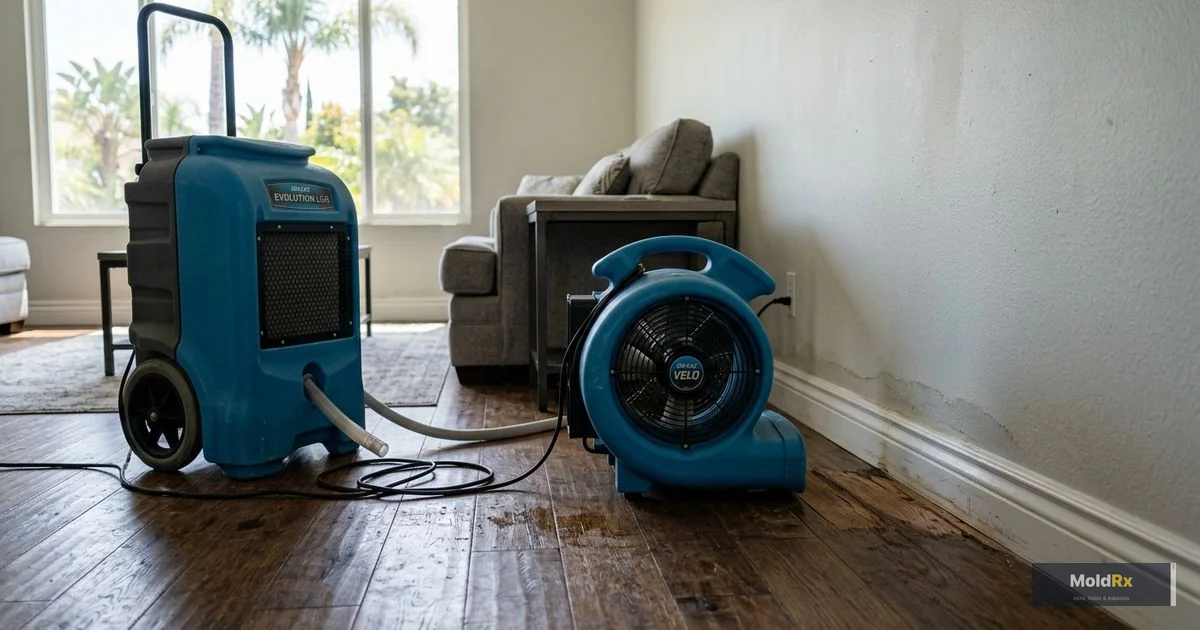
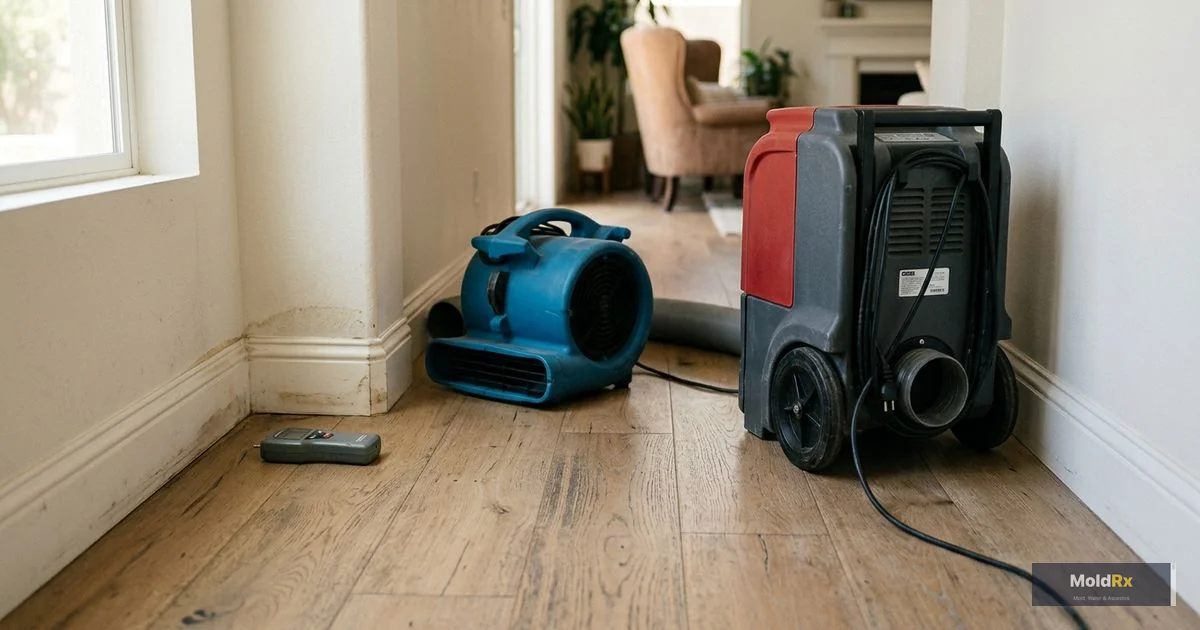
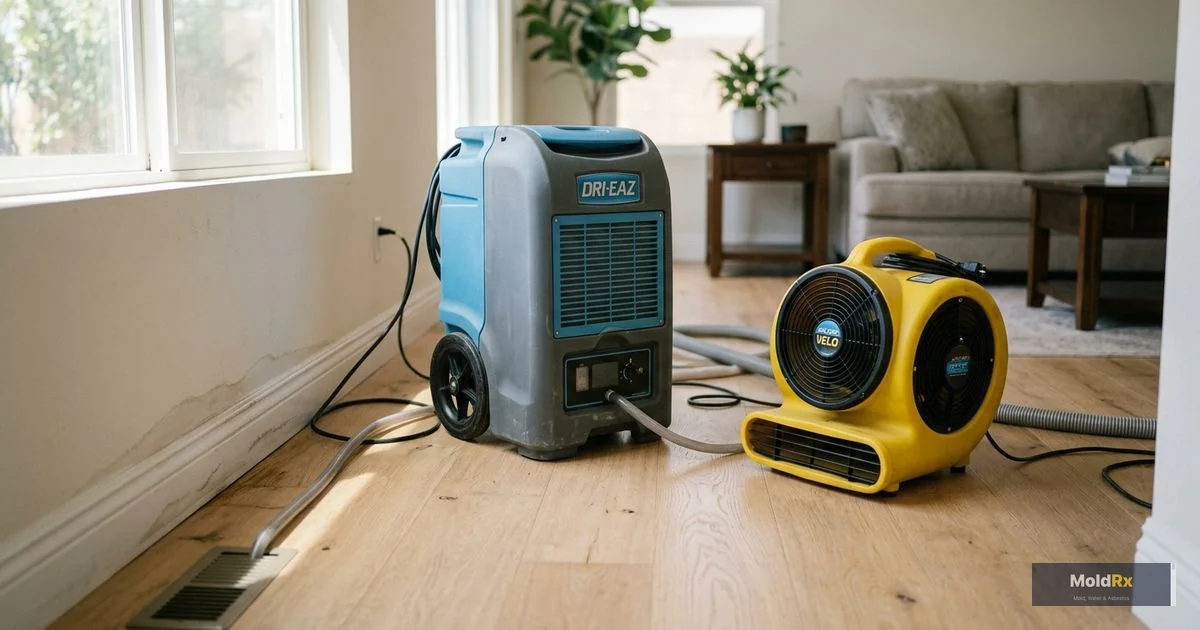
Our vetted specialists deploy commercial dehumidifiers and industrial air movers in configurations designed for Banning's specific conditions. Thermal imaging reveals moisture hidden behind walls, under floors, and above ceilings. Pin-type and pinless moisture meters provide daily readings that track drying progress against target thresholds.
Drying is not considered complete until every affected material reaches verified target moisture content -- not surface-dry, not close-enough, but actually at levels confirmed safe to prevent mold colonization and structural degradation.
Cleaning, Sanitization, and Contamination Control (Days 3-7)
For Category 2 and Category 3 water events, thorough cleaning and sanitization follow structural drying. Antimicrobial treatments are applied to salvageable materials. Contaminated materials that cannot be restored -- saturated insulation, Category 3-contacted drywall below the flood line, destroyed carpet padding -- are removed, bagged, and disposed of according to industry standards and local regulations.
Air scrubbers with HEPA filtration run during and after demolition to capture airborne contaminants and mold spores.
Restoration and Rebuild (Days 5-14+)
Once the structure is verified dry and sanitized, restoration work returns your home to pre-damage condition:
- Drywall replacement and finishing
- Flooring replacement or repair
- Baseboard, trim, and millwork installation
- Cabinet repair or replacement where needed
- Painting and final finish work
- Insulation replacement in affected wall cavities and attic spaces
All repairs meet current building codes and are matched to your home's existing finishes.
What You Should Expect From MoldRx
-
Complete Honesty. If the damage is limited and the restoration straightforward, you will hear that. If the water has been in the walls for weeks and the situation is worse than it looks -- which is common in Banning homes where the dry climate masks hidden moisture -- you will hear that too. No minimizing. No catastrophizing. The truth.
-
Transparent Communication. You will understand what is happening, why, and what comes next. Every decision point will be explained. Every moisture reading will be shared. You will not be kept in the dark about your own home.
-
Insurance-Ready Documentation. Detailed photos, moisture data logs, material inventories, and scope-of-work documents formatted for insurance adjusters. Water damage claims get denied when documentation is thin. Ours is not.
-
No Manufactured Urgency. The urgency is real -- water damage genuinely does get worse every hour. What you will not get from us is artificial pressure to sign up for services you do not need. We tell you what is necessary, what is recommended, and what is optional. You decide.
Banning Neighborhoods and Areas We Serve
Our vetted water damage restoration specialists respond to emergencies throughout Banning and the San Gorgonio Pass region:
- Downtown Banning -- Older commercial and residential structures with aging infrastructure
- Banning Bench -- Established residential area with homes dating to the 1950s-1970s
- Sun Lakes -- Active adult community with specific water damage risk profiles
- Rancho San Gorgonio -- Newer development area with modern construction
- Properties along the San Gorgonio River corridor and adjacent flood-risk zones
We serve ZIP code 92220 and surrounding areas, with rapid response extending to neighboring communities including Beaumont to the west, Cabazon to the east, and the unincorporated communities of Cherry Valley and Calimesa. Residential and commercial properties of all sizes are within our service area.
Related Services in Banning
Water damage that sits for more than 24 to 48 hours almost always becomes a mold problem -- especially in Banning, where the deceptive drying conditions mask hidden moisture that feeds mold growth behind walls and under floors. In addition to water damage restoration, we also offer Mold Removal in Banning, Asbestos Removal in Banning services to Banning property owners. Many older Banning homes built before 1980 may contain asbestos in flooring, insulation, or textured ceilings -- materials that must be properly tested before demolition during water damage restoration.
-> Learn more about remediation services in Banning
Frequently Asked Questions
How quickly should I address water damage in my Banning home?
Right now. Not tomorrow morning. Not after you see if it dries on its own. This is the single most important decision you will make in this situation. In Banning's climate, the surface of water-damaged materials may appear to dry quickly due to the low ambient humidity in the San Gorgonio Pass. This creates a dangerous false sense of security. Moisture trapped inside wall cavities, beneath flooring, and within insulation continues to cause damage and support mold growth even when surfaces feel dry. Professional extraction and monitored drying must begin as soon as possible -- ideally within the first few hours.
My Banning home seems to be drying out on its own. Do I still need professional restoration?
Yes, and this is exactly the situation that leads to the worst outcomes in Banning homes. The dry pass air dries surfaces but leaves moisture trapped inside structural materials. Homeowners who assume their home has dried naturally often discover extensive mold growth weeks or months later, hidden inside walls, beneath floors, and in crawl spaces. By that point, the remediation required is far more extensive and expensive than the original water damage restoration would have been. Professional moisture measurement is the only way to determine whether your home is actually dry or just surface-dry.
Does my insurance cover water damage restoration in Banning?
Most homeowner's policies cover sudden and accidental water damage events -- burst pipes, water heater failures, appliance malfunctions. Gradual damage from deferred maintenance, slow leaks, or long-term neglect is typically excluded. Flood damage from external sources (flash flooding, storm surge) usually requires separate flood insurance, which is particularly relevant for Banning properties in flood-risk zones near the San Gorgonio River. Contact your insurance company immediately to open a claim, and our documentation will support the process.
How long does water damage restoration take in Banning?
Timeline depends on severity and water category. Minor clean-water events affecting limited areas may be fully restored in 3 to 5 days. Moderate damage requiring structural drying of multiple rooms typically takes 7 to 10 days. Major events involving contaminated water, extensive structural penetration, or subsequent mold remediation can take 2 to 4 weeks. Banning's climate can extend drying times compared to lowland areas due to altitude and temperature fluctuation effects on equipment performance. You will receive an honest timeline after the initial assessment.
What should I do right now while waiting for the restoration team?
If you can safely reach the main water shutoff valve, turn it off. This stops the source if the damage is from a plumbing failure. Move furniture, electronics, and valuables out of standing water. Do not use household vacuums to extract water -- they present electrocution risks and are not designed for water removal. Do not turn on ceiling fans if the ceiling is wet or sagging. Do not enter rooms with standing water if electrical outlets are submerged. Take photos of all visible damage for insurance purposes. Then get out of affected areas and wait for professionals.
I have a 1950s-era Banning home. Are there special concerns?
Absolutely. Homes built in the 1950s through 1970s in Banning frequently contain galvanized steel plumbing that is well past its functional lifespan. A pipe burst in these homes often signals that the entire plumbing system is deteriorating -- the pipe that failed was just the weakest link. Additionally, homes built before 1978 may contain lead paint, and homes built before 1980 may contain asbestos in floor tiles, insulation, pipe wrap, or textured ceiling materials. Water damage restoration that requires demolition in these older homes must include proper hazardous material testing and handling.
Your Banning Home Cannot Wait
If water has entered your Banning home, the damage is spreading right now -- into your walls, under your floors, through your insulation. The San Gorgonio Pass climate that feels like it should help is actually working against you, drying surfaces while trapping destructive moisture in hidden spaces where mold is already beginning to grow.
Do not trust appearances. Do not assume the worst is over. Contact MoldRx immediately for emergency water damage restoration in Banning. Our vetted specialists understand the unique challenges of the San Gorgonio Pass, the aging infrastructure in established Banning neighborhoods, and exactly what it takes to properly dry and restore your home -- not just make it look dry.
Call now. The longer you wait, the worse it gets.