Mold Removal in Canyon Lake, CA — MoldRx
IICRC-Certified Mold Removal Professionals Serving Canyon Lake and the Temecula Valley
Canyon Lake does not look like mold country. A private, gated city of roughly 11,000 residents built around a 383-acre reservoir at 1,500 feet elevation, with dry summers and only 12 inches of annual rainfall — most homeowners assume mold belongs to the coast. They are wrong. Canyon Lake's residential footprint wraps around a body of water that elevates local humidity 10 to 15 percent above neighboring cities, and the housing stock was built predominantly between the 1970s and 1990s — now 30 to 55 years old, with original plumbing, aging HVAC, and building envelopes battered by decades of heat cycling and Santa Ana winds. Lakefront condensation migrating through walls, equestrian property moisture, rapid temperature swings driving condensation inside wall cavities, and Santa Ana winds hammering roofing and stucco create conditions most residents never connect to their resort-lifestyle community. MoldRx only sends vetted, IICRC-certified mold removal professionals who follow IICRC S520/R520 remediation standards and EPA federal mold guidance — specialists who work Canyon Lake and the Temecula Valley every week.
Request your free estimate — we'll assess your property and give you straight answers.
Why Mold Grows in Canyon Lake Homes
Canyon Lake was incorporated in 1990, but the community dates to 1968 when Corona Land Company began developing over 4,800 lots around Railroad Canyon Reservoir. Situated in western Riverside County between Lake Elsinore and Menifee, Canyon Lake covers 4.6 square miles at 1,502 feet elevation. ZIP code 92587 encompasses approximately 4,434 housing units — 86 percent detached single-family, 79 percent owner-occupied. Even well-maintained homes cannot outrun the moisture vectors that a private lake, aging construction, inland climate cycling, and Santa Ana winds create together.
Lake Proximity and Elevated Humidity
The 383-acre reservoir is the single largest mold risk factor in the community. Canyon Lake's humidity runs 10 to 15 percent higher than neighboring Menifee and Murrieta, particularly during morning and evening hours when temperatures drop.
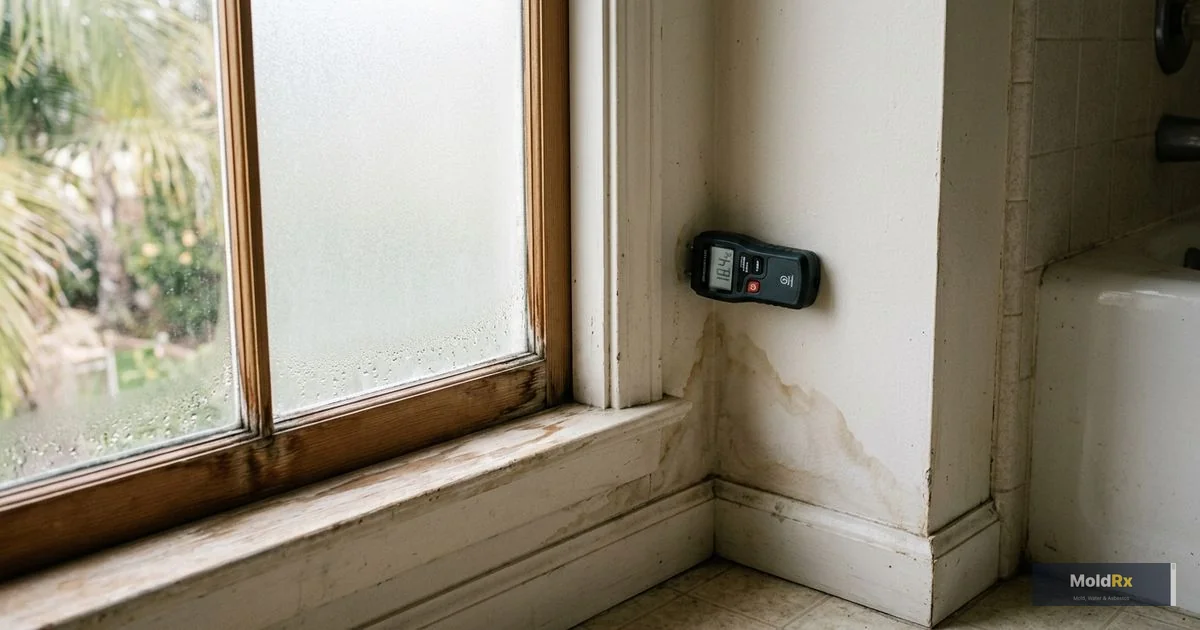
Lakefront homes experience condensation on windows, exterior walls, and garage surfaces — especially during winter mornings when overnight lows reach the low 40s and lake-effect moisture saturates still air. That condensation migrates into wall cavities through aging window seals and stucco cracks, wetting materials that never fully dry. Per IICRC S520 and EPA 402-K-01-001, mold colonizes within 24 to 48 hours once moisture enters a building material — and lake-driven humidity provides a daily source that feeds hidden colonies for months.
Properties along the East Shore, Holiday Island, and Vacation Beach face the most direct exposure, but homes on elevated lots are not exempt. Canyon Lake's bowl topography traps humid air, and morning fog can push relative humidity above 70 percent at grade level.
Aging Housing Stock
Canyon Lake's homes were built during three waves: original 1960s-1970s Corona Land Company construction, 1980s expansion, and the early 1990s push before incorporation. The typical house is 40 to 45 years old.
These homes feature materials past their design life: galvanized plumbing corroding from the inside, original roof tiles cracking, single-pane windows losing seals, bathroom exhaust fans undersized or vented into attics, and insulation that has settled over four decades. Original shower pan liners and polybutylene supply lines in 1980s homes represent active leak risks. Every slow drip behind a wall feeds mold where lake humidity keeps the surrounding air already moisture-rich.
The 1970s construction predates modern vapor barrier standards. Slab foundations in earlier homes may lack adequate moisture barriers, allowing ground moisture to migrate upward — particularly in lower lots closer to the lake.
Inland Heat and Humidity Cycling
Canyon Lake's Mediterranean climate brings summer highs in the mid-90s and winter nights in the low 40s. That 50-degree daily temperature swing drives condensation inside homes.
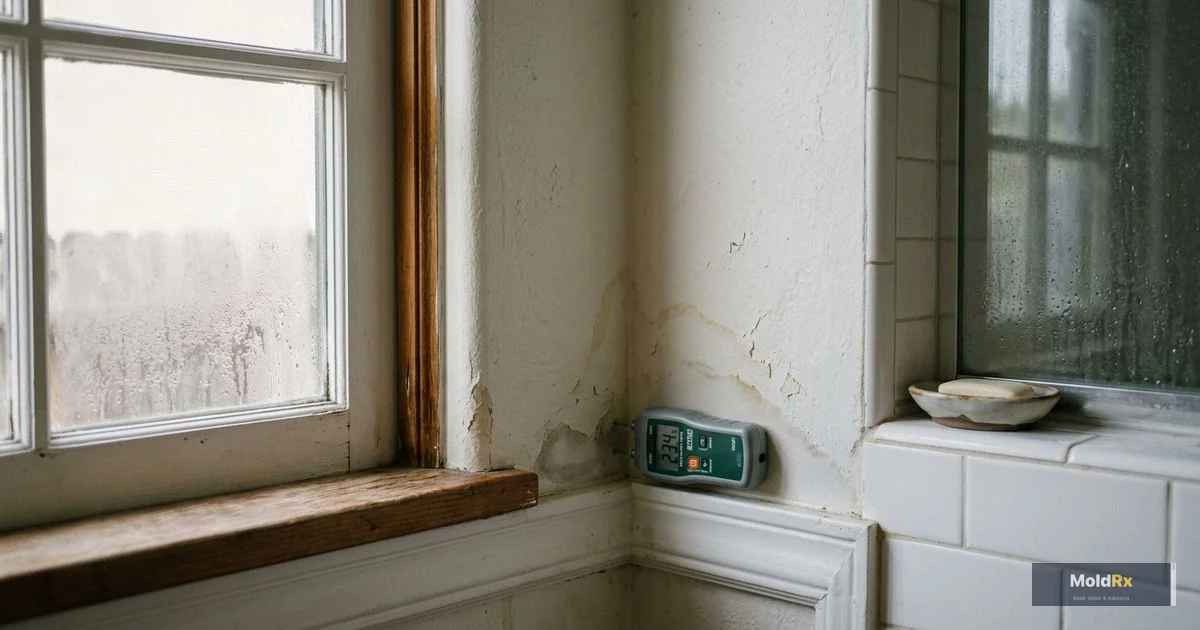
When warm air cools after sunset, moisture condenses on window frames, wall cavities, ductwork, and slab edges. In older homes with degraded insulation, the differential between heated interiors and cold exterior walls creates condensation inside wall assemblies — invisible accumulation feeding mold for weeks. The most humid month is May at 62 percent relative humidity; even the driest months average 50 percent. Combined with lake-effect moisture, Canyon Lake homes face condensation risk rivaling coastal communities — without coastal ventilation.
Santa Ana Winds and Spore Distribution
The Santa Ana winds — hot, dry katabatic air masses that compress through Southern California's mountain passes — hit the Temecula Valley with force. Canyon Lake's position between the Elsinore Mountains and the Santa Rosa Plateau funnels gusts regularly exceeding 40 mph.
Santa Ana winds stress building envelopes: lifting roof tiles, cracking stucco, forcing debris into gaps, and breaking seals marginal for years. A tile displaced during an October Santa Ana becomes a leak pathway during December storms — and in Canyon Lake, that leak enters a home already saturated with lake-effect humidity. The winds also scatter mold spores at high concentrations. For equestrian properties, wind-driven organic debris provides immediate food for mold spores once moisture is present.
Signs You Need Professional Mold Removal
Certain indicators signal that a mold problem has moved beyond what a homeowner can safely manage.
Visible Growth Beyond a Small Area
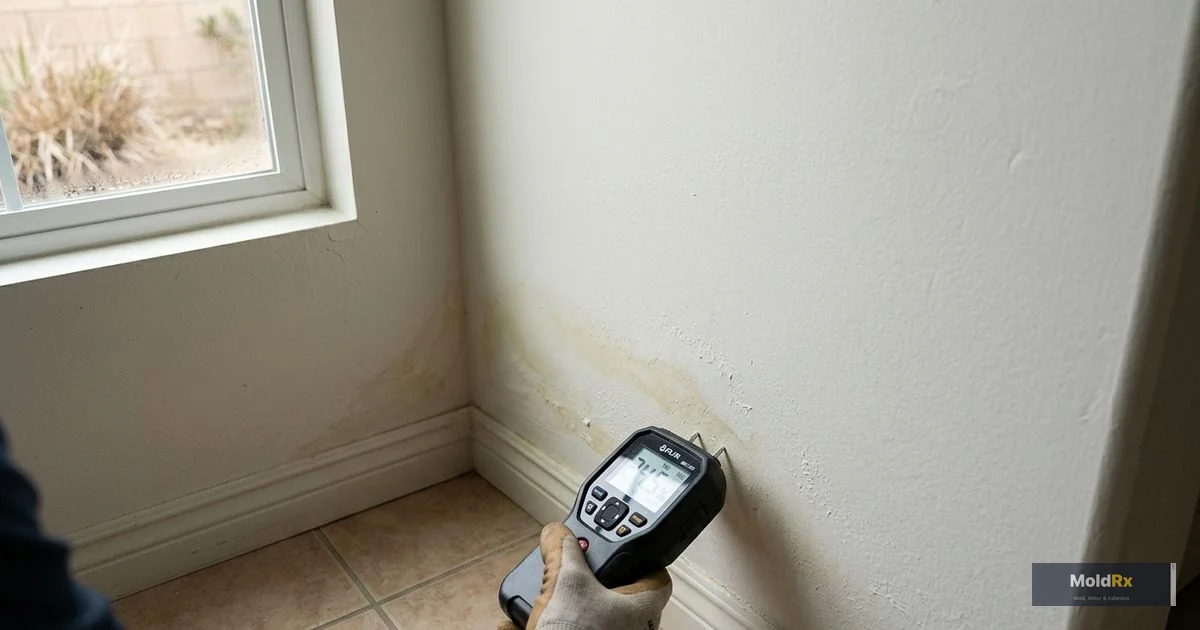
EPA 402-K-01-001 uses 10 square feet as the threshold for professional remediation. In Canyon Lake homes, visible growth commonly appears along baseboards on lakefront-facing exterior walls, inside bathroom cabinets with undersized exhaust fans, around HVAC registers where condensation accumulates, in garages at slab level where foundation moisture migrates upward, and on the interior side of exterior walls where lake-effect condensation wets insulation.
Persistent Musty Odor Without Visible Mold
If a musty smell returns after cleaning, mold is growing in a concealed space — behind drywall, under flooring, or within HVAC ductwork. Canyon Lake's older homes are prone to wall-cavity mold from lake-driven condensation that never produces visible surface evidence. Professional moisture mapping locates the source without unnecessary demolition.
Recurring Mold After Previous Cleanup
Mold that keeps returning means the moisture source was never resolved. In Canyon Lake, the pattern often involves lake-effect humidity re-wetting the same wall cavity every winter morning, or condensation cycling that resumes with every temperature swing — each cleanup buys months, but the colony reestablishes next cool season.
Water Damage History
Any previous water event — plumbing leak, roof failure, or groundwater intrusion — can leave residual moisture supporting mold growth for months. If your property was not dried within the 24-to-48-hour IICRC S500 window, a mold assessment is warranted. In Canyon Lake's 1970s and 1980s homes, slow plumbing failures behind walls are the most common trigger — leaks that saturated drywall and insulation for years without anyone noticing.
Health Symptoms That Worsen Indoors
Nasal congestion, eye irritation, persistent cough, or worsening asthma that improves when you leave the house may indicate airborne mold exposure. The CDC notes that mold causes respiratory symptoms in healthy individuals and more severe reactions in people with existing conditions.
Health Risks of Mold Exposure
Mold exposure is a documented health concern. According to the EPA, inhaling or touching mold spores can cause sneezing, runny nose, red eyes, and skin rash. The CDC identifies coughing, wheezing, and throat irritation as common responses. The World Health Organization's Guidelines for Indoor Air Quality: Dampness and Mould links prolonged exposure to respiratory infections, asthma development in children, and exacerbation of existing respiratory disease.
Vulnerable Populations in Canyon Lake
Canyon Lake's population skews older than the Riverside County average, with a significant share over 55. The WHO guidelines identify elderly and immunocompromised individuals as vulnerable populations for dampness-related health effects. Families with young children face risk as well — developing respiratory systems are more susceptible to mold irritation. For households with elderly residents, young children, or anyone managing asthma, timely remediation is a health imperative.
When DIY Mold Removal Isn't Enough
EPA guidance allows homeowner cleanup of small surface mold on non-porous materials. But these conditions require professional intervention:
- Contamination exceeding 10 square feet — EPA 402-K-01-001 recommends professional remediation at this threshold
- Mold inside HVAC systems or ductwork — Contaminated ductwork circulates spores throughout the house; NADCA standards apply for proper cleaning
- Structural involvement — Mold behind drywall, inside wall cavities, or within subfloor assemblies requires containment and HEPA filtration
- Toxic species suspected — Stachybotrys chartarum (black mold) requires IICRC S520-compliant removal and proper PPE
- Category 2 or 3 water involvement — Sewage or contaminated flooding per IICRC S500 requires professional protocols
- Insurance or real estate documentation needed — Professional remediation generates the records insurers and buyers require
A professional assessment is part of our free estimate.
How We Remove Mold in Canyon Lake Properties
Every remediation follows IICRC S520 standards and the ANSI/IICRC R520 Reference Guide — the benchmarks recognized by insurers, public health agencies, and courts. Our professionals adhere to Cal/OSHA Title 8 Section 5155 exposure limits throughout.
1. Inspection and Moisture Mapping
Before anything is torn out, our specialists map the full scope following EPA 402-K-01-001 assessment protocols. In Canyon Lake, that means checking lakefront-facing walls for condensation, inspecting slab foundations for groundwater migration, evaluating aging HVAC systems, examining attic spaces where temperature cycling condenses on sheathing, and assessing 1970s-to-1990s plumbing for corrosion. For equestrian properties, barns and outbuildings are included. You know exactly what we are dealing with before work begins.
2. Containment
Physical barriers and negative air pressure isolate the affected area per IICRC S520 Condition 2 and Condition 3 containment protocols. HEPA air scrubbers capture airborne spores down to 0.3 microns, preventing cross-contamination — critical in homes with residents the CDC, EPA, and WHO identify as vulnerable populations.
3. Removal and Treatment
Mold-damaged materials are removed following IICRC S520 procedures and Cal/OSHA Title 8 Section 5155 exposure limits. Remaining surfaces are treated with EPA-registered antimicrobial solutions that eliminate residual spores and inhibit regrowth. In Canyon Lake's older homes, this often involves working through multiple material layers — original drywall behind remodeled surfaces, decades-old insulation saturated with lake-effect moisture, and plumbing areas where slow leaks have compromised framing.
4. Moisture Correction
Removing mold without fixing the water source guarantees it returns. Our specialists resolve the underlying cause — lake-driven condensation entering through aging seals, foundation moisture migrating through slab, decades-old plumbing failing inside walls, or equestrian property drainage directing water toward the foundation.
5. Post-Remediation Verification
Affected areas are checked against IICRC S520 Condition 1 (normal fungal ecology) clearance standards. You receive documentation of everything performed — scope, materials removed, treatments applied, moisture readings, and verification results.
Mold Removal vs. Mold Remediation: What's the Difference?
Mold removal refers to physically eliminating mold growth — cutting out contaminated drywall, HEPA-vacuuming surfaces, applying antimicrobial treatments.
Mold remediation is the broader IICRC S520 process: assessment, containment, removal, moisture correction, and post-remediation verification. Remediation addresses both the mold and the conditions that caused it, returning the environment to Condition 1 (normal fungal ecology).
MoldRx professionals perform full remediation on every Canyon Lake job. The lake humidity gets traced, the aging plumbing gets identified, the condensation source gets resolved. Any company offering "mold removal" without addressing moisture is selling a temporary fix — and in a lakefront community where persistent humidity, aging housing, temperature cycling, and Santa Ana winds work against your home, that fix will fail fast.
Preventing Mold After Remediation
The right maintenance keeps mold from returning. These measures are calibrated for Canyon Lake's lakefront microclimate and aging housing stock:
Control Indoor Humidity — Especially Near the Lake
The EPA recommends keeping indoor humidity between 30 and 50 percent. Monitor with a hygrometer — particularly during winter and spring when lake-effect moisture and temperature cycling peak. Lakefront properties should check morning humidity, which regularly spikes above 60 percent before midday warming. Run bathroom exhaust fans during and 30 minutes after showers. Verify fans vent to the exterior — in Canyon Lake's older homes, some vent into attics.
Address Foundation and Slab Moisture
Lower-elevation properties closest to the lake face persistent subsurface moisture. Grade landscaping away from the foundation. Clean gutters and extend downspout discharge at least four feet out. If you notice damp baseboards, efflorescence on garage floors, or musty smells at slab level during winter, get a moisture assessment before mold establishes. Homes built in the 1970s often lack modern vapor barriers beneath the slab — retrofitting may be necessary for properties with chronic foundation dampness.
Maintain Your Building Envelope
Canyon Lake's Santa Ana exposure demands more frequent inspection than sheltered Temecula Valley cities. After wind events, check for displaced roof tiles, cracked stucco, damaged flashing, and compromised window seals. Inspect caulking and weather stripping annually — 1970s and 1980s materials are long past their service life. Pay particular attention to lake-facing walls where condensation stress is highest.
Manage Equestrian Property Moisture
For Canyon Lake's equestrian properties, barns and outbuildings create their own moisture vectors. Horse wash areas, water troughs, irrigated paddocks, and hay storage all generate humidity. Ensure barn ventilation is adequate, drainage directs water away from the main home's foundation, and hay storage stays dry and elevated. Combined with the lake's ambient humidity, unmanaged barn moisture can affect the primary residence.
Maintain Your HVAC System
Year-round HVAC use creates condensation on evaporator coils, drip pans, and ductwork. Schedule annual maintenance including coil cleaning, drip pan inspection, and duct checks per NADCA guidelines. Replace filters more frequently during Santa Ana events — dust and organic debris provide immediate food for mold spores once condensation occurs. HVAC systems original to 1970s and 1980s homes are less efficient at humidity control and more prone to pan failures.
What Sets MoldRx Apart
-
Straight talk, not sales talk. If your mold situation is smaller than you feared, we will tell you. If it is more involved, you will hear that too. We do not inflate jobs.
-
Licensed, insured, IICRC-certified. Our vetted professionals hold IICRC certifications, carry proper California contractor licensing through the CSLB (Contractors State License Board), and maintain insurance coverage required for remediation work in Riverside County.
-
Full documentation on every job. Detailed records of work completed, materials removed, treatments applied, and moisture readings — for insurance, real estate, and your own records.
-
Family-owned accountability. MoldRx is not a call center. We only send vetted remediation professionals we stand behind.
Get your free estimate — no obligations, no pressure. Just a clear picture of your situation.
Canyon Lake Neighborhoods We Serve
MoldRx provides mold removal across every neighborhood in Canyon Lake — ZIP code 92587 — including lakefront, hillside, equestrian, and interior residential properties.
-
East Shore — Properties along the eastern bank with direct lake exposure and the highest humidity impact. Homes sit closest to the water, making wall condensation and foundation dampness persistent year-round concerns. Many East Shore homes date to the original 1970s development phase.
-
Holiday Island — One of Canyon Lake's most desirable lakefront areas, with water on multiple sides amplifying humidity exposure. The island setting intensifies morning fog and condensation cycling, and homes face lake-effect moisture from nearly every direction.
-
Vacation Beach — The community's recreational lakefront zone where proximity to water exposes nearby homes to splash moisture, elevated humidity, and organic debris. Properties here experience the most concentrated lake-effect conditions in the community.
-
Canyon Hills — Elevated lots on the ridgelines above the lake. Canyon Lake's bowl topography traps humid air, and morning fog reaches hillside elevations before burning off. Temperature cycling is more extreme at higher lots, driving condensation harder through aging building envelopes.
-
Main Lodge and Towne Center — Central community areas surrounded by homes from multiple development eras. Properties face standard lake moisture plus landscaping irrigation that contributes ground-level humidity.
-
Equestrian Estates — Canyon Lake's horse properties with larger lots, barns, and outbuildings. These face the dual moisture burden of lake-effect humidity and equestrian operations — wash areas, irrigated paddocks, hay storage, and organic accumulation.
Nearby Communities We Also Serve
Our professionals also cover surrounding Temecula Valley communities with full CSLB licensing and IICRC credentials:
- Lake Elsinore — Northern neighbor with its own lakefront moisture challenges and aging housing stock
- Menifee — Southern neighbor with rapid growth alongside older agricultural-era properties
- Murrieta — Southeast neighbor with mixed-era housing and inland heat cycling
- Temecula — Eastern neighbor with wine country humidity and Santa Ana wind exposure
- Wildomar — Western neighbor with foothill elevation and development-era housing similar to Canyon Lake
Related Services in Canyon Lake
Mold rarely exists in isolation. We also cover:
→ All remediation services in Canyon Lake
Frequently Asked Questions
How long does mold remediation take in Canyon Lake?
Most projects take 2 to 5 days. A single-room bathroom issue may wrap in a day; multi-room remediation involving wall-cavity mold or foundation moisture can take a week or longer. We provide a realistic timeline after assessment.
Do I need mold testing before removal starts?
If mold is visible, testing is not always required — the priority is removal and moisture correction. Testing becomes valuable when you suspect hidden mold behind walls or beneath flooring, need insurance documentation, or are in a real estate transaction.
Will my homeowner's insurance cover mold removal?
It depends on the cause. Mold from a sudden covered event — a burst pipe, storm damage — is often covered. Mold from deferred maintenance typically is not. Our documentation supports legitimate claims with clear evidence of cause, scope, and remediation.
Can I stay home during remediation?
Usually, yes. Containment and HEPA filtration isolate spores from living areas. For larger projects or if household members have respiratory sensitivities, we may recommend temporary relocation during intensive removal phases.
Is mold common in Canyon Lake's lakefront homes?
More common than residents expect. The lake generates persistent humidity that enters homes through aging seals, stucco cracks, and foundation joints. Older building materials absorb more moisture than they release, and over months hidden colonies establish inside wall cavities and HVAC systems without visible surface evidence.
How does the lake affect mold risk compared to other Temecula Valley cities?
Canyon Lake's reservoir elevates local humidity 10 to 15 percent above Menifee, Murrieta, and Temecula — enough to push homes from borderline to active mold growth in older construction. The bowl topography traps humid air, and morning fog creates condensation events that inland cities without water features do not experience.
Do equestrian properties face higher mold risk?
Yes. Horse wash areas, water troughs, irrigated paddocks, and hay storage add localized humidity to the lake's already elevated moisture. The greater risk is moisture migrating from equestrian facilities to the primary residence through shared drainage paths. Organic debris from equestrian operations also provides food for mold spores.
How do Santa Ana winds affect mold in Canyon Lake homes?
Santa Ana winds damage building envelopes — displacing roof tiles, cracking stucco, forcing debris into seals. Every gap becomes a moisture entry point during the next rain, and in Canyon Lake that rain enters a home already dealing with elevated lake humidity. The winds also scatter mold spores at high concentrations, and any envelope opening allows spores inside.
Does Canyon Lake's gated community status affect remediation access?
Our vetted professionals are experienced working within gated communities. We coordinate gate access, comply with POA guidelines for contractor work, and respect community standards for equipment staging and work hours. Canyon Lake's requirements are factored into project planning from the initial estimate.
Is black mold more dangerous than other types?
Stachybotrys chartarum (black mold) produces mycotoxins that can cause more severe effects. However, the CDC advises treating all mold the same way — the IICRC S520 protocol does not change based on species. Color alone does not identify type. Regardless of species, mold exceeding 10 square feet warrants professional remediation.
Get Mold Removal in Canyon Lake
Mold spreads. Lake humidity keeps wetting wall cavities every morning. Temperature cycling keeps driving condensation every night. Santa Ana winds keep battering building envelopes every fall. Aging plumbing keeps corroding inside walls that were built when the community was still a developer's blueprint. The longer these conditions go unaddressed, the further contamination reaches into your home's structure and your family's air quality.
MoldRx only sends vetted remediation professionals who understand Canyon Lake properties — lakefront humidity, aging construction, equestrian property moisture, and Santa Ana wind damage. No guesswork. No runaround.
Call MoldRx for your free estimate — (888) 609-8907. Clear answers. Honest guidance. Work done right.