Mold Removal in Chino, CA — MoldRx
IICRC-Certified Mold Removal Professionals Serving Chino and Western San Bernardino County
Mold in a Chino home surprises most homeowners. You're in the Inland Empire, not on the coast — how did this happen? But Chino's flat, former-dairyland terrain, aging housing stock, and inland humidity cycles create conditions that quietly feed mold behind drywall, under cabinets, and inside HVAC ductwork. MoldRx only sends vetted, IICRC-certified mold removal professionals who follow IICRC S520/R520 remediation standards and EPA federal mold guidance — specialists who work Chino and western San Bernardino County every week. They know exactly what causes mold in Inland Empire homes and how to eliminate it at the source.
Request your free estimate — we'll assess your property and give you straight answers.
Why Mold Grows in Chino Homes
Chino sits at roughly 728 feet elevation on the western edge of San Bernardino County, about 30 miles east of downtown Los Angeles. The city covers flat terrain that was once the nation's largest concentration of dairy production — over 350,000 cows in a 50-square-mile area. That agricultural legacy left behind moisture-rich soil, high water tables, and graded land that doesn't always drain the way suburban development assumes it will. With a 2025 population of approximately 95,000, Chino has transformed from a dairy community into a rapidly growing suburban city — but the ground underneath remembers what it was.
Inland Heat-Humidity Cycles and Condensation
Chino's semi-arid Mediterranean climate pushes summer highs into the low-to-mid 90s, with occasional spikes above 100°F. Winter nights drop into the low 40s. That 50-degree daily temperature swing — more extreme than coastal communities experience — creates condensation on the interior side of exterior walls, around window frames, and inside poorly insulated attic spaces. Average relative humidity sits around 50-57%, but morning hours and peak humidity months (particularly May) can push levels well above 60%. When you combine that humidity with the temperature cycling, moisture collects in places homeowners never think to check. According to IICRC S520 guidelines and the EPA's Mold Remediation in Schools and Commercial Buildings (EPA 402-K-01-001), mold colonizes within 24 to 48 hours once conditions are right.
Agricultural Soil Moisture and High Water Tables
Chino's dairy and farming past isn't just history — it's in the ground your home sits on. Decades of irrigated agriculture and dairy operations saturated the soil across the Chino Basin. Many properties, especially in south Chino near The Preserve and the former dairy preserve lands, sit on ground with elevated water tables. That subsurface moisture migrates upward through concrete slabs and foundations, particularly during cooler months when ground temperatures create a thermal gradient. Homeowners notice damp baseboards, musty closets, or warped laminate flooring — all signs of slab-level moisture intrusion that feeds mold colonies hidden beneath finished surfaces.
Santa Ana Winds — A Double-Edged Sword
The Santa Ana winds blow through the Cajon Pass and sweep across San Bernardino County, including Chino, multiple times between October and March. These hot, dry winds drop humidity to single digits for days at a time — then stop. When the winds die, moisture rapidly rebounds, and the sudden humidity shift creates condensation events throughout the home. Santa Ana conditions also drive fine dust and particulate matter into every gap in the building envelope. That debris absorbs moisture during the post-wind humidity rebound, creating a nutrient-rich film on surfaces inside wall cavities that mold colonizes quickly. The wind damage itself — loosened roof flashing, cracked stucco seals, gaps around window and door frames — creates new moisture entry points that persist long after the event.
Chino's Aging and Mixed Housing Stock
Chino's housing tells two stories. In established neighborhoods like College Park, Old Town, and areas near Ramona Avenue, homes date from the 1960s through the 1980s — meaning they're 40 to 65 years old with original plumbing connections, aging HVAC systems, and construction methods that didn't prioritize moisture barriers. Galvanized supply lines corrode internally, polybutylene pipes (common in 1980s California construction) become brittle and fail at fittings, and original roof seals have long since exceeded their service life.
The other story is rapid new construction. The Preserve, a 5,226-acre master-planned community built on former dairy land in southeast Chino, has added nearly 5,000 homes since the mid-2000s with thousands more planned. These newer homes use builder-grade materials — budget caulking, standard-grade windows, and minimum-code insulation — that degrade faster than premium alternatives. Homes built in the 2004-2010 era are now 16 to 22 years old, entering the age range where original plumbing fittings fail, window seals lose integrity, and tub surround caulking cracks and separates.
Signs You Need Professional Mold Removal
Not every dark spot on a wall requires a remediation crew. But certain signs indicate the problem has moved beyond what a homeowner can handle safely or effectively.
Visible Growth Beyond a Small Area
The EPA's Mold Remediation in Schools and Commercial Buildings (EPA 402-K-01-001) uses 10 square feet as a general threshold — mold contamination exceeding that size typically warrants professional remediation rather than DIY cleanup. In Chino homes, visible growth commonly appears along baseboards near exterior walls, inside bathroom cabinets, around HVAC registers, on ceiling drywall in rooms below attic spaces, and in garages where slab moisture meets stored materials.
Persistent Musty Odor Without Visible Mold
If the smell returns after cleaning, mold is likely growing in a concealed space — behind drywall, under vinyl or laminate flooring, inside wall cavities, or within HVAC ductwork. Chino homes built on former dairy land are particularly prone to under-slab moisture that feeds hidden mold beneath finished floors without any visible sign. A professional inspection with moisture mapping locates the source without unnecessary demolition.
Recurring Mold After Previous Cleanup
Mold that keeps coming back means the moisture source was never resolved. Surface cleaning with bleach or household products kills what's visible but does nothing about the colony growing behind the surface or the water feeding it. If you've cleaned the same area more than once, the underlying condition needs professional diagnosis.
Water Damage History
Any previous water event — a slab leak, a roof leak during winter storms, a failed water heater, or slow condensation accumulation — can leave residual moisture that supports mold growth for months. If your Chino property has experienced water intrusion and was not professionally dried within the 24-to-48-hour window identified by IICRC S520 standards, a mold assessment is warranted.
Health Symptoms That Worsen Indoors
Nasal congestion, eye irritation, persistent cough, or worsening asthma symptoms that improve when you leave the house may indicate airborne mold exposure. The CDC notes that mold exposure can cause respiratory symptoms in otherwise healthy individuals and more severe reactions in people with existing conditions. These symptoms alone don't confirm mold — but combined with any of the signs above, they justify a professional evaluation.
Health Risks of Mold Exposure
Mold exposure is a legitimate health concern backed by federal agency guidance — not a marketing tactic. Understanding the actual risks helps you make an informed decision about remediation urgency.
According to the EPA, inhaling or touching mold spores can cause allergic reactions including sneezing, runny nose, red eyes, and skin rash. The CDC identifies additional respiratory effects including coughing, wheezing, and throat irritation. The World Health Organization's Guidelines for Indoor Air Quality: Dampness and Mould links prolonged indoor mold exposure to increased risk of respiratory infections, asthma development in children, and exacerbation of existing respiratory disease.
Populations at Higher Risk
- Children — Chino's median age of 36.2 years and family-oriented neighborhoods mean a significant share of households include children. Developing respiratory systems are more susceptible to mold-related irritation. The WHO guidelines specifically identify children as a vulnerable population for dampness-related health effects.
- Individuals with asthma or allergies — Mold is a known asthma trigger. The CDC recommends that people with mold allergies avoid exposure to mold. Chino's Inland Empire location already elevates seasonal allergy burden — adding indoor mold exposure compounds the problem.
- Elderly residents — Weakened immune function increases susceptibility to respiratory infections that mold exposure can facilitate.
- Immunocompromised individuals — People undergoing chemotherapy, organ transplant recipients, and those with HIV/AIDS face elevated risk of fungal infections from mold exposure.
The goal is not to create alarm — it's to provide the factual basis for why timely remediation matters, particularly in homes with vulnerable occupants.
When DIY Mold Removal Isn't Enough
For small surface mold on non-porous materials — a patch on a tile wall, mold on a glass window frame — the EPA guidance allows homeowner cleanup with proper protective equipment. But several conditions require professional intervention:
- Contamination exceeding 10 square feet — EPA 402-K-01-001 recommends professional remediation for areas this size or larger
- Mold inside HVAC systems or ductwork — Central air systems in Chino homes circulate spores throughout the house when ductwork is contaminated. NADCA (National Air Duct Cleaners Association) standards apply to HVAC-related mold remediation
- Structural involvement — Mold growing behind drywall, under subfloor materials, or inside wall cavities requires controlled demolition, containment, and HEPA filtration that homeowners are not equipped to perform safely
- Toxic species suspected — While not all mold is dangerous, species like Stachybotrys chartarum (black mold) produce mycotoxins that require IICRC S520-compliant removal procedures and proper PPE beyond what's available at hardware stores
- Water category 2 or 3 involvement — If the moisture source involves sewage, gray water, or contaminated flooding per IICRC S500 water damage categories, the mold remediation requires professional protocols to address both the biological and water contamination
- Insurance or real estate documentation needed — DIY cleanup produces no documentation. Professional remediation generates the scope-of-work records, moisture readings, and post-remediation verification that insurers, lenders, and buyers require
When in doubt, a professional assessment tells you whether the situation warrants full remediation or a simpler cleanup. That assessment is part of our free estimate.
How We Remove Mold in Chino Properties
Every remediation follows a structured process built on IICRC S520 standards and the companion ANSI/IICRC R520 Reference Guide — the industry benchmarks for professional mold remediation recognized by insurers, public health agencies, and the courts. Our professionals also adhere to Cal/OSHA Title 8 regulations for worker and occupant safety throughout the process.
1. Inspection and Moisture Mapping
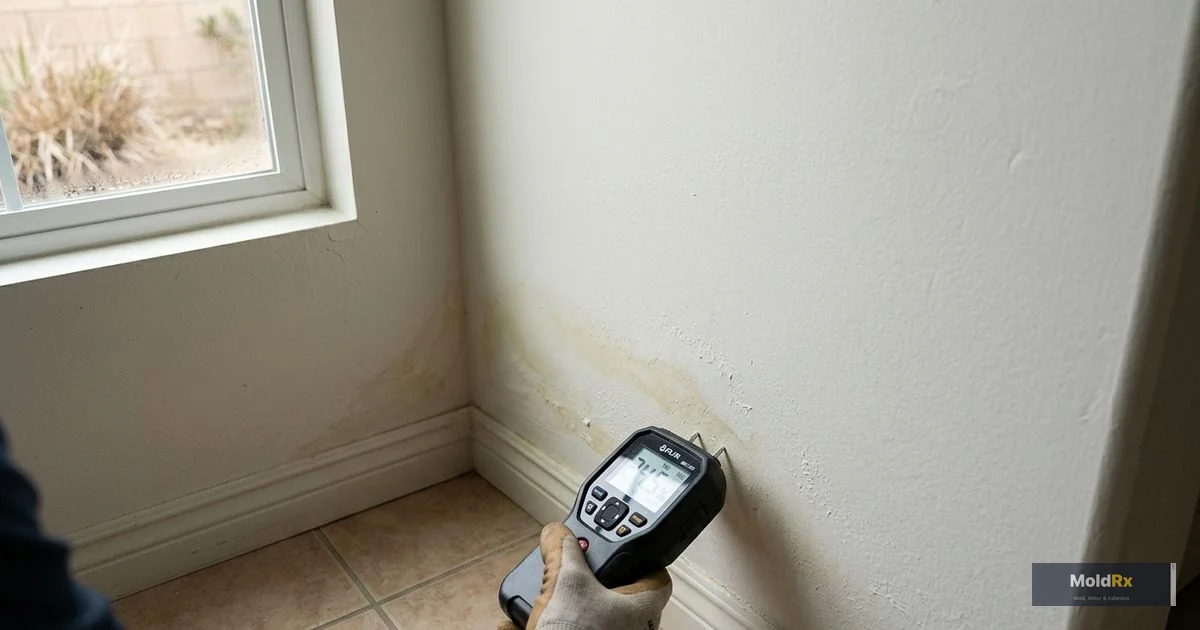
Before anything is torn out, our specialists map the full scope following the assessment protocols outlined in EPA 402-K-01-001. In Chino homes, that means checking HVAC ductwork and air handler units, inspecting under-slab plumbing for slow leaks (especially in older homes near downtown and College Park), examining wall cavities where inland condensation accumulates, and evaluating slab moisture in homes built on former dairy land. You'll know exactly what we're dealing with before work begins.
2. Containment
Physical barriers and negative air pressure isolate the affected area per IICRC S520 Condition 2 and Condition 3 containment protocols, depending on the scope of contamination. HEPA air scrubbers run continuously to capture airborne spores down to 0.3 microns. This prevents cross-contamination to unaffected rooms — especially important in family homes with children. The CDC, EPA, and the World Health Organization's WHO Guidelines for Indoor Air Quality: Dampness and Mould all identify children as more vulnerable to mold-related respiratory effects.
3. Removal and Treatment
Mold-damaged materials — drywall, insulation, carpet padding, porous surfaces that can't be effectively decontaminated — are removed and disposed of following IICRC S520 procedures and Cal/OSHA permissible exposure limits under Title 8 §5155 for airborne contaminants. Remaining structural surfaces are treated with EPA-registered antimicrobial solutions that eliminate residual spores and inhibit regrowth. Every surface in the containment zone gets addressed.
4. Moisture Correction
Removing mold without fixing the water source guarantees it returns. Our specialists identify and resolve the underlying cause — whether that's a failed plumbing joint, inadequate bathroom exhaust, slab moisture from the high water table, or condensation from insufficient insulation in an older Chino home. You'll get specific guidance on what needs to change to keep the problem from recurring.
5. Post-Remediation Verification
Work isn't finished until conditions are verified. Affected areas are checked against IICRC S520 Condition 1 (normal fungal ecology) clearance standards to confirm remediation was successful. You receive documentation of everything performed — scope of work, materials removed, antimicrobial treatments applied, moisture readings, and post-remediation verification results. This documentation meets the evidentiary standards insurers and real estate professionals require.
Mold Removal vs. Mold Remediation: What's the Difference?
The terms get used interchangeably, but they describe different scopes of work — and understanding the distinction helps you evaluate what your property actually needs.
Mold removal refers to physically eliminating mold growth from a structure. It's the hands-on work: cutting out contaminated drywall, HEPA-vacuuming surfaces, applying antimicrobial treatments. Removal addresses the mold that's already there.
Mold remediation is the broader process. It includes removal but also encompasses the full scope defined by IICRC S520: assessment, containment, removal, moisture correction, and post-remediation verification. Remediation addresses both the mold and the conditions that caused it. A remediation project doesn't just clean what's visible — it resolves the underlying moisture problem and verifies that conditions have returned to IICRC S520 Condition 1 (normal fungal ecology).
When MoldRx sends professionals to your Chino property, they perform full remediation — not just surface removal. That means the slab leak gets traced, the condensation source gets identified, the high-water-table moisture intrusion gets addressed. The mold is gone and the reason it grew is resolved.
Any company offering "mold removal" without addressing the moisture source is selling you a temporary fix. You'll be calling again within months.
Preventing Mold After Remediation
Once remediation is complete, the right maintenance keeps mold from returning. These prevention measures are calibrated for Chino's Inland Empire climate and housing conditions:
Control Indoor Humidity
The EPA recommends maintaining indoor humidity between 30% and 50%. Chino's inland location means outdoor humidity regularly fluctuates between 45% and 65%, with higher spikes during May and early morning hours. A standalone hygrometer lets you monitor conditions in real time. Run bathroom exhaust fans during and for 30 minutes after showers. In enclosed spaces like closets against exterior walls, master bathrooms, and laundry rooms, a dehumidifier may be necessary during high-humidity periods.
Address Condensation Zones
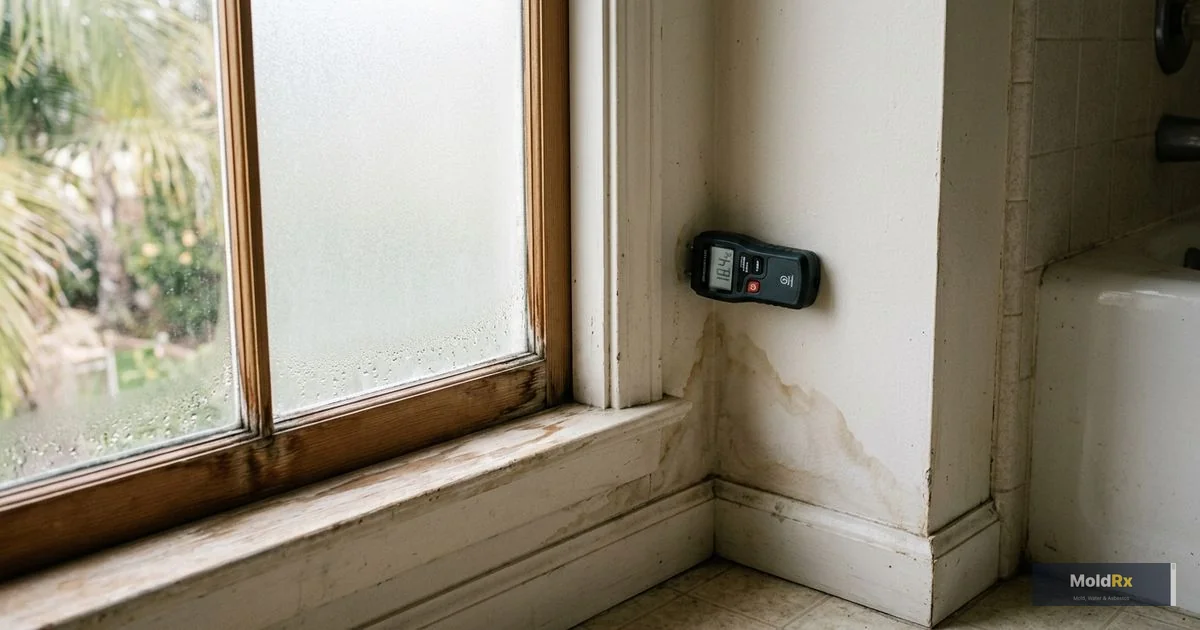
The temperature differential between Chino's hot summer days and cool winter nights creates condensation on cold surfaces — exterior walls, single-pane windows (common in 1960s-1980s homes), metal pipes, and poorly insulated attic spaces. Upgrading to double-pane windows, improving attic insulation, and wrapping cold water pipes in insulation reduces condensation buildup significantly. Pay particular attention to north-facing walls and rooms above garages, which cool faster than the rest of the home.
Manage Slab and Foundation Moisture
For homes built on former dairy land — particularly in south Chino and The Preserve area — slab moisture is an ongoing concern. Ensure your foundation drainage functions properly. Keep landscaping graded away from the foundation so irrigation and rain runoff flows outward, not toward the house. If you notice persistent dampness along baseboards or under flooring near exterior walls, have a moisture assessment done before mold establishes itself.
Fix Water Intrusion Promptly
Roof leaks during winter storms, plumbing drips, water heater failures, and slab moisture should be addressed within 24 to 48 hours — the window identified by IICRC S520 before mold colonization begins. The faster you eliminate standing water or active moisture, the lower your remediation risk.
Schedule Periodic Inspections
For Chino properties with previous mold history, an annual moisture inspection can catch developing problems before they become full remediation projects. This is especially valuable for homes with aging plumbing (pre-1990 construction in College Park and Old Town), flat or low-slope roofs, and any property where slab moisture has been documented.
What Sets MoldRx Apart
-
Straight talk, not sales talk. If your mold situation is smaller than you feared, we'll tell you. If it's more involved, you'll hear that too. We don't manufacture problems to inflate a job.
-
Licensed, insured, IICRC-certified. Our vetted professionals hold IICRC certifications, carry proper California contractor licensing through the CSLB (Contractors State License Board), and maintain the insurance coverage required for professional remediation work in San Bernardino County. They have the credentials and field experience to handle Chino's specific mold challenges — from slab moisture intrusion to condensation-driven growth in aging housing stock.
-
Full documentation on every job. Detailed records of the work completed, materials removed, treatments applied, and moisture readings. This protects you with insurance, in real estate transactions, and for your own peace of mind.
-
Family-owned accountability. MoldRx is not a call center routing you to whoever's available. We only send vetted remediation professionals we stand behind.
Get your free estimate — no obligations, no pressure. Just a clear picture of your situation.
Chino Neighborhoods We Serve
MoldRx provides mold removal across every neighborhood in Chino — ZIP codes 91710 and 91708 — including residential, commercial, and multi-family properties.
-
The Preserve — Chino's largest master-planned community, built on 5,226 acres of former dairy land in southeast Chino. Homes date from the mid-2000s to the 2020s. While the housing is newer, builder-grade materials are aging into the failure window, and the former agricultural soil retains more subsurface moisture than typical suburban lots. Slab-level moisture intrusion and garage mold are common concerns here.
-
College Park — Often called the "Beverly Hills of Chino," this established neighborhood features well-maintained homes primarily from the 1970s and 1980s. Low-traffic streets and mature landscaping keep the area desirable, but the aging plumbing, original HVAC systems, and older window seals in these 40-to-50-year-old homes create elevated mold risk. Bathroom remodels that didn't address the original moisture barriers are a frequent remediation trigger.
-
Old Town / Downtown Chino — The historic core along Central Avenue includes some of the city's oldest residential and commercial structures. Homes near the 1888 Old Schoolhouse and the original downtown grid date to the mid-20th century and earlier. Aging infrastructure, original roof systems, and decades of deferred maintenance in rental properties make this area a consistent source of remediation calls.
-
Chino Crossings — A newer planned community along Eucalyptus Avenue with homes built in the 2010s. Construction-era defects like improperly sealed stucco, insufficient attic ventilation, and builder-grade window installations are beginning to manifest as these homes enter their second decade. Post-construction settling can also open gaps in the building envelope that allow moisture intrusion.
-
South Chino (91710) — Residential areas south of Riverside Drive that border the former dairy preserve. Properties here sit on some of the highest-water-table land in the city. Foundation moisture, damp crawl spaces, and slab-level humidity readings that exceed normal ranges are recurring findings during mold inspections.
-
Ramona Avenue Corridor — A mix of 1960s ranch homes, small commercial buildings, and multi-family housing along one of Chino's main north-south arteries. The older construction vintage, combined with commercial-to-residential conversions that may not have been built to current moisture-management standards, creates a mixed remediation profile.
-
North Chino — Neighborhoods closer to Chino Avenue and the Pomona border, including mid-to-late 20th-century ranch- and Craftsman-style homes on larger lots. Mature trees and original landscaping can direct root growth toward supply lines and irrigation pipes, creating slow leaks that go unnoticed until mold is established in wall cavities.
Nearby Communities We Also Serve
Our vetted professionals also cover the surrounding Inland Empire, carrying the CSLB licensing and IICRC credentials required for residential and commercial mold remediation in San Bernardino County:
- Chino Hills — Adjacent community to the south with rolling terrain, newer developments, and canyon-proximity moisture challenges
- Ontario — Chino's western neighbor with similar housing stock, warehouse district humidity, and shared Inland Empire climate conditions
- Montclair — Small city between Chino and Pomona with older residential construction and aging infrastructure
- Eastvale — Rapidly growing Riverside County community south of Chino sharing similar new-construction mold vectors
Related Services in Chino
Mold rarely exists in isolation. If you're dealing with water damage, need testing before remediation, or own a pre-1980s property that may contain asbestos, we cover those too:
→ All remediation services in Chino
Frequently Asked Questions
How long does mold remediation take in Chino?
Most projects take 2 to 5 days depending on the size of the affected area, the materials involved, and whether structural repairs are needed. A single-room bathroom mold issue may wrap in a day. Multi-room remediation involving slab moisture intrusion or HVAC contamination can take a week or longer. We'll give you a realistic timeline after assessing your property.
Do I need mold testing before removal starts?
If mold is visible, testing isn't always required — the priority is removal and moisture correction. Testing becomes valuable when you suspect hidden mold (behind walls, under flooring), need documentation for insurance, or are involved in a real estate transaction. We'll recommend the right approach for your situation.
Will my homeowner's insurance cover mold removal?
It depends on the cause. Mold resulting from a sudden, covered event — like a burst pipe — is often covered. Mold from long-term deferred maintenance typically is not. Our documentation is designed to support legitimate insurance claims with clear evidence of the cause, scope, and remediation performed.
Can I stay home during remediation?
Usually, yes. Proper containment and HEPA filtration keep spores isolated from your living areas during the work. For larger projects, or if anyone in the household has asthma or respiratory sensitivities, we may recommend staying elsewhere during the most intensive removal phases. We'll discuss this during your assessment.
Is mold common in newer Chino homes like The Preserve?
Yes. Newer construction doesn't mean mold-proof construction. Homes in The Preserve and other post-2000 developments use builder-grade materials that degrade faster than premium alternatives. These homes are also built on former dairy land with elevated soil moisture. We regularly perform remediation in homes less than 15 years old where slab moisture, improperly sealed windows, or inadequate attic ventilation created conditions for mold growth.
How do I know if I have mold behind my walls?
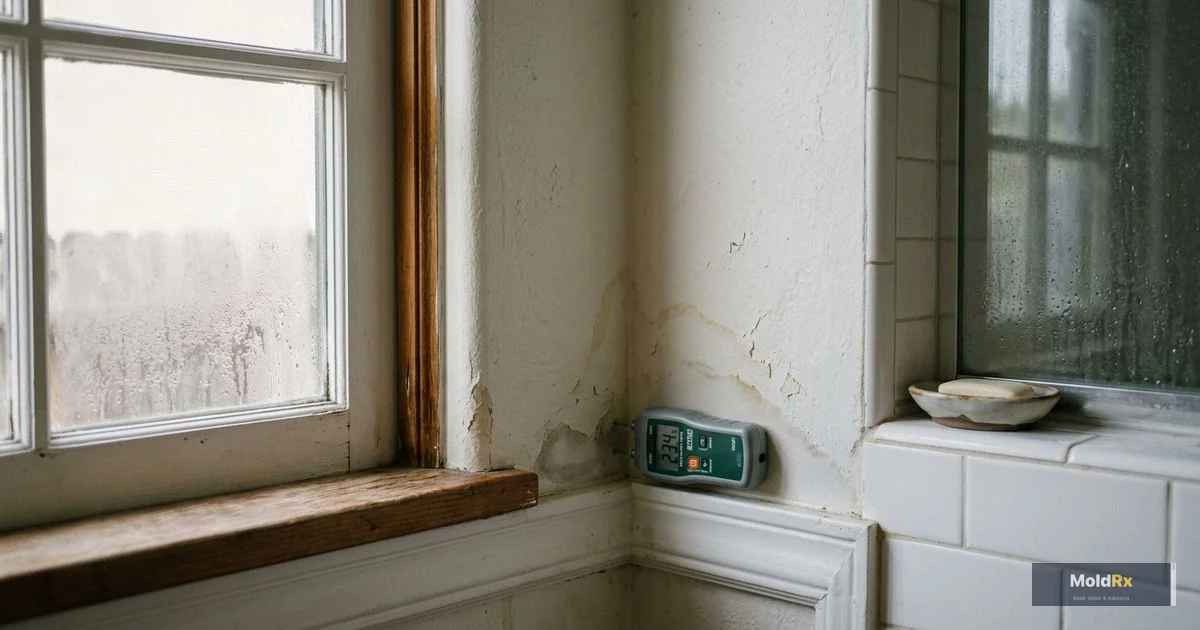
Common indicators include a persistent musty smell that doesn't go away with cleaning, visible water staining or discoloration on walls or ceilings, peeling paint or bubbling wallpaper, and worsening allergy symptoms indoors. In Chino homes, check areas along baseboards near exterior walls (condensation zones), bathrooms without exhaust fans, and anywhere plumbing runs through walls. If you suspect hidden mold, a professional inspection with moisture mapping can confirm what's there without unnecessary demolition.
What's the difference between mold removal and mold remediation?
Mold removal is the physical elimination of mold growth. Mold remediation is the complete process — assessment, containment, removal, moisture correction, and verification that conditions have returned to normal. Professional remediation following IICRC S520 standards addresses both the mold and the underlying moisture source so the problem doesn't recur. MoldRx professionals perform full remediation on every job.
Is black mold more dangerous than other types?
Stachybotrys chartarum (commonly called black mold) produces mycotoxins that can cause more severe health effects than common mold species. However, the CDC advises that all mold should be treated the same way from a remediation standpoint — the response protocol under IICRC S520 doesn't change based on species. Color alone doesn't identify mold type; laboratory testing is required for species identification. Regardless of type, mold exceeding 10 square feet warrants professional remediation.
Does Chino's former dairy land really affect mold risk?
It does. Decades of agricultural irrigation and dairy operations saturated the Chino Basin groundwater and soil. Properties built on this land — particularly in south Chino and The Preserve — sit on ground with higher residual moisture content than typical suburban developments. That subsurface moisture migrates upward through concrete slabs and foundations, especially during cooler months. It's a contributing factor we encounter regularly during Chino remediation assessments.
How do I prepare my home for mold remediation?
Our professionals will give you specific preparation instructions during the assessment, but general steps include: clearing personal items from the affected area (clothing, toys, food, electronics), ensuring clear access paths for equipment, securing pets away from the work zone, and identifying any items with sentimental value that may need specialized cleaning. You don't need to do any mold cleanup yourself before we arrive — that can actually spread spores further.
Get Mold Removal in Chino
Mold spreads. The longer moisture stays unchecked — whether it's rising through a slab from former dairy land or condensing on a wall from Inland Empire temperature swings — the further contamination reaches into your home's structure and your family's air quality.
MoldRx only sends vetted remediation professionals who understand Chino properties — the slab moisture issues, the aging plumbing in College Park and Old Town, the builder-grade failures in The Preserve, the condensation patterns that come with inland heat-humidity cycles. No guesswork. No runaround.
Call MoldRx for your free estimate — (888) 609-8907. Clear answers. Honest guidance. Work done right.