Emergency Water Damage and Mold Restoration
If water is actively flooding your property right now, call (888) 609-8907 immediately. We will walk you through what to do while we coordinate a response.
Emergency restoration is the urgent process of stopping active water intrusion, extracting standing water, drying structural materials, and preventing the mold growth that follows every water event left unaddressed. MoldRx provides emergency remediation services across Orange County, Riverside County, and San Bernardino County through IICRC-certified professionals equipped for burst pipes, sewage backups, storm damage, appliance failures, and any situation where water is threatening your property right now.
Here is the reality of water damage: mold begins colonizing wet materials within 24 to 48 hours. Every hour water sits in your walls, under your floors, or pooled in your rooms, the scope of the damage grows — and so does what it takes to fix it. A burst pipe caught in the first few hours is a contained extraction and dry-out. That same pipe left overnight can mean drywall removal, mold remediation, and weeks of disruption.
You do not need to figure this out alone. Call (888) 609-8907 and talk to a real person who will listen, help you assess the situation, and be honest about response timing and next steps. No scripts. No pressure. Just people who do this every day and understand what you're going through.
What Emergency Remediation Involves
Emergency remediation is not the same as scheduled restoration. It is a two-phase response: stabilize first, then restore. The immediate priority is stopping the damage from getting worse — not starting a full rebuild.
Phase 1: Emergency Stabilization
- Source control — Identifying and stopping the water at its origin (shutting off supply lines, isolating the failed appliance, tarping the breach point)
- Water extraction — Industrial pumps and truck-mounted extraction units remove standing water as fast as possible to limit how far it spreads and how deep it penetrates
- Structural drying setup — Commercial dehumidifiers and high-velocity air movers are positioned based on moisture mapping to begin drying walls, subfloors, and cavities before mold has a chance to establish
- Contamination assessment — Sewage backups and floodwater are Category 3 (black water) events requiring biohazard protocols, antimicrobial treatment, and disposal of contaminated porous materials
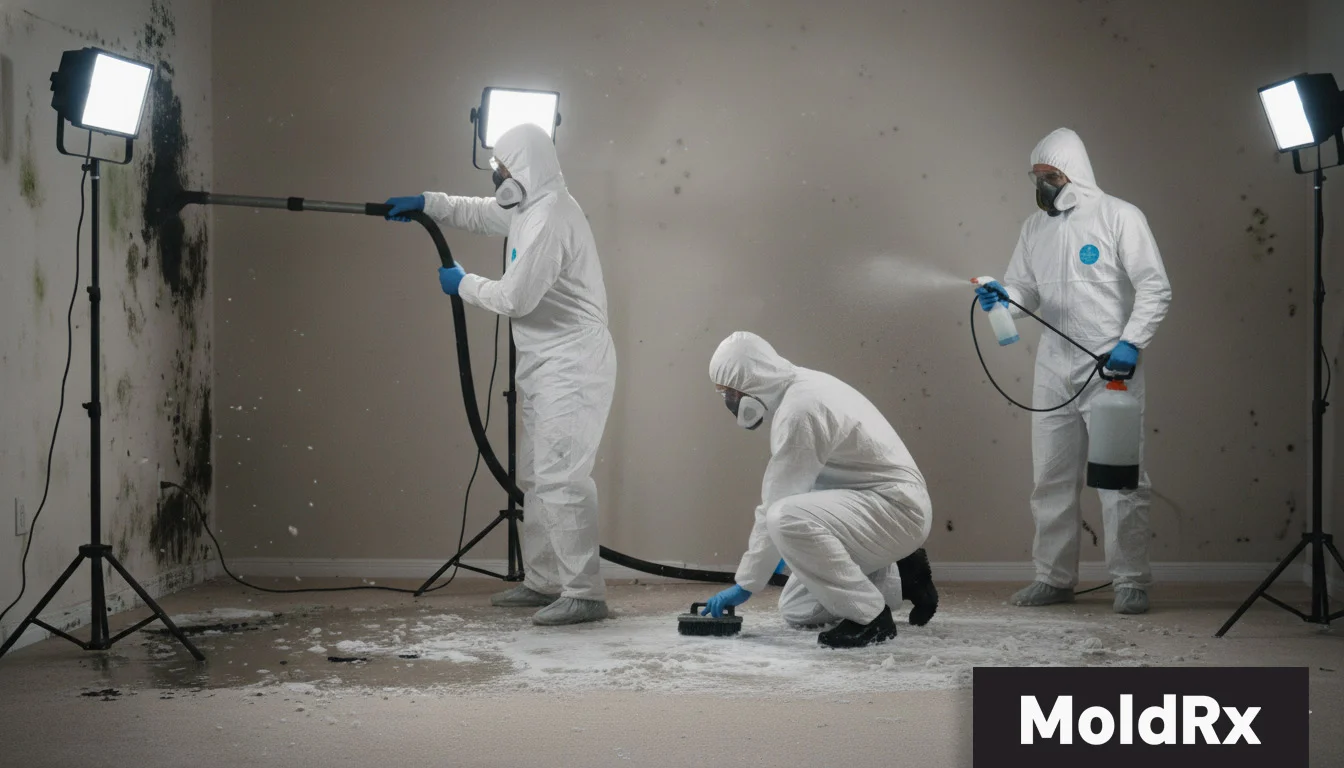
- Containment — When mold is already present or contaminated water has spread to multiple areas, containment barriers and negative air pressure isolate affected zones from clean spaces
Phase 2: Full Restoration
Once the emergency is controlled, the focus shifts to returning your property to pre-loss condition:
- Material removal — Saturated drywall, insulation, carpet padding, and other porous materials that cannot be dried within the safe window are removed and properly disposed of
- Mold prevention and remediation — Antimicrobial treatment of structural materials. If mold growth has already begun, full mold remediation protocols are implemented including HEPA filtration and clearance testing
- Moisture verification — Ongoing monitoring with commercial moisture meters and thermal imaging to confirm all materials have reached dry standard before any reconstruction begins
- Documentation — Moisture readings, drying logs, before/during/after photos, and clearance reports for your records and insurance
Common Emergency Scenarios
Burst Pipes and Plumbing Failures
A broken supply line can release hundreds of gallons per hour into your home. By the time you hear it, water may have already spread through wall cavities, under flooring, and into adjacent rooms. The damage is rarely limited to where you see the water — it follows gravity, wicks through drywall, and pools in the lowest points of the structure. Immediate extraction and structural drying are the difference between replacing a section of drywall and gutting an entire room. Learn more about hidden water leaks and how to spot them.
Sewage Backups
Sewage is Category 3 water — the most hazardous classification. It contains bacteria, viruses, parasites, and chemical contaminants that make any material it contacts a biohazard. Porous materials (carpet, padding, drywall below the flood line, insulation) cannot be salvaged — they must be removed and disposed of following biohazard protocols. The affected area requires antimicrobial treatment and thorough structural drying. This is not a situation where you can wait a day or two. Exposure to sewage-contaminated materials is a real health risk.
Storm Damage and Flooding
Roof breaches, foundation intrusion, and flash flooding introduce large volumes of water across wide areas — often multiple rooms or entire floors. Storm damage frequently compounds the problem because the source cannot be stopped until the storm passes or emergency tarping is in place. Extraction begins while containment of the entry point is coordinated simultaneously. Extended drying timelines are common because of the volume and spread of water involved.
Appliance Failures
Water heater ruptures, washing machine supply line failures, dishwasher leaks, and refrigerator line breaks are among the most common causes of residential water damage. These events often happen when you are away from home — at work, on vacation, overnight — which means hours of uncontrolled water flow before discovery. The longer the water runs, the further it spreads into materials you cannot see from the surface.
Fire Sprinkler Activations
Sprinkler systems discharge large volumes of water very quickly. A single sprinkler head can release 15 to 25 gallons per minute. Even a brief activation can saturate ceilings, walls, flooring, and everything in between. The water damage from a sprinkler activation often exceeds the fire damage that triggered it. Rapid extraction is critical because the water volume overwhelms materials fast.
What To Do Right Now
If you are dealing with an active water emergency, these steps can reduce damage while you wait for professional help.
Stop the Water (If You Can Do So Safely)
- Burst pipe or plumbing failure — Shut off the main water valve. In most homes, it is near the front of the house at ground level, at the water meter near the street, or in the garage. Turn it clockwise to close.
- Appliance failure — Turn off the appliance and close its dedicated supply valve (usually behind or beneath the unit)
- Sewage backup — Do not try to clear it yourself. Avoid contact with the water. Keep people and pets away from the affected area.
- Roof leak or storm intrusion — Place buckets or containers to catch active drips. Move belongings away from the water path. Do not go on the roof during a storm.
Protect Yourself
- Turn off electricity to any area where water is near outlets, appliances, or electrical panels. If you cannot reach the breaker panel safely without stepping in water, leave the power on and wait for help.
- Do not walk through standing sewage water. It is a biohazard.
- If the water source is unknown and you smell gas, leave the property immediately and call 911.
Reduce Further Damage
- Move furniture, electronics, documents, and valuables away from standing water and off wet carpet or flooring
- Open interior doors to improve air circulation (but keep exterior doors and windows closed during dust storms or high pollen)
- Place aluminum foil or plastic under furniture legs to prevent staining on wet carpet
- Do not use a household vacuum to remove water — they are not built for it and create an electrical hazard
- Do not turn on the HVAC system if you suspect mold is present — it will spread spores to every room connected to the ductwork
Then Call (888) 609-8907
Tell us what happened, what you are seeing right now, and whether anyone has been exposed to sewage or contaminated water. We will assess the urgency, give you honest information about response timing, and coordinate the right professional for your situation.
How MoldRx Responds
1. You Call — and Talk to a Real Person
When you call (888) 609-8907, you are not routed to a call center or an answering service reading a script. You talk to someone who understands water damage, asks the right questions about your specific situation, and gives you honest guidance — including what you can do right now to minimize damage while a response is coordinated.
2. Honest Response Timing
We will tell you the truth about when we can get someone to your property. Emergency response depends on current demand, crew availability, and your location within our service area. We will never promise a response time we cannot deliver. If we cannot respond immediately, we will tell you that — and walk you through interim steps to protect your property until a crew arrives.
3. On-Site Stabilization
The first priority is always stopping the damage from getting worse. Extraction begins immediately. Equipment is deployed based on the specific conditions at your property — the type of water, how far it has spread, what materials are affected, and whether contamination or mold are factors.
4. Clear Communication
Once the situation is stabilized, you will know exactly where things stand: what happened, how far the damage extends, what needs to happen next, and what the realistic timeline looks like. Every question gets answered. No jargon, no upselling, no vague estimates.
5. Coordinated Restoration
If the situation requires mold remediation, mold testing, plumbing repair, roofing work, or other trades, we coordinate those services so you are not left managing multiple contractors on your own during a stressful time. One point of contact. One team that owns the outcome.
6. Documentation for Insurance
Water damage from sudden, accidental events — burst pipes, appliance failures, storm breaches — is typically covered under standard homeowner's policies. We provide thorough documentation from the first phone call through final clearance: moisture readings, drying logs, photos, scope of work, and verification reports. This documentation exists to support your claim, not to create unnecessary work.
Who We Serve
Homeowners
A burst pipe at 2 AM. A flooded garage discovered after vacation. Sewage backing up through bathroom fixtures. These situations are stressful, disorienting, and overwhelming — especially when they happen in your own home. We handle residential emergencies of every scale, from a single-room extraction to a whole-house water event. The protocols are the same regardless of size: fast response, proper technique, clear communication, honest timelines.
Commercial and Industrial Properties
Water emergencies in commercial buildings add layers that residential projects don't have: business interruption costs, tenant displacement, inventory damage, liability exposure, and regulatory requirements. We adjust our response for commercial realities — after-hours and weekend availability, tenant notification coordination, phased work to minimize operational disruption, and the documentation packages commercial property owners and managers need for insurance, compliance, and stakeholder communication.
Property Managers and Landlords
Tenant calls about water damage require fast, professional response — for tenant health, your liability protection, and the property itself. Every hour of delay increases damage, increases cost, and increases your exposure. We provide the response speed and documentation your position demands: inspection reports, drying logs, clearance verification, and complete project records.
Real Estate Professionals
Water damage or mold discovered during a transaction can derail a closing. Whether it is a failed inspection, a disclosed prior event, or damage found during final walkthrough, we provide fast assessment, professional remediation, and clearance documentation that protects the transaction for both parties.
Where We Work
MoldRx provides emergency water damage and mold restoration services throughout Southern California:
- Orange County — Irvine, Anaheim, Santa Ana, Huntington Beach, Costa Mesa, Newport Beach, Fullerton, Orange, Mission Viejo, Lake Forest, and 30+ more cities
- Riverside County — Riverside, Corona, Temecula, Murrieta, Palm Springs, Palm Desert, Hemet, Moreno Valley, and 20+ more cities
- San Bernardino County — San Bernardino, Ontario, Rancho Cucamonga, Fontana, Redlands, Victorville, Upland, and 15+ more cities
Emergency Services FAQs
How fast can you respond to a water emergency?
Response time depends on current demand, crew availability, and your location within our three-county service area. We will give you an honest answer when you call — not an optimistic promise. What we can do immediately, regardless of dispatch timing, is walk you through steps to minimize damage while a crew is on the way. Call (888) 609-8907 and we will tell you exactly where things stand.
My pipe burst overnight. Is it too late to prevent mold?
Not necessarily, but time is critical. Mold typically needs 24 to 48 hours of sustained moisture on porous materials to begin colonizing. If extraction and structural drying begin within that window, the chances of preventing mold growth are significantly better. Even if it has been longer, fast action still limits how far mold spreads and how much material ultimately needs to be removed. Call now — every hour matters. Learn more about how fast mold grows after water damage.
What should I do while waiting for your crew to arrive?
Stop the water source if you can do so safely. Shut off the main water valve for plumbing failures. Turn off electricity to affected areas if water is near outlets or panels. Move valuables off wet floors. Do not use household vacuums on standing water. Do not turn on the HVAC if mold may be present. The detailed steps are listed in the "What To Do Right Now" section above.
Is sewage backup more dangerous than clean water flooding?
Yes. Sewage is classified as Category 3 (black water) — the most hazardous category. It contains bacteria, viruses, parasites, and chemical contaminants. Any porous material that contacts sewage water (carpet, padding, drywall, insulation) must be removed and disposed of properly. The affected area requires antimicrobial treatment, not just drying. Do not attempt to clean sewage damage yourself — avoid contact with the water and call for professional help immediately.
Will my homeowner's insurance cover emergency water damage?
Water damage from sudden, accidental events — burst pipes, appliance failures, storm breaches, sprinkler activations — is typically covered under standard homeowner's policies. Flood damage from rising external water usually requires separate flood insurance. Damage from long-term neglected maintenance (a slow leak you knew about, a roof you never repaired) is generally not covered. We provide thorough documentation from the start — moisture readings, drying logs, photos, scope of work — to support legitimate insurance claims.
How long does the drying process take after water extraction?
Most structural drying takes 3 to 5 days, depending on the volume of water, the materials affected, and ambient conditions. Concrete slabs, hardwood floors, and heavily saturated wall cavities can take longer. We monitor moisture levels daily with commercial meters and do not consider drying complete until all materials reach verified dry standard. Rushing this step leads to mold — we do not cut corners on drying timelines.
Can I stay in my home during emergency restoration?
In many cases, yes — especially once the water is extracted and drying equipment is running. If sewage backup is involved, if mold is present and spreading, or if the water event affected the electrical system or structural integrity, temporary relocation during the most intensive phase may be necessary. We will advise you based on your specific situation and always prioritize your safety over convenience.
Do you handle the mold remediation if mold has already started?
Yes. If mold growth is discovered during extraction or develops during the drying process, we transition directly into full mold remediation protocols — containment, HEPA filtration, material removal, antimicrobial treatment, and clearance testing. Coordinating water restoration and mold remediation through one team avoids the gaps and delays that happen when multiple companies are involved. We also offer standalone mold testing when air quality verification is needed.
What is the difference between emergency services and regular water damage restoration?
Emergency services are the immediate stabilization response — stopping the water, extracting standing water, and deploying drying equipment to prevent further damage. Regular water damage restoration is the scheduled process of repairing and rebuilding after the emergency is controlled. Many situations start as an emergency response and transition into scheduled restoration once the property is stabilized and the full scope of damage is assessed.
What if it is after hours or on a weekend?
Call (888) 609-8907. Water damage does not wait for business hours and neither do we. We will assess your situation, give you honest information about current availability, and help you take the right steps immediately — whether that means dispatching a crew or walking you through damage-minimizing measures until a crew can arrive.
Call Now — Every Hour Matters
Water damage gets worse with every hour that passes. Mold starts growing within 24 to 48 hours. The longer you wait, the more material needs to be removed, the more disruption to your life, and the harder the recovery becomes.
Call (888) 609-8907 right now. You will talk to a real person who will help you assess your situation, walk you through immediate steps, and coordinate the fastest response available. No scripts. No runaround. Just honest help from people who handle emergencies every day.
If you are not sure whether your situation is an emergency, call anyway. We would rather help you determine it's not urgent than have you wait on a situation that is getting worse by the hour.
Water Damage Restoration → · Mold Removal → · Mold Testing → · All Services → · Service Areas → · Contact Us →