Emergency Water Damage Restoration in Fountain Valley, CA — MoldRx
Vetted, IICRC-Certified Water Damage Restoration Specialists Serving Fountain Valley and Central Orange County — 24/7 Emergency Response
Water is in your Fountain Valley home right now. Every minute it sits there, it is destroying more of your property. Drywall is wicking moisture upward. Subfloors are swelling. Mold spores — dormant in every home — are preparing to colonize in as little as 24 hours. You found this page because you need help, and you need it immediately.
MoldRx only sends vetted, IICRC-certified water damage restoration professionals. We do not employ technicians ourselves. We are not a franchise. We are a coordination service built by two people with decades of combined remediation experience who got tired of watching Fountain Valley homeowners get matched with unqualified contractors during the worst moments of their lives. Every specialist we dispatch holds active certifications, carries proper insurance, and follows IICRC S500 standards for water damage restoration and IICRC S520 protocols for mold remediation — because in this city, water damage and mold damage are rarely separate problems.
Do not wait another hour. Request your free estimate now or call (888) 609-8907 for immediate emergency guidance.
Why Fountain Valley Is One of the Highest Water-Damage-Risk Cities in Orange County
Most people who move to Fountain Valley never learn the name Gospel Swamp. They should. Before it was a quiet suburban city of roughly 56,000 residents in the heart of Central Orange County, this land was a vast, waterlogged marshland where the Santa Ana River meandered through natural wetlands, artesian wells bubbled up from underground, and itinerant preachers set up tents on small muddy islands rising above the swamp. The area was known as Gospel Swamp from the 1880s through the early 1900s — and the city that replaced it was literally named Fountain Valley because of the extraordinary volume of underground water pushing toward the surface.
That water table has not gone anywhere.
The same geological conditions that created Gospel Swamp still exist beneath every foundation in this city. Fountain Valley sits atop some of the highest groundwater levels in Orange County. Geologists have warned that a major seismic event in this area could trigger liquefaction — a catastrophic mixing of earth and water that would turn the ground beneath homes into an unstable muddy plain. Even without an earthquake, the persistent high water table creates hydrostatic pressure against slab foundations, drives moisture through concrete, and accelerates corrosion on underground plumbing.
The 1960s-1970s Construction Problem
The overwhelming majority of Fountain Valley homes were built during the 1960s and 1970s suburban development boom. That means most properties are now 50 to 65 years old — and their original plumbing systems are at or well past the end of their expected service life.
Here is what that means for you right now:
- Galvanized steel supply lines from mid-century construction corrode from the inside out, developing pinhole leaks that drip behind walls for weeks or months before anyone notices
- Original copper pipes develop pitting corrosion, especially in areas with aggressive water chemistry, leading to slab leaks that saturate foundations from below
- Cast iron drain lines from the 1960s deteriorate, crack, and allow sewage backups — creating Category 3 (black water) contamination that demands immediate professional intervention per IICRC S500 and EPA guidelines
- Water heaters in garages and utility closets that are 10-15+ years old rupture without warning, releasing 40-80 gallons of water in minutes
- Polybutylene supply lines installed in some late-1970s homes are notorious for sudden catastrophic failure
These are not hypothetical risks. These are the actual calls we coordinate in Fountain Valley every single week.
Climate and Geography Working Against You
Fountain Valley's semi-arid Mediterranean climate delivers approximately 12-14 inches of annual rainfall, almost entirely concentrated between November and March. When winter storms hit after months of bone-dry weather, hardened soil cannot absorb the water. The city's flat topography — much of Fountain Valley sits at or near sea level — means stormwater pools rather than drains. Some areas remain within FEMA Special Flood Hazard Areas, particularly near drainage channels and low-lying zones closer to the Santa Ana River.
Coastal humidity from nearby Huntington Beach pushes average moisture levels to 65-70%, with marine layer intrusion driving them even higher during late spring. In a home already compromised by a plumbing failure, this ambient humidity dramatically accelerates secondary damage. Structural materials that might dry naturally in a desert community will breed mold in Fountain Valley within 24-48 hours without professional intervention.
This is why speed matters more here than almost anywhere else in Southern California.
Emergency Water Damage Categories and Classes: What You Are Dealing With
Understanding the severity of your situation is the first step toward protecting your family and your property. The IICRC S500 Standard — the nationally recognized reference guide for professional water damage restoration — classifies every water intrusion event by two metrics: the contamination level of the water and the complexity of the drying challenge. Our vetted specialists assess both immediately upon arrival.
Water Contamination Categories
Category 1 — Clean Water: Originates from a sanitary source with no substantial health risk. Broken supply lines, sink overflows without contaminants, malfunctioning appliance water lines, melting ice, or toilet tank leaks (not bowl). This is the best-case scenario, but Category 1 water degrades to Category 2 or 3 within 24-48 hours if left untreated as it contacts building materials, dust, and bacteria.
Category 2 — Gray Water: Contains significant contamination that can cause illness or discomfort if contacted or consumed. Dishwasher or washing machine discharge, toilet overflows with urine (no feces), sump pump failures, and water that has sat long enough to culture bacteria. Requires enhanced PPE and containment per IICRC S500 protocols.
Category 3 — Black Water: Grossly contaminated water containing pathogenic agents, toxins, or other harmful substances. Sewage backups, rising floodwater, water from the Santa Ana River or storm drains, and any standing water that has remained long enough to support microbial amplification. Category 3 events demand immediate professional response. All affected porous materials — carpet, padding, drywall, insulation — must be removed and disposed of. EPA and Cal/OSHA regulations govern the handling of biohazardous materials, and no homeowner should attempt Category 3 cleanup without certified professionals.
In Fountain Valley's aging housing stock, what begins as a Category 1 supply-line break can escalate to Category 2 or 3 within a single day — especially during humid months when microbial growth accelerates rapidly.
Water Damage Classes
Class 1: Least amount of water absorption and evaporation. A small area is affected, and materials have low porosity. The simplest drying scenario.
Class 2: A significant amount of water has been absorbed into building materials. The entire room has wet carpet and cushion, and moisture has wicked up walls less than 24 inches. Common in Fountain Valley slab-on-grade homes where water spreads laterally beneath flooring.
Class 3: The greatest amount of water absorption. Water may have come from overhead, saturating walls, ceilings, insulation, carpet, cushion, and subfloor. Requires the most aggressive drying configuration.
Class 4: Specialty drying situations involving materials with very low permeance — hardwood floors, plaster walls, concrete, and stone. These materials trap moisture and require extended drying times with specialized equipment. Many Fountain Valley homes built in the 1960s feature original plaster walls and hardwood floors that fall squarely into Class 4 territory, demanding technicians who understand how to dry these materials without causing additional damage.
Our vetted specialists classify your situation accurately on the first visit — because the wrong classification means the wrong equipment, the wrong timeline, and ultimately a failed restoration that leads to hidden mold growth months later.
The MoldRx Emergency Response Process for Fountain Valley
Every water damage event in Fountain Valley follows a protocol adapted from IICRC S500 standards and refined for the specific conditions of this city — the high water table, the aging housing stock, the coastal humidity, and the particular construction methods used in 1960s-1970s tract homes.
Step 1: Emergency Contact and Triage (Immediate)
When you call (888) 609-8907 or submit an emergency estimate request, we begin triage immediately. We need to understand: What is the water source? Is it still flowing? How long has the water been present? What type of flooring is affected? Are there health concerns — elderly residents, children, immunocompromised family members? This information determines which vetted specialist we dispatch and what equipment they bring.
Step 2: Rapid Assessment and Documentation (Within Hours)
Our vetted professionals arrive equipped with professional-grade moisture detection instruments — infrared cameras, penetrating and non-penetrating moisture meters, thermo-hygrometers. In Fountain Valley's older homes, water rarely stays where you can see it. It travels along original plaster walls, migrates beneath slab foundations through cracks invisible to the naked eye, and accumulates in wall cavities behind decades-old insulation. The assessment maps the full extent of the damage — not just the wet spot on your ceiling or the puddle on your kitchen floor.
Everything is photographed and documented from the moment we arrive. Moisture readings are logged. The water category and damage class are formally established. This documentation is built to insurance-adjuster specifications because we know exactly what your carrier needs to process your claim.
Step 3: Water Extraction (Same Day — No Exceptions)
Standing water comes out immediately. Our vetted specialists deploy truck-mounted and portable extraction units capable of removing thousands of gallons per hour. For Fountain Valley properties with slab-on-grade foundations — the dominant construction type in this city — extraction includes pulling water from beneath floating floors, delaminated vinyl, and saturated carpet padding.
In Category 3 scenarios, contaminated materials are removed, bagged, and disposed of in compliance with Cal/OSHA and EPA hazardous material handling requirements. There are no shortcuts with black water. Period.
Step 4: Structural Drying and Dehumidification (Multi-Day)
This is where Fountain Valley's specific conditions demand local expertise. Standard drying protocols developed for arid inland climates do not work here. The ambient humidity, the moisture rising from the high water table, and the dense construction materials in older homes all conspire to extend drying times.
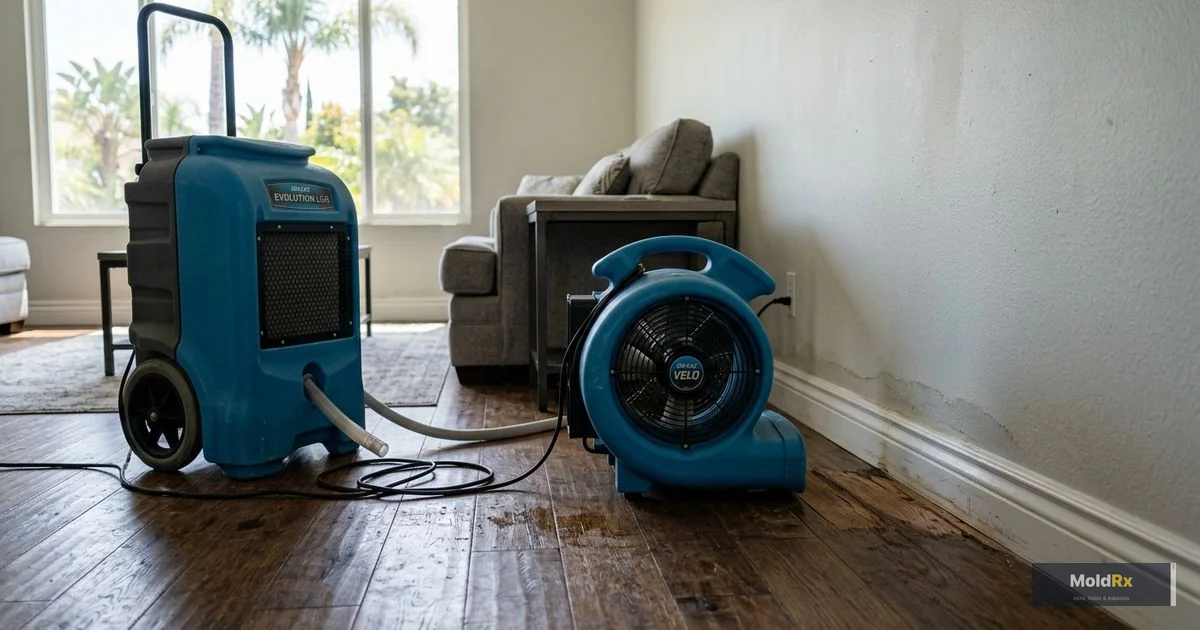
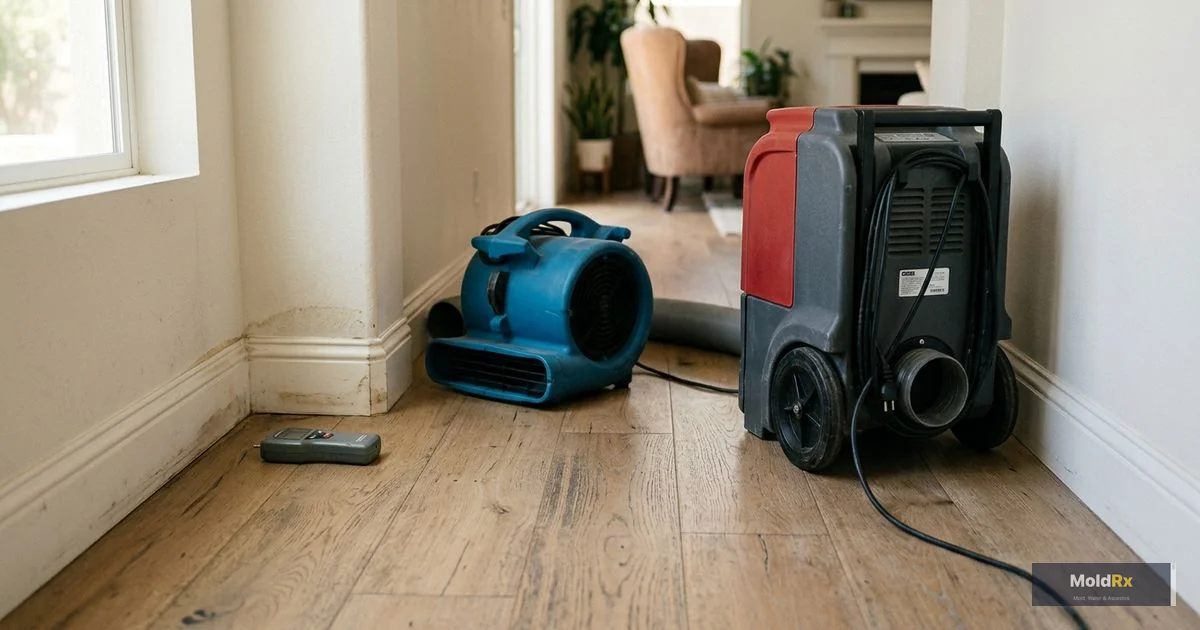
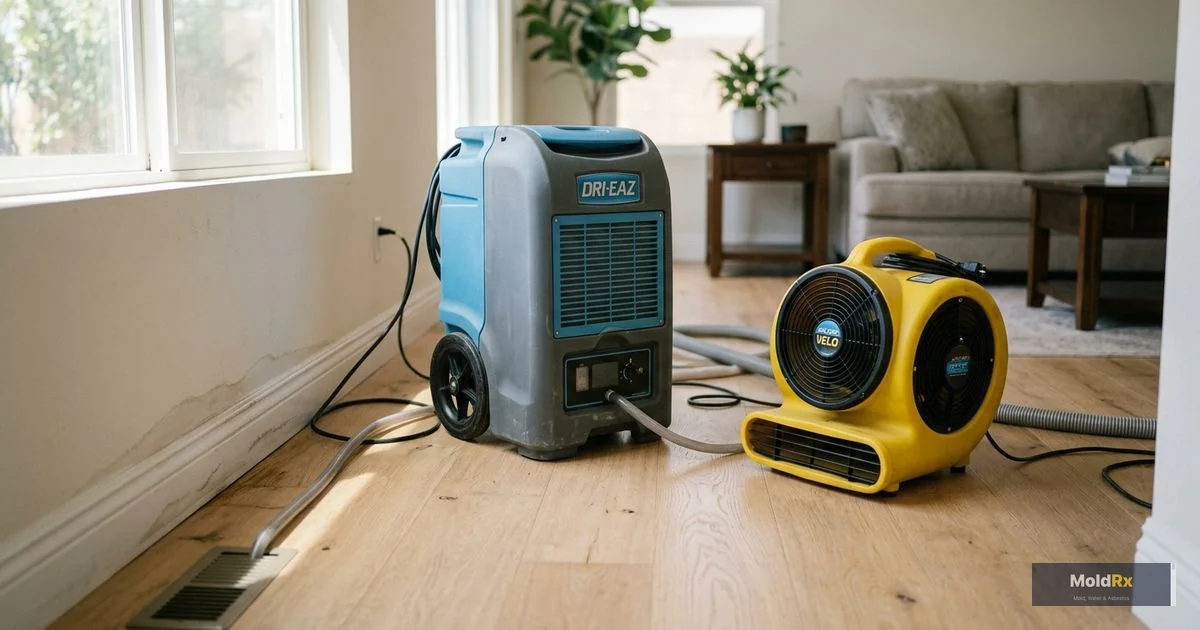
Our vetted specialists deploy commercial-grade low-grain refrigerant (LGR) dehumidifiers and high-velocity air movers in configurations calibrated for coastal Orange County conditions. Moisture levels are monitored at least daily using the same instruments from the initial assessment — because drying is not complete until readings confirm that all affected materials have reached the equilibrium moisture content appropriate for this climate zone, as defined by IICRC S500 standards.
For Class 4 situations involving hardwood floors, plaster, or concrete — common in Fountain Valley — specialty drying systems including desiccant dehumidifiers, heat drying systems, or injectidry panels may be required. Attempting to rush-dry these materials causes warping, cracking, and delamination that creates more damage than the water itself.
Step 5: Antimicrobial Treatment and Mold Prevention
Given Fountain Valley's humidity profile and the IICRC S520 standard for mold remediation, antimicrobial treatment of all affected surfaces is a non-negotiable step — not an optional upsell. Mold begins colonizing within 24-48 hours of a water event. By the time most homeowners notice visible mold, the colony has already established itself behind walls and beneath flooring. Our process treats affected areas proactively so you are not calling back in three weeks with a mold problem.
Step 6: Restoration and Rebuild
Once the structure is confirmed dry and treated, damaged materials are repaired or replaced. Drywall is rehung. Flooring is reinstalled. Paint is matched and applied. The goal is returning your Fountain Valley home to its pre-damage condition — or better, because our vetted specialists will also identify and flag the plumbing vulnerability that caused the damage in the first place. Fixing the symptom without addressing the cause means you will be back in this same situation within months.
Common Water Damage Emergencies in Fountain Valley
Our vetted specialists respond to these scenarios in Fountain Valley neighborhoods every week:
Slab Leaks Beneath 1960s-1970s Foundations Original copper supply lines develop pinhole leaks from decades of corrosion and soil pressure. Water saturates the concrete slab, travels laterally, and surfaces as unexplained damp spots on flooring — sometimes rooms away from the actual leak point. By the time the homeowner notices, thousands of gallons may have already migrated through the foundation.
Water Heater Failures in Garages Fountain Valley garage-mounted water heaters from the 2010s are now reaching end-of-life. When the tank rusts through, 40-80 gallons of water floods the garage and any adjacent living space within minutes. If the water heater is elevated on a platform (as required by code for garage installations), the falling water spreads even faster.
Sewage Backups from Deteriorated Drain Lines Original cast iron sewer laterals from the 1960s crack, collapse, or become root-invaded. The result is raw sewage backing up through floor drains, toilets, and tub drains — a Category 3 emergency requiring immediate professional remediation per EPA and IICRC S500 protocols.
Storm Flooding in Low-Lying Areas Properties near drainage channels, in former FEMA Zone A99 areas, or in neighborhoods closer to the Santa Ana River can experience surface flooding during heavy winter storms — particularly during El Nino years. The flat terrain and high water table mean this water has nowhere to go without mechanical intervention.
Appliance Supply Line Ruptures Dishwashers, refrigerator ice-maker lines, washing machines — the braided stainless steel supply hoses connecting these appliances deteriorate and burst, often while homeowners are at work or asleep. Eight hours of continuous water flow from a ruptured supply line can cause catastrophic damage to an entire floor of a home.
What You Should Do RIGHT NOW
If you are reading this during an active water emergency in your Fountain Valley home, take these steps immediately:
- Shut off the water source if you can identify it and safely reach the valve. The main shutoff for most Fountain Valley homes is near the front of the property at the meter box.
- Turn off electricity to affected areas if water is near outlets, appliances, or electrical panels. Do this at the breaker box only if you can reach it safely without standing in water.
- Do NOT use household fans or your HVAC system to try to dry the area. Residential fans are insufficient for structural drying and your HVAC will spread moisture and potential contaminants throughout the entire home.
- Do NOT pull up carpet or move saturated furniture yourself if you suspect Category 2 or Category 3 water. Contaminated water requires proper PPE and containment procedures.
- Document everything with photos and video before touching anything — your insurance adjuster needs to see the original conditions.
- Call (888) 609-8907 or request an emergency estimate so we can dispatch a vetted, IICRC-certified specialist to your Fountain Valley property immediately.
Time is the single most critical variable in water damage restoration. The difference between a manageable restoration and a full-scale mold remediation project that disrupts your life for weeks is often measured in hours, not days.
Fountain Valley Neighborhoods and Areas We Serve
MoldRx dispatches vetted water damage restoration specialists throughout all of Fountain Valley, including ZIP codes 92708 and 92728. We serve homeowners in established neighborhoods including Westmont, Tamura, Harper, Courreges, Masuda, Moiola, and Plavan, as well as properties surrounding Mile Square Regional Park — the 640-acre centerpiece of the city — and the Fountain Valley Recreation Center area.
We also respond to water damage emergencies in neighboring Central Orange County communities including Huntington Beach to the west, Costa Mesa to the south, Santa Ana to the east, Westminster and Garden Grove to the north, and Midway City — all within our primary service area.
Local Compliance and Contractor Standards
All vetted specialists dispatched by MoldRx to Fountain Valley properties hold valid CSLB (Contractors State License Board) licenses as required by California law. Restoration work is performed in compliance with Cal/OSHA workplace safety standards, EPA environmental regulations for handling contaminated materials, and IICRC S500/S520 industry best practices. We verify credentials before we ever send someone to your home — not after.
Related Services in Fountain Valley
Water damage rarely exists in isolation. In Fountain Valley's humid environment with its high water table and aging homes, a water event that goes unaddressed — even for 48 hours — frequently leads to mold colonization that requires separate remediation.
MoldRx also coordinates vetted specialists for Mold Removal in Fountain Valley, Asbestos Removal in Fountain Valley.
Important note for Fountain Valley homeowners with pre-1980 construction: Many homes built during Fountain Valley's development boom used asbestos-containing materials in floor tiles, pipe insulation, joint compound, and textured ceilings. When water damage requires demolition of these materials, asbestos testing must be performed before any disturbance to comply with EPA NESHAP regulations and Cal/OSHA requirements. Our vetted specialists know to check for this. Not every restoration company will.
Learn more about all remediation services in Fountain Valley
Frequently Asked Questions
How quickly can you get someone to my Fountain Valley home?
This is an emergency service. When you call (888) 609-8907 or submit an estimate request, we begin dispatching immediately. Our vetted specialists are positioned throughout Central Orange County and can typically reach Fountain Valley properties within hours of initial contact. The faster you call, the less damage your home sustains. There is no scenario in which waiting improves the outcome.
What should I tell my insurance company?
Document everything with photos and video before any cleanup begins. Note the time you discovered the water, the apparent source, and the extent of visible damage. File your claim as soon as possible. Our vetted specialists generate comprehensive documentation — moisture mapping, photo evidence, category and class determinations, daily drying logs — specifically formatted for insurance adjuster review. We coordinate directly with your carrier's adjuster when authorized.
Will my homeowner's insurance cover this?
Most standard homeowner's policies cover sudden and accidental water damage — burst pipes, appliance failures, water heater ruptures. Gradual damage from deferred maintenance, ground seepage, and external flooding typically require separate coverage or may be excluded. Sewage backups may require a separate rider. We provide the documentation your insurer needs, and our vetted specialists understand what adjusters are looking for.
How long does water damage restoration take in Fountain Valley?
Timeline depends on the category, class, and extent of damage. Minor Category 1, Class 1-2 events may be dried and restored in 3-5 days. Larger Class 3 scenarios requiring extensive structural drying typically take 1-2 weeks. Category 3 events involving contaminated water and material removal can extend to 2-3 weeks when rebuild is included. Fountain Valley's coastal humidity generally adds 1-2 days to drying timelines compared to inland communities. We give you a realistic timeline after the initial assessment — not an optimistic guess that sets you up for frustration.
Can water-damaged materials be saved?
It depends entirely on how fast you act and what type of water is involved. Hardwood floors, drywall, and carpet can often be saved if professional drying begins within 24-48 hours of a Category 1 event. Materials exposed to Category 2 or Category 3 water — or any porous materials that have supported visible mold growth — generally must be removed and replaced. Our vetted specialists will be honest about what can be saved and what cannot. We do not rip out materials unnecessarily, and we do not leave materials in place that will create problems later.
Is mold guaranteed after water damage?
Not if you act fast enough. Mold requires moisture, a food source (organic building materials), and time — typically 24-48 hours under favorable conditions. Fountain Valley's baseline humidity and warmth make those conditions favorable almost year-round. Professional extraction and structural drying within the first day dramatically reduces mold risk. This is why we treat every water damage call as an emergency — because in this city, the window before mold colonization begins is dangerously narrow.
Do I really need professional equipment? Can I dry this myself?
Household fans and consumer dehumidifiers are not capable of achieving the moisture removal rates required to prevent mold growth and structural damage in Fountain Valley's climate. Professional LGR dehumidifiers remove 15-30+ gallons of water per day from the air. Commercial air movers create the high-velocity airflow needed to evaporate moisture from structural materials. Professional moisture meters confirm when materials have actually reached safe levels — because surfaces that feel dry to the touch often retain dangerous moisture levels deep within the material. For anything beyond a minor spill contained to a single surface, professional equipment is not optional. It is the difference between a restoration and a demolition.
Stop the Damage Now — Call MoldRx
Every hour that passes with standing water or saturated materials in your Fountain Valley home is an hour of compounding destruction. Drywall that could have been dried is now growing mold behind your walls. Subfloor that could have been saved is now warping beyond repair. A restoration that could have taken five days is becoming a three-week project.
MoldRx exists for exactly this moment. We only send vetted, IICRC-certified professionals who follow IICRC S500 and S520 standards, carry proper CSLB licensing, and comply with EPA and Cal/OSHA regulations. We do not upsell. We do not send unqualified labor. We match your specific emergency with the specific specialist equipped to handle it — and we do it fast.
Your Fountain Valley home cannot wait. Request your free emergency estimate now or call (888) 609-8907 for immediate 24/7 guidance. The best time to call was when the water first appeared. The second best time is right now.