Your pipe burst on Tuesday. You cleaned up the standing water, ran some fans, and figured you’d dealt with it. Now it’s Friday, and you’re wondering—did you do enough? Is mold already growing somewhere you can’t see?
The timeline for mold growth after water damage is one of the most important things property owners need to understand. Here’s what actually happens, how fast it happens, and what that means for your response.
The 24-48 Hour Window Is Real
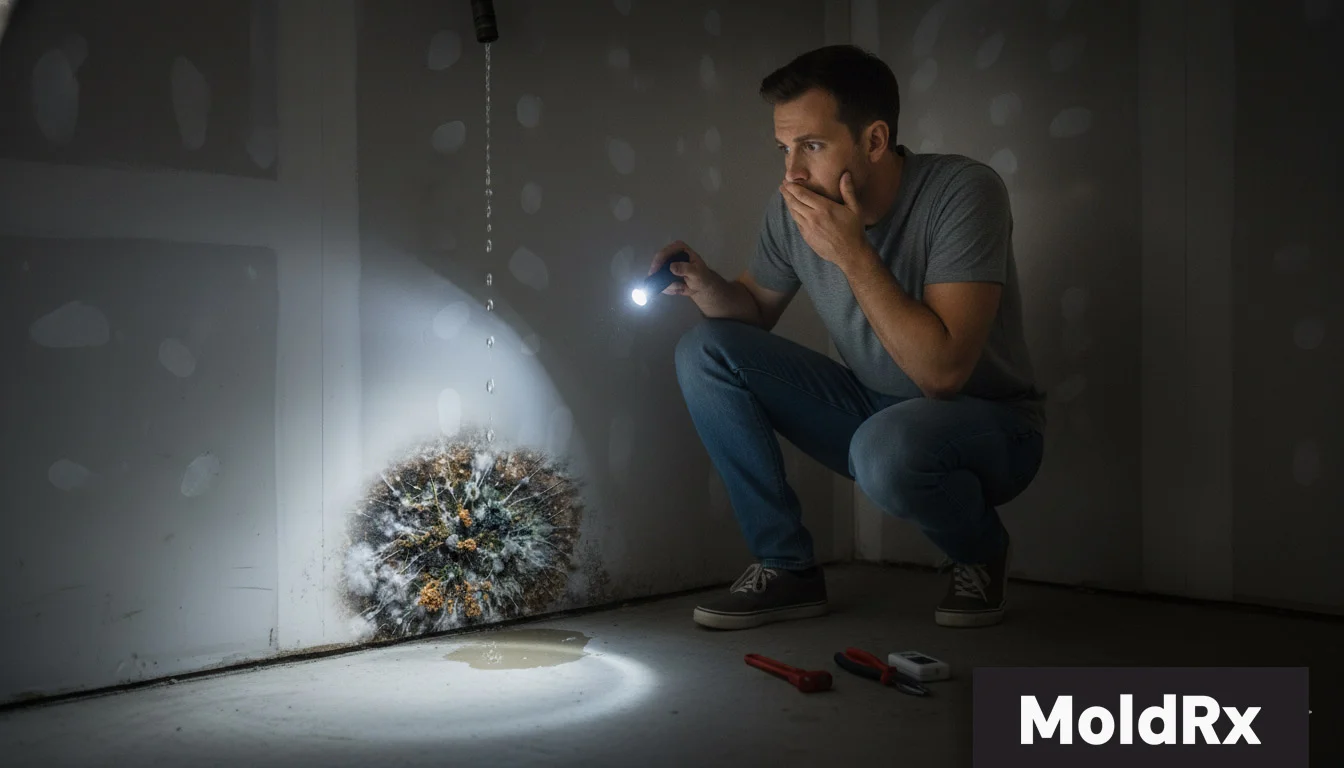
You've probably heard the "24-48 hour" figure repeated in water damage discussions. It's not marketing hype—it's based on how mold biology actually works.
Mold spores are already present in your home. They exist in virtually every indoor environment, floating in the air and resting on surfaces. Under normal conditions, they remain dormant and cause no problems. But when those spores land on a wet surface with organic material to feed on, the growth process begins.
Under optimal conditions—warm temperatures, high humidity, and a food source like drywall paper, wood, or carpet fibers—mold can begin colonizing a surface within 24 to 48 hours of water exposure. This doesn’t mean you’ll see visible mold in two days, but the microscopic colonization process has started.
Once established, mold colonies grow rapidly. What starts as invisible colonization can become visible growth within 3 to 12 days, depending on conditions. And once mold is actively growing, it produces more spores that spread to other damp areas, compounding the problem.
What Affects How Quickly Mold Grows
Not all water damage situations are equal. Several factors influence how quickly mold establishes itself after water intrusion.
Temperature plays a significant role. Mold grows best in temperatures between 77°F and 86°F—typical room temperature in most Southern California homes. Growth slows significantly below 40°F or above 100°F, but most mold species can survive a wide temperature range and resume growth when conditions improve.
Humidity levels matter more than standing water. Mold doesn’t need pools of water—it needs moisture in the material itself. Materials with moisture content above 60% provide ideal conditions for mold growth. This is why proper drying is so important: even after visible water is removed, materials can retain enough moisture to support mold for days or weeks.
The type of material affects colonization speed. Porous materials like drywall, carpet, insulation, and wood absorb water and provide organic nutrients that mold feeds on. These materials can support rapid mold growth. Non-porous materials like metal, glass, and hard plastic don’t absorb water or provide food, so they’re resistant to mold colonization (though mold can grow on dust or organic residue on their surfaces).
Air circulation—or lack of it—influences growth rates. Enclosed spaces with poor ventilation trap moisture and create stagnant conditions that favor mold. Wall cavities, spaces under flooring, and areas behind cabinets are particularly vulnerable because moisture can persist long after exposed surfaces appear dry.
The Hidden Growth Problem
Here's what makes water damage particularly dangerous: mold often grows first in places you can't see. Learn how to spot hidden water leaks before they cause damage.
When water soaks into a wall, it saturates the drywall, insulation, and potentially the framing behind it. The surface of the wall may dry within a day or two—but inside the wall cavity, moisture can persist for weeks. That enclosed, dark, humid space is an ideal mold incubator.
The same principle applies to flooring. Water that seeps under hardwood or laminate flooring, or soaks into carpet padding, creates perfect conditions for mold growth beneath the visible surface. You might walk on floors that feel dry while mold colonies establish themselves underneath.
This is why professional water damage restoration emphasizes thorough drying—not just of visible surfaces, but of wall cavities, subfloors, and other hidden spaces. Moisture meters and thermal imaging help identify trapped moisture that household methods would miss.
What Happens at Each Stage
Understanding the timeline helps you recognize when you’re dealing with a manageable situation versus a potential mold problem.
0-24 hours: Materials absorb water. Spores that land on wet surfaces begin the germination process. No visible mold yet, and proper drying during this window can prevent growth entirely.
24-48 hours: Mold colonization begins on surfaces that remain wet. Microscopic growth is occurring even though nothing is visible. This is the critical intervention window—thorough drying started now can still prevent a mold problem.
3-12 days: Visible mold growth appears on surfaces that remained wet. You may notice discoloration, fuzzy patches, or musty odors. Once you can see mold, remediation rather than just drying is typically needed.
1-3 weeks: Established mold colonies produce spores that spread to other areas. What started as a single affected area may now involve multiple locations. Secondary growth in hidden spaces is likely.
Beyond 3 weeks: Extensive colonization. Mold has likely spread through wall cavities, ductwork, and other connected spaces. Professional assessment and remediation become increasingly necessary.
Why Fast Action Matters So Much
The financial difference between fast and slow response to water damage is dramatic.
Water damage addressed within the first 24-48 hours—with proper extraction, drying equipment, and moisture monitoring—often remains a water damage problem. Professional water damage restoration prevents mold growth. The cost involves drying, maybe some material replacement, and returning things to normal.
Water damage that isn't properly addressed within that window frequently becomes a mold problem. Now you're dealing with water damage restoration plus mold remediation: containment, removal of contaminated materials, HEPA filtration, antimicrobial treatment, and clearance testing. A $2,000 water damage job can easily become a $10,000-15,000 mold remediation project when response is delayed or inadequate.
Beyond cost, there are health considerations. Mold exposure can trigger respiratory symptoms, allergic reactions, and aggravate asthma—particularly in children, elderly individuals, and those with compromised immune systems. The longer mold grows, the more spores circulate through your home.
What to Do Right Now
If you’re dealing with water damage, here’s how to act within the critical window:
Stop the water source if it’s still active. Shut off supply lines, address the leak, or take whatever steps are needed to prevent additional water intrusion.
Remove standing water as quickly as possible using wet/dry vacuums, mops, and towels. The faster you get bulk water out, the less it can soak into materials.
Increase air circulation immediately. Open windows, run fans, and if you have a dehumidifier, put it to work. Moving air helps surface drying, though it won’t address moisture trapped in wall cavities or under flooring.
Evaluate whether you need professional help. Small incidents may be manageable, but learn more about Can I remove Water Damage myself? before deciding. But if water has soaked into walls, affected multiple rooms, been present for more than 24 hours, or involves contaminated water—professional water damage restoration gives you the best chance of preventing mold growth.
If you're uncertain whether your situation is under control, professional assessment or mold testing can tell you whether materials have dried adequately or whether hidden moisture remains.
Questions About Water Damage or Mold?
MoldRx coordinates water damage restoration and mold remediation services throughout Orange County, Riverside County, and San Bernardino County. Our vetted specialists can assess your situation, determine whether you're dealing with a drying problem or a mold problem, and recommend the appropriate response.
Time matters with water damage. If you’re unsure whether your cleanup efforts were adequate, or if you’re already seeing signs of mold, contact MoldRx for honest guidance about your next steps.