Keep indoor relative humidity between 30% and 50%. That's the single most important number in mold prevention. Above 60% relative humidity, mold spores — which are always present in indoor air — find enough moisture to germinate and colonize surfaces. Above 70%, growth accelerates dramatically. Within 24 to 48 hours of sustained elevated humidity, mold can establish on drywall, wood, carpet backing, and dozens of other common building materials.
The challenge in Southern California is that humidity doesn't behave the way most people expect. This isn't the Gulf Coast, where humidity is constant. In SoCal, humidity shifts by region, by season, by time of day, and by microclimate — sometimes dramatically within the same city. A home in coastal Orange County faces entirely different humidity patterns than one in the Inland Empire. Controlling humidity here means understanding those patterns and responding to them, not just buying a dehumidifier and hoping for the best.
This guide covers how to measure humidity accurately, what drives humidity in different SoCal regions, whole-house and room-by-room control strategies, seasonal adjustments, and — critically — when humidity control isn't enough and the real problem is water intrusion that needs professional remediation.
How to Measure Indoor Humidity
You can't control what you can't measure. The tool you need is a hygrometer — a device that measures relative humidity. Digital hygrometers are available at any hardware store for under $15 and provide real-time readings accurate to within a few percentage points.
Place hygrometers in the areas most likely to have elevated humidity. One in the main living area gives you a baseline. Beyond that, prioritize bathrooms, the kitchen, the laundry room, any room with poor airflow, and — if accessible — the crawl space. You're looking for consistent readings, not a single snapshot.
Take readings at different times of day. Humidity fluctuates with outdoor conditions, HVAC cycling, and household activity. Morning readings during marine layer season will differ significantly from afternoon readings. Evening readings after showers and cooking will spike above baseline.
What the numbers mean:
- 30% to 50% RH — Ideal range. Mold cannot grow. Comfortable for occupants.
- 50% to 60% RH — Caution zone. Sustained readings above 55% warrant attention.
- Above 60% RH — Mold-favorable conditions. Growth on susceptible surfaces becomes likely over time.
- Above 70% RH — High risk. Mold can colonize surfaces within days. Condensation forms on cool surfaces. Active intervention is necessary.
A hygrometer reading of 65% in a single room after a shower is normal and temporary. That same reading six hours later with no recent water use is a problem that needs investigation.
SoCal Humidity Patterns by Region
Southern California is not one climate. It's a patchwork of microclimates shaped by the Pacific Ocean, mountain ranges, and desert basins.
Coastal Communities
Homes within roughly five miles of the coastline — Dana Point, Laguna Beach, Newport Beach, Huntington Beach, Long Beach, coastal San Diego — face the marine layer. This mass of cool, humid air moves onshore from the Pacific most prominently from late spring through early fall, carrying relative humidity above 80%.
Coastal homes experience sustained elevated outdoor humidity, especially overnight and into the morning. This humid air enters through open windows, door gaps, and building envelope leaks. Homes without air conditioning — common in older coastal communities where mild temperatures made AC seem unnecessary — are especially vulnerable because they rely on open windows for cooling, which invites marine layer moisture inside. Condensation on windows, musty closets, and mold in poorly ventilated bathrooms are hallmark problems.
Inland Valleys and the Inland Empire
Riverside County, San Bernardino County, and the broader Inland Empire are significantly drier on average, but the humidity challenges are different rather than absent. Summer temperatures routinely exceed 100 degrees, driving HVAC systems to run continuously for months. This creates two problems: the HVAC system generates condensation on its evaporator coil (which needs somewhere to drain), and the temperature differential between cooled interior air and superheated attic air creates condensation on ductwork and framing. Ductwork in unconditioned attics — common throughout the Inland Empire — is a frequent mold site.
Desert Communities
Palm Springs, the Coachella Valley, and high desert areas like Victorville have low average humidity, but HVAC systems work harder here than anywhere else in the region. Condensation issues are magnified — evaporator coils run almost continuously for five or more months. Swamp coolers (evaporative coolers), still common in desert communities, add moisture to indoor air by design and can push indoor humidity well above safe thresholds in poorly ventilated homes.
Whole-House Humidity Control Strategies
Individual fixes help, but the greatest impact comes from whole-house strategies that address how air and moisture move through the entire building.
Right-Size Your HVAC System
An oversized air conditioning system is one of the most common and least recognized causes of humidity problems. When an AC unit is too large for the space, it cools quickly and shuts off before completing a full dehumidification cycle. The thermostat is satisfied, but the air is still humid. This "short cycling" is widespread in Southern California homes where contractors installed larger units than the load calculation warranted.
Signs of an oversized system include frequent on/off cycling, rooms that feel cold but clammy, and condensation on supply registers. If you're replacing your system, insist on a Manual J load calculation — the engineering standard for correct sizing that accounts for insulation, window area, orientation, and air sealing quality, not just square footage.
Whole-House Dehumidifiers
For homes where HVAC alone doesn't maintain humidity below 50% — particularly coastal homes, homes with crawl spaces, and older homes with poor air sealing — a whole-house dehumidifier integrated into the HVAC ductwork provides consistent, automated humidity control.
These units pull moisture from the air independently of whether the AC is running, set to a target humidity (typically 45% to 50%). Most residential units handle 70 to 130 pints per day. They're particularly valuable during shoulder seasons (spring and fall) when outdoor humidity is elevated but temperatures don't call for air conditioning — meaning there's no dehumidification happening at all unless you have a dedicated unit.
Portable Dehumidifiers
For targeted control in a single space — a chronically humid bathroom, a laundry room, a converted garage, or a crawl space — portable dehumidifiers are effective and far less expensive than whole-house systems. Choose a unit rated for your square footage, connect a drain hose for continuous operation when possible, and clean the filter monthly. Portable units work well as a first step before deciding whether a whole-house solution is justified.
Energy Recovery Ventilators (ERV)
ERVs bring fresh outdoor air in while exhausting stale indoor air through a heat exchanger that also transfers moisture. In humid conditions, the ERV reduces the moisture load of incoming air before it enters your home. In Southern California, an ERV is generally preferable to its cousin the HRV (heat recovery ventilator) because the climate swings between high and low humidity — the ERV's moisture transfer helps in both directions. ERVs are most beneficial in tightly sealed homes where natural ventilation is limited.
Air Sealing and Insulation
Before adding mechanical equipment, address the building envelope. Humid outdoor air enters through every gap in the home's shell — around windows, doors, electrical outlets on exterior walls, plumbing penetrations, recessed lights, and the attic hatch. Sealing these penetrations reduces the volume of unconditioned air entering the home and the load on your HVAC and dehumidification systems. The work itself — caulk, spray foam, weatherstripping — is relatively inexpensive.
Insulation works in tandem by reducing temperature differentials where condensation forms. Poorly insulated exterior walls become cold relative to indoor air during winter nights, and moisture condenses on those cold surfaces. Adequate insulation keeps surface temperatures above the dew point.
Room-by-Room Humidity Control
Bathrooms
Run the exhaust fan during every shower and for 30 minutes after. The fan must vent to the exterior — not into the attic. If your fan is old, loud, or weak, replace it with a modern unit rated at 1.0 sone or below (nearly silent). Size fans at 1 CFM per square foot of floor area, minimum 50 CFM. Consider a humidity-sensing fan that activates automatically. Squeegee shower walls after use to remove standing water that would otherwise evaporate into room air for hours.
Kitchen
Use an externally vented range hood every time you cook — recirculating hoods do nothing for moisture. Run it 10 to 15 minutes after cooking finishes. Address under-sink leaks immediately — the enclosed, dark cabinet space is ideal for mold growth. When opening the dishwasher after a cycle, run the kitchen exhaust fan to capture the burst of steam.
Laundry Room
Vent the dryer to the exterior. Each dryer load releases approximately a gallon of water in vapor form — if it's not vented outside, it's saturating your indoor air. Don't let wet laundry sit in the washer. For interior laundry rooms without windows or dedicated exhaust fans, a portable dehumidifier addresses the humidity directly.
Crawl Space
Install a vapor barrier — a 6-mil polyethylene sheet covering 100% of the floor, overlapped 12 inches at seams and extending up foundation walls. In coastal areas with high ambient humidity, sealed (encapsulated) crawl spaces with mechanical dehumidification often outperform passive ventilation through open foundation vents. Place a dedicated hygrometer in the crawl space — conditions there can run 20 to 30 percentage points higher than the living area above. Address plumbing leaks immediately, as the enclosed environment prevents drying.
Attic
Verify balanced ventilation — intake through soffit vents, exhaust through ridge or roof vents. Confirm all bathroom and kitchen exhaust fans terminate outside the building, not in the attic. Inspect HVAC ductwork for damaged insulation or disconnections that create condensation where cold conditioned air meets hot attic air.
Seasonal Humidity Adjustments
Spring (March through May): Marine layer season begins. Coastal humidity climbs. Service your HVAC before summer — a clean evaporator coil and clear condensate drain line are your first defense against summer condensation.
Summer (June through September): HVAC runs continuously, generating condensation. Replace air filters every 30 to 60 days. Check the condensate drain monthly. Monsoon moisture surges occasionally push subtropical humidity into the region from the southeast.
Fall (October through November): Santa Ana winds create rapid humidity swings — extremely dry during events, moisture rebounds when marine air returns. Prepare for rainy season: clean gutters, inspect the roof, check exterior caulk, verify drainage.
Winter (December through February): Rainy season. Indoor humidity spikes from cooking, showers, and reduced ventilation. If you notice condensation on windows, indoor humidity is too high relative to the cold glass surface. Increase ventilation or reduce moisture sources.
When Humidity Control Isn't Enough
There's a critical distinction between humidity problems and water intrusion problems. Humidity control addresses moisture in the air. It does not address liquid water entering the building from leaks, flooding, or construction defects.
A dehumidifier cannot fix a leaking pipe. If there's an active plumbing leak behind a wall, a roof leak dripping onto attic sheathing, or a slab leak saturating concrete, no amount of dehumidification will prevent mold growth at the source.
Signs the problem is water intrusion, not ambient humidity:
- Mold growth concentrated in one area rather than diffused across surfaces
- Visible water stains on ceilings, walls, or flooring
- Soft or deteriorating drywall, especially on exterior walls or below bathrooms
- Persistent musty odors that don't respond to improved ventilation
- Mold that returns after cleaning in the same location
If you see these signs, the appropriate response is finding and fixing the water source, then assessing whether affected materials need professional remediation.
Stucco homes deserve special attention. Moisture trapped behind stucco — from failed caulk, missing flashing, or buried weep screeds — doesn't register on indoor hygrometers. The wall cavity can be saturated with mold growing on sheathing while indoor humidity reads normal. If you see signs of moisture on interior walls that share an exterior stucco surface, the problem likely requires professional evaluation with moisture meters or infrared imaging.
Frequently Asked Questions
What humidity level causes mold to grow?
Sustained relative humidity above 60% creates favorable conditions. Above 70%, mold can colonize surfaces within days. The key word is "sustained" — a brief spike after a shower won't cause mold, but consistently elevated humidity will. Keep indoor RH between 30% and 50%.
Do I need a dehumidifier in Southern California?
It depends on location and home type. Coastal homes, homes with crawl spaces, poorly ventilated homes, and homes without AC are most likely to need one. Monitor with a hygrometer for two to four weeks — if readings consistently exceed 55% to 60%, a dehumidifier is worthwhile.
What size dehumidifier do I need?
For a single room, a portable unit rated at 20 to 30 pints per day is typically sufficient. For whole-house dehumidification, units rated at 70 to 130 pints per day integrated into ductwork serve most SoCal homes. An HVAC technician can calculate specific capacity based on volume, climate zone, and moisture loads.
Where should I place a hygrometer?
Start with the main living area for a baseline. Add units in bathrooms, the kitchen, the laundry room, and any space that feels stuffy or smells musty. Crawl space placement is essential if you have one — humidity there often runs 20 to 30 percentage points higher than living spaces.
Is it possible for indoor air to be too dry?
Yes. Below 30% RH, expect dry skin, irritated sinuses, static electricity, and cracking in wood furniture. This is most common in desert and inland communities during winter. A humidifier or ERV can restore balance without pushing into mold-favorable territory.
Can opening windows help control humidity?
It depends on outdoor conditions. If outdoor humidity is lower than indoor — common on dry SoCal afternoons — opening windows helps. If outdoor humidity is higher — typical during coastal marine layer mornings — it makes the problem worse. Check outdoor humidity on a weather app before relying on natural ventilation.
Does running the AC reduce humidity?
Yes, when the system runs long enough. AC removes moisture as a byproduct of cooling. However, an oversized system that short-cycles shuts off before completing the dehumidification process. A properly sized system running at moderate intensity dehumidifies more effectively.
Why do my windows have condensation in winter?
Indoor air holds more moisture than the cold glass surface can support, so moisture condenses on the coldest surface in the room. It indicates indoor humidity is elevated. Solutions include running exhaust fans consistently, reducing moisture sources, upgrading to double-pane or low-e glass, and adding dehumidification.
Will a dehumidifier kill existing mold?
No. A dehumidifier slows or stops new growth but does not kill or remove established mold. Existing mold needs physical removal, and the moisture source that caused it needs elimination. Visible mold beyond a small surface area warrants professional assessment.
How do I know if my mold problem is from humidity or a leak?
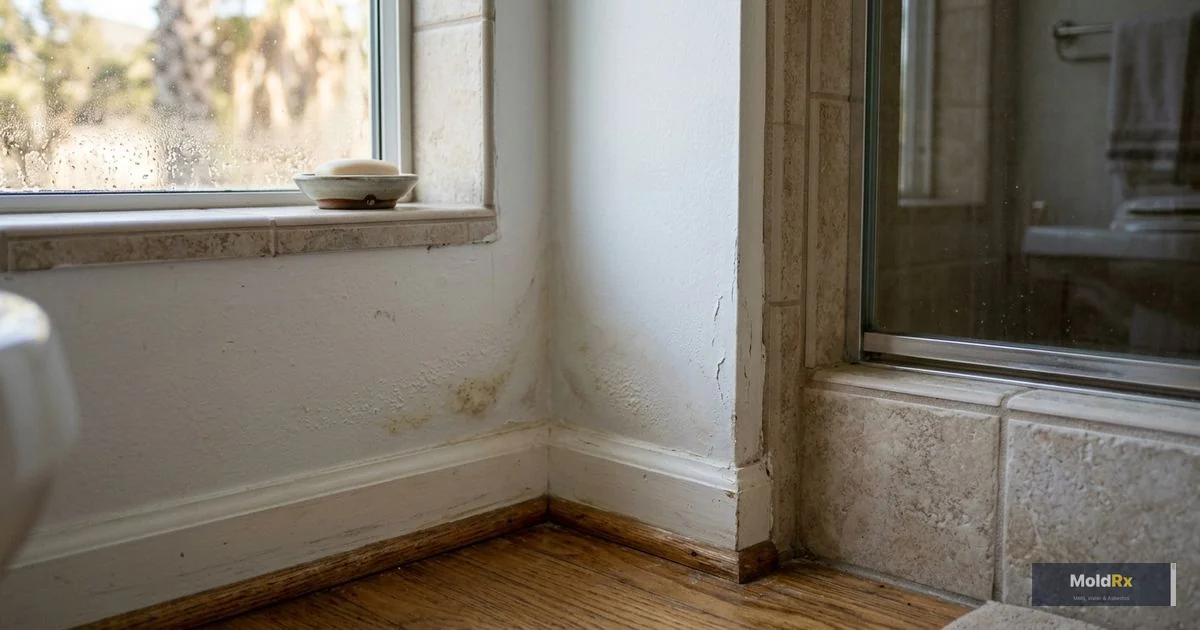
Humidity-driven mold tends to be diffuse — light surface growth across multiple walls, musty closets, mold on shoes in enclosed spaces. Leak-driven mold is concentrated — a specific wall, ceiling area, or corner — and typically more severe. If mold is concentrated in one area, investigate for a hidden leak before assuming humidity is the cause.
When You Need Professional Help
Humidity control is within every homeowner's ability — measuring humidity, running exhaust fans, maintaining your HVAC system, and deploying a dehumidifier when readings run high. These straightforward steps prevent the vast majority of humidity-related mold problems.
But some situations go beyond what humidity control can address. Active water intrusion, mold that keeps returning, mold inside wall cavities or HVAC systems, and mold covering more than 10 square feet all warrant professional evaluation. And if you've completed a mold remediation and want to ensure your humidity strategy is sufficient to prevent recurrence, a professional assessment can identify vulnerabilities before they become problems again.
MoldRx provides mold testing and coordinates mold remediation throughout Orange County, Riverside County, and San Bernardino County. Whether you're dealing with active mold, elevated humidity you can't control, or a home that just doesn't feel right, we'll assess the situation honestly and tell you what we find — even if the answer is that you don't need us.
Request a free estimate or call (888) 609-8907 to discuss your situation with someone who'll give you a straight answer.