Mold Removal in Indio, CA — MoldRx
IICRC-Certified Mold Removal Professionals Serving Indio and the Eastern Coachella Valley
Indio sits 14 feet below sea level in the eastern Coachella Valley — approximately 95,000 residents, nearly 69 percent Hispanic, spread across housing that ranges from 1950s downtown bungalows to rapid new construction in Shadow Hills and Terra Lago. Summer temperatures exceed 110 degrees and annual rainfall barely reaches three inches, so mold seems impossible. It is not. HVAC systems running six months a year produce daily condensation cycles. Agricultural irrigation from the Coachella Canal and date palm groves raises subsurface moisture. Builder-grade materials in boom-era developments trap humidity inside wall cavities. Monsoon storms send flash floods down wash channels that overwhelm drainage infrastructure. When Indio homeowners notice mold, it has usually been growing behind walls for months. MoldRx only sends vetted, IICRC-certified mold removal professionals who follow IICRC S520/R520 remediation standards and EPA guidance (publication 402-K-01-001) — specialists who work the Coachella Valley every week.
Request your free estimate — we'll assess your property and give you straight answers.
Why Mold Grows in Indio Homes
Indio covers more than 27 square miles of Riverside County desert floor at 14 feet below sea level. Average summer highs above 107 degrees and annual rainfall of just 3 to 4 inches make mold seem impossible — yet remediators working in the eastern Coachella Valley encounter active colonies regularly. Four moisture sources explain why.
HVAC Condensation Cycles
Most Indio homes run air conditioning from April through October. AC condensate must drain through lines that frequently clog with desert dust, mineral buildup, and algae. When a line backs up or a drain pan overflows, water enters wall cavities and ceiling spaces. Older homes using evaporative (swamp) coolers compound the problem by pumping gallons of water vapor indoors daily. At night, when temperatures drop 30 to 40 degrees, that moisture condenses on cooler surfaces — steadily wetting drywall, window framing, and wall cavities without leaving obvious stains.
Agricultural Irrigation and the Coachella Canal
Indio was built on date palm agriculture. The Coachella Canal — a 123-mile branch of the All-American Canal — delivers Colorado River water to roughly 78,000 acres of irrigated farmland. Homes near active groves, former agricultural parcels, or canal laterals sit above soil that stays perpetually damp. That moisture migrates upward through slab foundations by capillary action, wetting drywall and subfloor materials at ground level. Once materials stay damp, mold colonizes within 24 to 48 hours — a timeline documented in both the IICRC S520 Standard and EPA publication 402-K-01-001.
Housing Stock Mix — From Mid-Century to Builder-Grade
Downtown neighborhoods date to the 1940s and 1950s, with original plumbing, minimal insulation, and slab foundations lacking modern moisture barriers. The defining period was the 2000s boom: over 36 percent of Indio's housing was built between 2000 and 2009. Many boom-era homes used builder-grade materials — thin drywall, budget HVAC, minimal waterproofing — that degrade in sustained triple-digit heat. Older homes leak from corroded plumbing; newer homes trap moisture behind materials never engineered for long-term desert performance.
Monsoon Flooding and Wash Channels
Between July and September, the North American Monsoon pushes moisture into the Coachella Valley. Indio sits at the bottom of multiple alluvial fan watersheds — flash floods historically inundated the area until the CVWD built the $110 million North Indio Regional Flood Control Project. Despite this infrastructure, monsoon runoff still pools against foundations and enters through window seals and garage thresholds. Tropical Storm Hilary in 2023 demonstrated the valley's ongoing vulnerability. Because post-storm temperatures immediately return to extreme heat, water inside wall cavities creates ideal conditions for rapid mold growth.
Signs You Need Professional Mold Removal
These indicators tell you when professional assessment is warranted.
Visible Growth Beyond a Small Area
EPA publication 402-K-01-001 uses ten square feet as the threshold above which professional remediation is recommended. In Indio homes, visible colonies most commonly appear along slab-to-drywall transitions, inside AC air handler closets and ductwork, behind bathroom tile on deteriorated shower pans, and at the base of exterior walls in newer homes where builder-grade weatherproofing has failed. If growth covers more than a three-by-three-foot patch, or appears in multiple locations, professional containment and removal are appropriate.
Persistent Musty Odor Without Visible Mold
A persistent musty or earthy smell without an obvious source typically means mold is growing in a concealed location — wall cavities near AC air handler closets, inside HVAC supply plenums and ductwork, behind vinyl flooring on slab foundations, or inside garage-adjacent walls in newer subdivisions. If the odor intensifies when the AC cycles on or is strongest at floor level, concealed mold is a strong possibility.
Recurring Mold After Previous Cleanup
If mold returns after you have already cleaned an area, the moisture source has not been corrected. In Indio, this frequently means an AC condensate drain is still backing up, subsurface irrigation moisture is still wicking through the slab, or daily HVAC condensation cycles are still wetting the same surfaces. Recurring mold requires professional moisture mapping and source correction — not another round of surface treatment.
Water Damage History
The IICRC S520 standard and EPA guidance both document that mold colonizes damp materials within 24 to 48 hours of water exposure. Indio properties that have experienced monsoon flooding, a plumbing failure in triple-digit heat, or AC condensate overflow should be evaluated even if surfaces appear dry. In Indio's extreme heat, water inside wall cavities creates an incubator for rapid mold colonization that may not become visible for weeks.
Health Symptoms That Worsen Indoors
The CDC notes that mold exposure can cause nasal stuffiness, throat irritation, coughing, wheezing, and eye irritation in sensitive individuals. If household members experience symptoms that improve when they leave the home and return when they come back, indoor mold is a reasonable possibility — particularly in Indio homes where hidden HVAC condensation and slab moisture sustain colonies that produce spores continuously.
Health Risks of Mold Exposure
Mold produces allergens, irritants, and in some species mycotoxins. The EPA, CDC, and WHO Guidelines for Indoor Air Quality: Dampness and Mould all document that prolonged exposure is associated with respiratory symptoms, allergic reactions, and asthma aggravation. The concern arises when indoor colonies exceed normal outdoor baselines — which happens when mold establishes behind walls, inside ductwork, or beneath flooring.
Populations at Higher Risk
Indio's demographics make several vulnerable groups particularly relevant:
- Children — Indio has a younger population than the state average, with many multigenerational households. The WHO identifies children as a priority population in its dampness and mold guidelines.
- Adults with asthma or allergies — The CDC reports that mold exposure can trigger asthma attacks. Coachella Valley air quality, compounded by agricultural dust, already stresses respiratory systems.
- Elderly residents — Heritage Palms, Sun City Shadow Hills, and Indian Palms house significant 55-plus populations. Age-related immune and respiratory changes increase mold sensitivity.
- Immunocompromised individuals — Chemotherapy patients, transplant recipients, and those with chronic immune conditions face elevated risk, particularly from Aspergillus.
- Agricultural workers — Date palm industry workers already experience elevated respiratory exposure, making indoor mold an additive concern.
The goal of professional remediation is to return indoor fungal ecology to normal background levels — what the IICRC S520 standard defines as Condition 1.
When DIY Mold Removal Isn't Enough
The EPA's guidance on mold cleanup allows homeowners to address small areas of mold growth using basic precautions. However, several situations exceed what DIY methods can safely or effectively handle:
- The affected area exceeds ten square feet — EPA publication 402-K-01-001 identifies this as the threshold for professional remediation based on increased spore dispersal risk.
- Mold is inside HVAC ductwork or the air handler — The National Air Duct Cleaners Association (NADCA) recommends professional cleaning when mold is confirmed inside duct systems. In Indio homes running AC six months a year, ductwork contamination means every room receives spore-laden air.
- Growth has penetrated structural materials — Mold in wall framing, subfloor sheathing, or roof decking requires selective demolition, containment, and professional drying beyond surface cleaning.
- The mold appears to be Stachybotrys (black mold) — IICRC S520 requires careful containment during removal due to mycotoxin production. Species identification requires laboratory analysis.
- The water source is Category 2 or Category 3 — IICRC S500 classifies water from sewage backups or flooding as gray or black water. Mold from these sources — including monsoon floodwater with agricultural runoff — involves additional biohazard protocols.
- Documentation is needed for insurance or real estate — DIY cleanup does not produce the reports and clearance testing that insurance carriers and buyers require.
If any of these conditions apply, professional assessment is the practical next step. Request a free estimate — we will tell you what you actually need.
How We Remove Mold in Indio Properties
Every project follows the IICRC S520/R520 standard and Cal/OSHA Title 8 regulations. The work is methodical, documented, and designed to eliminate mold at the source.
1. Inspection and Moisture Mapping
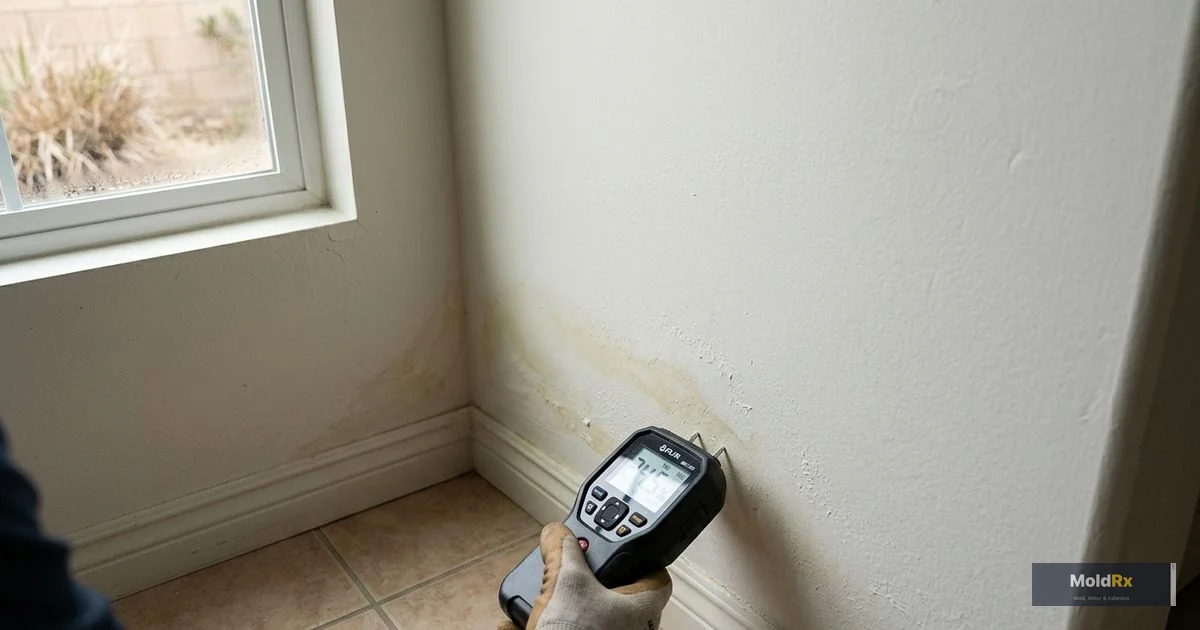
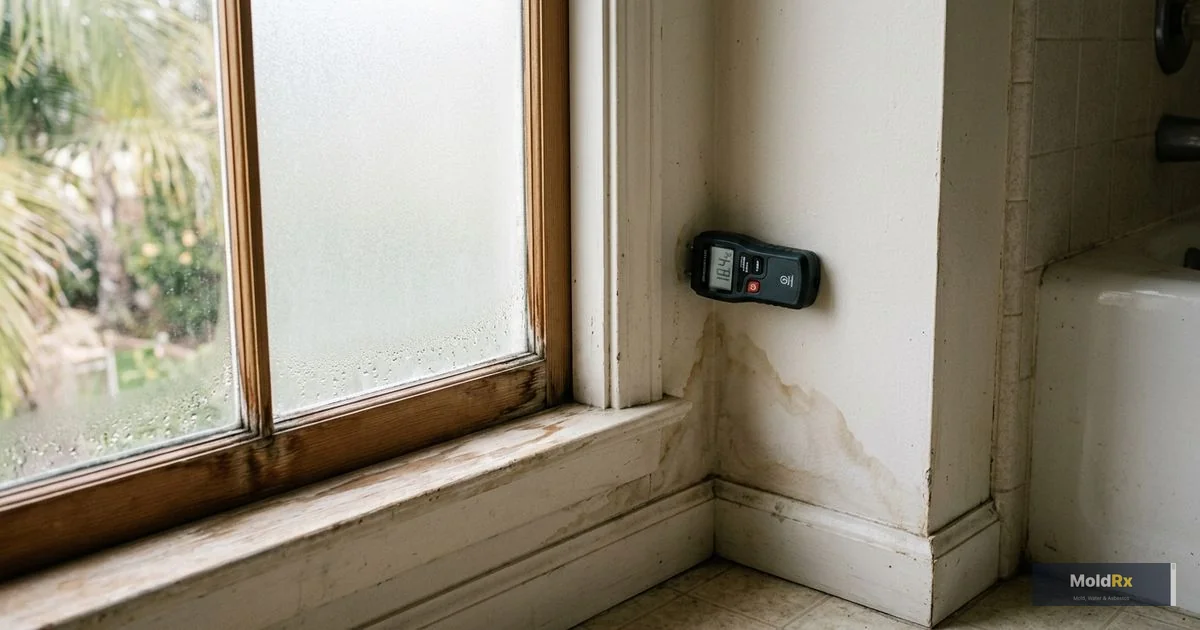
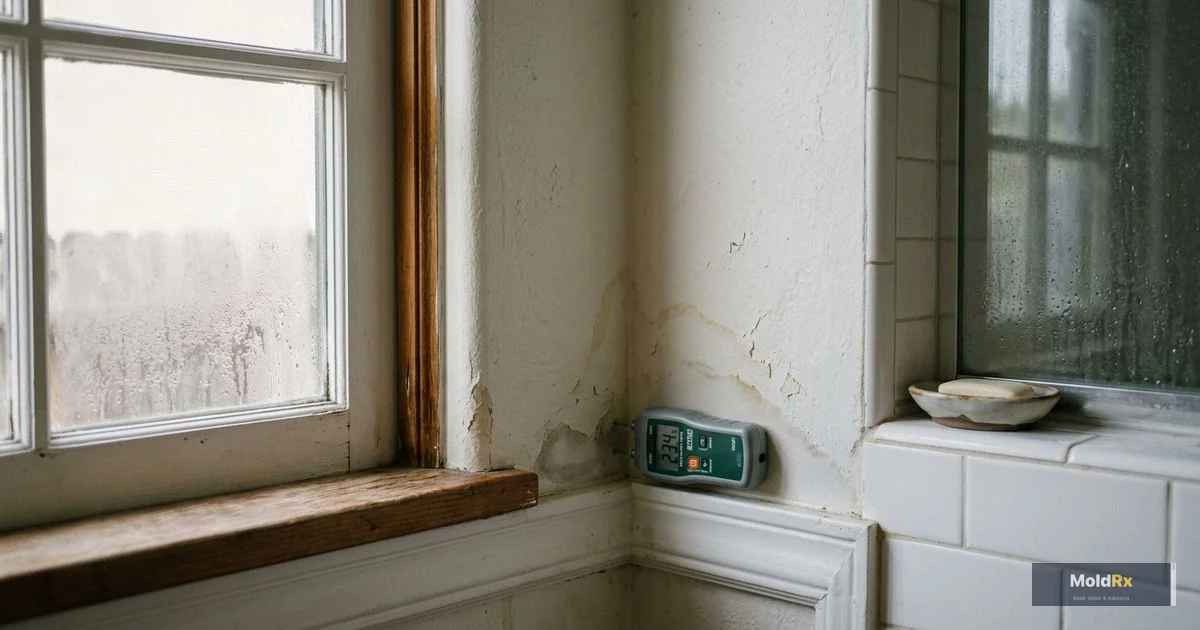
Professionals inspect using infrared thermal imaging and calibrated moisture meters to locate all affected areas. In Indio, this means scanning AC air handler closets and condensate paths, checking slab edges for capillary moisture from irrigation, and inspecting ductwork and builder-grade weatherproofing. The assessment follows EPA 402-K-01-001 protocols, producing a moisture map and scope of work before any material is disturbed.
2. Containment
Affected areas are isolated using polyethylene sheeting and negative air pressure machines with HEPA filtration. Protocols follow IICRC S520 Condition 2 and Condition 3 classifications. The CDC and EPA advise keeping vulnerable occupants away from active remediation, and the WHO Guidelines for Indoor Air Quality: Dampness and Mould document elevated risks for children — especially relevant in Indio's multigenerational households. Containment remains until clearance verification.
3. Removal and Treatment
Mold-colonized porous materials are removed, double-bagged, and disposed of per IICRC S520 protocols and Cal/OSHA Title 8 section 5155 standards. Salvageable surfaces are HEPA-vacuumed and treated with EPA-registered antimicrobial agents. In Indio, technicians frequently address mold along slab-to-drywall transitions, inside AC air handler closets, behind builder-grade shower surrounds, and along exterior walls where monsoon runoff has penetrated.
4. Moisture Correction
Mold removal without moisture correction is temporary. In Indio, correction targets the specific pathway: repairing AC condensate drains, installing slab vapor barriers, replacing failed plumbing, improving foundation weatherproofing against monsoon runoff, sealing ductwork joints, and regrading exterior soil to direct stormwater away from the structure.
5. Post-Remediation Verification
Verification confirms the property meets IICRC S520 Condition 1 — normal fungal ecology. The homeowner receives complete documentation: photographs, moisture readings, scope of work, clearance test results, and moisture correction summary for insurance, real estate, and property records.
Mold Removal vs. Mold Remediation: What's the Difference?
The terms describe different scopes of work. Mold removal is the physical elimination of colonized materials — cutting out drywall, disposing of contaminated insulation, cleaning surfaces. Mold remediation is the full IICRC S520 process: assessment, containment, removal, moisture source correction, structural drying, and post-remediation verification to confirm Condition 1 — normal fungal ecology.
Removal without remediation is incomplete. In Indio, where moisture sources like HVAC condensation, agricultural irrigation, and monsoon flooding are persistent conditions, moisture correction is the difference between a permanent fix and a recurring problem. MoldRx coordinates full remediation on every project — the complete IICRC S520 protocol from assessment through Condition 1 clearance.
Preventing Mold After Remediation
Successful remediation eliminates the existing colony, but Indio's moisture sources are persistent. These prevention steps are tailored to the eastern Coachella Valley.
Maintain Your HVAC System
Flush your AC condensate drain at the start and middle of each cooling season. Replace air filters monthly — desert dust clogs filters rapidly, increasing coil condensation. Have ductwork seals, drain pan, and coil checked annually. Homes with evaporative coolers should drain the reservoir monthly, replace pads regularly, and winterize completely at end of season.
Control Indoor Humidity
The EPA recommends 30 to 50 percent indoor humidity. Indio's outdoor humidity averages 27 percent in summer, but indoor levels spike when AC condensation accumulates, during monsoon surges, and where slab moisture adds floor-level humidity. A digital hygrometer gives real-time readings. If humidity consistently exceeds 50 percent, check condensate drainage and increase exhaust ventilation.
Manage Irrigation and Drainage
Keep drip irrigation emitters at least three feet from the foundation and check timers seasonally — overwatering raises moisture under slabs. Maintain positive grading so runoff flows away from the structure. Properties near the Coachella Canal or active groves should have slab edges checked annually.
Address Water Intrusion Promptly
Mold colonization begins within 24 to 48 hours. In Indio's heat, wall cavities can reach 130 degrees on summer afternoons, compressing that timeline. Whether the source is monsoon flooding, a plumbing failure, or AC condensate overflow, dry affected materials immediately. Every hour of delay increases colonization scope.
Schedule Periodic Inspections
For homes near agricultural operations, 2000s-era builds with builder-grade materials, and any property that has experienced monsoon intrusion, an annual moisture inspection is practical preventive care. Thermal imaging and moisture meters catch rising slab moisture and wall cavity condensation before mold establishes.
What Sets MoldRx Apart
- Straight talk, not sales talk. We report what the inspection actually finds — including when the problem is smaller than you feared. No inflated scopes, no manufactured urgency.
- Licensed, insured, IICRC-certified. Every professional MoldRx sends to an Indio property holds active credentials verified through the CSLB (Contractors State License Board) and carries full liability and workers' compensation insurance for Riverside County work.
- Full documentation on every job. Inspection reports, scope of work, moisture readings, clearance testing, photo documentation — every project produces a complete written record that stands up for insurance and real estate purposes.
- Family-owned accountability. We only send vetted remediation professionals we stand behind. If something is not right, you call us directly and we make it right.
Get your free estimate — no obligations, no pressure.
Indio Neighborhoods We Serve
MoldRx provides mold removal across every neighborhood in Indio — ZIP codes 92201, 92202, and 92203 — including residential, commercial, and agricultural properties throughout the City of Festivals.
- Old Town / Downtown Indio — The historic core along Miles Avenue, Bliss Avenue, and Fargo Street. Housing dates to the 1940s through 1960s — original plumbing, minimal insulation, slab foundations without modern moisture barriers, and aging swamp coolers make hidden mold from subsurface irrigation moisture and condensation a persistent concern.
- Shadow Hills — Master-planned community in northwest Indio (92203). Mid-2000s construction with builder-grade HVAC, thin drywall, and minimal weatherproofing produces hidden mold from AC condensate leaks — often not found until a decade in. Sun City Shadow Hills (3,400 homes, 55-plus) houses residents with elevated mold-exposure risk.
- Terra Lago — A golf community in north Indio (92201) built during the 2000s boom. Properties sit at the base of alluvial fan terrain, making them vulnerable to monsoon wash runoff that pools against foundations. Rapid-build materials compound the issue — once floodwater enters wall cavities, mold colonizes quickly in sustained heat.
- Heritage Palms — A guard-gated 55-plus community with over 1,000 homes in south Indio (92201). Golf course and landscape irrigation create elevated soil moisture around foundations. Residents are predominantly retirement-age adults whose respiratory health makes prompt remediation especially important.
- Indian Palms Country Club — An established gated community with a 27-hole golf course in central Indio. Homes span several decades, from 1970s-era builds with aging plumbing to later renovations. Irrigated golf course proximity raises subsurface moisture, and older homes with galvanized plumbing are prone to pinhole leaks that feed concealed mold.
- Polo Estates / Empire Polo District — South Indio, adjacent to the Empire Polo Club, active date groves, and irrigation infrastructure. The Coachella Canal and irrigation laterals raise the water table under nearby foundations, creating the highest agricultural moisture exposure in the city.
- North Indio / Avenue 42-44 Corridor — The rapidly developing northern edge where new subdivisions replace former agricultural land. These homes sit on soils irrigated for decades, retaining subsurface moisture that migrates through fresh slabs. The North Indio Flood Control Channel runs through this area.
Nearby Communities We Also Serve
Related Services in Indio
→ All remediation services in Indio
Frequently Asked Questions
Can mold really grow in a desert city like Indio?
Yes. Indio's extreme heat creates a false sense of security, but HVAC condensation, the Coachella Canal and agricultural irrigation, rapid-build 2000s housing, and monsoon flooding introduce more than enough moisture for mold to colonize indoor materials. Remediators working in the Coachella Valley encounter active colonies regularly.
How does HVAC use contribute to mold in Indio homes?
AC systems produce condensation at the evaporator coil every time they run. In Indio, where AC operates April through October, a clogged condensate drain or failing drain pan can leak water into wall cavities for weeks before detection. Older homes with swamp coolers face a different version — evaporative coolers pump gallons of water vapor indoors daily, creating condensation on cooler surfaces at night.
Does Indio's date palm agriculture increase mold risk for nearby homes?
Properties near active groves, retired agricultural parcels, or Coachella Canal laterals often have elevated subsurface moisture from decades of irrigation. That moisture migrates through slab foundations by capillary action, wetting drywall and subfloor materials without visible water intrusion. Musty odors at floor level, baseboard discoloration, or warping vinyl flooring near the slab all warrant a professional inspection.
Do newer Indio homes get mold too?
Frequently. Over 36 percent of Indio's housing was built during the 2000s boom using builder-grade materials designed for speed rather than long-term moisture management. After a decade of triple-digit summers, these materials degrade. AC condensate leaks, failed ductwork seals, and poor weatherproofing are among the most common mold sources in newer subdivisions.
Should I get a mold inspection after monsoon flooding?
If your property has experienced any water intrusion during monsoon season — even minor pooling against the foundation — an inspection is worthwhile. Mold colonizes damp materials within 24 to 48 hours, and triple-digit post-storm temperatures accelerate that timeline. Early detection prevents a contained moisture problem from becoming a full remediation project.
Do I need to leave my home during mold removal?
For most projects with proper containment, occupants can stay in unaffected areas. If contamination is extensive, involves the HVAC system, or if household members include young children or individuals with respiratory conditions, our team may recommend temporary relocation during the most intensive removal phases.
How do I prevent mold from returning after remediation?
Maintain AC condensate drain lines and service HVAC annually. Monitor indoor humidity and keep it between 30 and 50 percent. Keep irrigation emitters at least three feet from foundations. Ensure exhaust fans vent to the exterior. Maintain positive drainage away from the foundation. Properties near agricultural operations should have slab edges checked periodically.
What is the difference between mold removal and mold remediation?
Mold removal is the physical elimination of colonized materials. Mold remediation is the full IICRC S520 protocol: assessment, containment, removal, moisture correction, drying, and verification to achieve Condition 1 — normal fungal ecology. MoldRx coordinates full remediation on every project, because removal without moisture correction leads to recurrence.
Is black mold more dangerous than other types?
Stachybotrys chartarum produces mycotoxins, and the IICRC S520 standard requires specific containment during its removal. However, the CDC notes that mold color alone is not a reliable indicator of species or toxicity. Any colony exceeding the EPA's ten-square-foot threshold warrants professional remediation regardless of color. Laboratory analysis is the only reliable way to identify species.
Does MoldRx provide emergency mold removal in Indio?
Yes. Mold colonization begins within 24 to 48 hours of water exposure, and Indio's heat accelerates that timeline. Monsoon flooding, burst plumbing, AC condensate overflow, and irrigation failures all require rapid response. Call (888) 609-8907 — we coordinate prompt assessment and containment to limit colonization before it spreads.
Get Mold Removal in Indio
MoldRx only sends vetted, IICRC-certified remediation professionals who know Coachella Valley construction and Indio's unique moisture sources.
Call (888) 609-8907 or request your free estimate online — clear answers, honest guidance, work done right.