Water Damage Restoration in Lake Elsinore, CA -- Emergency 24/7 Response
Your Lake Elsinore home is flooding. The clock is ticking. Every minute water sits in your walls, under your floors, and around your foundation, the damage gets worse -- and more expensive. You need vetted water damage restoration professionals who know Lake Elsinore properties and can be there fast.
Water damage does not wait for a convenient time. It strikes at 2 AM when a pipe bursts behind a bathroom wall. It hits during a February storm when runoff from the Elsinore Mountains overwhelms drainage systems and sends water pouring into your garage. It creeps in silently from a failing water heater in a hallway closet, saturating subfloor for hours before anyone notices. And in Lake Elsinore -- where the largest natural freshwater lake in Southern California sits at the center of a natural basin surrounded by mountains -- water damage carries risks that homeowners in other cities simply do not face.
If you are dealing with water damage right now, stop reading and call MoldRx. We coordinate emergency response with vetted restoration professionals who serve Lake Elsinore 24 hours a day, 7 days a week. The sooner extraction begins, the more of your home we can save.
Why Water Damage in Lake Elsinore Is a Critical Emergency
Lake Elsinore is not like other Inland Empire cities when it comes to water damage risk. The geography, the climate, the housing stock, and recent hydrological events all combine to create conditions where water damage escalates faster and causes more destruction than homeowners expect.
The Lake Effect: A City Built Around Water
Lake Elsinore sits in a natural drainage basin fed by the San Jacinto River and surrounded by the Cleveland National Forest and Elsinore Mountains. The lake itself covers approximately 3,000 acres with 14 miles of shoreline. That is not just a scenic backdrop -- it is an active hydrological system that directly impacts thousands of homes.
In February 2024, a series of record-breaking rainstorms pushed the lake to 1,248 feet in elevation -- a 25-year high. The lake rose nearly 8 feet over two years, with 6 to 7 feet of that rise occurring in just six months. Boat launch points were submerged. Public walkways disappeared underwater. Benches and signs vanished beneath the surface. Officials prepared to divert excess water into the Santa Ana River to prevent catastrophic flooding.
When the lake rises, the water table rises with it. That means homes near the shoreline, in low-lying neighborhoods, and anywhere near the San Jacinto River floodplain face elevated risk of groundwater intrusion, foundation moisture, and slab leaks that can go undetected for weeks.
Storm Runoff and Flash Flooding
The potential for flooding in Lake Elsinore is greatest from October through April. Sources of flood water include Rice Canyon, the San Jacinto River, Temescal Wash, and Wasson Canyon Creek. When heavy storms dump 10 or more inches of rain over a short period, these channels overflow. The city's position at the bottom of a natural basin means there is only one direction for all that water to go -- down, and into your home.
Flash flooding is not a theoretical risk here. It is a documented, recurring reality. Lower-lying neighborhoods near the lake and along natural drainage channels are most vulnerable, but steep terrain means runoff can reach homes at higher elevations with surprising speed. Hardened desert soil does not absorb water effectively, so precipitation races across surfaces and pools against foundations, in garages, and in crawl spaces.
Housing Stock: A Tale of Two Eras
Lake Elsinore's approximately 75,000 residents live in homes spanning several distinct construction periods, and each era brings different water damage vulnerabilities.
Older homes (1950s-1970s) near historic downtown and the lakefront often have:
- Galvanized steel pipes that corrode from the inside out, restricting flow and eventually failing
- Original cast iron drain lines prone to cracking and root intrusion
- Aging slab foundations susceptible to shifting in Lake Elsinore's expansive clay soils
- Outdated HVAC systems that create condensation problems
- Inadequate or deteriorated weatherproofing
Newer planned communities (2000s-present) including Canyon Hills, Tuscany Hills, Rosetta Canyon, Summerly, and Terra Lago face different issues:
- Homes built during rapid development periods when construction moved fast and oversight was sometimes thin
- Slab leaks from foundation settling as soils compact over 15-20 years
- Water heaters approaching or exceeding their 10-15 year lifespan
- Supply line failures at fixtures, appliances, and washing machine connections
- Irrigation system malfunctions in landscaped yards, sending water against foundations
Canyon Hills, established in 2001, contains over 3,000 homes. Tuscany Hills includes developments built between 1973 and 2006. Many of these homes are now squarely in the window where plumbing systems begin to fail and water heaters approach end of life -- creating a wave of potential water damage emergencies across the city.
The Mineral Factor
Lake Elsinore's local water has high mineral content that causes limescale buildup inside pipes, faucets, and water heaters. Over time, this mineral accumulation reduces water pressure, stresses plumbing connections, and accelerates wear on water heaters and appliances. A water heater fighting limescale buildup runs hotter, wears out faster, and fails more catastrophically when it finally gives out -- often flooding a hallway, garage, or utility closet with 40 to 80 gallons of water in minutes.
Heat, Mold, and the 24-Hour Clock
Summer temperatures in Lake Elsinore regularly climb into the mid-90s to low 100s. Air conditioning runs constantly, creating condensation issues -- especially in older homes with inadequate insulation or aging HVAC systems. Hidden condensation behind walls, in attics, and around AC units creates moisture problems that go unnoticed until mold is visible.
Here is the critical fact every Lake Elsinore homeowner needs to understand: mold can begin growing within 24 to 48 hours of water exposure. In Lake Elsinore's hot climate, that timeline shrinks. When water damage occurs during summer, the combination of standing water and extreme heat creates an incubator for mold growth. What starts as a water damage problem becomes a mold remediation emergency within a day -- dramatically increasing the scope, timeline, and expense of restoration.
Emergency Water Damage Restoration: What Happens When You Call MoldRx
When water is actively flooding your Lake Elsinore home, you need a clear, proven process executed by professionals who have done this hundreds of times. Here is exactly what happens when you contact MoldRx.
Phase 1: Emergency Response and Assessment
A vetted water damage restoration specialist arrives at your Lake Elsinore property equipped to begin work immediately. The first priority is identifying and stopping the water source if it has not already been controlled. The specialist then conducts a thorough assessment:
- Water source identification -- Is it a burst supply line, a failed water heater, sewage backup, storm flooding, or groundwater intrusion?
- Water category classification -- Clean water (Category 1) from a supply line requires different protocols than gray water (Category 2) from an appliance or black water (Category 3) from sewage or floodwater. This classification determines everything about how the restoration proceeds.
- Damage mapping -- Using moisture meters and thermal imaging, the specialist identifies every area water has reached -- including places you cannot see. Water wicks up drywall at approximately one inch per hour. It seeps under baseboards, migrates through subfloor, and saturates insulation in wall cavities. The visible damage is almost never the full picture.
- Documentation -- Every finding is photographed and recorded. This documentation is critical for insurance claims and provides a baseline for measuring restoration progress.
Phase 2: Water Extraction
Standing water gets removed immediately using commercial-grade pumps and truck-mounted extraction units. For Lake Elsinore homes on slab foundations -- which describes most of the housing stock -- extraction crews pay particular attention to water that has migrated under flooring and along slab edges. Water trapped between flooring materials and concrete slabs causes delamination, warping, and creates ideal conditions for mold growth in spaces that are extremely difficult to dry without professional equipment.
Extraction is not just about pumping out visible water. Crews use weighted extraction tools on carpets and padding, hard-surface extractors on tile and hardwood, and sub-surface extraction techniques to pull water from beneath flooring systems. The goal is removing as much water as physically possible before drying equipment takes over -- because every gallon extracted is a gallon that does not need to be evaporated.
Phase 3: Structural Drying and Dehumidification
This is where most DIY attempts and inexperienced restoration companies fail. Removing standing water is only the beginning. Moisture trapped in walls, subfloor, framing, and insulation must be systematically dried to prevent structural damage and mold growth.
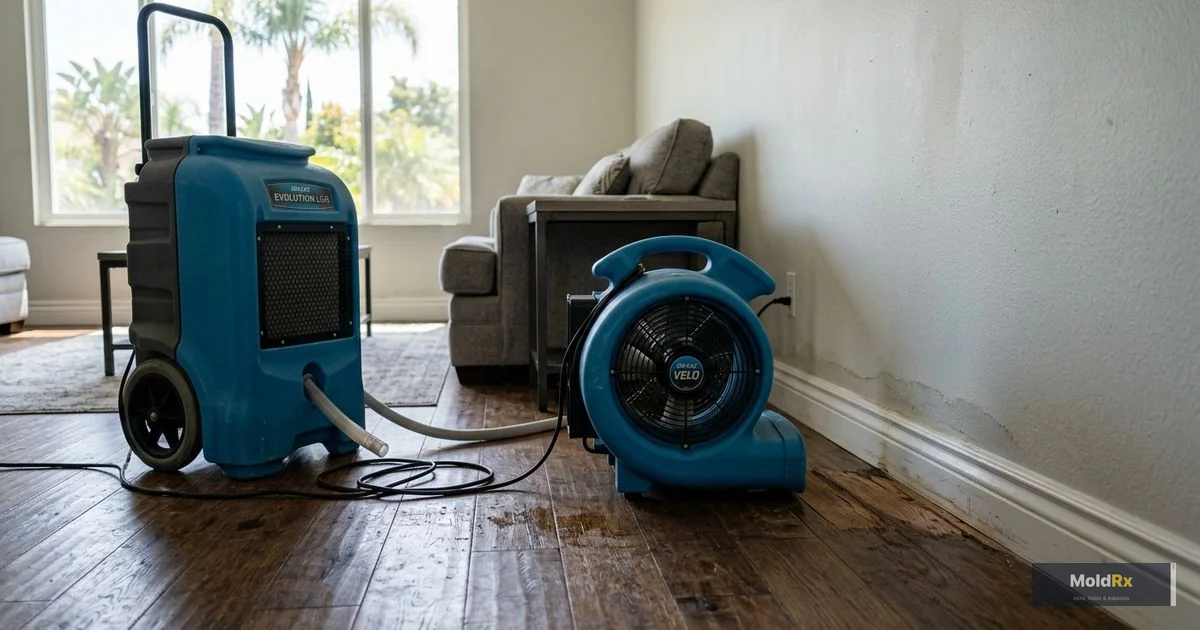
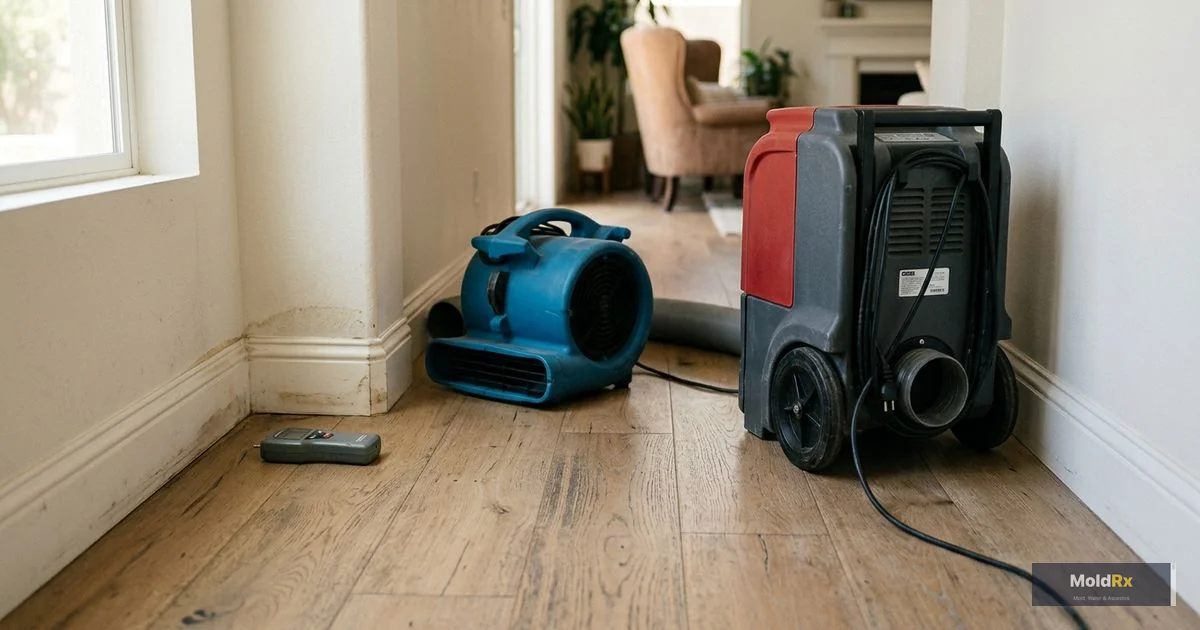
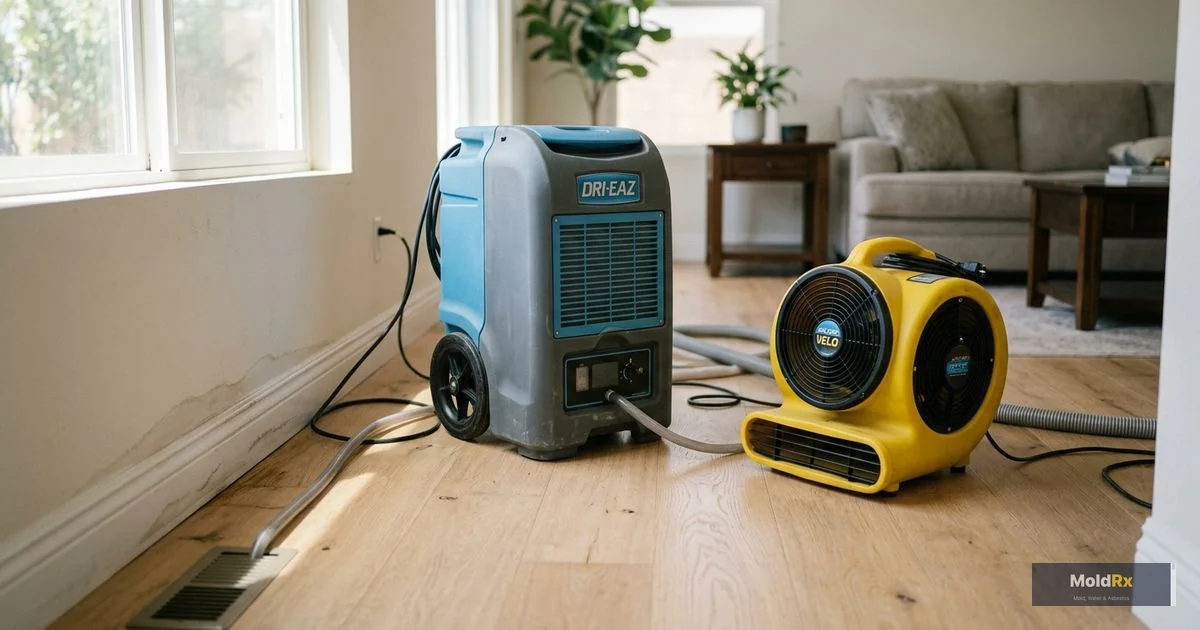
Industrial air movers -- far more powerful than any consumer fan -- create targeted airflow across wet surfaces. Commercial dehumidifiers pull moisture from the air and materials simultaneously. In Lake Elsinore's climate, the drying strategy must account for local conditions: low ambient humidity during summer means aggressive dehumidification can proceed rapidly, while winter restoration during the rainy season requires different calibration to manage higher ambient moisture levels.
Moisture meters monitor progress daily. The drying process is not considered complete when surfaces feel dry to the touch -- that is a dangerous misconception. Drying is complete when moisture readings in all affected materials fall within acceptable ranges as defined by IICRC S500 standards. This typically takes 3 to 5 days for moderate damage and longer for severe events. Cutting this process short is the single most common mistake in water damage restoration, and it leads directly to mold growth, warped materials, and structural compromise.
Phase 4: Cleaning, Sanitization, and Antimicrobial Treatment
Once structural drying is verified complete, affected areas receive thorough cleaning and sanitization. The specific protocols depend on the water category:
- Category 1 (clean water) -- Antimicrobial treatment of affected surfaces to prevent mold colonization
- Category 2 (gray water) -- Thorough cleaning, sanitization, and antimicrobial treatment. Affected porous materials like carpet padding may require removal
- Category 3 (black water) -- Aggressive removal of all contaminated porous materials, thorough sanitization of structural components, and comprehensive antimicrobial treatment. This is non-negotiable -- black water contains pathogens that pose serious health risks
Phase 5: Restoration and Reconstruction
The final phase brings your home back to its pre-damage condition. This may include:
- Drywall replacement in areas where saturation exceeded salvageable levels
- Flooring replacement or refinishing
- Baseboard and trim reinstallation
- Painting and texturing to match existing finishes
- Cabinet and vanity repair or replacement
- Any structural repairs identified during the assessment phase
What to Expect When You Work with MoldRx
-
Immediate Coordination: When you call about an emergency, we coordinate response immediately. Water damage is time-critical, and we treat it that way.
-
Brutal Honesty: We will tell you exactly what you are dealing with. If the damage is less severe than you feared, you will know. If it is worse -- if mold has already started, if structural components are compromised, if contaminated water is involved -- you will know that too. No sugarcoating, no inflating.
-
Clear Communication: You will understand what is happening at every step, what it will involve, and how long it takes. When the process hits an unexpected complication, you will hear about it immediately -- not after the fact.
-
Thorough Documentation: Every phase of the restoration is documented with photos, moisture readings, and detailed reports. When you file an insurance claim, you will have everything you need. When you sell your home in the future, you will have records showing the damage was professionally addressed.
-
No Shortcuts on Drying: The job is not done when surfaces feel dry. It is done when moisture meters confirm it. We do not rush drying to close out a job faster.
Lake Elsinore Neighborhoods and Areas We Serve
Our vetted water damage restoration professionals respond to emergencies throughout all Lake Elsinore neighborhoods, including:
- Canyon Hills -- Over 3,000 homes built starting in 2001, now reaching the age where water heater failures and supply line issues become common
- Tuscany Hills -- Including Watermark, Tesoro, Vellagio, Classics, Arabella, and Volterra developments spanning homes built from 1973 through 2006
- Rosetta Canyon -- Newer planned community with slab foundations vulnerable to settling-related leaks
- Summerly and Terra Lago -- Lakeside and hillside communities with specific runoff and drainage challenges
- Serenity and El Cariso Village -- Diverse housing stock requiring varied restoration approaches
- Historic Downtown and Lakefront neighborhoods -- Older homes with aging plumbing, slab leak risks, and proximity to rising lake levels
We cover ZIP codes 92530, 92531, and 92532 and respond to water damage emergencies in surrounding communities including Wildomar, Canyon Lake, Menifee, and Murrieta.
Related Services in Lake Elsinore
Water damage and mold damage go hand in hand -- especially in Lake Elsinore's climate. In addition to water damage restoration, we also offer Mold Removal in Lake Elsinore, Asbestos Removal in Lake Elsinore, Water Damage Restoration in Lake Elsinore services to Lake Elsinore property owners.
→ Learn more about remediation services in Lake Elsinore
Frequently Asked Questions
How quickly should I address water damage in Lake Elsinore?
Immediately. Not tomorrow. Not this weekend. Now. Mold begins growing within 24 to 48 hours of water exposure, and Lake Elsinore's warm climate accelerates that timeline. Structural materials absorb more water every hour, drywall deteriorates, wood framing begins to swell and warp, and flooring systems delaminate. The difference between acting within the first few hours and waiting even one day can be the difference between drying out existing materials and ripping them all out and replacing them. Our Lake Elsinore team coordinates emergency response around the clock specifically because water damage does not wait for business hours.
How much does water damage restoration cost in Lake Elsinore?
Every water damage situation is different, and honest professionals will not quote a price without seeing the damage first. Costs depend on the water category (clean, gray, or black water), the square footage affected, which materials are involved, whether structural components are compromised, and whether mold growth has begun. A small supply line leak caught within hours is a fundamentally different job than a water heater failure that flooded 500 square feet overnight. Contact us for an honest assessment of your specific situation -- we will tell you exactly what you are dealing with and what it will take to fix it.
Will my homeowner's insurance cover water damage restoration in Lake Elsinore?
Most homeowner's policies cover sudden and accidental water damage -- a burst pipe, an appliance failure, a water heater that ruptures. Gradual damage from neglected maintenance, slow leaks you ignored, or deferred plumbing repairs typically is not covered. Standard policies generally do not cover flood damage from storms or rising water levels -- that requires separate flood insurance, which is particularly relevant for Lake Elsinore properties near the lake and in FEMA-designated flood zones. Our documentation is designed to support insurance claims with the detailed photos, moisture readings, and itemized records that adjusters need to process your claim.
How long does water damage restoration take in Lake Elsinore?
For minor incidents -- a small leak caught quickly, limited affected area -- the process typically takes 3 to 5 days. Moderate water damage involving multiple rooms may take 7 to 10 days. Major events -- extensive flooding, Category 3 water, or situations where mold growth has already begun -- can take 2 weeks or longer. The structural drying phase cannot be rushed without creating worse problems later. We will give you a realistic timeline after our initial assessment and keep you updated throughout the process.
Can water-damaged materials in my Lake Elsinore home be saved?
It depends entirely on how quickly restoration begins and what type of water is involved. Hardwood floors, drywall, and carpet can often be saved if professional drying begins within 24 to 48 hours of clean water exposure. Porous materials exposed to gray or black water generally need replacement regardless of timing. Materials showing any mold growth must be removed. The sooner you act, the more materials can be salvaged -- which directly reduces your restoration costs and timeline.
What makes Lake Elsinore water damage different from other areas?
Lake Elsinore's position in a natural basin, the rising lake levels documented in recent years, the mix of older and newer housing stock, high-mineral local water that stresses plumbing systems, and extreme summer heat that accelerates mold growth all create a uniquely challenging water damage environment. Restoration professionals serving Lake Elsinore must account for factors like elevated water tables near the lake, expansive clay soils that shift and stress foundations, and flash flood risks from surrounding mountain terrain that do not exist in other parts of the Inland Empire.
Your Lake Elsinore Home Is at Risk Right Now -- Do Not Wait
If water is in your home right now, every hour you wait multiplies the damage. Drywall absorbs water and crumbles. Subfloor swells and delaminates. Mold spores -- already present in every home -- find the wet surfaces they need to colonize and begin spreading behind walls where you cannot see them. A problem that costs a few thousand dollars to fix today becomes a $10,000 to $20,000 nightmare by next week.
Lake Elsinore's geography, climate, and housing stock make water damage more dangerous here than in most cities. The rising lake levels, the flash flood risks from mountain runoff, the aging plumbing in older neighborhoods, and the water heaters and supply lines reaching end of life in newer communities -- it all adds up to a city where water damage emergencies happen every day.
MoldRx coordinates vetted water damage restoration professionals who know Lake Elsinore. They know the neighborhoods, the construction types, the soil conditions, and the climate factors that determine how water damage behaves in your specific home. They respond fast, they work thoroughly, and they tell you the truth about what your home needs.
Do not wait. Contact MoldRx now for emergency water damage restoration in Lake Elsinore.