Five household appliances account for the vast majority of appliance-related water damage claims: water heaters, washing machines, dishwashers, refrigerators, and HVAC systems.
The good news is that most appliance water damage is preventable. These machines almost always give warning signs before they fail, and the failures follow predictable patterns. If you know what to look for, you can catch problems early and avoid the kind of damage that turns a maintenance issue into a water damage restoration project.
1. Water Heaters
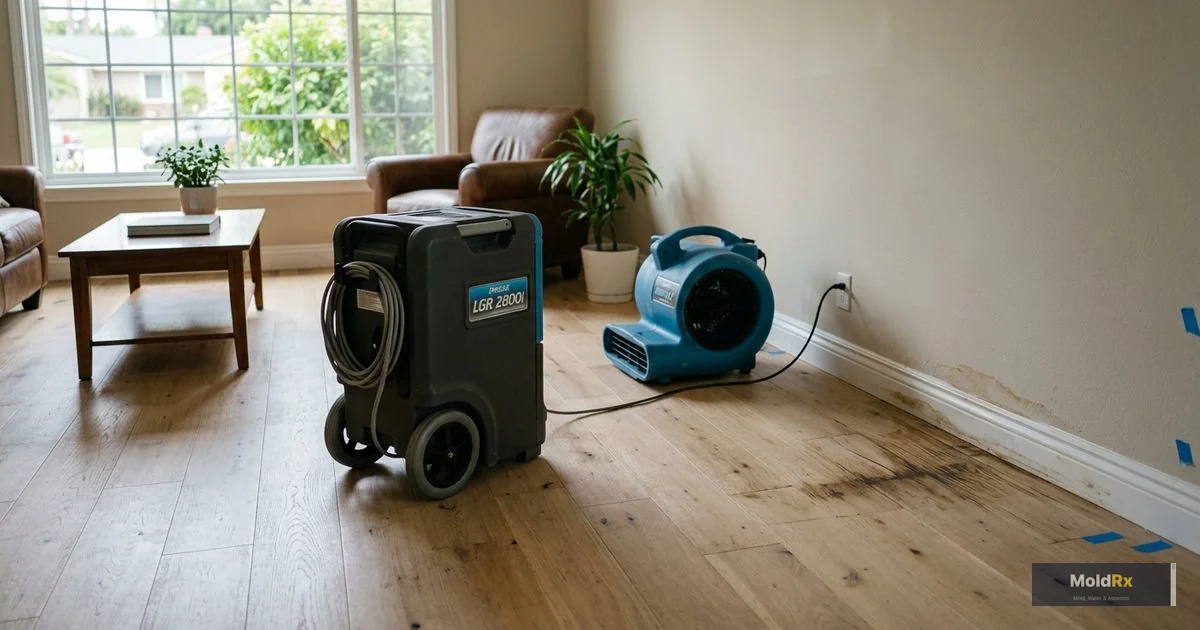
Water heaters are the single most common source of appliance-related water damage. A standard tank holds 40 to 80 gallons, and when one fails, all of that water — plus the continuous flow from the supply line — ends up on your floor and into your building materials.
How Water Heaters Fail
Tank corrosion and rupture. Every tank water heater has a lifespan of roughly 8 to 12 years. Sediment accumulates at the bottom, accelerating corrosion from the inside out. When the tank wall thins enough, it develops pinhole leaks or splits open — releasing dozens of gallons instantly while the supply line keeps feeding water until someone shuts it off.
Pressure relief valve failure. The temperature and pressure (T&P) relief valve can stick open and leak continuously, or fail closed and allow dangerous pressure buildup that accelerates tank failure.
Anode rod depletion. The sacrificial anode rod attracts corrosive minerals so they attack the rod instead of the tank lining. Once depleted — typically after 3 to 5 years — corrosion shifts to the tank itself. Most homeowners never check this rod, which is why tanks corrode prematurely.
Warning Signs
- Rust-colored water from hot water taps
- Pooling water or dampness around the base of the unit
- Rumbling, popping, or banging sounds during heating cycles
- Visible rust on the tank exterior, especially near the bottom
- The T&P valve discharge pipe is dripping
- The unit is more than 10 years old
Prevention
Flush the tank annually. Connect a garden hose to the drain valve and flush out accumulated sediment. This reduces corrosion and extends tank life.
Replace the anode rod every 3-5 years. This is the single most effective thing you can do to prevent tank failure. The rod is inexpensive; tank replacement is not.
Test the T&P relief valve annually. Lift the lever briefly — water should flow from the discharge pipe and stop when released. If it drips continuously or doesn't flow at all, replace the valve.
Install a drip pan and leak sensor. A drip pan catches slow leaks before they reach the floor. A water alarm sensor alerts you the moment moisture appears.
What to Do When It Fails
- Shut off the cold water supply valve directly above the unit. The steps are similar to a burst pipe emergency — stop the water first, then address everything else.
- Shut off the power. For electric heaters, turn off the breaker. For gas, turn the gas valve to "off."
- Do not walk through standing water if it has reached electrical outlets or the breaker panel.
- Start removing water with towels, a mop, or a wet/dry vacuum.
- Call for help. Water heater failures may seem contained in a garage or utility room, but water migrates into adjacent rooms and under walls. The longer it sits, the more damage it causes — and mold can begin growing within 24-48 hours on wet materials.
2. Washing Machines
Washing machines are the second most common source of appliance water damage. Failures are often severe because the machine is frequently on an upper floor — sending water cascading into the rooms below.
How Washing Machines Fail
Supply hose failure. The rubber or braided hoses connecting the machine to the supply valves are under constant pressure, even when the machine is off. Over time, hose material degrades, bulges, and ruptures. A burst supply hose delivers 500 to 650 gallons per hour — an 8-hour workday means over 4,000 gallons flooding your home.
Drain hose disconnection or overflow. The drain hose can slip out of the standpipe, kink, or clog with lint — spilling gray water onto the floor every cycle.
Internal pump and seal failures. The water pump, door seal (on front-loaders), and internal hoses can develop slow leaks that run undetected for weeks, causing chronic moisture damage to subfloors.
Warning Signs
- Bulging, cracking, or blistering on supply hoses
- Moisture or rust around supply valve connections
- Small puddles under or behind the machine after cycles
- Musty smell in the laundry area
- Supply hoses are more than 5 years old
Prevention
Replace rubber supply hoses with braided stainless steel. This is the highest-impact prevention step. Braided stainless steel hoses are inexpensive and resist bursting far better than rubber. Replace every 5 years regardless of appearance.
Turn off supply valves when the machine is not in use. This eliminates constant hose pressure and removes the risk of an unattended burst while you're at work or on vacation.
Never leave the house with the washing machine running. If a failure occurs while you're home, you'll notice within minutes. If it happens while you're gone for 8 hours, the damage can be catastrophic.
Inspect the drain hose regularly. Make sure it's seated in the standpipe, hasn't kinked, and isn't clogged with lint.
What to Do When It Fails
- Shut off both supply valves behind the washing machine immediately.
- Unplug the machine or turn off its breaker.
- Stop the spread. Use towels to dam doorways. If you're on an upper floor, prioritize minimizing water that reaches the floor below.
- Extract water immediately with a wet/dry vacuum.
- Check the ceiling below. Water-saturated drywall is heavy and can collapse.
- Call for professional assessment if water has spread beyond the immediate area — what you can see is usually a fraction of the total damage. See our guide on what to do in the first 24 hours after water damage.
3. Dishwashers
Dishwasher leaks often go undetected because the machine is enclosed in cabinetry. Water escapes slowly, damaging subfloor, cabinet bases, and adjacent flooring from underneath — sometimes for months before visible damage appears.
How Dishwashers Fail
Door seal deterioration. The rubber gasket degrades over time, developing cracks or gaps. Water leaks around the door during wash cycles and pools underneath the unit.
Supply line failure. The supply line connecting the dishwasher to the hot water supply is under constant pressure. A failure releases water continuously until discovered.
Drain line issues. A clogged, cracked, or improperly connected drain hose causes water to back up and leak under the unit, releasing gray water that creates additional concerns for microbial growth.
Float switch malfunction. When this switch fails, the machine overfills and overflows — sometimes during cycles when no one is nearby.
Warning Signs
- Warping or discoloration on the kitchen floor near the dishwasher
- Soft spots in the floor near the unit
- Musty odor under the kitchen sink or around the dishwasher
- Water stains or swelling on cabinet kickplates
- Visible moisture on the floor after a cycle
Prevention
Inspect the door seal monthly. Feel for cracks, hard spots, or gaps. Clean the seal to remove food debris that prevents proper sealing.
Check under the dishwasher periodically. Pull off the kickplate and look underneath with a flashlight. Any pooled water or moisture staining indicates an active or recent leak.
Run the dishwasher when you're home. Being present means you catch problems within a single cycle rather than after multiple unattended ones.
Inspect and replace the supply line every 5-8 years. Look for corrosion at fittings and moisture around connections.
What to Do When It Fails
- Turn off the dishwasher and cancel the cycle.
- Shut off the water supply under the kitchen sink.
- Remove standing water from the floor and from inside the unit if the drain has failed.
- Pull the kickplate and inspect underneath. If the subfloor is wet, stained, or soft, the leak has likely been ongoing.
- Check adjacent cabinets and flooring. Water migrates under cabinets and along the subfloor into areas you can't see without moving the unit.
- Assess the extent. A single-cycle overflow on tile may need nothing more than mopping. A slow leak running for weeks may have damaged subfloor and created conditions for hidden mold growth. When damage extends beyond the surface, professional assessment ensures nothing is missed.
4. Refrigerators
Refrigerator leaks are insidious. The water volume is small, but leaks are slow, persistent, and hidden behind a heavy appliance that rarely gets moved. By the time damage surfaces, flooring and subfloor are often extensively deteriorated.
How Refrigerators Fail
Ice maker supply line failure. The 1/4-inch water line feeding the ice maker — copper, braided, or plastic — is the most common failure point. These lines kink easily during installation, loosen when the refrigerator is moved, and develop leaks at fittings. Plastic lines are particularly failure-prone.
Drain pan overflow and clogged defrost drain. Every refrigerator produces condensation that collects in a drain pan underneath and evaporates. If the drain tube clogs or the pan cracks, water pools underneath and spreads into the surrounding floor. A clogged defrost drain backs water into the freezer compartment, eventually leaking onto the floor.
Warning Signs
- Water pooling on the floor near the refrigerator
- Unexpected ice buildup in the freezer
- Warped, discolored, or soft flooring around the unit
- Musty odor near the refrigerator
- Visible moisture or mineral stains on fittings behind the unit
Prevention
Use braided stainless steel ice maker supply lines. Replace plastic or copper tubing. A small investment for significant risk reduction.
Pull the refrigerator out and inspect behind it annually. Check the supply line for kinks, corrosion, or moisture. Look at the floor for staining. Check the drain pan for cracks or standing water.
Clean the condenser coils twice a year. Dirty coils force the compressor to work harder, generating more condensation. Vacuum or brush them to keep the system efficient.
Clear the defrost drain annually. If you see unexpected ice buildup or water inside the unit, the defrost drain may be clogged. Flush it with warm water.
What to Do When It Fails
- Move the refrigerator away from the wall to access the supply line and inspect behind it.
- Shut off the supply valve for the ice maker line (usually under the kitchen sink or on the wall behind the unit).
- Dry the area thoroughly. Press on the floor around the refrigerator to check for soft spots indicating subfloor deterioration.
- Check for mold. Chronic, low-volume leaks behind refrigerators are a common source of hidden mold growth. Discolored, soft, or musty flooring means mold may already be established.
- Assess whether flooring replacement is needed. Long-term slow leaks usually cause irreversible damage — laminate, hardwood, and particleboard subfloors that absorbed water over weeks or months typically need replacement rather than drying.
5. HVAC Systems
HVAC systems produce significant water as a byproduct of cooling. A central air conditioner in a Southern California home can generate 5 to 20 gallons of condensate per day during peak season. When drainage systems fail, the result is water damage in attics, ceilings, or interior closets where the air handler sits.
How HVAC Systems Fail
Clogged condensate drain line. The most common cause. Algae, mold, and debris accumulate inside the drain line, blocking flow. Water backs up into the drain pan and overflows.
Cracked or rusted drain pan. The primary drain pan can crack or rust through, allowing water to drip directly into the ceiling, attic floor, or wall cavity below.
Frozen evaporator coil. Low refrigerant or restricted airflow causes the coil to freeze. When the ice melts, the sudden water volume overwhelms the drain system.
Warning Signs
- Water stains on the ceiling below an attic air handler
- Dripping from around the indoor unit or from ceiling vents
- The system shuts off unexpectedly (float switch triggered by a full drain pan)
- Musty odors from vents — a sign of possible mold in the HVAC system
- Reduced cooling performance
Prevention
Flush the condensate drain line every 3-6 months during cooling season. Pour a cup of vinegar into the drain access point, or use a wet/dry vacuum on the exterior end to clear minor clogs.
Install a secondary drain pan with a float switch. If your air handler is above living space, a secondary pan and float switch provide backup that shuts off the system when water is detected.
Change air filters every 1-3 months. A clogged filter restricts airflow and can freeze the evaporator coil.
Schedule annual HVAC maintenance. A technician checks refrigerant, inspects the drain system, and verifies condensate is draining properly. This single visit prevents most HVAC water damage.
What to Do When It Fails
- Turn off the HVAC system at the thermostat and breaker.
- Place towels or containers to catch active dripping.
- Check the ceiling below if the air handler is in the attic. By the time you see ceiling stains, insulation above may already be soaked.
- Clear the clog if you can. Use a wet/dry vacuum on the exterior drain line opening or flush the access point with warm water.
- Call an HVAC technician if you can't clear the clog. Running the system with a blocked drain guarantees continued water damage.
- Assess for secondary damage. Undetected HVAC drain failures — especially in attics — often cause ceiling damage, insulation saturation, and mold growth that requires professional restoration.
General Appliance Water Damage Prevention Checklist
Even if you don't remember the details for each appliance, these steps cover the highest-impact prevention across all five categories:
- Replace all rubber supply hoses (washing machine, dishwasher, ice maker) with braided stainless steel
- Turn off supply valves to the washing machine when not in use
- Install water leak sensors behind the washing machine, under the dishwasher, near the water heater, behind the refrigerator, and near the HVAC drain pan
- Never leave water-using appliances running when you leave the house
- Know the age of your water heater and plan for replacement after 10 years
- Flush the water heater tank and HVAC condensate line at least annually
- Pull out the refrigerator once a year and inspect the supply line and floor
- Inspect door seals on the dishwasher and refrigerator regularly
- Know where your main water shutoff valve is and verify it works before you need it
Frequently Asked Questions
Which appliance causes the most water damage?
Water heaters — both in frequency and severity. A standard tank holds 40-80 gallons, and when the tank fails, the supply line continues delivering water until someone shuts it off.
How much damage can a washing machine leak cause?
A burst supply hose delivers 500-650 gallons per hour. An undetected failure during an 8-hour workday can release over 4,000 gallons, often affecting multiple rooms and levels.
How do I know if my water heater is about to fail?
Rust-colored hot water, rumbling sounds during heating, visible rust on the tank, pooling water around the base, and age over 10 years are the primary warning signs. Any combination of these warrants a prompt plumber visit.
Are braided stainless steel hoses really worth the upgrade?
Yes. They're inexpensive and dramatically reduce burst risk compared to rubber hoses. Every water damage professional recommends them.
Should I turn off my washing machine valves when not in use?
Yes. It eliminates constant hose pressure and removes the risk of an unattended burst. It takes five seconds and costs nothing.
How often should I flush my water heater?
At least once a year. In hard water areas — which includes much of Southern California — twice a year is better. Regular flushing extends tank life and reduces corrosion risk.
Can a small appliance leak really cause mold?
Yes. Mold begins growing on wet materials within 24 to 48 hours. Small, chronic leaks behind refrigerators and under dishwashers provide sustained moisture that allows mold to colonize for weeks or months before discovery.
What should I do first if an appliance is leaking?
Shut off the water supply to the appliance immediately. If you can't find or reach the appliance valve, shut off the main supply to the house. Then cut power to the appliance and start removing standing water. See our complete guide on what to do in the first 24 hours after water damage.
Does homeowner's insurance cover appliance water damage?
Most policies cover sudden and accidental appliance failures — a burst hose, for example. Damage from gradual leaks or poor maintenance is typically excluded. Document the failure and damage immediately and report the loss promptly.
How can I tell if water damage has spread beyond what I can see?
Soft spots in flooring, musty odors, and staining on walls or ceilings in adjacent rooms all indicate hidden spread. Water travels through floor joints, under walls, and through insulation — the visible damage is almost always a fraction of the total. Professional moisture mapping with commercial meters and thermal imaging can determine the full extent.
When Appliance Water Damage Has Already Happened
If you're reading this after an appliance failure has already caused damage, the most important thing to understand is that speed matters. Mold begins growing within 24-48 hours on wet materials, and water that has migrated into wall cavities, under flooring, and through insulation won't dry on its own.
MoldRx coordinates water damage restoration and emergency response services throughout Southern California. Our vetted specialists use commercial-grade extractors, dehumidifiers, and moisture detection equipment to find and dry every affected area — not just what you can see on the surface.
Whether you've discovered a washing machine flood, a slow leak behind the refrigerator, or water stains from an HVAC drain failure — call (888) 609-8907 for honest guidance about your situation. You can also request a free estimate online.