How to Identify Suspect Tiles, Understand the Risks, and Handle Them Safely
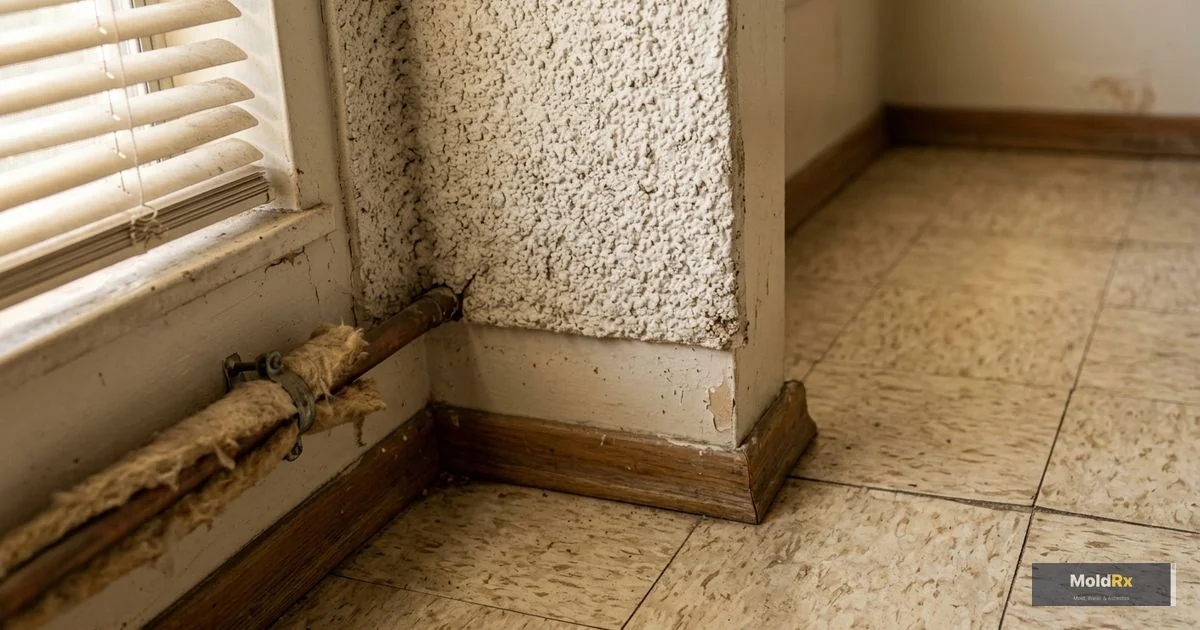
If you're looking at old floor tiles in a pre-1980 home and wondering whether they contain asbestos, here's the short answer: if the tiles are 9"x9", there's a strong probability they do. Vinyl asbestos tile — commonly called VAT — is the single most frequently encountered asbestos-containing material in residential and commercial buildings across the United States. And the black adhesive used to glue those tiles down is often more hazardous than the tiles themselves.
You cannot confirm asbestos by looking at a tile. No one can. The fibers are microscopic and embedded within the material matrix. Laboratory testing is the only way to know for certain. But understanding what to look for, what the risks are, and what you should never do with suspect tiles can protect you from a costly and dangerous mistake.
What Are Asbestos Floor Tiles?
Asbestos floor tiles are vinyl composite tiles that contain asbestos fibers mixed into the material during manufacturing. Manufacturers added asbestos because it made tiles stronger, more durable, more fire-resistant, and cheaper to produce. From the 1920s through the late 1970s, asbestos was a standard ingredient in resilient flooring products.
The result: millions of homes and commercial buildings — including a significant portion of Southern California's housing stock — still have asbestos-containing floor tiles in kitchens, bathrooms, basements, utility rooms, and hallways. Many remain in service decades later, which is why they're still encountered so frequently. Floor tiles join popcorn ceilings as the most common residential sources of asbestos. For background on the mineral itself, see our guide on what asbestos is.
How to Identify Suspect Asbestos Floor Tiles
You cannot confirm asbestos through visual inspection. But several characteristics can help you assess whether your floor tiles are likely candidates and whether professional testing is warranted before you disturb them.
Tile Size: The 9"x9" Indicator
Floor tiles measuring 9 inches by 9 inches are strongly associated with asbestos content. This was the standard size for vinyl asbestos tile during the peak manufacturing period from the 1930s through the 1970s. If you measure your tiles and they're 9"x9", the probability of asbestos is high — particularly if the home was built before 1980.
Size alone is not definitive. Some 9"x9" tiles did not contain asbestos, and asbestos was also used in some 12"x12" tiles. The 9"x9" dimension is a strong indicator, not a guarantee.
Construction Date of the Building
The age of your home is the second most important factor. Here's the general risk breakdown:
Built before 1960: Very high likelihood. Nearly all 9"x9" tiles from this period contained asbestos.
Built 1960-1980: High likelihood. Asbestos floor tiles remained common, though alternatives began entering the market in the late 1970s.
Built 1980-1990: Moderate likelihood. Asbestos use in new flooring declined sharply, but existing inventory continued to be installed into the mid-1980s.
Built after 1990: Low likelihood, though not impossible if salvaged or surplus materials were used.
Understanding indicators of asbestos in your property goes beyond flooring — other materials in the same home may also be affected.
Appearance and Color
Asbestos floor tiles came in virtually every color — white, beige, green, blue, brown, gray, red, black, and patterned combinations. No specific color confirms or rules out asbestos. Dark-colored tiles from the mid-century era are frequently cited as high-probability, but light-colored tiles from the same period are just as likely to contain asbestos.
The tiles typically have a slightly waxy or smooth surface finish and tend to be harder and more brittle than modern vinyl. Older asbestos tiles may show a slight marbling or veining in the material itself, distinct from any printed surface pattern.
Multiple Layers of Flooring
In many older homes, new flooring was installed directly over old flooring rather than removing it. If you pull back carpet, peel up newer vinyl, or notice layers during renovation, the bottom layer — especially if it consists of 9"x9" tiles — is frequently asbestos-containing. The oldest layer is the one most likely to contain asbestos.
The Adhesive Beneath: Mastic Matters
This is something many homeowners don't realize, and it may be the most important detail in this entire guide: the black or dark brown adhesive (mastic) used to install floor tiles frequently contains asbestos — even when the tiles themselves do not.
Cutback adhesive — the dark-colored mastic used to bond vinyl tiles to subfloors from the 1920s through the 1970s — was routinely manufactured with asbestos fibers. This means laboratory testing can show tiles are asbestos-free while the glue holding them down is loaded with asbestos.
The mastic is often more dangerous than the tile itself because it's more friable — easier to crumble and turn into dust — which means it releases fibers more readily when disturbed. Anyone who removes tiles and scrapes the adhesive without testing is potentially exposing themselves to significant fiber release, even if the tiles came up cleanly.
Both the tile and the mastic need to be tested separately. They are different materials with different compositions, and testing only the tile can give you a dangerously incomplete picture.
When Asbestos Floor Tiles Are Safe — And When They're Not
Here's something that often gets lost in discussions about asbestos flooring: intact, undisturbed asbestos floor tiles in good condition generally do not pose a significant health risk. The danger comes when tiles are damaged, deteriorating, or disturbed in ways that release fibers into the air.
Understanding whether asbestos is dangerous in your specific situation depends entirely on the condition of the material and what you plan to do with it.
Low Risk: Tiles That Are Intact and Undisturbed
Floor tiles that are firmly adhered, unbroken, and not visibly deteriorating are generally low risk. The asbestos fibers are bound within the vinyl matrix — locked inside the material — and not being released into the air. The EPA's consistent guidance is that asbestos-containing materials in good condition are often safest left in place. Removing them creates more risk than leaving them alone.
Higher Risk: Damaged, Deteriorating, or Disturbed Tiles
The risk changes significantly when tiles are:
- Cracked or broken — fractures expose the interior and can release fibers
- Chipping or crumbling — deteriorating edges or surfaces are actively releasing material
- Lifting or curling — separating tiles expose the mastic beneath and create edges that break
- Abraded by heavy traffic — severe wear that grinds through the surface layer exposes asbestos material
- Water damaged — moisture degrades the vinyl matrix that binds fibers
- Being disturbed by renovation — removing, cutting, sanding, or breaking tiles releases fibers
If your tiles show any of these signs, professional evaluation and testing are warranted before you do anything further.
What You Should Never Do with Suspect Floor Tiles
If you suspect your floor tiles may contain asbestos — and in a pre-1980 home with 9"x9" tiles, you should — never do any of the following:
Never sand asbestos floor tiles. Sanding is the most effective way to turn solid asbestos-containing material into airborne dust. Power sanding can generate massive amounts of fiber-laden dust in minutes — enough to contaminate an entire home through the HVAC system.
Never scrape tiles or mastic off the subfloor. Scraping breaks tiles and grinds mastic into dust, releasing fibers. The mastic is especially problematic because it becomes powdery when scraped.
Never break or snap tiles. Don't pry tiles up with a crowbar, chisel, or any tool that cracks them. Breaking fractures the material and exposes interior fibers.
Never use a power grinder or floor buffer on suspect tiles. Mechanical grinding or aggressive buffing can abrade the surface layer and release fibers from the tile body or underlying mastic.
Never sweep or dry-vacuum debris from broken tiles. Sweeping stirs up settled fibers. Standard vacuums exhaust microscopic particles through their filtration systems, spreading fibers throughout the space. Only HEPA-filtered vacuums designed for asbestos work should be used — and only by trained professionals.
Never dispose of suspect tiles in regular trash. In California, asbestos-containing materials are classified as hazardous waste. They must be wetted, double-bagged in labeled 6-mil poly bags, and disposed of at an approved facility by a licensed hauler.
Never attempt DIY removal. Improper removal can contaminate your entire home and create a remediation problem that costs many times more than professional testing and removal would have in the first place.
The Testing Process
Professional testing is the necessary first step before any work that would disturb suspect tiles. Here's what the process involves.
Step 1: Contact a Licensed Professional
Asbestos testing starts with a licensed inspector — not a general contractor or a homeowner with a hardware store test kit. Call (888) 609-8907 to talk to a real person about your situation.
Step 2: On-Site Inspection
The inspector evaluates your flooring — tile types, condition, extent of installation, and any other suspect materials in the area including adhesive. If you're planning a broader renovation, the inspector assesses all materials that might be disturbed, not just flooring.
Step 3: Sample Collection
Samples are collected from both tiles and mastic using wet methods and containment procedures that minimize fiber release. EPA guidelines call for multiple samples from each homogeneous material area. Each sample is sealed, labeled, and entered into chain-of-custody documentation.
Step 4: NVLAP-Accredited Laboratory Analysis
Samples are analyzed using polarized light microscopy (PLM) — the EPA-recommended method for bulk material analysis. The lab identifies whether asbestos is present, what type, and at what percentage. Standard results return within 3 to 5 business days. Rush analysis is available.
Step 5: Results and Guidance
You receive a detailed report with plain-language results for each sample — tiles and mastic reported separately. If asbestos is confirmed, your inspector explains your options based on material condition, extent, and your plans for the space.
Your Options If Asbestos Is Confirmed
A positive test result doesn't automatically mean you need to rip everything out. The right course of action depends on the condition of the material and what you're planning to do with the space.
Option 1: Leave in Place and Monitor
If the tiles are intact, firmly adhered, and you have no plans to disturb them — leaving them in place is a legitimate, EPA-endorsed option. This is called management in place. Monitor periodically for deterioration (cracking, lifting, crumbling) and avoid activities that could damage them. Many homeowners live safely for years with asbestos floor tiles that remain undisturbed.
Option 2: Cover the Tiles
Installing new flooring directly over the existing asbestos tiles is often the most practical solution. Vinyl plank, laminate, engineered hardwood, tile, or carpet can go on top without disturbing what's underneath. The installation must not involve sanding, grinding, or abrading the existing surface. Document that asbestos tiles are present beneath the new floor for future owners or contractors.
Option 3: Encapsulation
Applying a specialized sealant over asbestos floor tiles binds fibers in place and prevents release. This can work as a standalone measure or as preparation before installing new flooring on top. Encapsulation isn't suitable for badly damaged or crumbling tiles — at that point, removal is the better option.
Option 4: Professional Removal
When tiles need to come out — because they're badly damaged, because you're renovating down to the subfloor, or because the situation requires it — removal must be performed by a licensed C-22 asbestos abatement contractor in California. The process involves full containment with plastic sheeting, negative air pressure with HEPA filtration, wet methods to suppress fiber release, proper removal of both tiles and mastic, post-removal air monitoring, and disposal at an approved hazardous waste facility.
This is never a DIY project. Professional asbestos removal by licensed contractors is the only safe and legal path.
California Regulations Property Owners Need to Know
California has some of the most comprehensive asbestos regulations in the country. If you own property in Southern California, these rules directly affect what you can and cannot do with asbestos floor tiles.
Cal/OSHA Presumption — Cal/OSHA presumes that thermal insulation and surfacing materials in pre-1980 buildings contain asbestos until testing proves otherwise. The underlying principle applies to flooring: assume asbestos is present until laboratory analysis says it isn't.
SCAQMD Rule 1403 — The South Coast Air Quality Management District requires asbestos surveys before renovation or demolition work. Many local building departments apply similar requirements to residential demolition permits.
Contractor Obligations — Cal/OSHA requires employers, including general contractors, to identify asbestos hazards before workers are exposed. A contractor who begins demolishing flooring in a pre-1980 home without requiring asbestos test results is violating state regulations.
Disposal — Asbestos-containing waste must be wetted, double-bagged in labeled 6-mil polyethylene bags, transported by a licensed hazardous waste hauler, and disposed of at an approved facility.
Notification — Projects involving asbestos-containing materials require advance notification to the relevant air quality management district. Your abatement contractor handles this filing.
10 Frequently Asked Questions
1. How can I tell if my floor tiles contain asbestos?
You cannot tell by looking. The fibers are microscopic and embedded within the tile material. However, floor tiles measuring 9"x9" in homes built before 1980 have a high probability of containing asbestos. The only way to confirm is professional laboratory testing using polarized light microscopy. Both the tile and the adhesive beneath it should be tested.
2. Are all 9"x9" floor tiles asbestos?
No — but the correlation is strong. The 9"x9" dimension was the standard size during the era when asbestos was commonly used in flooring products (1930s through 1970s). Not every 9"x9" tile contains asbestos, and asbestos was also used in some 12"x12" tiles. Size is an indicator, not a confirmation. Testing is the only definitive answer.
3. Is it safe to live in a home with asbestos floor tiles?
Generally, yes — as long as the tiles are intact, in good condition, and not being disturbed. Intact asbestos floor tiles have the fibers bound within the vinyl matrix, and they don't release fibers into the air under normal conditions. The risk increases when tiles are cracked, broken, crumbling, or disturbed by renovation work.
4. Can I install new flooring over asbestos tiles?
Yes, and this is often the recommended approach. New flooring can be installed directly over intact asbestos tiles — including vinyl plank, laminate, tile, or carpet. The installation must not involve sanding, grinding, or scraping the existing surface. Document that asbestos tiles are present beneath the new floor for future owners or contractors.
5. Is the black adhesive under floor tiles dangerous?
It can be. The black or dark brown mastic used to install floor tiles from the 1920s through the 1970s frequently contains asbestos — sometimes even when the tiles above it do not. The mastic is often more friable than tiles, meaning it crumbles more easily and releases fibers when scraped or disturbed. Both tiles and adhesive should be tested separately.
6. What should I do if I accidentally broke an asbestos floor tile?
Don't panic, but don't ignore it. Don't sweep, vacuum, or try to clean up. Lightly mist the broken area with water to suppress fiber release, leave it alone, and contact a licensed asbestos professional. A single broken tile in an otherwise intact floor is manageable when handled properly.
7. Can my general contractor remove asbestos floor tiles?
Not unless they hold a C-22 asbestos abatement contractor license in California. General contractors (B license) are not licensed to perform asbestos removal. If your contractor encounters or suspects asbestos flooring during renovation, they are legally required to stop work and bring in a licensed abatement professional.
8. Do I need to test floor tiles if I'm not planning to disturb them?
Not strictly. If tiles are intact and you have no plans to renovate, management in place — leaving them undisturbed and monitoring for deterioration — is a legitimate approach. However, if tiles are damaged or you're considering future work in the area, testing gives you the information you need to plan accordingly.
9. How much does asbestos floor tile testing cost?
We don't publish pricing because scope varies — a single room is different from a whole-house survey covering flooring, mastic, ceilings, and insulation. Call (888) 609-8907 for an honest estimate based on your situation. Testing is always far less expensive than dealing with the consequences of disturbing asbestos unknowingly.
10. My home was built in 1985. Could the floor tiles still contain asbestos?
Possibly. Asbestos use in new flooring declined sharply after the late 1970s, but existing inventory continued to be installed into the 1980s. If your tiles are original and 9"x9", testing before disturbance is a reasonable precaution. For homes built after 1990, the probability is very low but not zero.
Don't Guess — Get Answers Before You Touch the Floor
Those old floor tiles might be nothing more than dated decor, or they might contain a material that can cause serious, permanent harm if disturbed incorrectly. The difference between those scenarios is a laboratory test — not a guess based on appearance and not advice from a contractor who "has seen a lot of these."
If you're planning any work that might disturb floor tiles in a pre-1980 home — replacing flooring, renovating a kitchen or bathroom, pulling up carpet laid over tiles — professional asbestos testing is the necessary first step. It's required by California regulations and far less costly than the alternative.
MoldRx coordinates professional asbestos testing and removal services throughout Orange County, Riverside County, and San Bernardino County. Our vetted specialists follow EPA sampling protocols, use NVLAP-accredited laboratories, and give you honest guidance — not a sales pitch.
Call (888) 609-8907 to talk to a real person about your floor tiles. Or request a free estimate online and we'll get back to you promptly. No scripts, no pressure — just the answers you need to make a safe, informed decision.