Where Asbestos Hides in Pre-1980 California Homes — and What You Should Do About It
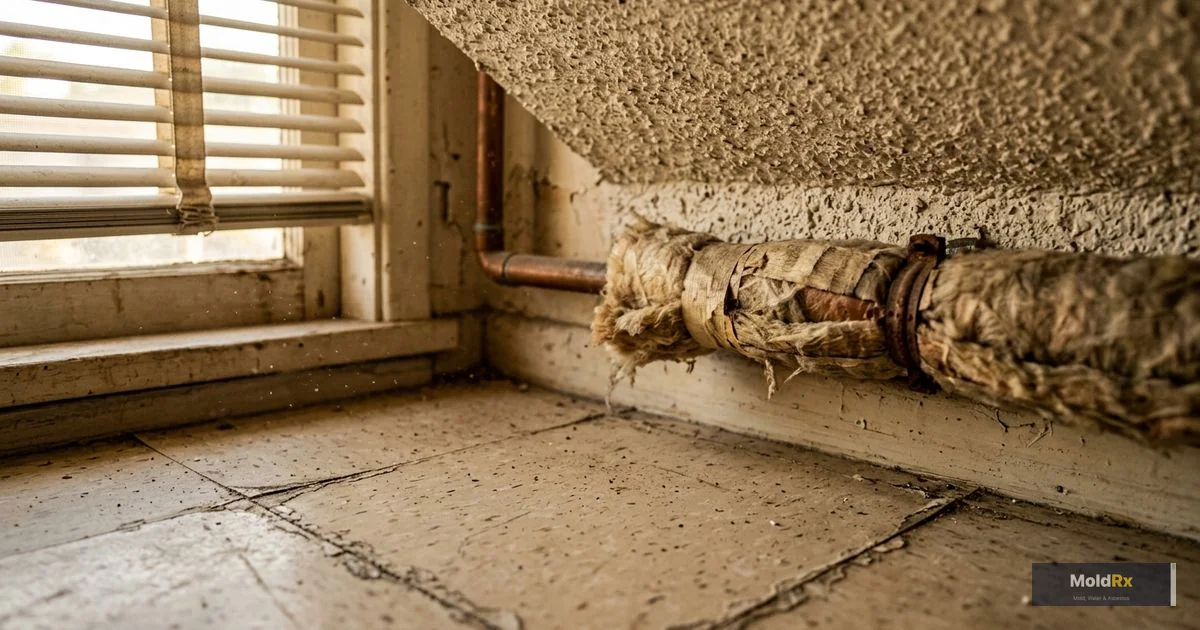
If your California home was built before 1980, it almost certainly contains asbestos in at least one building material. That is not speculation. California regulations presume that thermal insulation and surfacing materials in pre-1980 structures contain asbestos until laboratory testing proves otherwise — because the odds are that high. For a deeper look at the mineral itself, see our guide on what asbestos is.
Here is the critical thing every homeowner needs to understand: you cannot identify asbestos by looking at it, touching it, or guessing. The fibers are microscopic. Two identical-looking floor tiles from the same era — one might contain asbestos and the other might not. The only way to know is professional testing. And disturbing asbestos-containing materials without knowing what you're dealing with can turn a weekend project into a hazardous materials emergency with irreversible health consequences.
This guide covers where asbestos is most likely hiding in your older California home, why it was used so heavily in this state, and exactly what to do if you suspect it's present.
Why California Has an Outsized Asbestos Problem
California's asbestos problem is larger than most states, and it's not just because the housing stock is old. Several factors compound the risk.
Massive post-war building boom. California experienced explosive residential growth from the 1940s through the 1970s — precisely the decades when asbestos use in construction materials peaked. Entire cities in the Inland Empire, Orange County, and the San Fernando Valley were built during this window. Cities like Anaheim, Santa Ana, Fullerton, and Riverside have large concentrations of homes from this period.
Fire-resistant construction demand. California's wildfire risk drove heavy use of fire-resistant building materials, and asbestos was the most widely available fireproofing agent for decades. Builders used it in roofing, siding, insulation, and interior finishes specifically because it doesn't burn.
Stucco and concrete construction. Southern California's stucco-heavy building tradition meant that asbestos-containing cement products — exterior stucco coatings, fiber cement siding, and cement-based roofing materials — were standard. These materials are everywhere in older California neighborhoods.
Vermiculite insulation in attics. Many California homes had vermiculite insulation added to attics for energy efficiency. A significant portion of U.S. vermiculite came from a mine in Libby, Montana that was contaminated with tremolite asbestos.
The result: California has one of the highest concentrations of asbestos-containing residential structures in the country, and the problem extends across virtually every pre-1980 neighborhood in the state.
A Timeline of Asbestos in California Home Construction
Understanding when asbestos entered different building products helps you assess the risk in your specific home. But timing alone never eliminates the need for testing — it only tells you how likely the problem is.
1920s–1940s: Early Widespread Use
Asbestos-containing products entered mainstream residential construction during this period. Common applications included pipe insulation for boilers and heating systems, asbestos cement roofing shingles, asbestos-containing plaster and stucco, and early vinyl-asbestos floor tiles. Homes from this era that haven't been fully renovated are very likely to contain asbestos in multiple materials. In California, Craftsman bungalows, Spanish Revival homes, and early tract housing from this period are common in cities like Santa Ana and older sections of Riverside.
1940s–1950s: Post-War Building Boom
The surge of residential construction that followed World War II coincided with the peak of asbestos manufacturing. Materials from this era include asbestos-containing drywall joint compound, acoustic ceiling tiles, vinyl-asbestos floor tiles (the 9"x9" standard), sheet vinyl flooring with asbestos backing, heating duct insulation and tape, and asbestos-containing window glazing compound. Tract homes built across Orange County and the Inland Empire during this era were constructed quickly using standardized materials — which means entire neighborhoods share the same asbestos risk profile.
1950s–1970s: Peak Asbestos Era
This is the highest-risk period. Virtually every category of building material had an asbestos-containing version in widespread use. The most common materials included popcorn ceilings (sprayed-on acoustic texture), vinyl-asbestos floor tiles and black mastic adhesive, asbestos-containing pipe and boiler insulation, transite (asbestos cement) siding and panels, roofing felt and shingles, furnace and HVAC duct insulation, electrical panel backing and components, and fireproofing materials around fireplaces.
California homes built between 1950 and 1978 have the highest statistical probability of containing asbestos in multiple locations. Homes in cities like Anaheim and Fullerton — developed heavily during the 1950s and 1960s — fall squarely in this window.
1978–1986: The Phase-Out
The EPA banned spray-on asbestos-containing materials for fireproofing and insulating in 1973, then extended the ban to decorative products (including popcorn ceiling texture) in 1978. However, the ban did not recall existing inventory. Distributors, contractors, and hardware stores continued using stockpiled asbestos-containing products well into the 1980s. A home built in 1982 could still have asbestos in its ceiling texture, floor tiles, or adhesives if the builder used older product stock. Industry professionals generally use 1980 as the conservative cutoff, but materials installed through the mid-1980s are not automatically safe.
1990s–Present: Lower Risk but Not Zero
While new asbestos-containing construction materials largely disappeared from the U.S. market by 1990, the risk hasn't fully vanished. Imported building materials and specialty products have occasionally contained asbestos even in recent decades. The U.S. didn't fully ban chrysotile asbestos until 2024, with a 12-year phase-out for some uses. And any renovation done on an older home using salvaged or surplus materials could introduce asbestos-containing products into a newer structure.
Room-by-Room Guide: Where Asbestos Hides in Your Home
Asbestos wasn't used randomly. It was added to specific products for specific reasons: fireproofing, heat resistance, insulation, durability, and soundproofing. Knowing which materials in each part of your home are suspect helps you avoid accidentally disturbing them — and helps you understand the scope of testing you may need before a renovation. If you're planning work, California law requires an asbestos survey before renovation on pre-1980 structures.
Kitchen
The kitchen is often the first room homeowners want to renovate — and one of the most likely to contain asbestos.
Flooring. Vinyl floor tiles (especially 9"x9" tiles) and sheet vinyl flooring installed before 1980 frequently contain asbestos. The black adhesive (mastic) used to glue tiles and sheet vinyl to the subfloor is often more hazardous than the flooring itself. Layers of flooring stacked on top of each other are common in older kitchens — the asbestos-containing layer may be underneath newer flooring you can see.
Countertop and cabinet backing. Some older countertop materials and the backing boards behind kitchen cabinets used asbestos-containing products.
Walls and ceiling. Textured wall finishes, plaster, drywall joint compound, and ceiling texture (especially popcorn or stipple finishes) may all contain asbestos.
Around the stove and oven. Older heat-resistant materials used near cooking appliances — including heat shields and insulation — sometimes contained asbestos.
Bathroom
Floor tiles and adhesive. Same risk profile as the kitchen. Small ceramic tiles typically don't contain asbestos, but the adhesive or mortar beneath them can. Vinyl tile and sheet vinyl in bathrooms carry the same risk as elsewhere.
Wall tiles and backing. The cement board or adhesive behind bathroom wall tiles may contain asbestos.
Ceiling texture. Bathroom ceilings often received the same textured finishes as the rest of the house.
Pipe insulation. Exposed pipes in bathrooms — especially beneath sinks and around water heaters — may be wrapped in asbestos-containing insulation.
Living Areas and Bedrooms
Popcorn ceilings. The single most common residential source of asbestos. Sprayed-on acoustic texture applied before 1980 has a high probability of containing asbestos fibers mixed directly into the texture compound.
Textured wall finishes. Some wall texturing compounds used during the same period also contained asbestos.
Flooring under carpet. Many older homes have carpet laid over asbestos-containing vinyl tiles or sheet vinyl. You won't know it's there until the carpet is removed.
Window glazing and caulking. The putty compound holding glass panes in older wood-frame windows often contained asbestos.
Fireplace surround. Cement board, millboard, and other heat-resistant materials used around fireplaces and wood-burning stoves frequently contained asbestos.
Attic
Vermiculite insulation. Loose-fill insulation that looks like small gray or gold pebbles. A significant percentage of vermiculite insulation sold in the U.S. came from a contaminated mine and contains asbestos.
HVAC duct insulation and tape. Heating and cooling ducts running through the attic may have asbestos-containing insulation wrapping or tape at joints and seams.
Roof underlayment visible from below. Some roofing felt and underlayment materials contained asbestos.
Garage and Utility Areas
Pipe insulation. White, gray, or corrugated material wrapping older pipes — especially hot water and heating pipes — is one of the most common asbestos-containing materials in residential buildings.
Furnace and water heater insulation. Insulation on and around older heating equipment frequently contained asbestos. Gaskets and seals in older appliances may also contain asbestos.
Electrical panel backing. The backing boards and arc chutes in older electrical panels sometimes contained asbestos.
Cement board and wall panels. Garages in older homes sometimes used transite (asbestos cement) panels for walls and ceilings.
Exterior
Stucco. Older stucco coatings — extremely common on Southern California homes — may contain asbestos. This is particularly relevant during re-stuccoing or when stucco is damaged and needs repair.
Siding. Transite (asbestos cement) siding has a distinctive dense, somewhat fibrous appearance. It was widely used on mid-century California homes.
Roofing. Asbestos-containing materials include roofing shingles, roofing felt, and flashing.
Soffits and fascia. Exterior soffit panels and fascia boards on older homes may be asbestos cement.
California-Specific Construction Patterns That Increase Risk
Certain building practices common in California make asbestos exposure more likely during renovation or deterioration.
Slab-on-grade construction. Most California homes are built on concrete slabs rather than basements. Vinyl-asbestos floor tiles were commonly adhered directly to these slabs with black mastic. Removing this flooring means dealing with both the tile and the adhesive — and the adhesive is often the bigger problem.
Stucco-over-wire-lath construction. Southern California's signature stucco exteriors were applied over wire lath, and the stucco mix itself sometimes contained asbestos. Repairing, removing, or re-stuccoing releases dust from the entire wall assembly.
Forced-air heating systems. California homes overwhelmingly use forced-air heating rather than radiators or baseboard systems. The ductwork, duct tape, and duct insulation in these systems are potential asbestos sources — and the air handler distributes any released fibers throughout the entire house.
Flat and low-slope roofs. Many mid-century California homes have flat or low-slope roofs with built-up roofing systems. These systems used layers of roofing felt and tar, and the felt was frequently asbestos-containing.
Multiple renovation layers. Because California's housing market has driven constant remodeling, many homes have multiple layers of flooring, wall finishes, and ceiling treatments stacked on top of each other. The layer you can see may be safe while an asbestos-containing layer lurks underneath.
What to Do If You Suspect Asbestos
If your home was built before 1980, the most responsible assumption is that asbestos is present somewhere. Here is how to handle it.
Step 1: Don't Panic — and Don't Touch Anything
Asbestos materials that are intact and undisturbed generally do not release fibers. If your popcorn ceiling is in good condition and you're not planning to scrape it, it is not an emergency. You have time to handle this properly.
The danger comes from disturbance — cutting, scraping, sanding, drilling, breaking, or otherwise disrupting materials that contain asbestos. This is why renovation projects are the highest-risk scenario.
Step 2: Know What You Can't Do Yourself
California law is clear: asbestos abatement must be performed by licensed professionals following Cal/OSHA and EPA protocols. This is not a DIY project under any circumstances. Homeowner exemptions for minor work exist, but they're narrow, and the health risks of improper handling are severe and irreversible. Asbestos exposure causes mesothelioma, lung cancer, and asbestosis — diseases that can take 10 to 50 years to appear and have no cure. Understanding why asbestos is dangerous reinforces why professional handling is non-negotiable.
Step 3: Get Professional Testing Before Any Renovation
If you're planning any work that will disturb building materials in a pre-1980 home, you need professional asbestos testing first. A certified inspector will collect samples safely — minimizing fiber release — and submit them to an accredited laboratory for analysis using specialized microscopy.
California requires this testing before renovation or demolition work on pre-1980 structures. SCAQMD Rule 1403 and Cal/OSHA enforce the requirement, and penalties for skipping it are serious. For a full breakdown of when testing is mandatory, see our guide on asbestos surveys before renovation in California.
Testing tells you exactly which materials contain asbestos, which ones don't, and where you can work safely. Without it, you're guessing — and guessing wrong can contaminate your entire home.
Step 4: If Asbestos Is Found, Get Professional Removal
When testing confirms asbestos, professional asbestos removal follows regulated protocols: containment, HEPA filtration, wet methods to suppress fibers, proper bagging and disposal, and clearance testing afterward. The process is methodical and exists for a reason.
In some cases, encapsulation or leaving intact materials in place may be the better option. A qualified professional can advise you on the right approach for your specific situation.
Step 5: Monitor Intact Materials
If you have confirmed or suspected asbestos materials in good condition and you're not planning to disturb them, the most practical approach is monitoring. Check periodically for signs of deterioration — cracking, crumbling, water damage, or physical damage. If the material remains intact, it can stay in place safely. If it begins to deteriorate, that's when professional intervention becomes necessary.
Frequently Asked Questions
Do all homes built before 1980 in California have asbestos?
Not every single home, but the probability is high enough that California regulations presume asbestos is present in pre-1980 structures until testing proves otherwise. The only way to know for certain is laboratory testing. Operating under the assumption that asbestos is present — especially before renovation — is both the legal requirement and the safe approach.
Can I tell if my home has asbestos just by looking?
No. Asbestos fibers are microscopic and invisible to the naked eye. Materials containing asbestos look identical to materials that don't. Visual inspection can identify materials that are likely candidates (popcorn ceilings, 9"x9" floor tiles, pipe insulation), but laboratory analysis is the only way to confirm.
Is it safe to live in a home with asbestos?
Generally, yes — as long as asbestos-containing materials are intact and undisturbed. Asbestos becomes dangerous when fibers are released into the air through damage, deterioration, or disturbance. Many people live safely in homes with asbestos-containing materials for decades without issue. The risk arises when those materials are disrupted.
What is the most common asbestos material in California homes?
Popcorn ceilings, vinyl floor tiles (especially 9"x9" tiles), and pipe insulation are the three most frequently encountered asbestos-containing materials in California residential properties. The black adhesive beneath vinyl floor tiles is also extremely common.
I'm planning a kitchen remodel in my 1960s home. Do I need asbestos testing?
Yes. California law requires an asbestos survey before renovation work on pre-1980 structures. A 1960s kitchen almost certainly has materials that could contain asbestos — flooring, tile adhesive, drywall joint compound, ceiling texture, and more. Testing before work begins is both legally required and essential for safety.
How much does asbestos testing cost?
We don't quote pricing in our guides because costs vary based on the scope of testing, number of samples, and specific situation. Contact us for a straightforward assessment of what testing your project requires. Call (888) 609-8907 or request an estimate.
Can I remove asbestos myself in California?
California allows limited homeowner self-removal in very narrow circumstances, but the health risks make DIY removal dangerous regardless of legality. Improper removal can contaminate your home and expose you and your family to fibers that cause cancer and fatal lung disease. Professional removal follows strict containment and safety protocols that protect everyone in the building. The risks are irreversible — this is not a place to cut corners.
What should I do if I accidentally disturbed a material that might contain asbestos?
Stop work immediately. Do not clean up the debris. Do not vacuum — a regular vacuum will spread fibers rather than contain them. Leave the area, close it off as best you can, and contact a licensed asbestos professional for assessment. If you believe significant material was disturbed, err on the side of caution and get testing done.
Does my homeowner's insurance cover asbestos removal?
Most standard homeowner's insurance policies do not cover asbestos removal or abatement as a standalone service. However, if asbestos-containing materials are damaged as part of a covered event (such as water damage or fire), the abatement may be covered as part of the overall claim. Check with your insurance provider for your specific policy terms.
How long does asbestos testing take?
Sample collection by a certified inspector is typically completed within a few hours for a residential property. Laboratory analysis usually takes 3 to 5 business days for standard turnaround, with rush options available. The total time from inspection to results is typically about one week.
Take the Right First Step
If you own a pre-1980 home in California and you're planning renovation work — or you've noticed deteriorating materials that concern you — professional testing is the right first step. Not guessing. Not Googling. Not scraping a sample into a bag yourself.
MoldRx coordinates professional asbestos testing and asbestos removal services throughout Anaheim, Santa Ana, Fullerton, Riverside, and communities across Orange County, Riverside County, and San Bernardino County. Our vetted specialists follow Cal/OSHA and EPA protocols, and we'll give you honest guidance about whether testing is actually necessary for your situation.
Call (888) 609-8907 or request a free estimate to get started. We'll tell you what you're dealing with — and what it takes to handle it safely.