What California Property Owners Must Know Before Starting Any Renovation Project
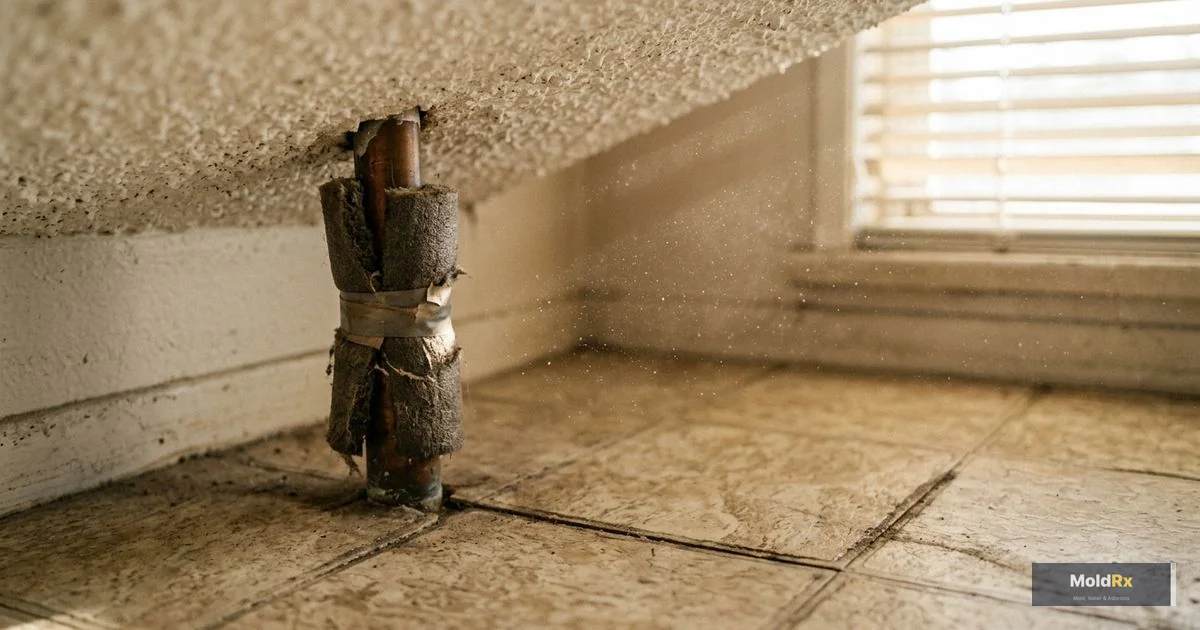
If you're planning a renovation in California and your building was constructed before 1980, you are legally required to have a professional asbestos survey conducted before work begins. This is not a suggestion, not a best practice, and not something your contractor can waive. It is a regulatory requirement enforced by the South Coast Air Quality Management District (SCAQMD), Cal/OSHA, and federal EPA rules — with real penalties for non-compliance.
The reason is straightforward: asbestos was used in thousands of building products from the 1930s through the late 1970s. Renovation work disturbs those materials, releasing microscopic fibers that cause irreversible lung disease and cancer. A pre-renovation survey identifies what contains asbestos before anyone picks up a hammer, so hazardous materials can be properly handled — or avoided altogether.
Here's what you need to know about when a survey is required, what it involves, and what happens if asbestos is found.
The Short Answer: When Is an Asbestos Survey Required?
California requires an asbestos survey before any renovation or demolition work on structures built before 1980 that will disturb building materials. This applies to residential properties, commercial buildings, industrial facilities, and public structures. It applies whether you're doing a full gut renovation or replacing a single floor.
The regulatory framework comes from two primary sources:
SCAQMD Rule 1403 — The South Coast Air Quality Management District's Rule 1403 is the most directly applicable regulation for property owners in Orange County, Riverside County, and the Inland Empire. It requires an asbestos survey by a Certified Asbestos Consultant (CAC) or Certified Site Surveillance Technician (CSST) before any renovation or demolition activity that could disturb asbestos-containing materials. The rule defines "renovation" broadly: any alteration of a facility or its components, including the stripping or removal of building materials.
Cal/OSHA Title 8, Section 1529 — California's occupational safety regulations presume that thermal insulation and surfacing materials in pre-1980 buildings contain asbestos until testing proves otherwise. Any employer — including general contractors — must identify asbestos hazards before workers are exposed. If your contractor doesn't require survey results before starting work on a pre-1980 building, that's a serious red flag.
The federal EPA NESHAP (National Emission Standards for Hazardous Air Pollutants) also requires asbestos inspections before demolition and certain renovation activities, reinforcing the state-level requirements.
What Triggers the Requirement
Not every project on an older building requires a full survey. The requirement is triggered when your planned work will physically disturb building materials that could contain asbestos. Understanding what qualifies helps you plan your project timeline and budget accordingly.
Projects That Require a Survey
Kitchen and bathroom remodels — Removing cabinets, countertops, flooring, wall tile, or drywall in a pre-1980 structure requires a survey. Even partial demolition — taking out a single wall or replacing a section of flooring — triggers the requirement if the materials being disturbed could contain asbestos.
Flooring replacement — Pulling up vinyl tile, sheet vinyl, or carpet that's been glued over older materials. The adhesive beneath vinyl flooring is frequently more hazardous than the flooring itself.
Ceiling work — Scraping, sanding, or removing popcorn ceilings or textured coatings. This is one of the most common renovation activities that releases asbestos fibers when testing hasn't been done first.
Wall demolition or modification — Removing walls, cutting new openings, or stripping wallpaper or textured finishes that could disturb underlying drywall, joint compound, or plaster.
Roof replacement — Older roofing materials including shingles, felt, and flashing may contain asbestos.
HVAC system work — Replacing ductwork, removing insulation around pipes or boilers, or disturbing duct tape and mastic in older mechanical systems.
Window and door replacement — Older caulking, glazing compounds, and surrounding materials may contain asbestos.
Electrical and plumbing upgrades — Running new wiring or plumbing through walls, ceilings, or floors disturbs materials that could contain asbestos.
Complete demolition — Tearing down any pre-1980 structure requires a full asbestos survey before demolition begins.
Projects That Typically Don't Require a Survey
Cosmetic work that doesn't disturb building materials — painting over intact surfaces, hanging pictures, replacing light fixtures without disturbing ceiling materials, or replacing hardware — generally doesn't trigger the survey requirement. However, the line between "cosmetic" and "disturbing materials" is thinner than most homeowners assume. When in doubt, call a professional.
What an Asbestos Survey Involves
A pre-renovation asbestos survey is a systematic inspection of all materials that could be disturbed by your planned work. Here's what the process looks like from start to finish.
Step 1: Hiring a Qualified Inspector
The survey must be conducted by a California-certified professional — either a Certified Asbestos Consultant (CAC) or a Certified Site Surveillance Technician (CSST) working under a CAC's supervision. These certifications are issued by California's Division of Occupational Safety and Health (DOSH) and require specific training, examination, and continuing education.
This is not a job for your general contractor, a home inspector, or a handyman. The inspector must be independent of any abatement contractor who might later perform removal — a separation required to prevent conflicts of interest. Call (888) 609-8907 to get connected with a qualified inspector for your project.
Step 2: Scope Review
The inspector reviews your renovation plans to determine which building materials will be disturbed. The scope of the survey is directly tied to the scope of your project. A single-room bathroom remodel requires inspection and sampling of materials in that room. A whole-house renovation requires a comprehensive survey of all materials throughout the structure.
This is why communicating your full project scope to the inspector is critical. If you expand the renovation scope after the survey, additional sampling may be needed.
Step 3: Visual Inspection
The inspector conducts a thorough visual inspection of all suspect materials within the project area — flooring, ceiling texture, drywall, joint compound, insulation, pipe wrapping, roofing materials, adhesives, caulking, and anything else that will be disturbed. Each material is classified into homogeneous areas — zones where the same material was applied at the same time and likely has the same composition throughout.
Step 4: Sample Collection
The inspector collects physical samples from each homogeneous area using methods designed to minimize fiber release. Wet methods are used to suppress dust during sampling. Each homogeneous area requires multiple samples — SCAQMD Rule 1403 generally requires a minimum of three samples per homogeneous area for surfacing materials. Each sample is sealed, labeled, and entered into chain-of-custody documentation.
Step 5: Laboratory Analysis
Samples are sent to an NVLAP-accredited laboratory for analysis using polarized light microscopy (PLM) — the EPA-recommended method for bulk material analysis. The lab identifies whether asbestos is present, what type (chrysotile, amosite, crocidolite, etc.), and at what concentration. Materials containing more than 1% asbestos are classified as asbestos-containing material (ACM) under both federal and California regulations.
Step 6: Survey Report
The inspector produces a detailed written report documenting every material sampled, laboratory results, the location of any confirmed asbestos-containing materials, and recommendations. This report becomes a critical document — your abatement contractor needs it, your general contractor needs it, and you may need to submit it to the local air quality management district before work begins.
What Materials Are Most Commonly Tested
While every building is different, certain materials in pre-1980 structures are tested in virtually every pre-renovation survey. Understanding what's typically sampled helps you anticipate the process.
Flooring materials — Vinyl tiles, sheet vinyl, linoleum, and the adhesive (mastic) beneath them. The 9"x9" vinyl tile format is the most common asbestos-containing flooring material, but 12"x12" tiles and sheet goods can also contain asbestos.
Ceiling materials — Popcorn ceiling texture, acoustic tiles, and other textured ceiling finishes. Popcorn ceilings installed before 1980 have a high probability of containing asbestos.
Drywall and joint compound — The compound used to finish drywall seams and corners sometimes contained asbestos. The drywall itself occasionally contained it as well.
Insulation — Pipe insulation, boiler wrapping, HVAC duct insulation, duct tape, and vermiculite attic insulation are all common asbestos sources in older buildings.
Exterior materials — Cement siding (transite), stucco, roofing materials, and window glazing are sampled when the project scope includes exterior work.
Adhesives and caulking — Window caulk, roofing mastic, and construction adhesives used in older buildings frequently contained asbestos.
For a comprehensive overview of indicators you may have asbestos, see our detailed guide.
Timeline and Logistics: Planning Your Renovation Around the Survey
Building the survey into your project timeline from the beginning prevents costly delays.
Survey scheduling — Most qualified inspectors can schedule within one to two weeks. Emergency and rush scheduling is often available for time-sensitive projects.
On-site inspection — The physical inspection and sampling for a typical residential renovation takes two to four hours, depending on the size and complexity of the project area.
Laboratory turnaround — Standard PLM analysis takes three to five business days. Rush turnaround (24 to 48 hours) is available from most accredited laboratories for an additional fee.
Total timeline — From initial contact to receiving the survey report, plan for approximately one to two weeks under normal circumstances. Rush processing can compress this to a few days when needed.
The practical recommendation: Schedule your asbestos survey as soon as you've defined the scope of your renovation. The survey results determine whether abatement is needed — and abatement adds its own timeline to the project.
What Happens If Asbestos Is Found
A positive result on your survey report doesn't mean your renovation is cancelled. It means additional steps are required before certain materials can be disturbed. You have several options depending on the type, condition, and location of the asbestos-containing materials.
Option 1: Abatement Before Renovation
Professional asbestos removal is performed by a licensed C-22 asbestos abatement contractor before your renovation work begins. The abatement process involves full containment with sealed plastic sheeting, negative air pressure with HEPA filtration, wet methods to suppress fiber release, air monitoring throughout the process, disposal at an approved hazardous waste facility, and final clearance testing by an independent monitor.
Once clearance testing confirms safe fiber levels, your general contractor can proceed with renovation work normally.
Option 2: Design Around It
In some cases, you can modify your renovation plans to avoid disturbing asbestos-containing materials entirely — installing new flooring over existing asbestos-containing vinyl tile instead of removing it, building new walls over existing surfaces, or enclosing rather than removing pipe insulation in good condition.
This approach can save time and money, but the asbestos-containing materials remain in the building. Any future work disturbing those materials triggers the same survey and abatement requirements.
Option 3: Encapsulation
For certain materials in reasonable condition, encapsulation — applying a specialized sealant that binds asbestos fibers in place — may be appropriate. Encapsulation is not appropriate for materials that will be physically disturbed during renovation, but it can address asbestos-containing materials adjacent to the project area that need to be protected during construction activity.
Option 4: Management in Place
If the asbestos-containing material is outside your renovation area, in good condition, and won't be disturbed, the survey report may recommend management in place — leaving the material undisturbed and monitoring it periodically for deterioration. This is consistent with EPA guidance and is often the most practical approach for materials in stable condition. Understanding whether asbestos is dangerous in its current state depends entirely on whether the material is intact and undisturbed.
Penalties for Non-Compliance
Skipping the asbestos survey isn't a calculated risk — it's a gamble with consequences that range from expensive to catastrophic.
Regulatory Fines
SCAQMD can impose fines of up to $75,000 per day for violations of Rule 1403. Cal/OSHA penalties for serious asbestos violations can reach $25,000 per violation and higher for willful or repeat violations. Federal EPA NESHAP penalties can exceed $100,000 per day for significant violations. These are not theoretical numbers — they are assessed against property owners and contractors in Southern California with regularity.
Mandatory Remediation and Project Delays
If asbestos is disturbed without proper protocols, regulatory agencies can issue stop-work orders and require professional decontamination of the entire affected area. A renovation that might have required modest abatement costs can generate tens of thousands of dollars in emergency remediation costs when asbestos is disturbed improperly — plus weeks or months of project delay while the property is assessed, decontaminated, and cleared for re-entry.
Legal Liability
Property owners who expose workers, tenants, or neighboring properties to asbestos fibers face personal injury liability that can extend decades into the future — because asbestos-related diseases have latency periods of 10 to 50 years.
Criminal Penalties
In egregious cases — particularly where there's evidence of knowing violation — criminal prosecution is possible under both state and federal law.
The survey is not the expensive part of an asbestos problem. The survey is the part that prevents the expensive part.
10 Frequently Asked Questions
1. Do I need an asbestos survey if my home was built after 1980?
The regulatory presumption applies to buildings constructed before 1980. However, buildings built between 1980 and the late 1980s may still contain asbestos, because existing product stockpiles continued to be sold after the 1978 EPA ban. If your home was built between 1980 and 1990, a survey is a reasonable precaution. For buildings constructed after 1990, a survey is generally not required unless there's specific reason to suspect asbestos-containing materials.
2. Can my general contractor do the asbestos survey?
No. In California, pre-renovation asbestos surveys must be conducted by a Certified Asbestos Consultant (CAC) or a Certified Site Surveillance Technician (CSST) working under a CAC's supervision. General contractors do not hold these certifications and are not qualified to perform asbestos surveys. Additionally, the inspector should be independent of any abatement firm to avoid conflicts of interest.
3. How much does a pre-renovation asbestos survey cost?
We don't publish pricing because the cost depends on the scope of your project — a single-room bathroom remodel involves fewer samples and less time than a whole-house gut renovation. Call (888) 609-8907 for an honest estimate based on your specific project. What we can tell you with certainty is that a survey is always a fraction of the cost of dealing with improperly disturbed asbestos.
4. What happens if I start renovating and then discover asbestos?
All work must stop immediately. The area should be sealed off, HVAC systems shut down to prevent fiber distribution, and a qualified asbestos professional contacted for assessment. Depending on the extent of disturbance, emergency decontamination may be required — which is significantly more expensive than a pre-renovation survey would have been. Your contractor may also be required to file a report with the relevant air quality management district.
5. Does SCAQMD Rule 1403 apply to single-family homes?
Rule 1403 applies primarily to commercial, industrial, and multi-family demolition and renovation. However, many local building departments in the SCAQMD region require asbestos surveys for residential demolition permits. Cal/OSHA requirements apply whenever workers — including your hired contractor — may be exposed to asbestos. As a practical matter, any renovation on a pre-1980 home that involves a licensed contractor will trigger survey requirements through Cal/OSHA even if Rule 1403 doesn't directly apply.
6. Can I do the asbestos survey myself using a DIY test kit?
No — and this is a serious safety issue. DIY kits require you to collect samples without the wet methods, containment, or PPE that licensed inspectors use, risking fiber release into your living space. A single DIY sample also may not represent the material throughout your home. Most importantly, a DIY kit result won't satisfy regulatory requirements — you need a survey from a California-certified inspector.
7. How long is an asbestos survey report valid?
There's no fixed expiration date, but the report is only valid as long as building conditions remain unchanged. If significant time passes or the building experiences water damage or physical changes, a re-assessment may be warranted. Most contractors and regulatory agencies accept reports less than one year old that reflect current conditions.
8. What if only a small amount of asbestos is found?
The quantity of asbestos-containing material doesn't change the regulatory requirements — even a small amount must be handled according to proper abatement procedures if it will be disturbed during renovation. However, a small scope of abatement work is obviously less disruptive and less costly than large-scale removal. The survey helps you understand exactly what you're dealing with so you can plan accordingly.
9. Will the asbestos survey delay my renovation project?
If you plan ahead, no. A survey typically takes one to two weeks from scheduling to receiving results, and you should schedule it during the planning phase before your contractor is ready to begin. The survey delay is negligible compared to the weeks or months of delay that result from a stop-work order if asbestos is discovered mid-renovation.
10. Who is responsible for the survey — the property owner or the contractor?
The property owner is ultimately responsible for ensuring the survey is completed before work begins. Your contractor has a separate Cal/OSHA obligation to protect workers from asbestos exposure — and a responsible contractor will require survey results before starting. But the regulatory and legal liability for failing to conduct the survey falls on the property owner.
Don't Let a Missing Survey Derail Your Renovation
The asbestos survey is the single most important step between planning a renovation and starting construction on any pre-1980 building in California. It protects your health, your workers' health, your investment, and your legal standing. It's required by law, and it's a fraction of the cost of the consequences of skipping it.
MoldRx coordinates professional asbestos testing and asbestos removal services throughout Orange County, Riverside County, and San Bernardino County. Our vetted specialists are California-certified, use NVLAP-accredited laboratories, and follow EPA and Cal/OSHA protocols. We'll give you honest guidance about what your project requires — not a sales pitch.
Call (888) 609-8907 to talk to a real person about your renovation project. Or request a free estimate online and we'll get back to you promptly. The survey is the easy part — let us help you get it done right so your renovation can move forward without surprises.