Shut off your main water valve right now. If a pipe has burst in your home, every minute the water runs means more damage to your walls, floors, and belongings. Stop the water first. Then come back and read the rest of this guide.
Your main water shutoff valve is in one of three places:
- Front of the house — at ground level near an exterior wall, often near the hose bib
- Garage — on the wall closest to the street, usually at knee height
- Water meter at the street — a covered box near the curb with a valve you turn clockwise to close (you may need a meter key or pliers)
Turn the valve clockwise until it stops. Go to a faucet and turn it on to confirm the water has stopped. If it slows to a trickle and stops, you have successfully shut off the supply.
If you cannot find the shutoff valve, or the valve is stuck and won't turn, call (888) 609-8907 immediately. We will walk you through locating and shutting off your water while we coordinate emergency response to your property.
Now that the water is off, here is exactly what to do next — step by step, in order of priority.
Step 1: Shut Off Electricity to Affected Areas
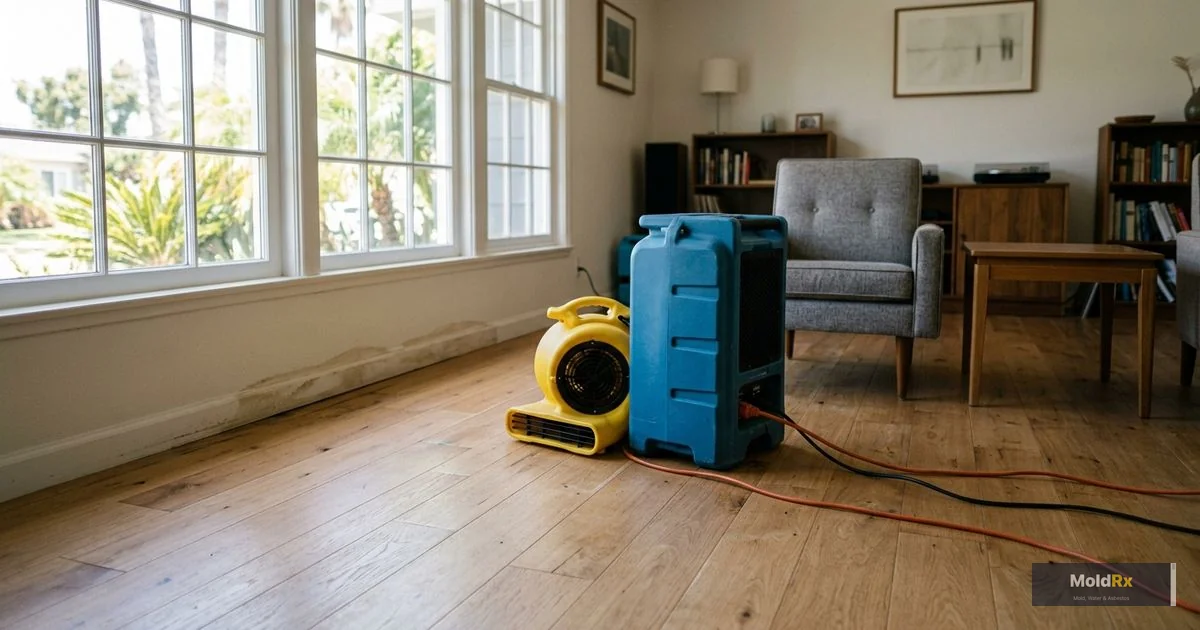
Water and electricity are a lethal combination. Before you step into standing water, move furniture, or start cleaning — address the electrical risk.
Go to your breaker panel and shut off circuits serving any area where water is present. If you are not sure which breakers correspond to which rooms, shut off more rather than fewer.
If your breaker panel is in the affected area — a flooded garage, for example — do not approach it. Do not step through standing water to reach it. Call your electric utility's emergency line or call (888) 609-8907 for help coordinating a safe response. If you smell gas at any point, leave the property immediately and call 911.
Step 2: Call for Professional Help
A burst pipe is not a "wait and see" situation. Water has spread into places you cannot see — wall cavities, under flooring, into adjacent rooms.
Call (888) 609-8907 now. Tell us what happened, how long the water was flowing, which areas are affected, and whether water reached electrical panels or the HVAC system. We will give you an honest timeline and walk you through next steps specific to your situation while a crew is dispatched.
Step 3: Document Everything Before You Clean Up
Before you start mopping, moving things, or pulling up carpet — stop and document what you see. Your insurance claim depends on evidence of the damage, and the best evidence exists right now, before you start changing anything.
Use your phone to take photos and video of:
- The burst pipe itself and the source area
- Standing water — wide shots showing how far it has spread
- Damaged walls, flooring, baseboards, and ceilings
- Damaged furniture, electronics, documents, and personal items
- The water meter reading (if accessible)
Take more photos than you think you need. Walk through every affected room. Open cabinet doors and check closets that share walls with the affected area. Record a narrated video walkthrough if you can. This documentation takes ten minutes and can be worth thousands of dollars when your insurance adjuster arrives.
Step 4: Initial Emergency Cleanup
While you wait for professional help to arrive, you can take steps to reduce the damage — as long as you do so safely.
Remove standing water using a wet/dry shop vacuum if you have one. Mops and towels work for smaller amounts. Push water toward doors, drains, or the lowest point where it can be collected. The goal is to reduce how long materials sit in standing water.
Move belongings out of harm's way. Lift furniture off wet carpet (place aluminum foil or plastic under legs if you cannot move it). Move electronics, documents, and irreplaceable items to a dry area. Do not throw anything away before documenting it.
Remove excess water from surfaces. Wipe down wet walls with dry towels. Blot wet upholstery rather than rubbing. If ceiling drywall is sagging with trapped water, place a bucket underneath and carefully puncture the center of the sag with a screwdriver to release the water in a controlled way — a saturated ceiling will eventually collapse on its own, causing more damage.
Increase air circulation. Open interior doors and run fans across wet surfaces. If you have a dehumidifier, turn it on at the highest extraction rate.
What not to do:
- Do not use a regular household vacuum on water — electrical hazard
- Do not turn on the HVAC system if mold may be present — it will spread spores through every connected room
- Do not use a hair dryer or heat gun on wet walls — rapid surface drying traps moisture behind the surface
- Do not pull up carpet or cut into wet drywall without professional guidance — older homes may contain asbestos or lead paint
- Do not attempt pipe repair yourself until a licensed plumber has assessed the situation
Types of Pipe Failures
Not every "burst pipe" is the same. The type of failure determines the volume of water, the contamination level, and the cleanup required.
Supply line breaks are the most damaging. Supply lines carry pressurized fresh water — typically 5 to 10 gallons per minute. An 8-hour overnight break can release over 2,000 gallons into your home. The water is clean (Category 1), so materials dried quickly can often be salvaged, but the volume and pressure mean water spreads rapidly into wall cavities, under flooring, and through adjacent rooms.
Drain line failures release water more slowly (gravity-fed, not pressurized), but the water is Category 2 (gray water) containing soap, food particles, and bacteria. Materials contacted by gray water require antimicrobial treatment and have more limited salvage potential.
Water heater failures release 40 to 80 gallons immediately, plus continuous supply line flow until shut off. Hot water causes additional damage because heat accelerates swelling and delamination of engineered materials like laminate flooring and cabinet substrates.
Appliance supply line failures — the braided steel or rubber hoses connecting your washing machine, dishwasher, refrigerator, and toilets — are among the most common failure points in residential plumbing. These lines are often installed once and forgotten for decades. Washing machine supply line failures are the single most common source of residential water damage claims nationwide.
Sewer line backups force wastewater back through your lowest fixtures. This is Category 3 (black water) — the most hazardous classification. Any porous material contacting sewage must be removed and disposed of. Keep people and pets away and call for professional help immediately.
What Causes Pipes to Burst in Southern California
If you live in Southern California, you might assume burst pipes are a cold-weather problem that does not apply here. Pipes fail in SoCal more often than most homeowners expect — just for different reasons.
Aging copper pipes. Most homes built between the 1960s and 1990s have copper plumbing. After 40 to 60 years, copper develops pinhole leaks from the inside out through pitting corrosion. Southern California's hard water accelerates this process. A single pinhole is a warning sign — adjacent sections are often close behind, and many homeowners repair one leak only to experience another break weeks later in a different location.
Polybutylene pipes. Homes built between roughly 1978 and 1995 may have polybutylene (Poly-B) supply lines — a gray flexible plastic pipe that reacts with chlorine in treated water and degrades from the inside out. The pipe becomes brittle, develops micro-fractures, and eventually fails. Polybutylene failure is a matter of when, not if. If your home was built during this period, have a plumber confirm your pipe material.
Thermal stress. Southern California does not freeze, but inland areas of Riverside and San Bernardino counties experience significant temperature swings — summer days exceeding 110 degrees, winter nights dropping into the 30s. Pipes in attics are particularly vulnerable: attic temperatures can reach 150 degrees on summer afternoons, then cool dramatically overnight. This repeated expansion and contraction weakens joints and can cause CPVC pipes to become brittle and crack.
Hard water corrosion. Southern California has some of the hardest water in the country. Mineral buildup restricts flow, increases pressure, and accelerates corrosion at joints, valves, and fittings. Water heaters are especially vulnerable — once the sacrificial anode rod is depleted (typically after 3 to 5 years), the tank itself begins corroding.
Excessive water pressure. Pressure above 80 PSI stresses every component in your plumbing system. Many older SoCal homes lack a functioning pressure regulator. High pressure feels great in the shower but dramatically shortens the lifespan of supply lines and appliance connections.
The Damage Timeline: Why Every Hour Matters
The damage a burst pipe causes does not stop when you shut off the water. Moisture that has already soaked into materials continues causing damage on its own timeline.
0-1 hour: Water spreads across flooring, soaks into carpet and padding, and wicks up drywall 12 to 18 inches above the flood line. Water follows gravity into lower levels and seeps into wall cavities.
1-24 hours: Saturated materials swell. Laminate delaminates. Wood floors cup and buckle. Drywall softens. Paint blisters. Content damage increases significantly.
24-48 hours: Mold begins colonizing wet surfaces. Microscopic growth starts on porous materials that remain wet. What was a water damage problem becomes a water damage plus mold problem.
48 hours - 1 week: Mold becomes visible. Contaminated materials must now be removed, not just dried. Restoration cost increases substantially.
Beyond 1 week: Structural damage compounds. Mold spreads through wall cavities and ductwork. The gap between "what could have been saved" and "what needs to be torn out" widens every day.
This is why speed matters more than anything else in a burst pipe emergency. The difference between a contained dry-out and a full mold remediation is often measured in hours, not days. For a detailed hour-by-hour response plan, see our guide to what to do in the first 24 hours after water damage.
When Insurance Covers a Burst Pipe
Most standard homeowner's insurance policies cover water damage from burst pipes and sudden plumbing failures. But there are important limits.
Typically covered: Sudden, accidental pipe failures and the resulting water damage — drywall, flooring, carpet, personal property, emergency restoration, mold remediation from the covered event (though some policies cap mold separately), and temporary housing costs if the damage makes your home uninhabitable.
Typically not covered: The pipe itself (considered maintenance), gradual leaks that went unaddressed (the most common coverage dispute — learning to spot hidden water leaks protects your coverage), flood damage from rising external water (requires separate flood insurance), damage from deferred maintenance, and sewer line backups (requires a separate endorsement).
Protect your claim: Report within 24 hours. Do not delay mitigation — your policy requires reasonable steps to prevent additional damage, and shutting off water and beginning cleanup helps your claim. Keep damaged materials until the adjuster has inspected them. Keep all receipts for emergency expenses.
MoldRx provides thorough documentation from the first phone call through final clearance — moisture readings, drying logs, photos, scope of work, and verification reports structured to support insurance claims.
How to Prevent Burst Pipes
You cannot eliminate the risk entirely, but regular attention to your plumbing system dramatically reduces it.
- Know where your main shutoff valve is — before you need it. Make sure it turns. Label it. If it is corroded, have a plumber replace it. A stuck shutoff valve during a burst pipe emergency turns a bad situation into a catastrophe.
- Inspect appliance supply lines annually. Look for bulging, cracking, or moisture at connections on washing machine, dishwasher, and refrigerator hoses. Replace rubber hoses with braided stainless steel. Replace all supply lines every 5 to 8 years regardless of appearance.
- Monitor your water pressure. A pressure gauge (under $15) on a hose bib tells you where you stand. If pressure exceeds 80 PSI, install or replace the pressure-reducing valve at your main line.
- Flush your water heater annually. Hard water sediment accelerates tank corrosion. Replace the anode rod every 3 to 5 years. Most water heater tank failures are preventable with basic maintenance.
- Know your pipe material. Polybutylene (homes built 1978-1995) and aging copper (40+ years old) are the highest-risk materials. A plumbing inspection can identify vulnerable sections and prioritize replacement before an emergency.
- Install a water leak detection system. Smart sensors near water heaters and washing machines alert your phone when moisture is detected. Whole-house systems include automatic shutoff valves that stop flow the moment a leak occurs — even when you are not home.
- Do not ignore small leaks. A dripping faucet or wet spot on the ceiling is a signal, not a minor inconvenience. Small leaks grow into big leaks. A small plumbing repair now prevents a major restoration project later.
Burst Pipe FAQs
How do I find my main water shutoff valve?
In most Southern California homes, the main shutoff valve is located near the front of the house at ground level — often near an exterior hose bib, in the garage on the wall closest to the street, or at the water meter box near the curb. If the valve is at the meter, you may need a meter key (available at hardware stores for under $10) to turn it. Every adult in your household should know where this valve is before an emergency happens.
My pipe burst while I was away. How bad is the damage?
It depends on how long the water was flowing. A supply line running for several hours can release thousands of gallons. Even if the visible water seems manageable, it has almost certainly spread into wall cavities, under flooring, and into areas you cannot see. Professional assessment with moisture meters and thermal imaging is the only way to determine the full extent. Call (888) 609-8907.
Can I fix a burst pipe myself?
You can stop the water by shutting off the supply and applying a temporary pipe clamp. But the pipe that failed is usually a symptom — a licensed plumber should assess whether adjacent pipes are at similar risk. For the water damage itself, whether you can handle it yourself depends on scope: water that has spread into wall cavities or sat for more than a few hours typically requires professional extraction and structural drying.
How much water comes out of a burst pipe?
A typical residential supply line delivers 5 to 10 gallons per minute — that is 300 to 600 gallons per hour. An overnight burst can release 2,400 to 4,800 gallons. Even 30 minutes of flow releases 150 to 300 gallons, enough to saturate flooring, wick up walls, and seep into lower levels.
Will my homeowner's insurance cover the damage?
Standard policies typically cover sudden, accidental pipe failures — including extraction, structural drying, material replacement, and personal property. The pipe repair itself is usually excluded as maintenance. Damage from gradual leaks or deferred maintenance may be denied. Report promptly and document everything. See the insurance section above for details.
How quickly does mold grow after a burst pipe?
Mold can begin colonizing wet surfaces within 24 to 48 hours. Visible growth typically appears within 3 to 12 days. Professional structural drying within that first 24 to 48 hour window is the most effective way to prevent it. Read our guide on how fast mold grows after water damage.
Should I turn off my water heater after a burst pipe?
Yes. Once the main water supply is off, shut off your water heater (gas valve or circuit breaker). A water heater running without incoming water can overheat and be damaged. If the water heater itself failed, shut off both the water supply to the unit and the energy source.
What should I do about wet carpet?
Do not pull up carpet yourself unless advised by a professional. Extract water with a wet/dry vacuum, place fans for air circulation, and keep people off the wet area to avoid pushing water deeper into the padding. Carpet padding that stays wet beyond 24 to 48 hours usually cannot be salvaged.
Do I need to move out during restoration?
In most cases, no. Once extraction is complete and drying equipment is running, you can stay — though the equipment is loud. If sewage is involved, mold is spreading, or structural or electrical safety is compromised, temporary relocation may be necessary.
How long does the full restoration process take?
A typical burst pipe affecting one or two rooms: extraction on day one, structural drying for 3 to 5 days, repairs over the following 1 to 2 weeks. Major events affecting multiple rooms or where mold has established can extend to several weeks. We will give you an honest timeline — not an optimistic guess.
Your Pipe Burst. Here Is What Happens Next.
If you have followed the steps in this guide, you have already done the most important things: stopped the water, addressed electrical safety, and reduced immediate damage. What happens next determines whether this stays a manageable restoration project or becomes something much larger and more expensive.
Water that has soaked into walls, flooring, and cavities does not dry on its own — not with fans, not with open windows, not with a household dehumidifier. It needs commercial extraction equipment, industrial dehumidifiers, and targeted air movement guided by moisture readings. And it needs to start within hours, not days.
Call (888) 609-8907 right now. You will talk to a real person who will help you understand what you are dealing with and what needs to happen next. We serve Orange County, Riverside County, and San Bernardino County with IICRC-certified professionals equipped for exactly this situation.
Every hour matters. The water may be off, but the damage clock is still running.
(888) 609-8907 — Call now for emergency assessment and response.
Emergency Services | Water Damage Restoration | Get a Free Estimate | All Service Areas