A Practical Guide for Homeowners
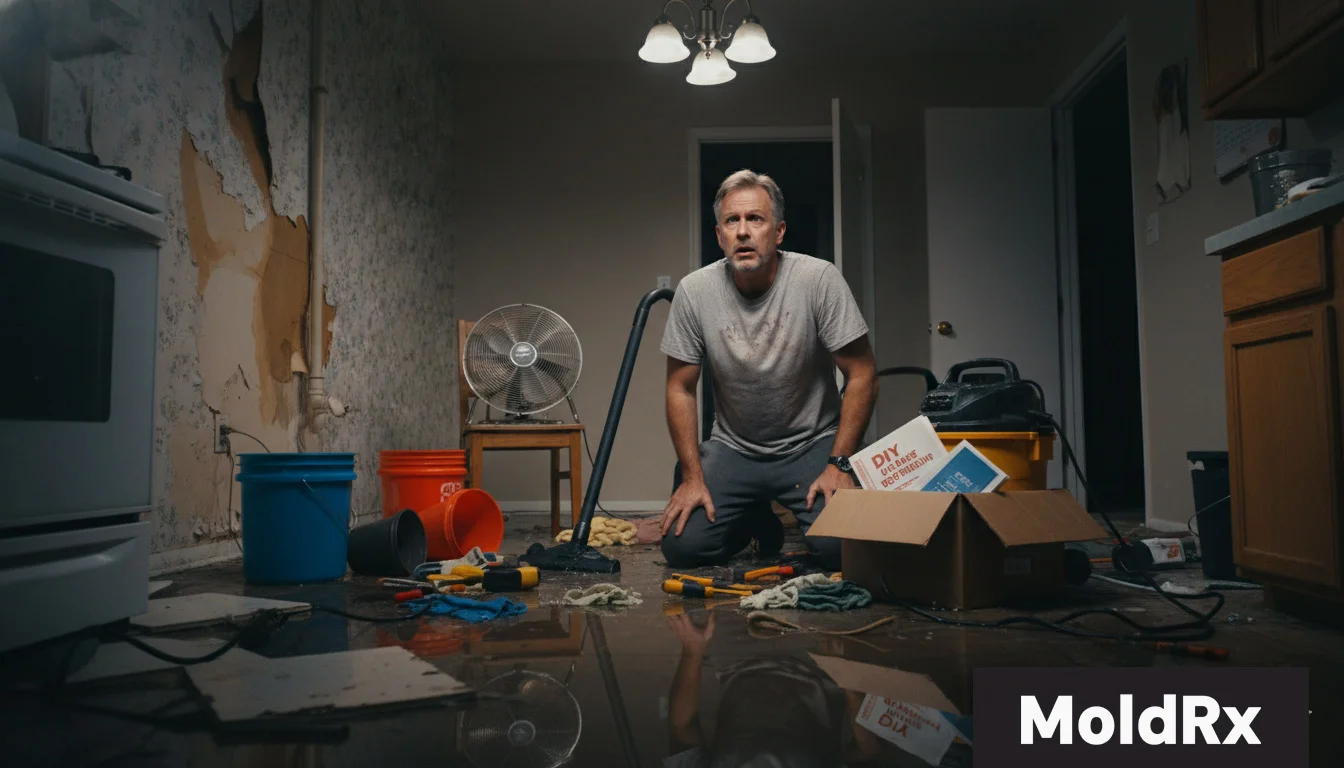
When water floods your kitchen, soaks through a ceiling, or pools in your basement, the first question is often: can I handle this myself, or do I need to call someone? The honest answer is—it depends. Some water damage situations are manageable for a capable homeowner with the right approach. Others require professional equipment and expertise that no amount of DIY effort can replace.
Here’s how to tell the difference and make the right call for your situation.
When DIY Water Damage Cleanup Can Work
Not every water intrusion requires a restoration crew. Small, contained incidents with clean water can often be handled by homeowners who act quickly and thoroughly. The key factors that make DIY cleanup feasible are the size of the affected area, the type of water involved, how long it’s been wet, and what materials are affected.
Size matters. If the water damage covers less than about 10 square feet—roughly the size of a small bathroom—and is limited to a single room or area, DIY cleanup is often realistic. Once you’re dealing with multiple rooms, large sections of flooring, or water that has traveled between floors, the scope typically exceeds what household equipment can effectively handle.
Water type is critical. The restoration industry classifies water into three categories. Category 1 is clean water from sources like a broken supply line, overflowing sink, or rainwater. This is generally safe to handle yourself. Category 2 (gray water) comes from sources like washing machines, dishwashers, or toilet overflow with urine only—it contains some contaminants and requires more caution. Category 3 (black water) includes sewage, floodwater from outside, or water that has sat stagnant for extended periods—this is hazardous and should never be a DIY project.
Time is everything. The 24-48 hour window is real. Mold can begin growing within 24 to 48 hours of water exposure in the right conditions. If you discover fresh water damage and can begin cleanup immediately, DIY is more viable. If water has been sitting for days—or you're not sure how long—professional assessment becomes important.
What DIY Water Damage Cleanup Actually Requires
If your situation meets the criteria above, here’s what effective DIY cleanup involves. Be honest with yourself about whether you have the time, equipment, and physical ability to do this properly.
Stop the water source first. This seems obvious, but in the rush to start cleaning, people sometimes forget to shut off the supply line, turn off the water heater, or address whatever is causing the water intrusion. Nothing else matters if water is still coming in.
Remove standing water quickly. Use a wet/dry vacuum, mops, and towels to extract as much water as possible. The faster you get standing water out, the less it can soak into materials. For significant amounts of water, you may need to rent extraction equipment—a standard household wet vac has limited capacity.
Remove saturated materials. Wet carpet padding almost always needs to be discarded—it’s nearly impossible to dry thoroughly and becomes a mold breeding ground. Carpet itself can sometimes be saved if dried within 24-48 hours, but padding is usually a loss. Wet drywall that has begun to sag, crumble, or show water staining above the waterline typically needs to be cut out and replaced.
Dry everything thoroughly. This is where most DIY efforts fall short. Opening windows and running a household fan is not sufficient for anything beyond a minor spill. Effective drying requires high-velocity air movers and dehumidifiers. For a single room, you might get by with a rental dehumidifier and several box fans running continuously for days. For larger areas, professional-grade equipment becomes necessary.
Clean and disinfect. Any surfaces that contacted the water need to be cleaned with appropriate solutions. For Category 1 water, standard household cleaners work. For Category 2 water, antimicrobial solutions are recommended. Porous materials that absorbed contaminated water often cannot be adequately cleaned and may need replacement.
Verify dryness. This is the step most homeowners skip—and it’s the one that causes problems later. Materials can feel dry to the touch while still holding moisture inside. Professionals use moisture meters to verify that materials have returned to normal moisture levels. Without this verification, you may seal up walls or replace flooring over materials that are still wet, creating perfect conditions for hidden mold growth.
When You Need Professional Water Damage Restoration
Certain situations exceed what DIY cleanup can safely or effectively address. Professional water damage restoration isn't optional—it's necessary. If any of the following apply, professional help is required.
The water is contaminated. Category 3 (black water) situations—sewage backups, floodwater from outside, or water containing hazardous materials—require professional remediation. The health risks from improper handling are serious, and the cleanup protocols are specific and rigorous.
Water has affected structural elements. If water has soaked into wall cavities, subfloors, ceiling structures, or insulation, household equipment cannot adequately dry these materials. Learn how to spot hidden water leaks before they cause extensive damage. Water inside walls can persist for weeks, causing hidden mold growth and structural damage that won't become apparent until much later.
Multiple rooms or floors are affected. Large-scale water damage requires commercial-grade extraction equipment, multiple air movers, industrial dehumidifiers, and careful moisture monitoring across all affected areas. The equipment alone for a multi-room restoration can cost thousands to rent, and knowing how to deploy it effectively requires training and experience.
You can’t begin cleanup immediately. If you discover water damage after being away, or if the water has been present for more than 24-48 hours, mold growth may have already begun in hidden areas. Professional assessment can identify whether remediation is needed beyond just drying.
You’re dealing with finished spaces. Basements with finished walls, rooms with built-in cabinetry, or areas with hardwood floors present unique challenges. Water behind finished walls or under hardwood can’t be dried with surface-level airflow. Professionals have equipment to inject air into wall cavities and monitor moisture levels inside structures.
Insurance is involved. If you're filing a claim, professional documentation is required. DIY repairs may not be covered, and improper cleanup that leads to later mold problems can complicate claims significantly.
The Real Risk of Getting It Wrong
The consequences of inadequate water damage cleanup aren't immediately visible—that's what makes them dangerous. How Fast Does Mold Grow After Water Damage? Mold can establish itself within 24-48 hours in damp conditions. But you may not see it for weeks or months, because it often grows first in hidden spaces: inside wall cavities, beneath flooring, behind cabinets, in ceiling structures.
By the time visible mold appears or musty odors develop, the problem has typically spread well beyond the original water damage area. What started as a manageable water cleanup becomes a mold problem—often requiring mold remediation costing several times more than professional water restoration would have.
Beyond mold, inadequate drying can lead to warped flooring, delaminating subfloor, damaged structural framing, and ongoing humidity issues in the affected space.
How to Decide
Ask yourself these questions honestly:
Is the affected area small (under 10 square feet) and contained to one room? Is the water clean (Category 1) and from a known source? Did you discover it immediately and can begin cleanup within hours? Are the affected materials primarily hard surfaces rather than wall cavities, subfloors, or insulation? Do you have access to adequate drying equipment—not just fans, but proper air movers and dehumidifiers?
If you answered yes to all of these, DIY cleanup may be appropriate. If you answered no to any of them, professional assessment is the safer choice.
When in Doubt, Get an Assessment
If you’re uncertain whether your situation is DIY-appropriate, getting a professional assessment doesn’t commit you to anything. A qualified water damage professional can evaluate the scope of the damage, identify hidden moisture, and give you honest guidance about what’s actually needed.
MoldRx coordinates water damage restoration services throughout Orange County, Riverside County, and San Bernardino County. Our vetted professionals can assess your situation and tell you straight whether you're dealing with something manageable or something that needs proper equipment and expertise. We'd rather tell you it's a minor issue than sell you services you don't need.
Contact MoldRx if you’re facing water damage and want an honest assessment of your options.