You got your mold test results back and something doesn't add up. Maybe the report says everything is normal, but you still smell that musty odor every time you walk into the basement. Or maybe the results show elevated levels, but you've never had a water problem and the house feels fine. Either way, you're asking a reasonable question: can mold testing actually be wrong?
Yes -- mold testing can produce misleading results. A single round of air sampling is a snapshot of conditions during a five- to ten-minute window, not a guarantee of what's happening throughout your entire home. False negatives (missed problems) and false positives (flagged non-problems) both happen, and understanding why they occur is the key to getting accurate, actionable information. The goal isn't to distrust testing -- it's to understand its limitations so you can use it effectively.
This guide covers what causes false negatives and false positives, why results vary between companies, how to minimize errors, and what to do when your results don't match what your senses are telling you.
False Negatives: When Testing Misses a Real Problem
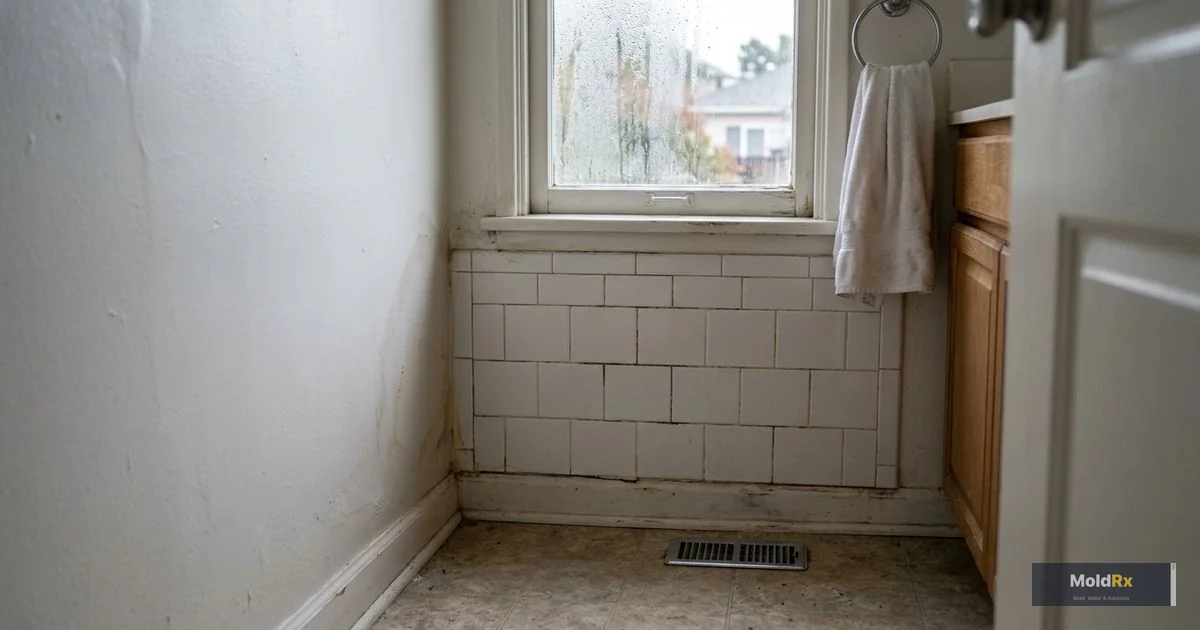
A false negative is the more dangerous error. You have mold growing somewhere in your home, but the test results come back normal. You move on thinking everything is fine, and the problem continues -- or gets worse. Here's what causes it.
Testing During Unfavorable Conditions
Mold spore release fluctuates with humidity, temperature, and air movement. If your home was tested on a cold, dry day with suppressed spore activity, the air sample may capture fewer spores than would be present under different conditions. Similarly, if you cleaned thoroughly or aired out the house before the inspector arrived, you may have temporarily reduced airborne concentrations without realizing you were undermining the test. The air in your home should reflect your normal living conditions during testing, not a best-case scenario.
HVAC System Was Off or Recently Changed
Your HVAC system circulates air through every room -- including rooms with concealed mold. When it's running, it moves spores from contaminated areas into the general airspace where a sample can capture them. When it's off, those spores may stay trapped near the source. If the system was off for an extended period before testing, or if filters were recently changed, the air sample may underrepresent the actual mold burden in the home.
Mold Behind Sealed Walls, Floors, or Ceilings
This is one of the most common causes of false negatives. Mold growing inside a well-sealed wall cavity, beneath an intact floor, or above an undamaged ceiling may not release enough spores into the occupied airspace to register on an air sample. Air sampling works well when there's some air exchange between the contaminated space and the room -- gaps around outlets, HVAC returns, visible damage. It is less reliable when the growth is fully encapsulated with no pathway for spores to reach the breathing zone. Our guide on how professionals detect hidden mold covers the investigative tools -- thermal imaging, moisture meters, wall cavity sampling -- that fill this gap.
Testing the Wrong Location
If the inspector collected samples in the kitchen and living room but the mold is growing inside a bathroom wall or in the attic, the results may look normal even though a problem exists elsewhere in the home. Mold spores don't distribute evenly through a building. Concentrations are highest near the source and drop off with distance, especially in homes with multiple floors or zones served by separate HVAC systems.
A thorough inspection collects samples from multiple locations, prioritizing rooms where problems are suspected -- rooms with past water damage, rooms where occupants report symptoms, rooms with a musty smell. An inspector who samples only one or two rooms may miss a problem that's concentrated elsewhere.
Dormant Mold
Mold needs moisture to grow and release spores. If a previous water event caused growth but the moisture source has since dried out, the colony may go dormant -- alive but not actively producing spores. A dormant colony won't register on an air sample. The mold is still there, the structural damage it caused is still there, but the test doesn't detect it. This is particularly relevant after a water event that was addressed quickly but not thoroughly -- the visible water is gone, but mold that established itself during the wet period is dormant and waiting for the next moisture event to reactivate.
False Positives: When Results Suggest a Problem That Isn't There
A false positive is less dangerous but still costly and stressful. The report shows elevated mold levels, and you're told you have a problem -- but there's actually no active mold growth in your home. The spores came from somewhere else.
Outdoor Spores Flooding In
This is the most common cause of apparently elevated indoor results. If windows or doors were open during testing -- or were open recently -- outdoor spores may have flooded the indoor environment and inflated the sample. In Southern California, outdoor mold levels spike during and after rain events, and residual spores inside the home can appear elevated even after windows are closed.
The outdoor control sample exists to catch this, but it only captures outdoor conditions during the same brief window. If a Santa Ana wind shifted conditions between the outdoor and indoor samples, or if the outdoor sample was collected in a sheltered location that didn't reflect ambient conditions near the home's openings, the comparison may be skewed.
Recent Disturbance
Activities that agitate settled dust send dormant spores back into the air. Vacuuming without a HEPA filter, sweeping, moving boxes, running a leaf blower near an open window, or nearby construction can all temporarily spike airborne spore counts without indicating active growth. If testing happens shortly after a disturbance, results may reflect a temporary spike rather than a chronic condition. This is why experienced inspectors ask about recent activities and may recommend testing under undisturbed conditions.
Sampling Near an Open Window or Door
A spore trap placed near an open window, near a frequently used door, or in the path of outdoor air infiltration will capture more outdoor spores than a sample in the center of a room with closed windows. The result: indoor counts that look elevated because the sample is essentially measuring outdoor air. An experienced inspector places samples in locations that represent the breathing zone, away from direct outdoor air paths.
Normal Outdoor Species at Expected Levels
Sometimes homeowners see mold names on a report and assume any detection is bad news. But Cladosporium, Alternaria, basidiospores, and many other genera are normal components of outdoor air. Finding them indoors at levels comparable to or lower than the outdoor control is completely expected. A report listing these species isn't a false positive in the technical sense, but it can feel like one if the lab report doesn't explain the context. The raw data needs to be read correctly to mean anything useful.
Why Results Vary Between Companies
It's not unusual for two different testing companies to produce different results from the same home. Sometimes the difference is significant enough that one company recommends remediation and the other says everything looks fine. This doesn't necessarily mean one is dishonest -- it often means the testing conditions were different.
Sample Location and Number of Samples
There is no universal protocol dictating exactly where samples must be taken. One inspector might sample two rooms; another might sample five rooms plus problem areas. More samples in more locations provide a more complete picture. Fewer samples mean more opportunity to miss a localized problem or to catch a localized anomaly that doesn't represent the whole house.
Timing
A test at 8:00 AM on a cool, dry morning and a test at 2:00 PM on a warm, humid afternoon in the same house can produce very different results. Mold spore release increases with warmth and humidity. HVAC cycling, occupant activity, and wind conditions all change throughout the day. Two tests a week apart -- one before a rain event and one after -- may also diverge significantly.
Lab Methodology and Analyst Variability
Even with AIHA-accredited laboratories, there is inherent variability in spore trap analysis. A technician examines a portion of the sample slide under a microscope, identifies spore types by appearance, and counts them. Different analysts may classify borderline spores differently, and different labs may examine different portions of the slide. The numbers are accurate within the method's precision, but they are not exact.
Interpretation Differences
Two inspectors looking at the same lab data may reach different conclusions. One may consider indoor Aspergillus/Penicillium at twice the outdoor level to be mildly elevated but not actionable; another may flag the same ratio as a concern. There is no bright-line threshold separating "normal" from "elevated" -- interpretation requires professional judgment, and that judgment varies. Our guide on how to find a qualified mold inspector covers what to look for in an inspector whose judgment you can trust.
How to Minimize Testing Errors
You can't eliminate the inherent limitations of air sampling, but you can significantly reduce the chance of misleading results by following a few principles.
Hire an Experienced, Independent Inspector
An inspector with recognized certifications (ACAC CMI/CIE or MICRO CMI), an AIHA-accredited lab, and no financial relationship with a remediation company has both the skill and the incentive to get your results right. Experience means they know where to sample and how to interpret borderline results. Independence means they have no motivation to inflate or downplay findings.
Collect Multiple Samples Across Multiple Locations
A single indoor sample is never enough. At minimum, a competent assessment includes an outdoor control sample and indoor samples from every area of concern plus at least one unaffected area for comparison. More samples mean more data points, which means more confidence in the overall picture.
Always Include an Outdoor Control
An indoor result without an outdoor baseline is essentially uninterpretable. The outdoor control establishes what's normal for your area on the day of testing. Any inspector who skips the outdoor sample is cutting the most important corner in the entire process.
Test Under Normal Living Conditions
Don't deep-clean or air out the house before the inspector arrives. Don't open or close windows you wouldn't normally open or close. Run the HVAC system the way you normally run it. The test should capture what you actually live with, not a best-case scenario.
Discuss Conditions and History With Your Inspector
Tell the inspector about past water events, areas where you notice odors, rooms where symptoms seem worse, recent renovations, and anything else that might guide where and how they sample. The more context they have, the better they can design a sampling strategy that catches what needs catching.
Consider Supplementary Testing Methods
If air sampling results are normal but you have strong reasons to suspect a problem, ask about supplementary methods. Wall cavity sampling, surface tape lifts, and moisture mapping with thermal imaging can catch problems that standard air sampling misses. Our guide on types of mold testing covers when each method is appropriate.
What to Do When Results Don't Match What You See or Smell
When Results Are Normal but You Know Something Is Wrong
Trust your senses. A normal air test does not mean there is no mold in your home -- it means the air sample did not capture elevated spore levels during that specific sampling window. If you have a persistent musty smell, visible water staining, or health symptoms that correlate with time spent in the home, the problem may still exist.
Next steps:
- Request additional testing. A second round under different conditions (different time of day, HVAC running, higher humidity) may capture what the first round missed.
- Ask for wall cavity or surface sampling. If the suspected source is behind a wall or under flooring, direct sampling of the concealed space is more reliable than room air sampling.
- Investigate the moisture. Moisture meters and thermal imaging can identify damp areas that suggest water intrusion -- without relying on air sampling at all.
- Don't dismiss your symptoms. Mold exposure affects different people differently. If your symptoms consistently improve away from home, that correlation is meaningful regardless of what one air test showed.
When Results Are Alarming but the Home Seems Fine
Before assuming you have a major hidden problem, consider whether testing conditions may have influenced the results. Were windows open? Was there recent disturbance or construction? Were samples collected near a doorway? Was the outdoor control representative? If any of these factors apply, consider retesting under controlled conditions. If elevated results persist across a second round with proper controls, the finding is real and warrants investigation -- mold can grow in concealed spaces without producing a detectable odor, especially in early stages.
Frequently Asked Questions
Can a mold test give a false positive?
Yes. Indoor air samples can show elevated spore counts due to outdoor spores entering through open windows, recent dust disturbance, sampling near outdoor air sources, or testing shortly after a rain event. These results may suggest an indoor mold problem when one doesn't exist. An experienced inspector accounts for these variables, and a properly collected outdoor control sample helps distinguish genuine indoor elevation from outdoor contamination.
Can a mold test give a false negative?
Yes. Mold behind sealed walls may not release enough spores into the living space to register on an air sample. Dormant mold that's dried out won't produce airborne spores. Testing during low-humidity conditions, with the HVAC off, or in the wrong rooms can all produce normal-looking results despite active growth elsewhere in the home.
How accurate are professional mold tests?
Professional air sampling with calibrated equipment and an AIHA-accredited lab is the most reliable method available for assessing indoor air quality. However, it remains a snapshot. Accuracy increases with more sample locations, proper outdoor controls, appropriate conditions, and experienced interpretation. No single test is 100 percent conclusive.
Are DIY mold test kits accurate?
Retail settle-plate kits have significant limitations. They cannot measure spore concentrations per volume of air, cannot provide the indoor/outdoor comparison that professional interpretation relies on, and will almost always "grow" mold because spores are everywhere. A positive result tells you almost nothing useful, and a negative result doesn't reliably rule out a problem. Our guide on when mold testing is worth it covers this in more detail.
Why did two testing companies give me different results?
Differences in sample location, timing, number of samples, lab methodology, and interpretation can all produce different results from the same home. This doesn't necessarily mean one company was wrong -- spore levels fluctuate throughout the day. If the discrepancy is significant, a third round under documented, controlled conditions can help resolve it.
Can mold testing miss black mold?
Yes. Stachybotrys (commonly called "black mold") produces heavy, sticky spores that don't become airborne easily. A colony inside a sealed wall cavity may not release enough spores to appear in a standard room air sample. Surface or wall cavity sampling is more reliable for detecting Stachybotrys in concealed locations. Any detection in an air sample is significant precisely because it's hard to capture -- even a small number suggests a substantial colony. Learn more in our guide on black mold versus regular mold.
Should I retest if my results seem wrong?
Yes. If your results contradict what you're observing -- normal results despite a persistent musty smell, or elevated results in a home with no moisture history -- retesting under different or more controlled conditions is reasonable. Request that the inspector document testing conditions thoroughly (windows open/closed, HVAC status, recent weather, time of day) so you can compare variables between rounds.
Does the time of year affect mold test accuracy?
Yes. Outdoor mold levels vary significantly by season. In Southern California, outdoor spore counts are higher during warmer months and after rain. Low outdoor counts can make modest indoor levels look elevated by comparison; extremely high outdoor counts can mask genuine indoor problems. A qualified inspector interprets results in the context of seasonal conditions.
What is the most reliable type of mold test?
No single testing method is the most reliable for every situation. Air sampling is best for overall indoor air quality assessment. Surface sampling (tape lifts) is best for identifying what's growing on a specific material. Wall cavity sampling is best for detecting mold in concealed spaces. ERMI testing provides a broader species profile. The most reliable approach is usually a combination tailored to your specific situation. Our guide on types of mold testing breaks down each method.
If my test was negative, does that guarantee I don't have mold?
No. A normal result means elevated mold levels were not detected in the samples collected at that time and in those locations. Mold in concealed spaces, dormant mold, or mold in rooms that weren't sampled would not necessarily appear. If you have ongoing concerns -- especially persistent odor or health symptoms -- further investigation is warranted regardless of the initial test outcome.
Testing Has Limits -- But It's Still Worth Doing Right
Mold testing is imperfect. No honest professional will tell you otherwise. A single round of air sampling is a snapshot that can miss real problems and occasionally flag non-problems. The results depend on where the samples are taken, when they're taken, what the weather is doing, how the building's air is moving, and who interprets the data.
But that doesn't mean testing is worthless -- far from it. Professional mold testing performed by an experienced, independent inspector under appropriate conditions is still one of the most effective tools for detecting hidden contamination and guiding remediation decisions. The key is understanding what testing can and can't do so you use it as one piece of the puzzle rather than treating a single report as the final word. When results and reality don't match, the answer is to investigate further -- more samples, different methods, better conditions -- until the data and your observations converge.
MoldRx provides professional mold testing and remediation throughout Southern California. If you've received test results that don't make sense, or if you want testing done right the first time, we can help.
Call (888) 609-8907 or request a free estimate to talk through your situation.