Your crawl space is probably the last place you think about. It's dark, cramped, and easy to forget — until something goes wrong. A musty smell drifting up from the floor. Allergies that won't quit. Soft spots in your hardwood. By the time you notice these signs, mold may have been growing under your house for months.
Crawl space mold is caused by ground moisture, poor ventilation, and plumbing leaks — and it directly affects the air quality in the living space above. Because of the stack effect, air from your crawl space continuously rises into your home, carrying mold spores, musty odors, and excess humidity with it. What grows under the house doesn't stay under the house.
This guide covers why crawl spaces grow mold, how to tell if you have a problem, what remediation looks like, and how to prevent it from coming back.
Why Crawl Spaces Grow Mold
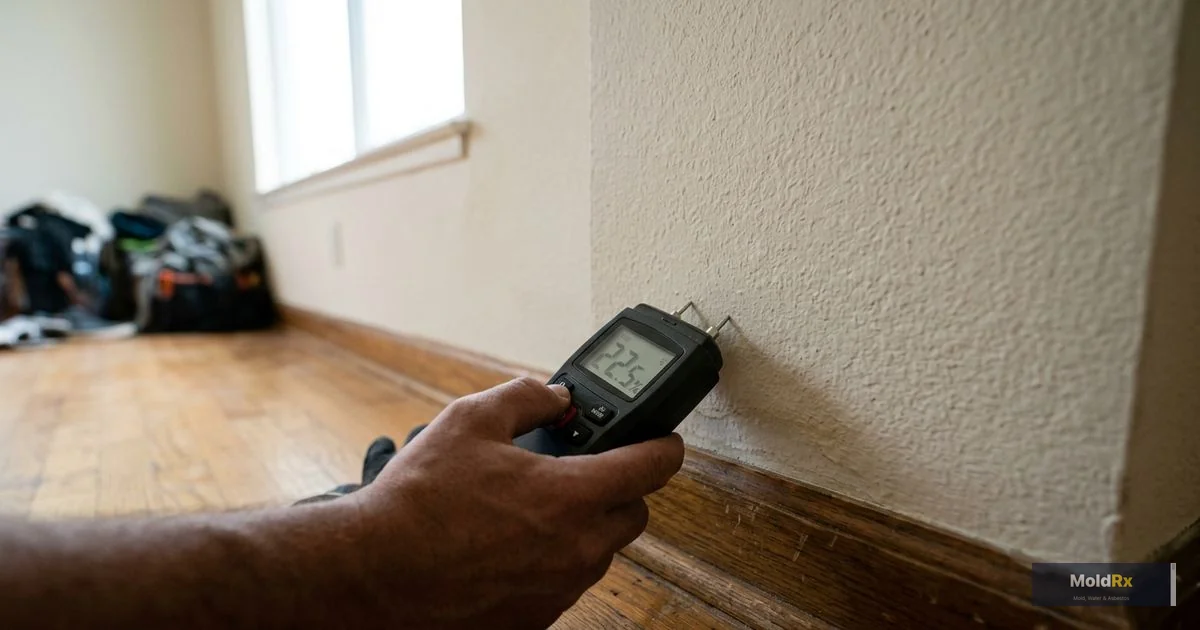
A crawl space is, by design, the most mold-friendly environment in a home. It combines every condition mold needs — moisture, organic material, darkness, still air, and moderate temperatures — in an enclosed space that nobody monitors.
Ground Moisture
The ground beneath your home releases moisture continuously. Even in Southern California's dry climate, soil moisture migrates upward through bare dirt floors and foundation walls. After rain events, irrigation cycles, or seasonal water table changes, that moisture increases significantly. Without a vapor barrier, ground moisture evaporates into the enclosed space and saturates the wood framing, floor joists, subfloor sheathing, and insulation above.
In raised-foundation homes — common throughout Orange County, Riverside County, and San Bernardino County — the crawl space is the primary interface between the ground and the living space.
Poor Ventilation
Crawl spaces are enclosed by foundation walls on all sides. Conventional construction includes vents for air exchange, but these vents are often insufficient, blocked by debris or landscaping, painted over, or sealed by homeowners trying to keep pests out.
Even when vents are open, they don't always help. In humid conditions — coastal summer mornings, rainy season, or after heavy irrigation — outside air entering through vents can introduce more moisture than it removes. Warm, humid air entering a cooler crawl space condenses on floor joists and metal ductwork, adding moisture to the space the vents are supposed to dry.
Plumbing Leaks
Many homes route supply lines, drain lines, and water heater connections through the crawl space. A slow leak from a pipe joint, a corroded fitting, or a dripping connection can go unnoticed for months because nobody goes down there to check. The leaked water wets framing and soil, raising humidity and feeding mold growth on every organic surface it touches.
Plumbing leaks are particularly damaging because they combine a direct water source with existing moisture conditions. A crawl space that was borderline can become heavily contaminated once a plumbing leak adds continuous water to the environment.
Organic Material Everywhere
Wood floor joists, subflooring, rim joists, sill plates, and paper-faced insulation are all food sources for mold. A crawl space is essentially cellulose-rich building materials in direct contact with the moisture sources described above.
Signs You Have Crawl Space Mold
Crawl space mold is hidden by definition — you can't see it from your living space, and most homeowners never go into their crawl space. But the mold sends signals upward into the home that are recognizable if you know what to look for. Many of these overlap with the signs of mold behind walls — the difference is the direction: these signals come from below rather than behind.
Musty Odors Rising from the Floor
A persistent musty or earthy smell at floor level — particularly over carpeted areas, near floor registers, or in rooms above the crawl space — is one of the earliest indicators. The odor comes from microbial volatile organic compounds (MVOCs) that mold produces as it grows. If the smell intensifies on humid days, after rain, or when the HVAC system runs, it's likely originating from the crawl space.
Unexplained Allergy and Respiratory Symptoms
Mold spores from the crawl space enter the home through gaps in the subfloor, around plumbing and electrical penetrations, and through HVAC returns at floor level. If household members experience persistent congestion, sneezing, itchy eyes, headaches, or worsening asthma — and symptoms improve when they leave the house — elevated mold spore levels from the crawl space are a plausible cause.
Sagging or Soft Floors
When floor joists and subflooring absorb moisture over extended periods, they lose structural integrity. Floors that feel bouncy, soft, or uneven — or that have developed a noticeable sag — may indicate moisture damage and mold colonization in the crawl space below. This is an advanced sign that usually means the problem has been developing for months or longer.
High Indoor Humidity
If your home feels humid despite air conditioning and ventilation, the crawl space may be the source. Excessive moisture under the house migrates upward, raising indoor humidity levels and causing condensation on windows. A hygrometer reading consistently above 60% relative humidity indoors — especially at floor level — warrants investigation.
Visible Mold in the Crawl Space Itself
If you or an inspector enter the crawl space, mold growth may be visible on floor joists, subfloor sheathing, sill plates, and insulation. It often appears as white, gray, green, or black discoloration on wood surfaces, sometimes with a fuzzy or web-like texture. White mold is frequently mistaken for efflorescence or natural wood coloring. Even if the wood appears structurally sound, visible mold means spores are being produced and entering the living space above.
The Stack Effect: How Crawl Space Mold Affects Your Indoor Air
Understanding why crawl space mold matters to the living space above requires understanding the stack effect — the natural air movement pattern that connects every level of a building.
Warm air rises. Indoor air moves upward and exits through the upper portions of the building — attic spaces, roof penetrations, upper-story windows, and exhaust vents. As air leaves the top, replacement air is drawn in from below — through the crawl space, through gaps in the subfloor, around penetrations, and through the lower building envelope.
Research consistently shows that 40% to 50% of the air on the first floor of a home originates from the crawl space or basement below. That air carries whatever is in the crawl space: moisture, mold spores, MVOCs, and potentially soil gases. If your crawl space has active mold growth, a significant percentage of the air your family breathes passed through that contaminated space on its way up.
This is why crawl space mold isn't just a structural concern — it's an indoor air quality problem. You may never set foot in your crawl space, but you're breathing its air every day. Professional mold testing can measure spore levels in your living space to determine whether the crawl space is affecting indoor air quality.
SoCal-Specific Factors: Why Crawl Space Mold Happens Here
Southern California homeowners tend to dismiss crawl space moisture because of the dry climate. But several regional factors make crawl space mold more common here than people expect. Understanding why SoCal homes are vulnerable to mold starts with recognizing how local construction and climate interact beneath the house.
Raised Foundation Homes Are Common
While slab-on-grade construction dominates newer developments, many established neighborhoods feature raised-foundation homes — particularly those built before the 1980s. Cities like Riverside, Redlands, Orange, and Fullerton have large stocks of older raised-foundation homes with crawl spaces built without modern moisture management: bare dirt floors, no vapor barrier, minimal insulation, and foundation vents that may be blocked or inadequate.
Irrigation and Grading Issues
Southern California's dry landscape requires irrigation — and over-irrigation is one of the most common causes of crawl space moisture in the region. Sprinkler systems spraying against the foundation, drip lines too close to the perimeter, planters against foundation walls, and grading that directs water toward the house all introduce water at the foundation line. That water migrates into the crawl space through foundation cracks, soil, and joints between the wall and footing.
Because irrigation runs on a schedule, this is a chronic moisture source operating multiple times per week — as reliable as a plumbing leak.
Concentrated Rainfall Events
When Southern California does get rain, it arrives in intense bursts. Homes with grading that slopes toward the foundation, absent or clogged gutters, or insufficient drainage see water pool at the foundation line. The water enters the crawl space, saturates the soil, and raises humidity levels. Between storms, the crawl space may never fully dry before the next rain arrives — particularly during wet winters.
Seasonal Marine Layer Moisture
Coastal and near-coastal communities experience elevated humidity from May through September when the marine layer lingers. Cool, humid air entering crawl space vents condenses on surfaces inside the crawl space, keeping moisture levels elevated for months — even without rain or a plumbing leak.
How Professional Crawl Space Mold Remediation Works
Crawl space mold remediation is a specialized process that accounts for the confined space, the structural materials involved, and the ongoing moisture conditions that caused the problem. Here's what the process typically involves.
Assessment and Moisture Source Identification
Before any mold removal begins, professionals assess the full scope: entering the crawl space to document mold growth, taking moisture readings of framing and soil, identifying the moisture source, and assessing structural integrity of affected members.
The moisture source must be identified and addressed. Removing mold without fixing the water problem means the mold will return. Plumbing leaks are repaired, grading and irrigation issues are corrected, and ventilation failures are addressed before remediation proceeds.
Containment
Because the crawl space communicates directly with the living space above, containment is essential to prevent spores from entering the home during removal. Professionals seal the access point and connections between the crawl space and conditioned space. HEPA-filtered negative air machines ensure contaminated air exhausts outside rather than migrating upward.
Mold Removal and Material Remediation
Wood framing that is mold-contaminated but structurally sound is treated in place — HEPA vacuumed, wire-brushed or sanded to remove surface growth, and treated with professional-grade antimicrobial solutions. Wood that has been severely compromised is replaced. Contaminated insulation is removed and disposed of — once colonized, paper-faced insulation cannot be effectively cleaned. Any debris or organic matter in the crawl space is removed as well.
Air Scrubbing and Clearance Testing
HEPA-filtered air scrubbers run during and after remediation to capture airborne spores. Once the work is complete, an independent party collects air samples from the crawl space and living space above. If spore counts are at or below normal levels, the project passes clearance. If not, additional work is performed and testing is repeated. Learn more about how professionals detect hidden mold and what post-remediation verification involves.
Prevention: Keeping Crawl Space Mold from Coming Back
Remediation addresses the existing mold, but long-term prevention requires changing the conditions that allowed growth in the first place. Several proven strategies — used individually or in combination — can keep a crawl space dry and mold-free.
Vapor Barriers
A vapor barrier is a heavy-duty polyethylene sheet (typically 6 mil to 20 mil thickness) laid over the crawl space floor and sometimes extended up the foundation walls. It prevents ground moisture from evaporating into the crawl space air — the single largest moisture source in most crawl spaces. A crawl space with bare dirt and no vapor barrier is an open moisture highway.
Full Encapsulation
Encapsulation goes beyond a basic vapor barrier. The entire crawl space — floor, foundation walls, and piers — is lined with a continuous, sealed barrier system. Seams are overlapped and taped, the barrier is mechanically fastened to the walls, foundation vents are sealed closed, and a dehumidifier or conditioned air supply manages moisture in the now-sealed space.
Encapsulation eliminates ground moisture intrusion, exterior humidity infiltration through vents, and the condensation cycle caused by humid outside air entering a cooler crawl space. It's the most effective long-term crawl space moisture solution and is increasingly recommended by building scientists as the standard of care.
Ventilation Improvements
For crawl spaces with traditional vented designs, ensuring adequate airflow can reduce moisture buildup — clearing blocked vents, adding vents if the current ratio is insufficient, and in some cases installing powered exhaust fans. However, during humid seasons, vented crawl spaces can gain moisture from incoming air. This is why building scientists increasingly recommend encapsulation over ventilation for crawl spaces with persistent moisture issues.
Drainage Corrections
Grading should slope away from the foundation at a minimum of 6 inches over the first 10 feet. Gutters should discharge at least 4 to 6 feet from the foundation. Irrigation systems should avoid spraying the foundation perimeter. In cases where surface water enters the crawl space during rain, a French drain or interior perimeter drain can intercept water before it reaches the crawl space floor. A sump pump may be needed where water accumulation is unavoidable.
Dehumidification
In encapsulated crawl spaces or where humidity remains elevated despite other measures, a commercial-grade dehumidifier can maintain humidity below 60% — the threshold above which mold growth becomes likely. These units are designed for continuous operation with automatic drainage.
Plumbing Maintenance
Because plumbing leaks are a primary moisture source in crawl spaces, periodic inspection of supply lines, drain connections, and water heater components can catch leaks before they create mold problems.
Crawl Space Mold: 10 FAQs
How common is mold in crawl spaces?
Very common. Crawl spaces combine every condition mold needs — moisture from the ground, organic building materials, darkness, and still air. Homes with vented crawl spaces over bare dirt are particularly susceptible. If your home has a crawl space that's never been inspected for moisture and mold, the probability of at least some growth is significant.
Can crawl space mold make you sick if you never go down there?
Yes. The stack effect pulls air from the crawl space into the living space above — research indicates 40% to 50% of first-floor air originates from below the home. Mold spores, MVOCs, and excess moisture all travel this path. You don't need to enter the crawl space to be affected by what's growing there.
What does crawl space mold look like?
Mold on crawl space framing appears as white, gray, green, or black discoloration on wood surfaces — floor joists, subfloor sheathing, rim joists, and sill plates. White mold is often overlooked because it resembles efflorescence or natural wood coloring. Heavier growth may appear fuzzy or web-like, spreading across large sections of framing.
How do I know if I have mold under my house without going into the crawl space?
Indirect signs include a persistent musty smell at floor level, allergy or respiratory symptoms that improve when you leave home, sagging or soft floors, and high indoor humidity. Professional mold testing with air sampling in the living space can detect elevated spore levels indicating a crawl space source — without requiring you to enter the space yourself.
Is crawl space mold covered by homeowner's insurance?
Mold resulting from a sudden, accidental event — such as a burst pipe — may be covered, while mold from gradual conditions like poor ventilation or ground moisture is typically excluded. Coverage varies by policy. If you discover crawl space mold, document everything before remediation begins and review your policy's mold provisions.
Should I seal my crawl space vents to prevent mold?
Simply sealing vents without other measures can make moisture problems worse by trapping humidity with no escape route. Vent sealing should be part of a comprehensive encapsulation system that includes a sealed vapor barrier, dehumidification or conditioned air supply, and proper drainage. Sealing vents alone, without controlling moisture from other sources, can accelerate mold growth rather than prevent it.
Can I treat crawl space mold myself?
For small areas of surface mold on accessible, structurally sound wood, some homeowners can address limited crawl space mold — if the moisture source is also corrected. However, crawl spaces present unique challenges: confined space, high spore concentrations, difficulty with containment, and working in spaces that may be only 18 to 36 inches high. For any significant contamination, professional mold remediation is strongly recommended.
How long does crawl space mold remediation take?
A crawl space with moderate mold on framing and no major structural damage typically takes 2 to 4 days for remediation, plus additional time for moisture source correction and encapsulation work. Larger projects may take longer. Clearance testing adds 1 to 3 days for lab results after work is complete.
Will encapsulation prevent mold permanently?
When properly installed and maintained, encapsulation is the most effective long-term crawl space moisture control strategy. It eliminates ground moisture, seals out humid exterior air, and maintains controlled humidity levels. It's not a guarantee against all possible moisture events — a plumbing leak would still need to be addressed — but it eliminates the chronic moisture conditions that cause the vast majority of crawl space mold.
What's the difference between a vapor barrier and full encapsulation?
A vapor barrier covers the crawl space floor to block ground moisture evaporation. Full encapsulation goes further: the barrier extends up foundation walls, all seams are sealed, vents are closed, and the space is conditioned with a dehumidifier or HVAC supply. A vapor barrier reduces one moisture source. Encapsulation creates a controlled environment addressing ground moisture, exterior humidity, condensation, and air quality simultaneously.
Take Control of What's Under Your House
Crawl space mold grows worse with time, not better. The moisture conditions that allow it don't resolve on their own, and the mold doesn't stay under the house — it affects the air your family breathes every day. The good news: crawl space mold is both treatable and preventable. Professional remediation eliminates existing contamination, and moisture control measures like encapsulation keep it from returning.
If you're noticing musty odors, respiratory symptoms, soft floors, or high humidity — or if your crawl space has never been inspected — it's worth finding out what's happening under the house.
MoldRx coordinates professional mold testing and mold remediation throughout Orange County, Riverside County, and San Bernardino County. We'll assess your crawl space honestly and tell you what's needed — whether that's full remediation and encapsulation or simply monitoring a minor moisture concern.
Call (888) 609-8907 to talk through what you're seeing, or request a free estimate online.