Most water damage restoration projects take 5 days to 3 weeks from initial extraction through completed reconstruction. Structural drying alone -- the phase most people underestimate -- typically requires 3 to 5 days under controlled conditions with professional equipment running continuously. Complex losses involving contaminated water, multiple floors, or secondary mold growth can extend well beyond three weeks.
That range is broad because the variables between a small supply line leak in a bathroom and a sewage backup that floods an entire first floor produce radically different timelines. The honest answer to "how long will this take?" depends on what the water did before you stopped it, what type of water it was, and what it soaked into.
This guide breaks down the timeline phase by phase, explains the factors that push it shorter or longer, and gives you realistic expectations for common scenarios.
Why the Timeline Varies So Much
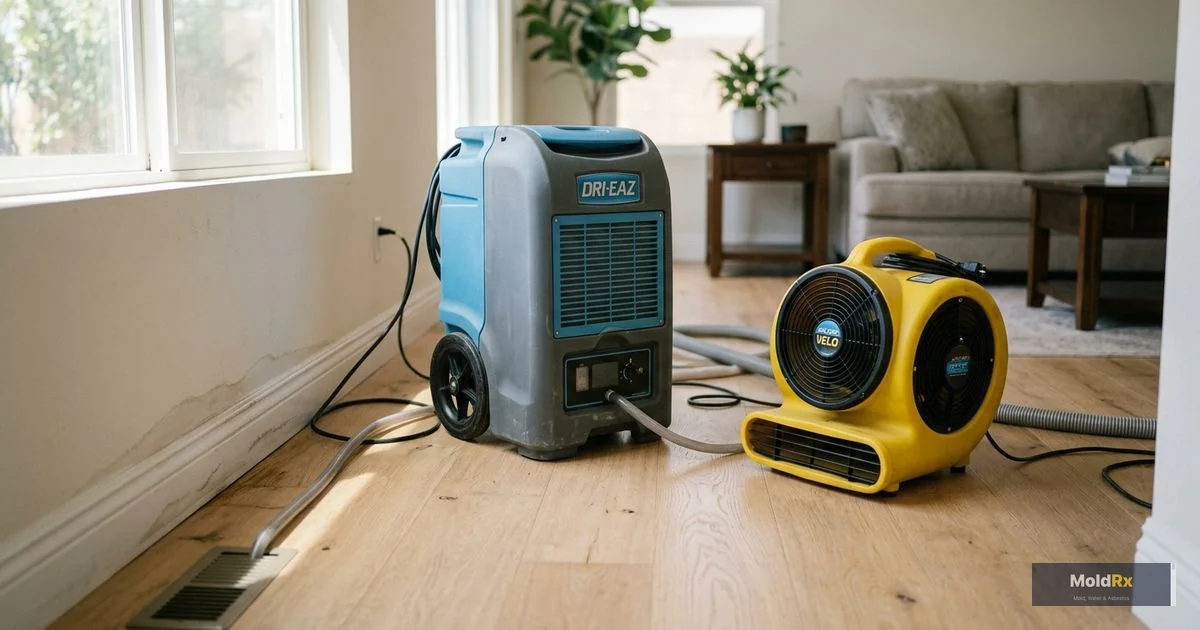
Two homes on the same street can experience a burst pipe on the same day and face restoration timelines that differ by weeks. Restoration duration isn't determined by the water event itself -- it's determined by what the water affected and how quickly the response began.
Water Category
The IICRC S500 standard classifies water damage into three categories, each carrying a different restoration protocol.
Category 1 (clean water) -- broken supply lines, overflowing sinks, rainwater -- is the simplest to address. Materials can often be dried in place without removal. This is the fastest scenario.
Category 2 (gray water) -- washing machine overflows, dishwasher leaks, toilet overflows with urine -- requires additional cleaning and antimicrobial treatment. Some porous materials need removal rather than drying. Add 1 to 3 days for the additional protocols.
Category 3 (black water) -- sewage, exterior flooding, or water that has sat stagnant long enough to become grossly contaminated -- demands the most aggressive response. Nearly all porous materials must be removed and discarded. A Category 3 loss typically adds a full week or more compared to the same footprint with clean water.
Critically, water categories escalate over time. Clean water that sits for 48 to 72 hours can become Category 2 or 3 as bacteria multiply. Delayed response extends the timeline not just because water spreads further, but because the water itself becomes harder to deal with.
Damage Class
The IICRC also classifies damage into four classes based on absorption depth:
Class 1: Limited area, minimal absorption. A slow leak caught early. Drying: 2 to 3 days.
Class 2: Full room affected, water wicked up walls 12 to 24 inches. The most common class for residential burst pipes. Drying: 3 to 5 days.
Class 3: Maximum absorption -- water came from above and saturated walls, insulation, carpet, subfloor, and structural components from the top down. Drying: 5 to 7 days.
Class 4: Deeply saturated low-permeance materials -- hardwood floors, plaster walls, concrete, dense structural lumber. Requires specialty techniques like desiccant dehumidification or heat drying. Drying: 7 to 10+ days.
Square Footage and Materials
More affected area means more equipment, more monitoring, and more reconstruction. A single-room event may finish in under a week. Water that traveled through multiple rooms, between floors, or into shared wall cavities multiplies every phase.
Materials matter too. Tile and sealed concrete dry quickly. Porous materials -- drywall, carpet, insulation, untreated wood -- absorb deeply and take longer. Some cannot be dried at all and must be replaced, shifting the timeline from drying into demolition and reconstruction. Hardwood flooring is a particular factor: controlled drying to save hardwood can take 7 to 14 days on its own.
Whether Secondary Damage Has Developed
If mold has begun growing -- which can start within 24 to 48 hours of sustained moisture -- the project scope expands beyond water damage restoration to include mold remediation. That means containment, HEPA air filtration, removal of colonized materials, antimicrobial treatment, and post-remediation clearance testing before reconstruction can begin. Mold remediation can add 3 to 10 days to the total project timeline depending on the extent of growth.
This is the single biggest reason that fast initial response matters for timeline purposes. Water damage caught and addressed within the first 24 hours almost never involves mold. Water damage that sits for a week almost always does. That one variable can double the total project duration.
Phase-by-Phase Timeline Breakdown
The water damage restoration process follows a systematic sequence where each phase must be completed -- and verified -- before the next one begins. Here's what each phase involves and how long it typically takes.
Phase 1: Emergency Response and Inspection (Hours 0-6)
The clock starts when you make the call. Professional companies dispatch crews within 1 to 4 hours. The initial response includes stopping the water source, assessing safety hazards, and conducting a thorough inspection using moisture meters and thermal imaging to map the full extent of water migration. This determines the water category, damage class, and total affected area -- the three variables that define every decision that follows.
Typical duration: 2 to 6 hours from initial call through completed assessment.
Phase 2: Water Extraction (Hours 2-24)
Bulk water removal begins during or immediately after inspection. Truck-mounted and portable extractors remove standing water. Sub-surface extractors pull water from carpet padding. Hard-to-reach areas may require controlled demolition -- flood cuts in drywall, baseboard removal, pulling up flooring -- to access trapped water behind walls and under floors.
For Category 3 events, extraction also involves removing and discarding all porous materials that contacted the water: carpet, pad, insulation, drywall below the flood line, and sometimes structural sheathing.
Typical duration: 4 to 12 hours for standard residential events. Large-scale or contaminated water events may require 1 to 2 full days.
Phase 3: Structural Drying (Days 1-5+)
This is the longest and most critical phase, and the one most commonly misunderstood. Structural drying isn't "running fans for a few days." It's a controlled, monitored process using commercial-grade equipment to pull moisture out of building materials until they reach verified dry standards.
A typical setup includes air movers (10 to 30 high-velocity fans creating airflow across wet surfaces), commercial dehumidifiers (processing hundreds of pints per day), and specialty systems like injectidry units for wall cavities, floor mat systems for hardwood, and heat panels for concrete.
A technician visits every 24 hours to take moisture readings, adjust equipment, and verify that the drying trajectory is on track. Drying is complete when moisture readings across all affected materials match readings from unaffected materials in the same structure -- not when surfaces feel dry, and not after a predetermined number of days.
Typical duration: 3 to 5 days for Class 1-2 losses. 5 to 7 days for Class 3. 7 to 14 days for Class 4. Rushing this phase is never an option -- mold prevention depends entirely on it being done right.
Phase 4: Cleaning, Sanitizing, and Mold Prevention (Days 3-7)
Once drying is verified, affected areas are cleaned and treated -- antimicrobial application, HEPA vacuuming of demolition debris, and cleaning or discarding contents based on the water category.
If mold is discovered during drying, mold remediation protocols are activated: containment, material removal, HEPA air filtration, antimicrobial treatment, and post-remediation clearance testing. The project does not advance to reconstruction until clearance confirms the space is safe.
Typical duration: 1 to 3 days for Category 1 losses. 2 to 5 days for Category 2-3 or situations requiring mold remediation.
Phase 5: Reconstruction (Days 7-21+)
Reconstruction restores your property to pre-loss condition: replacing drywall, reinstalling baseboards and trim, replacing insulation, laying new flooring, repainting, and any cabinetry or fixture work. Minor losses may need only drywall patching and paint. Major losses can require weeks of trades work across framing, drywall, flooring, painting, electrical, and plumbing.
Reconstruction never begins in a space that hasn't been verified dry and cleared. Starting reconstruction over wet materials traps moisture behind new finishes -- guaranteeing mold growth in weeks or months.
Typical duration: 2 to 5 days for minor reconstruction. 1 to 3 weeks for moderate losses. 4 to 6 weeks for major losses involving multiple rooms and systems.
Why Rushing the Process Backfires
The pressure to finish faster is real -- you're displaced, equipment is running 24 hours a day, and life is on hold. But cutting the drying phase short is the most expensive shortcut in restoration.
Materials that aren't verified dry before reconstruction trap moisture behind new finishes. New drywall installed over studs that still hold elevated moisture becomes a sealed incubation chamber. Within weeks, mold colonizes the concealed wet materials. Within months, you're tearing out the new work to remediate mold that the original restoration was supposed to prevent.
This isn't theoretical. It's one of the most common failures in the industry, and it's almost always the result of a restoration company that declares drying "complete" based on time rather than moisture data. Every phase of the restoration process exists because the one before it created the conditions for the next one to succeed. The total timeline is the time it takes to do each phase correctly.
Realistic Timelines by Scenario
Here's what the full timeline typically looks like for common water damage scenarios in Southern California homes.
Small Leak (Dishwasher, Supply Line, Toilet Overflow)
Scenario: A supply line under the kitchen sink fails. Water spreads across the kitchen floor and soaks the toe kicks of adjacent cabinets. Category 1 water, Class 1-2 damage, roughly 100 to 200 square feet.
- Extraction and setup: Same day
- Drying: 3 to 4 days
- Reconstruction: 1 to 3 days (drywall patches behind cabinets, new toe kicks, repaint)
- Total: 5 to 8 days
This is the fastest realistic timeline for a professional restoration. If you're told a water loss of this size will be "done in two days," question how drying is being verified.
Burst Pipe (Single Floor, Multiple Rooms)
Scenario: A pipe bursts in an upstairs bathroom wall and runs for several hours before discovery. Water saturates the bathroom, hallway, and a bedroom. It has wicked up drywall 18 inches in all three spaces and soaked through to the ceiling of the room below. Category 1 water (caught same day), Class 2-3 damage, roughly 400 to 800 square feet across two floors.
- Emergency response and extraction: Day 1
- Controlled demolition (flood cuts, carpet removal, ceiling demo below): Days 1-2
- Drying: 4 to 6 days
- Cleaning and mold prevention: 1 to 2 days
- Reconstruction (drywall, ceiling, flooring, paint, trim): 5 to 10 days
- Total: 12 to 21 days
Major Flooding (Storm Damage, Sewer Backup, Prolonged Water Event)
Scenario: A sewage line backs up and floods an entire first floor with Category 3 water. Kitchen, living room, dining room, and hallway affected. Standing water present for 8+ hours. Approximately 1,000 to 1,500 square feet.
- Emergency response: Day 1
- Extraction and full demolition of all porous materials below the flood line: Days 1-3
- Contaminated material disposal, cleaning, and antimicrobial treatment: Days 2-4
- Structural drying: 5 to 7 days
- Mold assessment and potential remediation: 3 to 7 days if growth is found
- Full reconstruction (framing, drywall, flooring, cabinets, paint, trim, fixtures): 2 to 4 weeks
- Total: 3 to 6 weeks
Category 3 events are the longest restorations because contamination protocols alone add a full week compared to an identical footprint with clean water.
Delayed Response (Water Present for Days Before Professional Help)
Scenario: A slow leak behind a wall went undetected for a week. Mold has colonized drywall backing and framing. Category 1 water degraded to Category 2. Roughly 150 to 300 square feet of wall area affected.
- Inspection and mold assessment: Day 1
- Containment and controlled demolition: Days 1-2
- Mold remediation and structural drying (overlapping): 3 to 5 days
- Post-remediation clearance testing: 1 to 2 days
- Reconstruction: 3 to 7 days
- Total: 2 to 3 weeks
What looks like a "small" problem due to limited square footage can still take weeks when secondary mold damage is involved. Clearance testing creates a hard gate that reconstruction cannot bypass.
What You Can Do to Shorten the Timeline
You can't speed up the physics of drying -- but you can avoid the decisions that extend the timeline.
Respond immediately. Every hour of delay means more migration, more saturation, and a higher probability of category escalation and mold. Know what to do in the first 24 hours and do it.
Stop the water source. Extraction can't begin effectively while water is still flowing. Shut off the main valve if you have to.
Document, then step back. Take photos and video for insurance, then let professionals set up equipment without delay.
Don't turn off drying equipment. Air movers and dehumidifiers run 24 hours a day for a reason. Every hour off extends the timeline.
Make reconstruction decisions during drying. Delays in the rebuild phase often come from material selection. Use the drying phase to choose flooring, paint, and cabinet replacements so materials are ready when the space is.
Frequently Asked Questions
How long does the drying phase take?
Structural drying typically takes 3 to 5 days for standard residential water damage. Class 3 and 4 losses involving deep saturation of dense materials can take 7 to 14 days. Drying duration is determined by daily moisture readings, not by calendar estimates.
Can I stay in my home during restoration?
It depends on the scope. Small, localized events in a single room often allow you to stay. Large losses, Category 3 contamination, or situations involving mold remediation may require temporary displacement. Your restoration team will advise based on safety and livability.
Does insurance cover the full restoration timeline?
Most standard homeowner's policies cover sudden, accidental water damage restoration including Additional Living Expenses (ALE) if you're displaced. ALE covers temporary housing, meals, and related costs for the documented duration of the restoration. Professional documentation of each phase supports your claim for the full timeline.
Why does my restoration company check moisture every day?
Daily moisture monitoring tracks the drying trajectory and confirms that equipment placement is working. It also provides documented proof that materials reached verified dry standards before reconstruction -- critical for both mold prevention and insurance documentation.
What if mold is found during the drying process?
The scope expands to include mold remediation before reconstruction can proceed. This adds containment, material removal, HEPA filtration, antimicrobial treatment, and post-remediation clearance testing. Finding mold during active restoration is significantly better than discovering it months later behind new finishes.
How long after water damage does mold start growing?
Mold can begin colonizing wet building materials within 24 to 48 hours. Visible growth typically appears within 3 to 12 days. This is the primary reason drying speed matters -- every day of effective drying reduces the probability of a secondary mold problem.
Is it faster to just tear everything out and rebuild?
Aggressive demolition eliminates drying time for removed materials, but it increases reconstruction time and cost significantly. Professional restoration balances what can be dried in place against what must be removed, optimizing the total timeline and minimizing unnecessary destruction.
Can I use my own fans and dehumidifiers instead of professional equipment?
Household fans and dehumidifiers lack the capacity to dry structural materials in a building envelope. A residential dehumidifier removes 30 to 50 pints per day. A commercial unit removes 200+ pints per day. DIY drying efforts may dry surfaces while leaving moisture trapped in wall cavities, subfloors, and framing -- creating conditions for mold growth that won't become apparent for weeks.
What happens if the restoration takes longer than estimated?
Legitimate delays occur when drying takes longer than projected (some materials are slow to release moisture), when hidden damage is discovered during the process, or when mold is found. Your restoration company should communicate daily and explain any timeline changes with supporting moisture data.
How do I know when restoration is truly complete?
Restoration is complete when all affected materials have returned to verified dry moisture levels, all contaminated materials have been removed and replaced, any mold has been remediated and clearance-tested, and reconstruction has restored the property to pre-loss condition. You should receive documentation of moisture readings, any testing results, and a final walkthrough confirming the scope of work is complete.
Get an Honest Timeline for Your Situation
Every water damage situation is different, and the only way to get an accurate timeline is a professional assessment of what the water actually did. Generic estimates don't account for your specific materials, your water category, or whether hidden moisture is extending the problem beyond what's visible.
MoldRx coordinates professional water damage restoration throughout Orange County, Riverside County, and San Bernardino County. Our vetted specialists assess the full scope of your water damage -- including hidden moisture in wall cavities and subfloors -- and give you a realistic, phase-by-phase timeline based on what they actually find.
Call (888) 609-8907 to speak with a real person about your situation. Or request a free estimate online -- honest guidance from a family-owned company, no pressure, no scripts.
Water Damage Restoration | Emergency Services | Mold Removal | Mold Testing | All Services | Service Areas