The Three Things That Matter Most
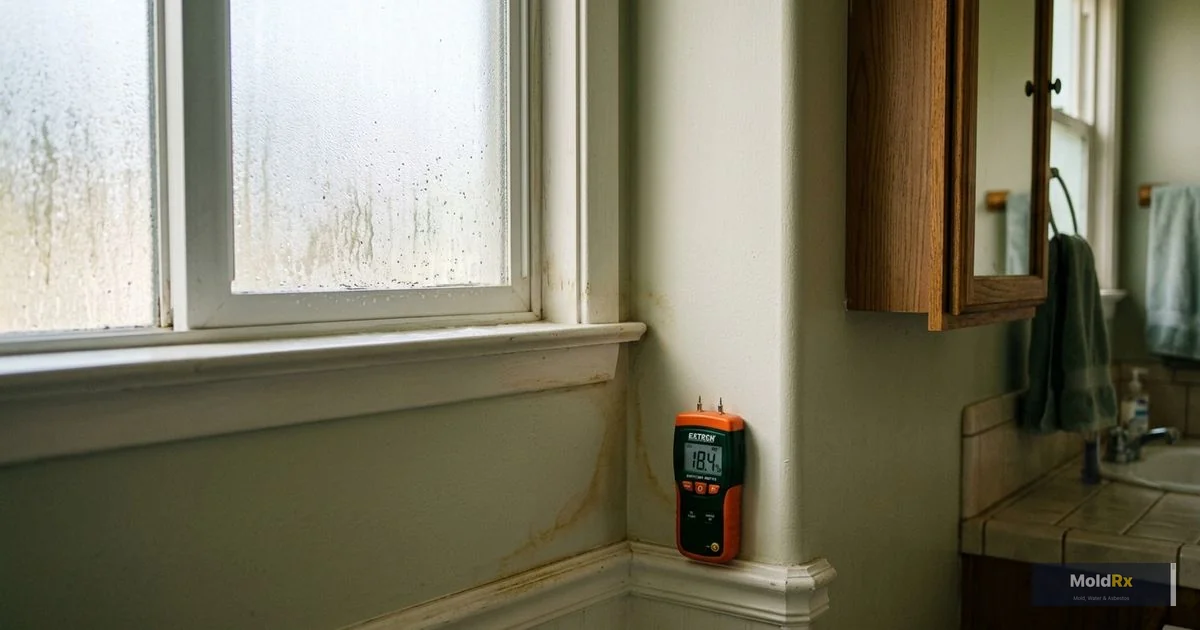
You've confirmed you have a mold problem. Maybe you found it yourself, maybe a home inspector flagged it, or maybe a mold test came back with elevated spore counts. Now you need to hire someone to fix it — and this decision matters more than most homeowners realize.
The wrong company can spread contamination to clean areas of your home, fail to address the moisture source, skip the verification that proves the work was actually successful, or simply charge you for work that doesn't meet any recognized standard. The right company eliminates the problem, documents the work, and gives you confidence that your home is safe.
Before you compare quotes or read reviews, verify these three things about any mold remediation company you're considering:
-
They hold IICRC S520 certification. This is the industry standard for mold remediation. It means their technicians have been trained in proper containment, removal, and verification protocols. If a company can't tell you what IICRC S520 is, move on.
-
They use a separate company for testing. The company that remediates the mold should not be the same company that tests for it — before or after the work. Independent testing eliminates the conflict of interest that exists when the same company profits from both finding the problem and fixing it. This separation is a best practice recognized across the industry.
-
They provide a written scope of work before starting. You should know exactly what will be done, which materials will be removed, how the area will be contained, and what the timeline looks like — all in writing, before a single sheet of poly goes up. Companies that want to "just get started" without documenting the plan are companies you should avoid.
If a company meets all three of these criteria, you're starting from a solid foundation. The rest of this guide will help you evaluate everything else.
Green Flags: What Good Companies Do
A qualified mold remediation company will demonstrate professionalism, transparency, and technical competence from the first phone call. Here's what to look for.
They answer your questions without deflecting
When you call, the person on the other end should be willing to explain their process, discuss your situation honestly, and answer questions without rushing you toward a contract. A good company treats the initial conversation as an opportunity to understand your problem — not close a sale.
They conduct a thorough on-site assessment
Before providing a quote, a reputable company sends someone to your property to evaluate the situation in person. They should inspect the affected area, check for moisture with meters, assess whether contamination may have spread beyond what's visible, and look for the water source that caused the growth. Remote quotes based solely on photos or phone descriptions are not sufficient for any meaningful mold project.
They explain the moisture source — not just the mold
Mold is a symptom. Moisture is the disease. Any company focused only on removing the mold without identifying and correcting the moisture source is setting you up for the same problem again in weeks or months. Good companies talk about the cause as much as the contamination. Learn more about what happens during professional mold remediation.
They use proper containment protocols
Professional remediation requires physical containment barriers (polyethylene sheeting) and negative air pressure to prevent spores from spreading to unaffected areas during removal. If a company's plan doesn't include containment and HEPA air filtration, they are not performing remediation — they're performing demolition with mold present, which will make the problem worse.
They carry appropriate insurance
At minimum, a mold remediation company should carry general liability insurance and workers' compensation coverage. Ask to see certificates of insurance. If a worker is injured on your property and the company doesn't carry workers' comp, you could be liable.
They recommend independent clearance testing
After remediation is complete, air and surface samples should be collected by an independent third party — not the remediation company — to verify that spore counts have returned to normal levels. A company that recommends this separation is demonstrating that they're confident in their work and committed to objective verification.
They provide complete documentation
A professional company documents the entire project: pre-remediation conditions, scope of work, materials removed, containment and filtration methods used, moisture readings, photos from every stage, and clearance testing results. This documentation protects you for insurance claims, real estate transactions, and your own records.
They have verifiable references and reviews
Established companies should have a track record you can verify — online reviews, references from past clients, or case studies. Look for consistency in the feedback: do clients mention professionalism, communication, and thorough work? A few glowing reviews are less meaningful than dozens of consistent ones.
They communicate a realistic timeline
A contained mold remediation project typically takes 2 to 5 days. Larger projects with multiple rooms, HVAC contamination, or structural involvement take longer. A company that promises to remediate a significant mold problem in a single afternoon is cutting corners.
Red Flags: What to Avoid
Some warning signs are obvious. Others are subtle but equally important. If you encounter any of the following, proceed with extreme caution — or find another company.
They use scare tactics or pressure you into immediate decisions
Mold is a serious issue, but a legitimate company will never pressure you into signing a contract on the spot by telling you your family is in immediate danger. Yes, mold should be addressed promptly — but you have time to get a second opinion, verify credentials, and make an informed decision. Companies that weaponize urgency are more interested in your wallet than your walls.
They quote a price without seeing the property
Any company that gives you a firm price over the phone or based on photos alone is guessing. The scope of mold remediation depends on factors that can only be evaluated in person: how far the mold has spread behind walls, what materials are affected, where the moisture is coming from, and how the space is configured. Phone estimates are either too low (to get in the door, then upsell on site) or too high (because they're padding for unknowns).
They recommend "mold fogging" or "mold encapsulation" as a primary solution
Fogging an entire space with antimicrobial chemicals or painting over mold with encapsulant are not remediation. These approaches don't remove the contaminated material, don't address root structures embedded in porous surfaces, and don't correct the moisture source. Antimicrobial treatment has a role in remediation — but only after physical removal of contaminated materials, not instead of it.
They do their own testing
When the same company tests for mold and then remediates it, there is an inherent conflict of interest. They have a financial incentive to find a problem and then declare their own work successful. Industry best practice is clear: testing and remediation should be performed by separate entities. If a company insists on doing both, ask why — and consider whether the answer serves your interest or theirs.
They can't explain their containment process
Ask how they plan to prevent spores from spreading during removal. If the answer is vague, or if they don't mention containment barriers and negative air pressure, they're not following professional protocols. Removal without containment can turn a one-room problem into a whole-house contamination event.
They don't mention the moisture source
If a company's entire proposal focuses on removing mold without a plan to identify and address what caused it, the mold will return. Period. A company that doesn't discuss moisture correction either doesn't understand the problem or doesn't care whether you call them back in six months.
They lack verifiable certifications
"We've been doing this for 20 years" is not a certification. Ask specifically for IICRC S520 certification. Ask to see it. If they can't produce documentation or don't know what you're talking about, they haven't been trained to the industry standard.
They want full payment upfront
A reasonable deposit is normal. Full payment before work is complete is not. Reputable companies structure payment so that a final payment is made after the work is done and — ideally — after clearance testing confirms success.
They guarantee to "remove all mold" from your home
This is impossible, and any company that promises it is being dishonest. Mold spores are everywhere — indoors and outdoors — and they always will be. The goal of remediation is to remove active growth, remove contaminated materials, return indoor spore counts to normal background levels, and eliminate the moisture conditions that allowed the growth. A company that guarantees a "mold-free" home doesn't understand mold biology.
They don't provide a written contract or scope of work
Verbal agreements protect nobody. If a company won't put their plan, timeline, and pricing in writing before starting work, you have no recourse if the work is incomplete, inadequate, or causes additional damage. Insist on written documentation. Walk away if they won't provide it.
Certifications Explained
Not all certifications carry the same weight. Here's what the most common ones actually mean.
IICRC S520: Standard for Professional Mold Remediation
The IICRC (Institute of Inspection, Cleaning and Restoration Certification) publishes the S520 standard, which is the most widely recognized set of guidelines for mold remediation in the United States. It covers assessment procedures, containment requirements, removal methods, clearance criteria, and safety protocols.
When a company holds IICRC S520 certification, it means their technicians have completed training on these protocols and passed an examination. This doesn't guarantee perfect work on every job, but it establishes a baseline of knowledge and competence that uncertified operators may lack entirely.
Why it matters: IICRC S520 is the standard most frequently referenced by insurance companies, industrial hygienists, and public health agencies. If you file an insurance claim, the adjuster will likely evaluate the remediation against S520 criteria. Work that doesn't meet this standard may not be accepted.
IICRC WRT: Water Damage Restoration Technician
Since mold is always a moisture problem, the WRT certification is relevant. It covers water damage assessment, drying science, and moisture detection — all directly related to identifying and correcting the conditions that cause mold. A company with both S520 and WRT certifications can address both the mold and the underlying water damage.
State Licensing
Licensing requirements for mold remediation vary by state. In California, mold remediation companies do not currently need a specific mold license, but they do need a general contractor's license if the project involves structural work. Some companies also hold specialty licenses related to hazardous materials handling. Check your state's requirements and verify that the company meets them.
Insurance: General Liability and Workers' Compensation
These aren't certifications, but they're non-negotiable. General liability insurance protects you if the remediation work causes damage to your property. Workers' compensation protects you from liability if a worker is injured on site. Ask for certificates of insurance and verify they're current. Do not hire uninsured contractors for mold work.
Questions to Ask Before Hiring
Use this list when you're evaluating companies. The answers — and how they answer — will tell you a lot.
-
Are your technicians IICRC S520 certified? If yes, ask to see proof. If they can't produce it or don't know what it is, move on.
-
Do you use independent third-party testing for clearance? The answer should be yes. If they want to do their own clearance testing, that's a conflict of interest.
-
Will I receive a written scope of work before you start? This should detail which areas are affected, what materials will be removed, the containment plan, and the timeline.
-
How will you contain the work area? Look for specific answers: polyethylene sheeting, sealed seams, negative air pressure with HEPA-filtered air scrubbers. Vague answers are a warning sign.
-
How will you identify and address the moisture source? If the answer focuses only on removing mold and not on finding the cause, the problem will recur.
-
Do you carry general liability insurance and workers' compensation? Ask to see current certificates.
-
What does your pricing structure look like? Not "how much" — but how is payment structured? A deposit followed by a final payment after clearance testing is standard. Full payment upfront is not.
-
Can you provide references from recent clients? A company that can't produce references — or won't — should give you pause.
-
What happens if clearance testing fails? A professional company will perform additional work at no extra charge and retest until clearance is achieved. Get this in writing.
-
Will I receive full documentation of the project? Photos, moisture readings, scope of work, materials removed, and clearance testing results should all be included.
What the Process Should Look Like
If you've never been through mold remediation before, it helps to know what a well-run project looks like from start to finish. This is the process you should expect from any qualified company.
Assessment and planning. A technician visits your property, inspects the affected area, uses moisture meters to map the extent of the problem, and develops a remediation plan. You receive a written scope of work and a clear timeline.
Independent pre-remediation testing (when warranted). If testing hasn't already been done, or if the full extent of contamination needs to be established, an independent testing company collects air and surface samples. These results inform the remediation plan and establish a baseline for comparison after the work is done. Learn more about whether you need a mold test.
Containment setup. Before any material is disturbed, the work area is sealed with polyethylene sheeting. HEPA-filtered air scrubbers establish negative air pressure inside the containment zone. HVAC systems in the affected area are shut down or isolated.
Removal and treatment. Contaminated porous materials — drywall, insulation, carpet padding, ceiling tile — are carefully removed, bagged, and disposed of properly. Salvageable surfaces are HEPA-vacuumed and treated with antimicrobial solutions. Air scrubbers run continuously throughout.
Moisture source correction. The leak, condensation issue, or ventilation failure that caused the mold is identified and corrected — either by the remediation company or in coordination with the appropriate specialist.
Independent clearance testing. After remediation is complete and before containment is removed, an independent tester collects air samples from the work area and compares them against outdoor baselines and unaffected areas. If spore counts are at or below normal levels, the space passes clearance. If not, additional work is performed and the space is retested.
Reconstruction. Removed materials — drywall, insulation, flooring, trim — are replaced. This typically doesn't begin until clearance testing confirms the remediation was successful.
Documentation and walkthrough. You receive the complete project file: scope of work, before/during/after photos, moisture readings, clearance test results, and any recommendations for ongoing prevention. A final walkthrough ensures you understand everything that was done and have no remaining questions.
Frequently Asked Questions
How much does professional mold remediation cost?
Cost varies significantly based on the size of the affected area, the materials involved, accessibility, and whether structural repair is needed. Small, contained projects cost less than multi-room remediations involving structural work. The only way to get an accurate estimate is through an on-site assessment — any company that quotes a specific number without seeing your property is guessing.
Should I get multiple quotes?
Getting two or three quotes from qualified companies is reasonable. When comparing, don't just look at price — compare the scope of work each company proposes. A lower quote might mean a smaller scope, which could mean they're planning to do less work. Make sure every quote includes containment, HEPA filtration, material removal, moisture source correction, and independent clearance testing.
Can I do mold remediation myself?
For very small areas of surface mold on non-porous materials (under 10 square feet), the EPA considers DIY cleaning acceptable. For anything larger, anything on porous materials, or anything involving hidden mold behind walls or in HVAC systems, professional remediation with containment and HEPA filtration is necessary. Disturbing mold without proper containment spreads spores throughout the property and can turn a localized problem into a whole-house issue.
How long should mold remediation take?
Most contained projects (one room or less) take 2 to 5 days. Larger projects involving multiple rooms, HVAC contamination, or structural repairs take a week or more. Any company promising same-day completion for a significant mold problem is either underestimating the scope or cutting critical steps.
Does mold remediation include fixing the water damage that caused the mold?
It depends on the company and the scope of the project. Some mold remediation companies also handle water damage restoration. Others focus on the mold and coordinate with plumbers, roofers, or other specialists to address the moisture source. What matters is that the moisture source gets corrected — either as part of the remediation project or through coordinated work with the appropriate specialist.
Will my homeowner's insurance cover the remediation?
Coverage depends on the cause. Mold from sudden, accidental events (burst pipe, appliance failure, storm damage) is typically covered. Mold from long-term neglect or deferred maintenance usually is not. Professional documentation — moisture readings, photos, clearance testing, scope of work — is essential for supporting an insurance claim. Ask your remediation company about their documentation process before work begins.
What if I find mold during a home renovation?
Stop the renovation immediately. Disturbing mold during construction without containment will spread spores throughout the work area and potentially the entire home. Have the mold professionally assessed and remediated before continuing the renovation. This protects both the construction workers and everyone living in the home.
Is it safe to stay in my home during remediation?
In many cases, yes — containment barriers and negative air pressure isolate the work area from living spaces. For larger projects, homes with immunocompromised residents, or projects involving areas like bedrooms, temporary relocation during the most intensive phases may be recommended. A good company will advise you based on your specific situation.
How do I know if the remediation was successful?
Independent clearance testing is the objective answer. Post-remediation air samples should show indoor spore counts at or below outdoor baseline levels. Visual inspection alone is not sufficient — mold spores are invisible, and the only way to verify the air quality has been restored is through laboratory analysis of air samples collected by an independent party.
What should I do if mold comes back after remediation?
Contact your remediation company immediately. Mold recurrence after professional remediation almost always indicates that the moisture source was not fully corrected. A reputable company will investigate and address the issue. This is also why documentation and clearance testing matter — they establish what was done and verified, so any recurrence can be properly diagnosed.
Ready to Talk to Someone Who Will Be Straight With You?
Finding the right mold remediation company comes down to competence, transparency, and accountability. The company you choose should hold recognized certifications, explain their process clearly, separate testing from remediation, put everything in writing, and stand behind their work with independent verification.
If you're dealing with a mold problem in Orange County, Riverside County, or San Bernardino County and want honest guidance from people who do this the right way, call (888) 609-8907 or request a free estimate online. No scripts, no pressure — just a real conversation about your situation and what it will take to resolve it.