You got your mold test results back. There's a multi-page laboratory report with columns of Latin names, numbers measured in spores per cubic meter, and no clear indication of whether you should be concerned or relieved. Welcome to the experience of almost every homeowner who has ever ordered a mold test.
Mold test results are comparison-based, not threshold-based. There is no universally accepted "safe" spore count. Instead, your results compare indoor spore concentrations and species to outdoor baselines and control samples to determine whether something abnormal is happening inside your home. Once you understand that principle, the rest of the report starts to make sense.
This guide walks through every section of a typical mold test report -- what the numbers mean, which species matter, what "elevated" actually indicates, and what you should do with the information.
Anatomy of a Mold Test Report
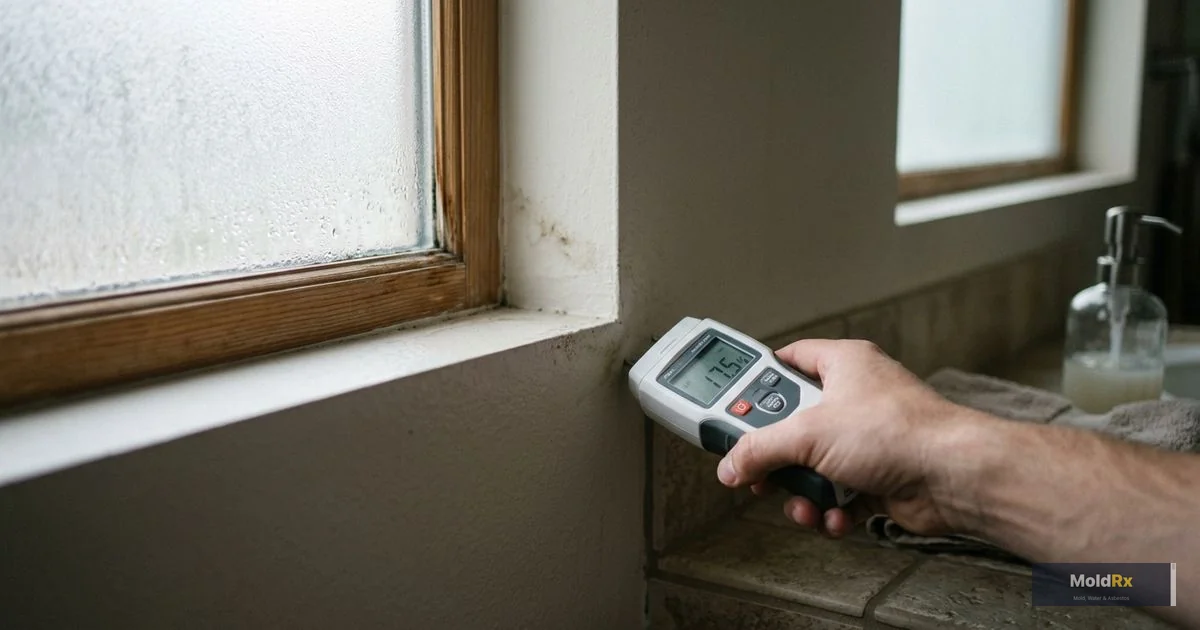
A professional mold test report from an AIHA-accredited laboratory follows a fairly standard format. The layout varies between labs, but the core components are consistent.
Project Information and Sample Parameters
The first page identifies the property address, the date samples were collected, the inspector, the laboratory, and the analytical method. For air samples, the most common method is non-viable spore trap analysis -- the lab identifies and counts spores based on their physical appearance under a microscope rather than culturing them.
Each sample is listed by location: "outdoor control," "living room," "master bedroom," and so on. The report also notes the volume of air collected (typically 75 or 150 liters) and the flow rate of the sampling pump (usually 15 liters per minute). The laboratory uses these to convert raw spore counts into concentrations. You don't need to do anything with these numbers yourself -- they're there for quality assurance.
The Results Table
This is the core of the report. The table lists each mold type (genus) found in each sample location, along with two numbers:
- Raw count -- the actual number of spores the analyst observed on the sample slide
- Concentration (spores/m3) -- the calculated number of spores per cubic meter of air, derived from the raw count and the sample volume
The concentration is the number you care about. It's what allows you to compare one sample location to another, because it normalizes for differences in sample volume. At the bottom of each column, a total spore count sums all identified spore types for that location.
The Outdoor Control
One column will be labeled as the outdoor sample. This is your baseline -- every other sample is evaluated against it. The outdoor control establishes what mold types and concentrations are normal for your area on the day the samples were collected. This matters because outdoor mold levels fluctuate dramatically with season, weather, and regional ecology.
Understanding Spore Counts
Why There Is No Universal "Safe" Number
This is where most homeowner confusion begins. You'll find websites claiming that anything above 500 spores/m3 is dangerous or that counts below 200 spores/m3 are "normal." These thresholds are not scientifically supported.
There is no federally established exposure limit for indoor mold in the United States. The EPA, CDC, and OSHA have not set numerical thresholds for acceptable indoor mold levels. Mold sensitivity varies enormously between individuals, the health significance depends on the species present, and "normal" background levels vary by geography, season, and weather.
What matters is the comparison between your indoor samples and the outdoor control. If the outdoor air contained 3,000 total spores/m3 and your living room contained 1,500 spores/m3, that's generally normal -- indoor levels are lower than outdoor, which is what you'd expect in a building without a mold problem. But if the outdoor air contained 500 spores/m3 and your living room contained 5,000 spores/m3, that's a significant discrepancy suggesting an indoor source.
The Indoor/Outdoor Comparison
A healthy building acts as a partial filter. The building envelope and HVAC filtration remove some outdoor particulates, including mold spores. As a result, indoor spore counts in a clean building are typically lower than outdoor counts. The species found indoors should also mirror what's found outside -- the same environmental mold that drifted in, at reduced levels.
When indoor counts exceed outdoor counts, or when species appear indoors that aren't present in the outdoor sample, something is producing spores inside the building. That's the signal you're looking for.
Common Species and What They Indicate
The laboratory will identify mold spores to the genus level -- sometimes to the species level, depending on what's distinguishable under a microscope. Here's what the most commonly reported genera mean in context.
Cladosporium
The most common outdoor mold in most climates. Finding Cladosporium in your indoor samples is almost always normal -- it's the mold most likely to appear in both outdoor and indoor samples. As long as indoor levels are comparable to or lower than outdoor levels, it is not a concern. Significantly elevated indoor Cladosporium could indicate an indoor moisture issue, but this would be unusual and typically accompanied by other signs of a problem.
Aspergillus/Penicillium
These two genera are grouped together on most spore trap reports because their spores are nearly identical under a microscope and cannot be reliably distinguished without culturing. This is not a lab error -- it's a known limitation of non-viable spore trap analysis.
Aspergillus and Penicillium spores are common in outdoor air, and finding them indoors at levels comparable to the outdoor control is normal. They become significant when indoor levels are substantially higher than outdoor levels. Both genera thrive on moisture-damaged building materials. Elevated indoor Aspergillus/Penicillium with low outdoor levels is one of the most common patterns indicating a hidden mold problem -- growth inside a wall cavity, under flooring, or in another concealed space. If your report shows this pattern, it warrants investigation even if you don't see visible mold. Our guide on how professionals detect hidden mold covers the investigative process.
Some Aspergillus species are of particular health concern -- Aspergillus fumigatus, for instance, can cause serious respiratory infections in immunocompromised individuals. A standard spore trap cannot distinguish between different Aspergillus species; if species-level identification matters, your inspector may recommend supplemental culture sampling.
Stachybotrys
Stachybotrys chartarum is the mold most commonly referred to as "black mold." It grows on cellulose-rich materials (drywall paper, ceiling tiles, wood) that have been wet for an extended period -- typically at least 72 hours of sustained saturation.
Stachybotrys is rarely found in outdoor air. Any detection of Stachybotrys in an indoor air sample is notable and almost always indicates an active water damage problem with established mold growth inside the building. Because Stachybotrys produces dense, sticky spores that don't become airborne easily, finding even a small number in an air sample suggests a larger colony nearby. Professional mold remediation is appropriate when Stachybotrys is confirmed. Our article on black mold versus regular mold provides additional context on health concerns.
Chaetomium
Another water-damage indicator that grows on cellulose materials under prolonged moisture -- very similar habitat requirements to Stachybotrys, and the two are frequently found together. Finding Chaetomium in an indoor sample strongly suggests water-damaged building materials with active fungal colonization. The response is the same: identify the moisture source, investigate for concealed damage, and remediate professionally.
Other Common Species
- Basidiospores -- Includes mushrooms, shelf fungi, and other macroscopic fungi. Overwhelmingly outdoor organisms. Normal at levels comparable to the outdoor control. Elevated indoor levels can occasionally indicate wood decay, but this is uncommon.
- Alternaria -- Common outdoor mold. Normal at levels comparable to the outdoor control.
- Epicoccum, Curvularia, Myxomycetes, Periconia -- Various outdoor spore types that appear seasonally. Normal when consistent with the outdoor sample.
What "Elevated" Actually Means
When a report describes results as "elevated," it means indoor levels are significantly higher than expected based on the outdoor baseline and control samples.
There is no single multiplier that defines "elevated." Some guidelines suggest indoor levels more than two to three times the outdoor levels warrant attention, but context matters. An indoor count of 800 spores/m3 against an outdoor count of 200 spores/m3 is a more meaningful discrepancy than 3,200 indoors against 3,000 outdoors -- even though the first has a higher ratio.
Factors that determine whether a discrepancy is significant:
- Which species are elevated. Elevated Cladosporium is less concerning than elevated Aspergillus/Penicillium or any detection of Stachybotrys/Chaetomium. The species matters as much as the number.
- How many indoor locations show the same pattern. One elevated sample out of five could be a localized issue or sampling anomaly. Three out of five is a much stronger signal.
- Whether species are present indoors that are absent outdoors. If Aspergillus/Penicillium is at 2,000 spores/m3 indoors and not detected outdoors, there is almost certainly an indoor source.
- Whether water-damage indicators are present at any level. Stachybotrys and Chaetomium at even trace levels are significant because they shouldn't be there without active water damage.
When Results Are Concerning vs. Normal
Let's walk through several common scenarios you might see in your results.
Scenario: Normal Results
Outdoor control shows 2,500 total spores/m3, predominantly Cladosporium (1,800) and Aspergillus/Penicillium (500). Indoor samples show 1,200-2,000 total spores/m3 with the same species at similar or lower proportions. No Stachybotrys, no Chaetomium.
Interpretation: Indoor levels are lower than outdoor levels with the same species profile. This is a healthy building filtering outdoor air normally. No action needed.
Scenario: Moderately Elevated Results
Outdoor control shows 600 total spores/m3. One bedroom shows 3,500 total spores/m3, driven primarily by elevated Aspergillus/Penicillium (2,800 indoors vs. 200 outdoors). Other rooms show levels consistent with the outdoor control.
Interpretation: One room has a significantly elevated count of a species group that's associated with indoor growth on building materials. This suggests a concealed mold source in or near that room -- possibly inside a wall, behind cabinetry, or under flooring. Further investigation is warranted, even if no mold is visible. Learn more about when testing warrants next steps in our guide on whether you need a mold test.
Scenario: Highly Elevated Results
Outdoor control shows 800 total spores/m3. Multiple indoor locations show 8,000-15,000 total spores/m3. Stachybotrys detected at 200-400 spores/m3 in two rooms. Chaetomium detected at 100 spores/m3 in one room. Not detected outdoors.
Interpretation: This is a serious finding. Multiple water-damage indicator species are present indoors at levels that should not exist without active growth. Total counts are roughly 10-20 times the outdoor baseline. There is significant mold contamination in this building that requires professional remediation. The health implications of mold exposure become more relevant at this level of contamination.
What to Do With Your Results
Your next steps depend entirely on what the report shows. Here's a decision framework.
Results Are Normal
Indoor levels are comparable to or lower than outdoor levels. No water-damage indicators detected. Species are consistent with outdoor air.
What to do: Nothing immediate. If you ordered the test because of a specific concern -- a musty smell, visible discoloration, a previous water event -- consider whether additional investigation is warranted. Air sampling is a snapshot in time, and mold behind a sealed wall may not always show up in one round of sampling. But in many cases, normal results mean there's no current problem.
Results Show Moderate Elevation
Indoor levels exceed outdoor levels for one or more species, particularly Aspergillus/Penicillium. No water-damage indicators present.
What to do: Investigate. Elevated results suggest an indoor mold source, but moderate elevation without water-damage indicators may mean a smaller, developing issue caught early. Addressing the moisture source early is far simpler and less costly than waiting.
Results Show Significant Elevation or Water-Damage Indicators
Indoor levels are dramatically higher than outdoor levels, and/or Stachybotrys, Chaetomium, or other water-damage species are present.
What to do: Remediate. These results indicate established contamination requiring professional intervention. After remediation, clearance testing verifies the work was successful before reconstruction begins.
For any level of concerning results, the first step is the same: get a professional assessment to understand scope and source. A report tells you what's in the air -- an inspection tells you why.
Limitations Worth Knowing
Air sampling is a snapshot. Results represent a five- to ten-minute window. Mold spore release varies throughout the day, so a single round of sampling can miss intermittent problems.
Non-viable analysis cannot distinguish all species. Standard spore traps identify mold to the genus level. They cannot differentiate between Aspergillus fumigatus (potentially pathogenic) and Aspergillus niger (generally less concerning). Culture-based sampling or PCR analysis may be needed for species-level identification.
Air results don't pinpoint the source. Elevated counts tell you an indoor source exists but not whether it's inside a wall, under flooring, or in the HVAC system. A follow-up investigation locates it.
Frequently Asked Questions
What is a normal mold spore count?
There is no single number that qualifies as "normal." Normal is defined by comparison to the outdoor control sample collected at the same time and location as your indoor samples. Indoor spore counts that are equal to or lower than the outdoor count, with the same species, are generally considered normal. In most environments, total outdoor spore counts range from a few hundred to several thousand spores per cubic meter depending on season and geography.
Should I be worried about Aspergillus/Penicillium on my report?
Not necessarily. Aspergillus and Penicillium spores are ubiquitous in outdoor air and are commonly found indoors at low levels. They become a concern only when indoor levels are significantly higher than outdoor levels -- that pattern suggests an indoor growth source. The grouping of these two genera is standard for non-viable spore trap analysis and is not cause for alarm in itself.
My report shows Stachybotrys. How serious is this?
Any detection of Stachybotrys in an indoor air sample is significant. Because Stachybotrys produces heavy, sticky spores that do not become airborne easily, their presence in an air sample typically indicates an established colony growing on water-damaged material. This warrants professional investigation and likely remediation. That said, a finding on a lab report is not a medical diagnosis -- discuss any health concerns with your doctor.
What does "not detected" mean on a mold report?
It means no spores of that particular type were observed in the analyzed portion of the sample. It does not guarantee that the mold type is completely absent from the environment. Spore trap analysis examines a section of the sample slide, and low concentrations may not be captured in every sample. "Not detected" is a good result, but it's not the same as "confirmed absent."
Can I compare my results to my neighbor's or to results I found online?
No, not meaningfully. Mold test results are specific to the conditions at the time and location of sampling. Outdoor baselines differ between neighborhoods and between days. Comparing your indoor levels to someone else's results -- or to numbers posted on the internet -- without comparing the outdoor controls is meaningless. Always evaluate your results against the outdoor control included in your own report.
How often should I retest?
If your initial results were normal and you have no ongoing concerns, routine retesting is not necessary. If you had remediation performed and clearance was achieved, retesting six to twelve months later can provide peace of mind -- our guide on when to retest after mold remediation covers this timeline in detail. If you have ongoing health concerns or a history of moisture issues, periodic testing on an annual basis may be worthwhile.
Are DIY mold test kits accurate?
Retail settle-plate kits have significant limitations. They cannot measure spore concentrations per volume of air, cannot provide the indoor/outdoor comparison that professional testing relies on, and are prone to false positives because mold spores are always present in the air. A positive result tells you very little, and a negative result doesn't reliably rule out a problem. Professional testing with calibrated sampling pumps and accredited laboratory analysis is the standard for a reason.
Do mold test results expire?
Results represent conditions at a specific point in time. They don't "expire" in a formal sense, but their relevance decreases over time -- especially if conditions in the home have changed (new water event, HVAC replacement, seasonal shift, completed remediation). For real estate transactions or insurance claims, recent results -- typically within 30 to 90 days -- carry more weight than older reports.
What does "background levels" mean on a report?
An inspector may describe certain findings as being at "background levels," meaning the concentrations and species are consistent with what would be expected from normal outdoor air infiltration. This is another way of saying the results are normal and no indoor source is indicated. It's a qualitative judgment based on the comparison between indoor and outdoor data.
My report shows mold, but I don't see any. Should I still be concerned?
Possibly. Mold frequently grows in concealed spaces -- inside wall cavities, beneath flooring, behind cabinetry, inside HVAC ductwork -- where you would never see it during normal daily life. Elevated spore counts without visible mold are actually one of the most common findings that prompt further investigation. The air is telling you something is there; you just haven't found it yet. Our guide on signs of mold behind walls explains the investigative process.
Make Sense of Your Results -- and Your Next Steps
A mold test report is a diagnostic tool, not a verdict. It tells you what's in the air and on surfaces in your home, and when interpreted correctly, it tells you whether that picture is normal or whether something needs attention. The key is always comparison -- indoor versus outdoor, your home versus baseline conditions -- not raw numbers against arbitrary thresholds.
If your results are normal, that's genuinely good news. If they're elevated, you have actionable information that can guide you toward a targeted solution before the problem gets worse.
MoldRx provides professional mold testing and remediation throughout Southern California. If you have a report you need help interpreting, or if you haven't tested yet and want to understand your home's air quality, we can help.
Call (888) 609-8907 or request a free estimate to talk through your situation.