The Inland Empire doesn't look like a place with a mold problem. Summer temperatures push past 100 degrees. Humidity drops into the teens. The landscape is brown and dry for months at a time. If you live in Riverside, San Bernardino, Corona, Fontana, Ontario, Rancho Cucamonga, or Moreno Valley, mold probably isn't on your radar.
It should be. The Inland Empire's extreme temperature swings and HVAC dependence create mold conditions most residents don't expect. Hard water eats through copper pipes under your slab. Air conditioning generates condensation inside your walls and attic for six months straight. Swamp coolers pump moisture directly into living spaces. New construction settles on expansive clay soils, cracking foundations and opening pathways for water. And when the desert monsoon arrives, flash flooding overwhelms drainage systems never designed for that volume.
The result: mold problems as severe as anything in a humid climate, discovered later because nobody was looking.
Why the Inland Empire Is Different
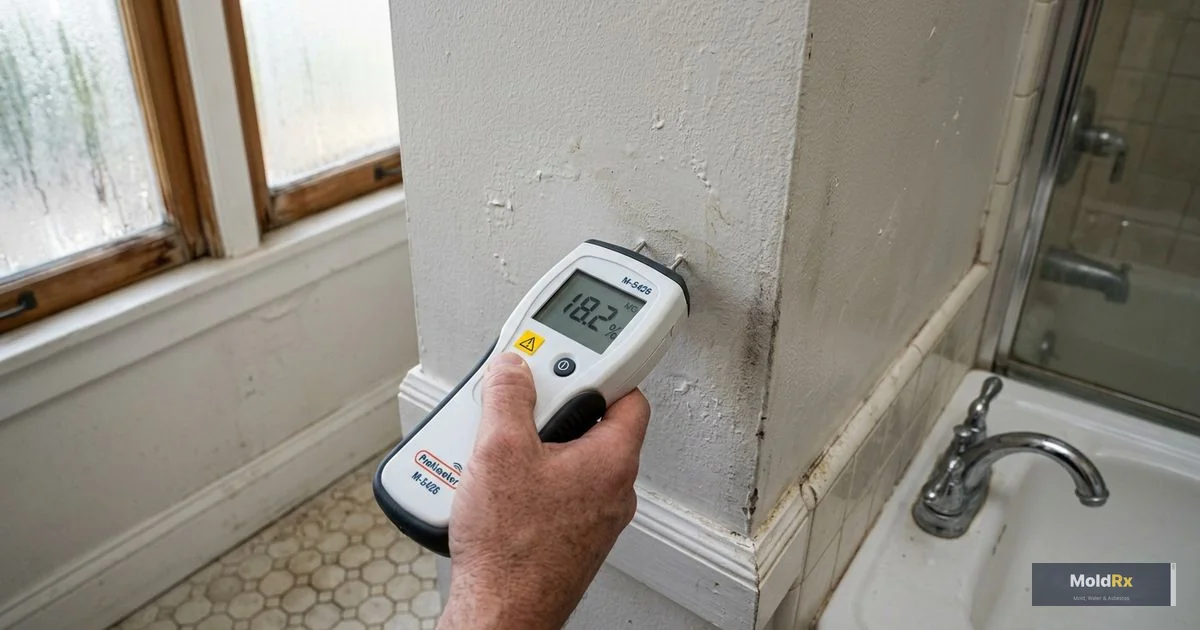
If you've read about why Southern California homes are vulnerable to mold, you know the region-wide factors — stucco trapping moisture, slab-on-grade construction, concentrated rainfall. The Inland Empire shares all of those risks and adds several of its own.
The core difference is temperature. Coastal Orange County rarely sees temperatures above the mid-80s. The Inland Empire regularly hits 105 to 115 degrees in summer and drops into the 30s on winter nights. That 70- to 80-degree daily swing creates condensation dynamics that coastal homes never experience.
When air conditioning runs 14 to 18 hours a day from May through October, every surface in the building envelope becomes a potential condensation point. When winter nights drop below freezing while daytime temperatures climb into the 60s, moisture migrates through building materials and condenses wherever warm air meets cold surfaces. This isn't steady ambient humidity. It's a mechanical moisture cycle driven by the HVAC systems that IE residents depend on to survive the climate.
Temperature Extremes and HVAC Condensation
Air conditioning is the single largest mold risk factor in Inland Empire homes, and it's the one homeowners are least likely to suspect.
How AC Creates Moisture Inside Your Home
When outdoor temperatures exceed 100 degrees, the temperature differential between conditioned interior air (typically 72 to 76 degrees) and the building envelope is enormous. Attic temperatures in IE homes routinely exceed 140 degrees in summer. Supply ducts running through that superheated attic space create condensation at every connection point, every joint, and every imperfection in the duct insulation. That condensation drips onto insulation, ceiling drywall, and framing — creating a persistent moisture source that operates for months.
The same dynamic occurs inside wall cavities. Exterior walls absorb heat all day, reaching surface temperatures of 130 degrees or higher on west- and south-facing exposures. The interior side of that same wall is cooled to 75 degrees by the AC. Moisture in the air within the wall cavity condenses on the cooler surface — the back of the drywall or the interior face of the insulation. This happens every day, all summer, with no visible sign from either side of the wall.
Condensate Drain Failures
Every air conditioning system produces condensate — water extracted from indoor air during the cooling process. A properly functioning system channels this water through a drain line to the exterior. But condensate lines clog with algae, crack with age, or disconnect at joints. When they fail, water overflows into the air handler cabinet, the surrounding closet or utility space, or — in attic-mounted systems common in newer IE construction — directly onto ceiling materials.
A condensate overflow in an attic can saturate insulation and drywall for weeks before the homeowner notices a ceiling stain. By then, mold has been growing for far longer than the 24 to 48 hours it needs to establish.
Oversized Systems and Short-Cycling
Many IE homes have oversized air conditioning — a legacy of contractors who sized equipment for peak summer temperatures without proper load calculations. An oversized system cools air quickly but shuts off before it adequately dehumidifies. Indoor humidity stays elevated despite the AC running, and that moisture condenses on cool surfaces — in closets, behind furniture against exterior walls, and in corners with limited air circulation.
Hard Water and Copper Pipe Corrosion
The Inland Empire has some of the hardest water in Southern California. Municipal supplies throughout Riverside and San Bernardino Counties carry high concentrations of dissolved calcium and magnesium — a consequence of local groundwater sources and Colorado River water that supplements the supply. That hard water accelerates pinhole corrosion in copper pipes, creating localized pitting that eventually breaches the pipe wall. In homes built from the 1960s through the 1990s — a massive portion of the IE housing stock — original copper plumbing running through or beneath the slab is now 30 to 60 years old, well past the point where pinhole corrosion and slab leaks become common.
A slab leak is invisible. Water escaping under the foundation has nowhere to go but up — into flooring materials, baseboards, and lower wall cavities. Because the leak is hidden beneath concrete, it often runs for weeks or months before the homeowner notices a warm spot on the floor, a water bill spike, or dampness at a baseboard. That timeline is a mold factory. By the time a slab leak is detected in an IE home, mold behind the baseboards and under the flooring is frequently advanced.
Cities with particularly hard water and high rates of slab-leak-related mold include Riverside, Corona, Moreno Valley, Fontana, Ontario, and San Bernardino. If your home was built before 2000 and still has original copper plumbing, this is one of your highest mold risk factors.
Swamp Cooler Moisture Problems
Evaporative coolers — commonly called swamp coolers — are still widely used in the Inland Empire, particularly in older homes built before central air became standard and in areas where electricity costs make compressor-based AC expensive. They work by pulling hot, dry air through water-saturated pads, cooling through evaporation and pushing the humidified air into the home.
The problem is in the mechanism: swamp coolers work by adding moisture to indoor air. When outdoor humidity rises above 30 to 40% — which happens regularly during monsoon season, after rainstorms, and during cooler months — the cooler pushes excessively humid air into the home. Indoor humidity can spike to 60%, 70%, or higher. That moisture condenses on cooler surfaces and settles into building materials. In homes with poor ventilation (and many older IE homes have inadequate exhaust fans and no whole-house ventilation), moisture accumulates faster than it can escape.
Swamp coolers also create moisture problems at the unit itself. Rooftop-mounted units sit in standing water during operation. Pads stay wet for hours after the unit shuts off. Drain pans corrode and leak. Water supply lines crack. Any of these failures introduces water to the roof structure, and gravity does the rest — moisture migrates down through ceiling materials, into wall cavities, and into the spaces behind closets and cabinets on the top floor.
The most common mold locations in homes with swamp coolers: ceiling areas directly below the rooftop unit, bathroom and kitchen walls where humidity is already elevated, and window frames where condensation from the humid indoor air pools on the sill.
New Construction and Settling Issues
The Inland Empire has experienced massive residential development over the past 25 years. Entire communities in Eastvale, Menifee, Beaumont, Perris, and the southern reaches of Riverside County were built during the 2000s and 2010s construction booms. Many of these homes sit on expansive clay soils that swell when wet and shrink when dry.
Foundation Movement Creates Entry Points
Expansive soils exert tremendous pressure on foundations. As the soil cycles between wet and dry — and the Inland Empire's climate ensures extreme cycles — the foundation shifts, settles, and develops cracks. Even hairline cracks in a slab foundation allow ground moisture to migrate into the home. Larger cracks can admit significant water during and after rain events.
The same soil movement affects the building envelope above grade. Stucco cracks. Window and door frames shift out of alignment, breaking the seal between the frame and the surrounding wall. Roof-to-wall transitions flex and separate. Each of these gaps is a moisture entry point — and in a region where rain arrives in intense bursts, even small gaps admit water.
Construction Moisture
Newer homes also carry a risk that buyers rarely consider: construction moisture. Concrete slabs, stucco, and drywall compound all contain significant moisture when installed. During building booms — when schedules are compressed and demand is high — homes are sometimes enclosed before materials fully dry. That residual moisture is trapped inside wall cavities and beneath flooring, a ready-made source for mold.
This is why mold in brand-new IE homes isn't as unusual as it sounds. Homeowners assume a new home is free of water damage risk, then discover mold within the first year or two — typically construction moisture combined with HVAC thermal cycling.
Desert Monsoon and Flash Flooding
From roughly July through September, the North American Monsoon pulls moisture from the Gulf of California into Southern California's interior, producing sudden, intense thunderstorms that drop heavy rain in short bursts. Unlike winter rain events — which the region at least nominally plans for — monsoon storms arrive fast, hit hard, and overwhelm infrastructure. Storm drains back up. Streets flood. Water pools against foundations, garage doors, and any low point in the grade around a property.
The impact on homes is immediate. Water enters through garage doors (garages in IE homes frequently have finished rooms above — water damage in the garage means moisture migrating into framing and drywall overhead). It backs up through landscape drains, finds its way through foundation cracks, and exploits any imperfection in the building envelope's interface with the ground.
After the storm passes — often within an hour or two — temperatures spike back above 100 degrees. The surface dries immediately. But water inside the building envelope doesn't dry from within. Materials inside wall cavities, beneath garage flooring, and in crawl spaces (more common in hillside IE communities in the San Bernardino foothills) retain moisture for days or weeks. The rapid return of extreme heat actually drives moisture deeper into building materials rather than allowing it to evaporate.
Homeowners who experience a monsoon flood, mop up the visible water, and assume the heat will take care of the rest are the ones who discover mold two months later.
Older Homes in Established IE Cities
The Inland Empire isn't all new construction. Cities like Riverside, San Bernardino, Redlands, Colton, and Ontario have substantial stocks of homes built in the 1950s through 1970s — an era with construction practices that create compounding mold risks as these homes age.
What Makes Pre-1980 IE Homes Particularly Vulnerable
Original copper plumbing in the hardest water zone. Homes built before 1980 in the IE almost universally have copper supply lines running through or under the slab. Combined with the region's hard water, these pipes are at peak corrosion risk — 45 to 75 years of mineral-laden water flowing through copper creates the exact conditions for slab leaks.
Minimal or absent vapor barriers. Many pre-1970 homes were built without vapor barriers beneath the slab. Ground moisture migrates directly through the concrete into the home — a slow, chronic moisture source that keeps baseboards and lower wall materials damp enough for mold, particularly after periods of rain when soil moisture increases.
Outdated insulation and ventilation. Older IE homes frequently have inadequate attic insulation, no soffit or ridge venting, and bathroom exhaust fans that vent into the attic rather than to the exterior. Every shower sends moisture into the attic space, where it condenses on the underside of the roof sheathing and supports mold growth in an area the homeowner never sees.
Decades of deferred maintenance. Stucco on a 50-year-old home has endured 50 years of thermal cycling, seismic movement, and settling. Hairline cracks have become significant cracks. Caulk failed years ago. Flashing has corroded or separated. The building envelope is more permeable than it appears, and every rain event finds its way deeper into the wall cavity than the last.
Swamp cooler legacy. Many older IE homes had swamp coolers for decades before converting to central air. The moisture those coolers introduced over years of operation often left lasting damage in roofing materials and ceiling cavities — damage that current owners may not know exists until a mold inspection reveals it.
Inland Empire Mold: 10 FAQs
Can mold really grow in the Inland Empire? It's so dry here.
Yes — and it's more common than most IE residents realize. The dryness is outdoor ambient dryness. Inside your home, HVAC condensation, plumbing leaks, swamp coolers, and inadequate ventilation create moisture conditions where mold thrives. The dry climate actually makes the problem worse by giving homeowners a false sense of security that delays detection.
What are the most common causes of mold in Riverside County homes?
Slab leaks from corroded copper plumbing, HVAC condensation (particularly in attic-mounted systems), swamp cooler moisture introduction, stucco moisture intrusion during rain events, and poor ventilation in bathrooms and kitchens. The specific cause varies by the age and construction of the home, but slab leaks and HVAC condensation are the two most frequent drivers.
Is mold risk different in San Bernardino County versus Riverside County?
The risk factors are largely the same — both counties share the same climate, water quality, soil conditions, and construction practices. San Bernardino County has a wider elevation range (valley floor to Big Bear), where higher-elevation homes face additional moisture from snow, while lower-elevation cities like Fontana, Rialto, and San Bernardino share identical risk profiles with Riverside County cities.
Should I worry about mold if my IE home was built in the last 10 years?
Yes, though the risk factors differ from older homes. Newer homes are more likely to have PEX plumbing (which resists corrosion) but still face HVAC condensation, construction moisture that may not have fully dried, foundation settling on expansive soils, and tight building envelopes that can trap moisture if ventilation is inadequate. New construction is not mold-proof.
Does running the AC help prevent mold or make it worse?
Both. Air conditioning lowers indoor humidity, which is protective. But it also creates condensation throughout the building envelope — in ductwork, on the backside of exterior walls, and around system components. A well-maintained, properly sized AC system with clean condensate drains is a net positive. A poorly maintained, oversized, or leaking system is one of the biggest mold risk factors in an IE home.
My house has a swamp cooler. Should I be concerned about mold?
Yes. Swamp coolers add moisture to indoor air by design. When outdoor humidity rises — during monsoon season, after rain, or during cooler months — that added moisture can push indoor humidity to levels that support mold growth. The cooler unit itself (particularly rooftop-mounted units) can also develop leaks that introduce water to roofing and ceiling materials. Inspect the unit regularly and monitor indoor humidity with a hygrometer.
How do I know if I have a slab leak?
Common signs include unexplained increases in your water bill, warm or damp spots on the floor, the sound of running water when all fixtures are off, cracks developing in the flooring, and — most relevant here — musty odors or visible mold growth at baseboards. Because slab leaks are hidden, they often announce themselves through secondary signs like mold rather than visible water.
Can monsoon flooding really cause mold in an IE home?
Absolutely. Monsoon storms drop heavy rain in short periods, flooding streets and pooling water against foundations. Water that enters through garage doors, foundation cracks, or landscape drains saturates building materials. The rapid return to extreme heat after the storm does not dry the interior of the building envelope — it can actually drive moisture deeper into materials. Any monsoon-related water intrusion should be dried thoroughly and promptly.
What should I do if I find mold in my Inland Empire home?
First, identify and address the moisture source — mold cannot survive without moisture, and removing mold without fixing the underlying water problem means it will return. For small, surface-level mold on non-porous surfaces, cleaning with appropriate products may suffice. For mold on drywall, in wall cavities, in HVAC systems, or covering more than about 10 square feet, professional mold remediation is recommended. A professional mold test can determine the extent of the problem before you decide on a course of action.
Is mold in my IE home covered by homeowner's insurance?
It depends on the cause. Most homeowner's insurance policies in California cover mold that results from a "sudden and accidental" covered peril — like a burst pipe. Mold resulting from gradual leaks (including slab leaks that went undetected), deferred maintenance, or condensation is typically excluded. Review your policy and document any water damage thoroughly from the moment you discover it.
Protect Your Inland Empire Property
The Inland Empire's mold problem is hidden in plain sight — masked by a dry climate that makes residents assume they're immune. But the combination of extreme temperatures, HVAC dependence, hard water, aging plumbing, expansive soils, swamp coolers, and monsoon events creates a set of mold risk factors as serious as any humid climate in the country. The difference is awareness: homeowners in humid regions know to look for mold. IE homeowners typically don't — and that delayed recognition means bigger problems by the time they're found.
If you're seeing signs of moisture damage, smelling something musty, noticing mold at baseboards or around HVAC components, or dealing with a slab leak or water intrusion in your Inland Empire home, the dry heat outside doesn't mean you're safe.
MoldRx provides professional mold testing and mold remediation throughout Riverside County and San Bernardino County — including Riverside, San Bernardino, Corona, Fontana, Ontario, Rancho Cucamonga, and Moreno Valley. We'll assess your property, identify the moisture source, and give you an honest evaluation of whether professional remediation is needed.
Call (888) 609-8907 or request a free estimate to get started.