Mold begins growing within 24 to 48 hours after flood water enters your home. That timeline is not flexible and it does not wait for you to file an insurance claim or find a contractor. The clock starts the moment water crosses your threshold, and every hour that passes narrows the window between a recoverable property and a mold remediation project that costs ten times what the initial water damage would have.
The speed of your response determines the outcome more than the severity of the flood itself. Properties with three inches of water that get dried within 48 hours often recover without mold. Properties with one inch of water that sit untouched for a week almost always develop significant growth.
This guide covers the flood-specific mold timeline, why flood water creates worse conditions than other water events, where hidden mold develops, and what to do at each stage. If you need immediate help, call (888) 609-8907 or request a free estimate.
The Flood Mold Timeline: What Happens Hour by Hour
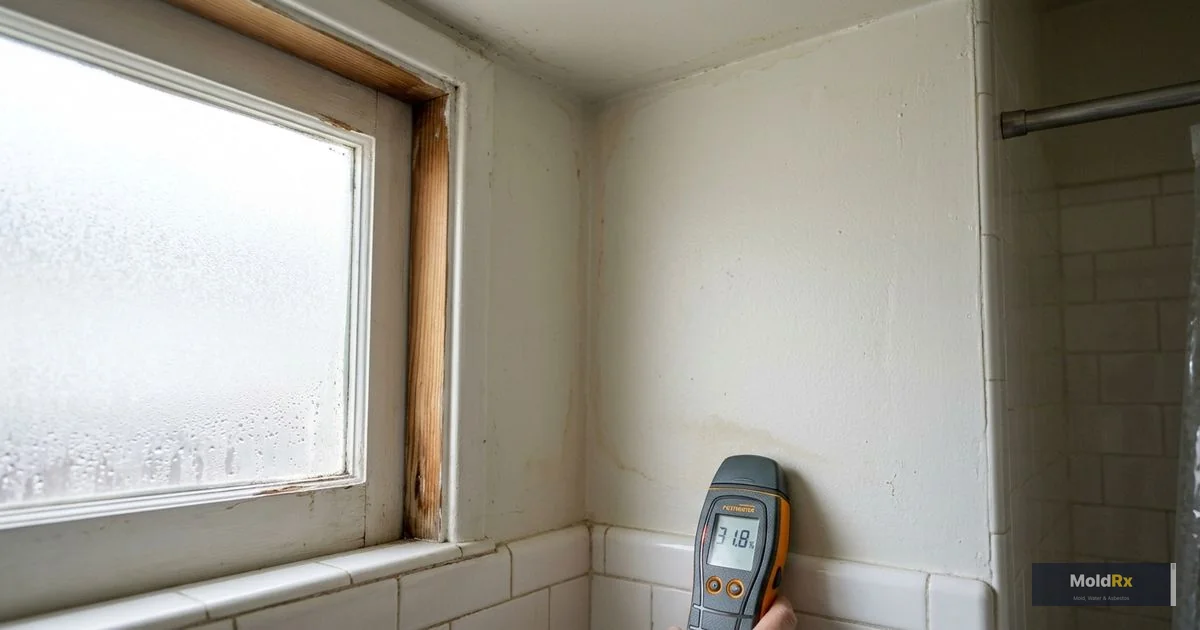
The progression from flood water to active mold colony follows a predictable biological sequence. Understanding this timeline helps you recognize where you are in the process and what interventions are still available to you. For a broader look at mold growth rates from all water sources, see our guide on how fast mold grows after water damage.
0-24 Hours: Absorption, Saturation, and Contamination
The moment flood water enters a structure, building materials begin absorbing it. Drywall wicks water several inches above the visible waterline through capillary action. Carpet padding absorbs many times its weight. Wood framing, OSB subfloors, and insulation become saturated — more completely and more widely than a pipe leak, because the water volume is arriving from every direction at once.
During this phase, dormant mold spores on interior surfaces encounter the sustained moisture they need. No visible mold exists yet. But with flood water, the water itself is delivering nutrients, bacteria, and organic matter directly onto building materials — soil, sewage, decomposing vegetation, and microbial contamination that pre-loads surfaces with the food mold needs to colonize rapidly.
This is the highest-leverage window for intervention. Professional extraction and drying initiated during this period can still prevent mold growth, but the scope of saturation is usually far beyond what household equipment can address.
24-48 Hours: Colonization Begins
Mold spores on surfaces that have remained wet for 24 hours begin to germinate. They extend microscopic filaments called hyphae into drywall paper, wood grain, carpet fibers, and any organic material they contact. This growth is invisible to the naked eye, but colonization is actively underway.
In flood conditions, this process accelerates compared to clean water events. The organic debris and bacterial contamination in flood water provide supplemental nutrients that support faster germination. And because flood water affects the lowest levels of a structure comprehensively — not just one room or one wall — the total area of active germination can be enormous.
Aggressive professional drying initiated during this window can still arrest the process. Materials brought below 60% moisture content will stall germination. But with every hour that passes, colonization becomes harder to reverse with drying alone.
48-72 Hours: The Tipping Point
This is where the trajectory of a flood-damaged property gets decided. Materials wet for two to three days are hosting active mold colonies rooting deeper into substrates — transitioning from surface colonization to material penetration.
Some materials that could have been saved with earlier intervention now require removal. Drywall that was merely wet at 24 hours may now have mold penetrating the paper facing. Carpet padding that could have been dried is now contaminated with both flood-borne bacteria and active mold.
If your flood-damaged property has been sitting for 48 to 72 hours without professional drying, mold growth is almost certainly underway — even if you cannot see it yet. The question is no longer whether you have mold. It is how much, and where.
One Week: Visible Growth and Active Spread
By day seven, mold is producing visible growth on surfaces that remained wet — discoloration on drywall, fuzzy patches on wood, dark staining on carpet, or colonies on organic debris left by the flood water. The characteristic musty odor of microbial volatile organic compounds (MVOCs) is often noticeable.
More critically, established colonies are now producing spores that become airborne and spread to surfaces that were never directly flooded — upper walls, ceilings, closet interiors, HVAC ductwork. What began as a ground-floor flood problem is becoming a building-wide air quality issue.
At this stage, professional mold remediation — containment, HEPA filtration, material removal, antimicrobial treatment, and clearance testing — is required.
Two Weeks and Beyond: Established Infestation
After two weeks of unaddressed flood damage, mold colonies are deeply established — penetrated into building material substrates, not just surfaces. Drywall, insulation, carpet, padding, and wood framing in the flood zone are almost certainly compromised. Secondary colonization in areas not directly flooded — spread through airborne spores and HVAC distribution — may be extensive.
Materials that could have been saved earlier must now be removed. The project timeline extends from days to weeks, and the cost multiplies accordingly. The difference between a contained water damage restoration and a full-scale mold remediation is often just 48 to 72 hours of response time.
Why Flood Water Is Worse Than a Pipe Leak
Not all water damage creates equal mold risk. A burst supply line and a flood may both put water in your home, but the mold implications are fundamentally different.
Category 3 Contamination
The water damage industry classifies water into three categories based on contamination level. A broken supply line is typically Category 1 (clean water). A washing machine overflow is Category 2 (gray water). Flood water is almost always Category 3 (black water) — the most contaminated classification, carrying sewage, chemicals, bacteria, viruses, and organic debris. For a detailed breakdown, see our guide on water damage categories explained.
Category 3 water does not just create moisture conditions for mold. It delivers a concentrated nutrient payload — soil, decomposing vegetation, sewage solids — that accelerates mold colonization beyond what clean water alone would produce.
Greater Volume and Deeper Penetration
A pipe leak might saturate a wall and the flooring in one room. A flood saturates every surface across the entire affected footprint simultaneously. Flood water also penetrates from directions pipe leaks do not — entering through doorways, rising through floor penetrations, wicking through foundation walls — creating moisture in locations extremely difficult to access for drying.
Extended Exposure and Organic Debris
With a pipe leak, you can shut off the source. With a flood, water may continue entering for hours or days. Deeply saturated materials take longer to dry, keeping the mold growth window open longer even after removal begins.
Flood water also deposits organic silt, mud, and debris on every surface it contacts. This layer is itself a mold food source. Even non-porous surfaces like tile and concrete can support mold growth when coated with organic flood residue.
Hidden Mold Locations After Flooding
Mold after flooding grows first and fastest in places you cannot see. Understanding where hidden colonization occurs helps you recognize the scope of the problem and understand why professional assessment matters. Learn more about how professionals detect hidden mold in concealed building spaces.
Inside Wall Cavities at the Flood Line
Flood water saturates the back face of drywall, insulation, and framing inside wall cavities. The exterior surface may dry within days — especially with fans running — but the cavity behind it stays wet for weeks without professional intervention. Mold colonizes the back of the drywall, insulation paper facing, and bottom plates of wood framing. The first visible sign is often musty odors, paint bubbling, or staining bleeding through the wall surface weeks later.
Under Flooring and Above Subfloors
Flood water penetrates beneath flooring materials — between hardwood planks and the subfloor, under laminate, beneath vinyl, and deep into carpet padding. Surface extraction does not remove moisture trapped in these layers. In slab-on-grade construction common throughout Southern California, moisture becomes trapped between the slab and flooring with virtually no way to evaporate — supporting mold growth for months.
Behind Cabinets and Built-In Fixtures
Kitchen, bathroom, and laundry room floods push water behind cabinets, under vanities, and into toe-kick spaces. These enclosed areas combine sustained moisture, organic materials, and zero airflow — first to develop mold, last to be checked during cleanup.
Inside HVAC Ductwork and Air Handlers
If flood water reaches return air grilles, ductwork, or the air handler, contaminated water enters the HVAC system. Once the system runs, it distributes mold spores throughout the entire building. A localized flood becomes a whole-building exposure event.
Behind Baseboards and Inside Trim Cavities
Baseboards trap moisture between themselves and the wall at exactly the height where flood water saturated the surface. This strip dries last and grows mold first — and is one of the easiest places to miss during cleanup.
Southern California Flood Scenarios
Southern California's flood risks are different from what most people picture when they think of flooding. Understanding the specific scenarios helps you recognize when your property is at risk.
Atmospheric rivers bring sustained, heavy rainfall that overwhelms drainage infrastructure. When storm drains back up and streets flood, contaminated water enters homes through doorways, garage openings, and foundation penetrations. Recent atmospheric river seasons have produced flooding in communities across Orange, Riverside, and San Bernardino Counties that had no prior flood history — demonstrating that traditional flood zone maps do not capture the full picture of regional flood risk.
Flash floods in burn scar areas are an increasing threat. Post-wildfire burn scars repel water rather than absorbing it, and even moderate rainfall can produce flash floods carrying mud, ash, and chemical debris into downslope neighborhoods — creating extremely aggressive mold conditions.
Storm surge and coastal flooding affect low-lying coastal communities during major Pacific storms. Salt water keeps materials damp longer than fresh water (hygroscopic effect), giving mold additional time to establish.
Infrastructure failures during heavy rain — levee overtopping, retention basin overflows, stormwater system backups — can flood neighborhoods outside natural flood zones with Category 3 water containing sewage and industrial runoff.
Immediate Action Steps After Flooding
If your property has been flooded, here is what to do — sequenced by priority. For a comprehensive hour-by-hour breakdown of the first day, see our guide on what to do in the first 24 hours after water damage.
Document everything before you touch it. Photograph and video all affected areas before cleanup begins. Capture waterlines on walls, standing water levels, and the extent of damage. This documentation is critical for insurance claims.
Ensure safety first. Do not enter a flooded structure if electricity has not been shut off. Flood water conducts electricity. If you cannot reach the electrical panel safely, call your utility company to disconnect power.
Begin water removal immediately. Use pumps, wet/dry vacuums, and any available means to remove standing water. If the volume is beyond what household equipment can handle, call for professional emergency services immediately.
Remove flood-contaminated contents. Upholstered furniture, mattresses, carpet padding, and porous items that absorbed flood water generally cannot be salvaged. Getting them out reduces the total moisture load and eliminates mold food sources.
Open the structure for airflow. Open windows and doors. Run fans if electricity is safely available. Understand that fans and open windows supplement professional drying — they do not replace it.
Do not turn on the HVAC system. If flood water contacted any part of your HVAC system, running it will distribute contamination and mold spores throughout the building. Leave it off until a professional has assessed the system.
Contact your insurance company. Report the flood damage as soon as possible. Most policies have reporting deadlines, and prompt notification protects your coverage.
Call a professional restoration company. Flood damage requires commercial extractors, industrial dehumidifiers, air scrubbers, and moisture monitoring equipment to dry a structure thoroughly enough to prevent mold. Call (888) 609-8907 for immediate assessment.
When Professional Help Is Required
Some water damage situations can be handled by homeowners. Flood damage is not one of them. Understanding how water damage leads to mold helps explain why professional response is necessary, not optional, for flood events.
Category 3 water requires professional handling. Flood water carries biological and chemical contaminants that create health hazards during cleanup. Professional teams use PPE, containment protocols, and antimicrobial treatments that household cleaning cannot replicate.
The volume exceeds household drying capacity. A flooded structure contains orders of magnitude more moisture than a typical pipe leak. Household fans and dehumidifiers cannot dry building materials within the mold prevention window. Professional restoration uses commercial equipment rated for the volume involved.
Hidden moisture requires professional detection. Flood water saturates concealed building assemblies that you cannot see or access without moisture meters, thermal imaging, and invasive inspection. These hidden wet zones become mold incubators without professional intervention.
Insurance documentation requires professional records. Insurers expect professional moisture readings, drying logs, and photographic documentation. Attempting DIY cleanup and later filing a claim often results in reduced coverage because the documentation trail does not exist.
Frequently Asked Questions
How quickly does mold start growing after a flood?
Mold can begin colonizing flood-damaged materials within 24 to 48 hours. Flood water accelerates this compared to clean water events because it delivers organic nutrients and bacteria directly onto building surfaces. Visible mold typically appears within 3 to 12 days on materials that remain wet.
Is flood mold more dangerous than mold from a pipe leak?
The mold species are generally the same, but flood conditions create more extensive growth across larger areas. The presence of Category 3 contaminants (sewage, bacteria, chemicals) means the combined health exposure is typically more significant. The contamination is compounded, not just the mold.
Can I save my drywall after a flood?
It depends on how quickly drying begins and how high the water reached. Drywall submerged in flood water for more than 24-48 hours typically must be removed. Many restoration protocols call for removing drywall at least 12 to 24 inches above the visible waterline to account for wicking.
Does homeowners insurance cover mold after a flood?
Standard homeowners insurance typically does not cover flood damage — that requires a separate flood insurance policy (NFIP or private). If you have flood insurance, mold resulting from the covered flood event is generally included, provided you took reasonable steps to mitigate. Documenting damage and beginning cleanup immediately strengthens any claim.
Should I use bleach to kill mold after a flood?
Bleach is not an effective mold remediation tool. It can kill surface mold on non-porous materials, but it does not penetrate porous building materials where mold roots grow. Professional remediation uses EPA-registered antimicrobial products designed for porous substrates. Bleach can also react with flood-borne contaminants to create hazardous fumes.
How long after a flood should I wait to return home?
Do not return until standing water is removed, electricity is confirmed safe, and the structure is assessed for stability. Wear protective equipment — rubber boots, gloves, and an N95 respirator — during any re-entry before professional cleaning. If mold is visible, avoid disturbing contaminated materials until remediation professionals establish containment.
Can mold from flooding spread to the second floor?
Yes. Mold spores become airborne and travel through stairwells, HVAC ductwork, and natural air circulation to upper floors. If the HVAC system operated after flooding, spore distribution throughout the building is likely. Second-floor growth typically appears near HVAC registers, in bathrooms, and in closets.
What does mold after a flood look like?
Flood-related mold appears as dark spots on drywall, fuzzy growth on wood, discoloration on carpet, or powdery deposits on concrete. Colors range from black and dark green to white, gray, and orange — color depends on species, not severity. Flood mold often grows alongside the organic residue deposited by the water itself, making it difficult to distinguish from flood debris without professional assessment.
How long does mold remediation take after a flood?
A single-room remediation might take 3 to 5 days. A whole-floor remediation after significant flooding can take 1 to 3 weeks or longer, including setup, material removal, treatment, drying, and clearance testing. Projects that include HVAC decontamination or structural repairs extend further.
Can I prevent mold after a flood if I start drying immediately?
Starting immediately gives you the best chance. If professional extraction and drying begin within the first 24 hours, mold prevention is achievable in many cases — even after flooding. The challenge is that flood volumes require commercial equipment to dry within the prevention window. Household fans alone are rarely sufficient.
The Timeline Decides the Outcome
Every flood-damaged property faces the same biological clock. Mold spores already present encounter the moisture, warmth, and organic nutrients they need — and flood water delivers additional contamination that accelerates the process. The timeline from water entry to active colony is measured in hours, not weeks.
Properties that receive professional extraction and drying within 24 to 48 hours recover at a fraction of the cost and disruption of properties that wait. Every day of delay expands the scope, increases the cost, and elevates the health risk. The biology does not negotiate, but the outcome is still within your control — if you act now.
Get Help Now
MoldRx coordinates emergency flood response, water damage restoration, and mold remediation as integrated services throughout Orange County, Riverside County, and San Bernardino County. We work both sides of the flood-to-mold timeline, and we know that the fastest initial response is the best mold prevention strategy there is.
Call (888) 609-8907 or request a free estimate. If water is in your property right now, do not wait.
Emergency Services → · Mold Removal → · All Services → · Service Areas → · Contact Us →