Mold showed up on the home inspection report. Whether you're buying or selling, your stomach probably dropped. You're now wondering whether this kills the deal, what it costs, who pays for it, and what happens next.
Mold found during a home inspection isn't necessarily a deal-killer — but how you handle it determines the outcome. Mold is a common finding in residential inspections, particularly in bathrooms, attics, crawl spaces, and areas with past water damage. The presence of mold doesn't mean the house is uninhabitable. It means there's a moisture problem that led to biological growth, and that problem needs to be addressed properly before the transaction closes.
This guide covers both sides of the transaction — what buyers should do when mold appears on an inspection report, what sellers can do to prevent it from derailing a sale, how California disclosure law applies, and what documentation satisfies lenders and closes deals cleanly.
For Buyers: Mold on the Inspection Report
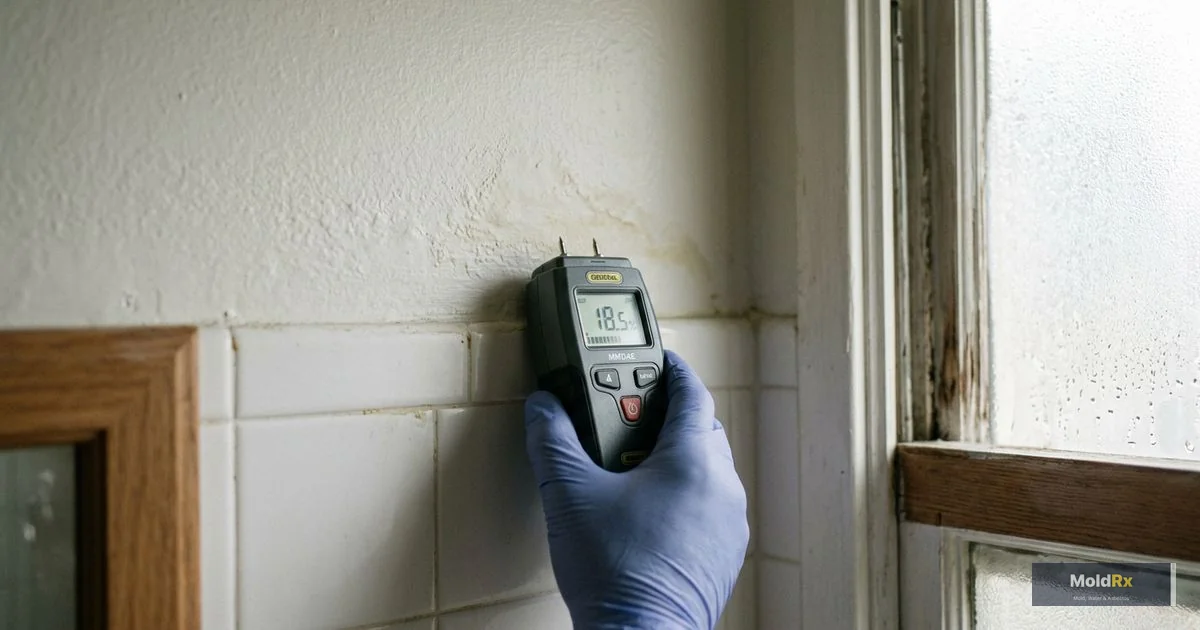
Your home inspector flagged mold. Here's how to handle it step by step.
Understand What the Inspector Actually Found
Home inspectors are generalists. They inspect the roof, foundation, electrical, plumbing, HVAC, and everything in between. Most are trained to identify visible mold growth and moisture conditions, but they are not mold specialists. An inspection report that says "visible mold-like substance observed" or "suspected microbial growth" is a starting point — not a diagnosis.
What matters is context. A small patch of surface mold on bathroom caulking is a maintenance issue, not a structural concern. Mold staining across an attic sheathing or along a basement wall is a different conversation entirely. Before reacting, understand the location, extent, and likely moisture source behind the finding.
Request Professional Mold Testing
If the inspection report flags anything beyond minor surface mold, your next step is professional mold testing. This is different from what your home inspector did. A qualified mold assessor will take air samples (comparing indoor levels to outdoor baseline), surface samples from affected materials, and moisture readings throughout the property.
Testing accomplishes three things in a real estate context:
-
It quantifies the problem. Lab results tell you what types of mold are present and at what concentrations — not just "mold exists" but "here's how your indoor levels compare to what's normal." This is information you can negotiate with.
-
It identifies hidden issues. Signs of mold behind walls aren't always visible on a standard inspection. Air sampling can detect elevated spore counts that suggest mold growth in concealed areas — inside wall cavities, under flooring, or in ductwork — even when nothing is visible.
-
It creates a baseline. If the seller agrees to remediation, pre-remediation test results establish the starting condition. Post-remediation clearance testing can then be compared against this baseline to verify the work was successful.
The cost of professional mold testing is modest relative to the price of a home. Consider it part of your due diligence — the same way you'd pay for a sewer scope or structural engineer if the inspection flagged concerns in those areas.
Negotiate Remediation — Don't Just Walk Away
Discovering mold doesn't mean you should abandon the deal. It means you have information, and information is leverage. Here are the typical negotiation paths:
Seller completes remediation before closing. This is the most common and cleanest approach. The buyer requests that the seller hire a licensed mold remediation company to complete the work, with independent clearance testing confirming success before the transaction closes. The buyer's agent should specify that remediation must follow IICRC S520 standards and that clearance testing must be performed by a company independent of the one doing the remediation.
Seller provides a credit toward remediation costs. If the seller doesn't want to coordinate the work — or if the buyer prefers to choose their own remediation company — a credit at closing is another option. The risk here is that the actual cost may exceed the credit, particularly if hidden damage is more extensive than initially estimated. If you go this route, get a detailed scope and estimate from a remediation professional before agreeing to a credit amount.
Price reduction. In some cases, the mold finding supports a broader price negotiation, especially if it points to underlying structural moisture issues (a failing roof, inadequate drainage, chronic plumbing leaks) that will require additional investment beyond the mold remediation itself.
The worst move is walking away from an otherwise good property over a mold issue that would cost a fraction of the purchase price to resolve. The second worst move is ignoring the finding and closing without addressing it.
Get Clearance Before Closing
After remediation is completed, an independent testing company — not the remediation company — should perform clearance testing. This involves air sampling in the remediated area, in unaffected areas of the home, and outdoors.
Successful remediation should result in indoor spore levels comparable to or lower than outdoor levels and unaffected areas. The clearance report should also confirm that no visible mold growth remains and that moisture levels in affected materials are within normal range.
Do not close escrow until you have clearance documentation in hand. If the remediation company or the seller pushes back on independent clearance testing, that's a red flag. Proper remediation professionals expect and welcome third-party verification — it validates their work. Learn more about what happens during mold remediation so you understand what a complete job looks like.
Watch for Red Flags in the Seller's Response
How a seller responds to a mold finding tells you a lot. Be cautious if the seller insists the mold was "already cleaned up" but has no documentation, offers to have a handyman handle remediation instead of a licensed specialist, resists independent clearance testing, claims the mold is "just cosmetic" without professional assessment, or becomes evasive about the property's water damage history.
A cooperative seller who agrees to professional remediation with clearance documentation is telling you they want to close the deal properly. A seller who minimizes, deflects, or resists is telling you something else.
For Sellers: Getting Ahead of Mold Before It Kills Your Deal
Mold discovered during a buyer's inspection creates leverage for the buyer, delays closing timelines, and sometimes kills deals outright — especially when buyers are already nervous about the property or competing with other listings. The better approach is handling mold before your home goes on the market.
Consider Pre-Listing Mold Testing
If your home has any history of water damage — roof leaks, plumbing issues, flooding — proactive mold testing before listing eliminates surprises. It also lets you control the timeline and choose your own remediation company rather than negotiating under pressure during escrow.
Pre-listing testing is especially worthwhile if your home has older plumbing, a flat roof, a history of leaks (even "fixed" ones), bathrooms without exhaust fans, a crawl space or basement, or any area where you've noticed a musty smell.
Complete Remediation Before Listing
If testing identifies a mold issue, addressing it before your home hits the market puts you in the strongest possible position. Complete the remediation, obtain clearance documentation, and make both available to prospective buyers and their agents.
A seller who can present a clearance report from an independent testing company is demonstrating that the problem was identified, professionally addressed, and verified as resolved. This transforms a potential deal-killer into a non-issue — or even a selling point that demonstrates how well the home has been maintained.
When choosing a mold remediation company, make sure they hold IICRC S520 certification, use proper containment protocols, and that clearance testing is performed by a separate, independent company. These details matter when a buyer's agent reviews the documentation.
Fix the Moisture Source — Not Just the Mold
Remediation that removes mold without addressing the underlying moisture source is incomplete, and any competent buyer's inspector will notice. If the mold resulted from a roof leak, fix the roof. If it resulted from a plumbing failure, repair the plumbing. If condensation in a bathroom caused it, install or repair the exhaust fan.
Document these repairs alongside the mold remediation. A complete package — moisture source identified and repaired, mold professionally remediated, clearance testing passed — is what closes deals without friction.
California Disclosure Requirements
California has some of the most extensive seller disclosure obligations in the country, and mold falls squarely within them.
The Transfer Disclosure Statement (TDS)
Under California Civil Code Sections 1102-1102.17, sellers of residential property (one to four units) must complete a Transfer Disclosure Statement. The TDS requires sellers to disclose known material facts about the property's condition — and that includes past or present mold issues.
The TDS specifically asks about defects or malfunctions in various systems and components. If you know about mold growth, past water damage that led to mold, or remediation work that was performed, you are legally required to disclose it. This applies whether the mold is currently present or was previously remediated.
What Sellers Must Disclose
California courts have consistently held that sellers must disclose facts that materially affect the value or desirability of the property. For mold, this means:
Current mold conditions. If you know mold exists in the home, you must disclose it — even if the buyer's inspector might not find it.
Past mold conditions and remediation. If mold was previously found and remediated, disclose the history — what was found, what was done, and the results. Having clearance documentation strengthens your position.
Water damage history. Past leaks, flooding, or moisture issues that may have led to mold growth should be disclosed. The connection between water damage and mold is well established, and failure to disclose known water damage creates liability.
Testing results. If professional testing identified specific mold types or elevated spore counts, those findings should be part of your disclosure.
The Cost of Non-Disclosure
Failing to disclose a known mold condition in California exposes sellers to significant legal liability. Buyers who discover undisclosed mold after closing can pursue remediation costs, diminished property value, health-related damages, and in some cases rescission of the sale entirely.
The legal standard is what the seller "knew or should have known." A seller who lived in the home for years and never investigated persistent water stains or musty odors may still be held to have known about conditions a reasonable person would have investigated.
Honest disclosure paired with documentation of professional remediation builds buyer confidence. What destroys deals — and invites lawsuits — is the discovery that a seller concealed a known problem.
What Constitutes Proper Remediation for a Real Estate Transaction
Not all mold cleanup is created equal. For a real estate transaction, the remediation needs to meet specific standards that satisfy buyers, agents, inspectors, and lenders.
Industry Standards
Proper mold remediation follows the IICRC S520 Standard for Professional Mold Remediation. This isn't a legal requirement in California, but it's the industry benchmark that informed buyers and their agents look for. IICRC S520 establishes protocols for containment, safe removal of contaminated materials, HEPA air filtration, antimicrobial treatment, and verification through clearance testing.
A remediation company following IICRC S520 will document their process — containment setup, materials removed, disposal records, and scope of work completed. This documentation becomes part of the property record.
Separation of Testing and Remediation
In real estate transactions, the separation between the company performing remediation and the company performing testing is particularly important. When the same company tests and remediates, there's an inherent conflict of interest — they profit from finding problems and from being hired to fix them.
Independent testing means the assessor who takes air samples has no financial interest in whether remediation is needed, and the clearance tester has no financial interest in whether the remediation passes. This independence gives the results credibility with all parties to the transaction.
Clearance Documentation That Satisfies Lenders
Lenders care about mold because it affects property value and can indicate structural moisture issues that threaten the collateral. When mold is identified during a transaction, some lenders require clearance documentation before approving the loan.
Clearance documentation that satisfies lenders typically includes a pre-remediation assessment, the remediation company's scope of work and completion report, post-remediation clearance test results from an independent company, confirmation that moisture levels are within normal range, and documentation that the moisture source was repaired.
FHA and VA loans tend to have stricter requirements, and mold findings can trigger additional scrutiny. Conventional lenders vary. Having thorough documentation ready prevents delays regardless of the lender's specific requirements.
When Mold Findings Legitimately Should Concern You
While most mold findings during inspections are manageable, some warrant serious caution:
Widespread mold across structural components. Mold covering large areas of attic sheathing, floor joists, or wall framing suggests a chronic moisture problem that may have compromised structural integrity. This goes beyond mold remediation into structural assessment territory.
Mold resulting from foundation or drainage issues. If the moisture source is groundwater intrusion, poor grading, or a compromised foundation, the cost of fixing the underlying issue may significantly exceed the mold remediation itself.
Evidence of repeated mold problems. If the property shows signs of mold that was previously cleaned but has returned, the underlying moisture problem hasn't been solved. Recurring mold signals an unresolved root cause.
Mold combined with other significant inspection findings. Mold alongside an aging roof, outdated plumbing, or foundation issues paints a picture of deferred maintenance that extends well beyond the mold itself.
Frequently Asked Questions
Does mold always show up on a home inspection?
No. Standard home inspections are visual assessments of accessible areas. Mold inside wall cavities, under flooring, or behind cabinets won't be identified. If you have concerns about hidden mold — especially in a home with past water damage — a dedicated mold inspection with air sampling provides a more thorough assessment.
Can I back out of a purchase because of mold?
If you're within your inspection contingency period, you can typically cancel for any reason, including mold findings. After contingencies are removed, your options depend on your purchase agreement. If the seller failed to disclose a known mold condition, you may have grounds for legal action.
Who pays for mold testing during a real estate transaction?
This is negotiable. Typically the buyer pays for their own inspection and any additional testing they request. However, if the buyer requests mold remediation, it's common for the buyer to request that the seller pay for both remediation and the clearance testing that verifies its success.
Should I get a mold test even if the inspection didn't find mold?
If the home has risk factors — a history of water damage, older plumbing, a basement or crawl space, areas with poor ventilation, or a musty smell — a professional mold test can identify issues a general inspection might miss. Learn more about whether you need a mold test for your specific situation.
Can the seller refuse to remediate mold?
A seller can refuse any request during negotiation. But if the buyer walks away, the seller must now disclose the mold finding to all future prospective buyers. The buyer's other options include negotiating a price reduction or proceeding with plans to handle remediation after closing.
Will mold affect my ability to get a mortgage?
It can. If the appraiser notes mold or if the inspection report is shared with the lender, some lenders will require clearance documentation before funding the loan. FHA and VA loans are particularly sensitive to health and safety conditions. Resolving the mold issue with proper documentation before closing prevents lending delays.
How long does mold remediation take in a real estate transaction?
Most residential mold remediation takes one to five days depending on scope, plus two to three days for lab results from clearance testing. Total timeline is typically one to two weeks. This usually fits within standard escrow timelines, though tight closings may need extensions.
What if the appraisal mentions mold?
If the appraiser notes mold as an adverse condition, the lender will almost certainly require remediation and clearance before funding. The appraiser may also note it as a factor affecting value. In this scenario, addressing the mold isn't optional — it's a condition of the loan. Work with your agent to negotiate who handles and pays for the remediation.
Is the seller liable if I find mold after closing?
If the seller knew about the mold and failed to disclose it on the TDS, they may be liable for remediation costs, diminished value, and other damages under California law. If the mold genuinely developed after closing or the seller had no knowledge, liability is less clear. Evidence that the condition predated the sale strengthens your case.
Does a mold clearance report guarantee the mold won't come back?
No. Clearance testing confirms that mold levels are within normal range at the time of testing. If the underlying moisture source isn't permanently resolved — or a new moisture event occurs — mold can return. This is why proper remediation always addresses the moisture source, not just the mold. Understanding why mold keeps coming back helps you evaluate whether the root cause was addressed.
Protect the Transaction — and Your Investment
Whether you're buying or selling, mold during a home inspection is a solvable problem when it's handled with the right process, the right professionals, and the right documentation. The deals that fall apart are the ones where mold is minimized, covered up, or addressed with shortcuts that don't hold up to scrutiny.
MoldRx coordinates professional mold testing and mold remediation for real estate transactions throughout Orange County, Riverside County, and San Bernardino County. We understand the documentation requirements that buyers, sellers, agents, and lenders need — from pre-listing assessments through post-remediation clearance that satisfies every party at the closing table.
If mold has surfaced in your transaction and you need honest guidance about the right next step, request an estimate or call (888) 609-8907 to discuss your situation.