Most homeowners never set foot in their attic — until a home inspector flags dark staining on the roof sheathing, a musty smell starts drifting from ceiling vents, or a real estate transaction stalls because of visible mold on the rafters. By that point, the problem has usually been developing for months or years.
Attic mold is caused by moisture trapped in a poorly ventilated space — usually from roof leaks, bathroom exhaust vented into the attic, or inadequate ventilation. Warm, humid air rises from the living space below and condenses on cooler attic surfaces, feeding mold on the sheathing, rafters, and joists. Because attics are out of sight, contamination often spreads across large areas before anyone notices.
This guide covers why attics grow mold, what makes Southern California attics vulnerable, how to recognize the problem, how remediation works, and how to prevent it from returning.
Why Attics Grow Mold
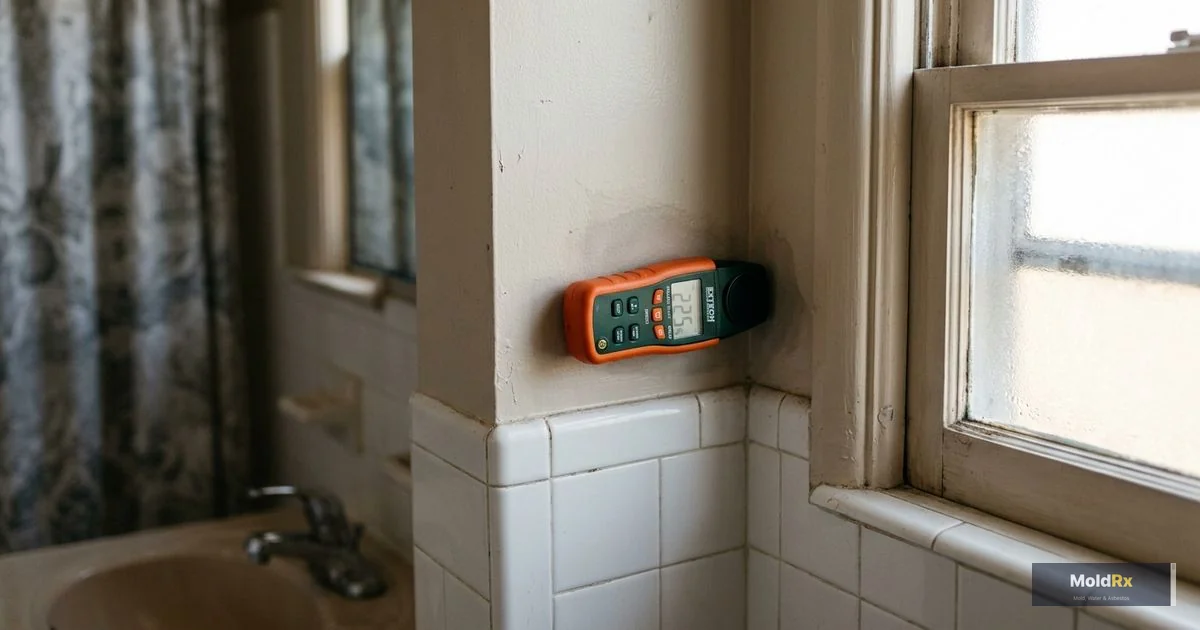
An attic becomes a mold incubator when moisture enters faster than it can escape. Wood sheathing, rafters, and collar ties provide food. Darkness and still air provide the environment. All that's missing is moisture — and in most problem attics, multiple sources deliver it.
Inadequate Ventilation
Attic ventilation relies on cool air entering through soffit vents at the eaves, rising as it warms, and exiting through ridge vents or roof vents at the peak. When this system fails — blocked soffits, missing ridge vents, insulation pushed against the eaves, or too few vents for the square footage — the attic traps warm, humid air against cooler roof sheathing.
Ventilation failures are the single most common cause of attic mold. Building codes require 1 square foot of net free ventilation area per 150 square feet of attic floor (or 1:300 with balanced intake/exhaust). Many homes fall short.
Bathroom and Kitchen Exhaust Vented into the Attic
Bathroom exhaust fans and kitchen range hoods are designed to expel moisture-laden air to the building exterior. When ductwork terminates in the attic instead — through a disconnected joint or improper routing — every shower and boiling pot dumps humid air directly into the attic.
A single bathroom fan venting into the attic can introduce several pints of moisture per day. Multiply that by the number of bathrooms and years the condition has existed, and the cumulative moisture load is enormous. Mold growth often radiates outward from the exhaust duct termination point.
Dryer Vents Terminating in the Attic
Clothes dryers exhaust hot, moisture-saturated air. When the dryer vent runs into the attic instead of to the building exterior, each load of laundry pushes several pounds of water vapor into the space. Lint accumulation from improperly routed dryer vents also provides additional organic material for mold to colonize.
Roof Leaks
Cracked or displaced tiles, deteriorated flashing around vents and chimneys, worn valley flashing, and aged underlayment all allow rainwater into the attic. In Southern California, where rain arrives in concentrated storms, even small vulnerabilities allow significant water intrusion. Roof leaks are sometimes intermittent — only appearing during wind-driven rain from a specific direction — making them difficult to trace. Between storms, mold colonizes the damp wood.
Air Leaks from the Living Space
Warm, humid air from the living space migrates into the attic through every gap in the ceiling plane: recessed light housings, attic hatches, plumbing and electrical penetrations, HVAC ductwork connections, and gaps around chimneys. This warm air hitting the cooler attic environment condenses on roof sheathing — the same fundamental moisture dynamic that drives crawl space mold, but in reverse. Homes with poor air sealing leak conditioned air into the attic continuously, providing a steady moisture supply that ventilation alone may not overcome.
SoCal-Specific Factors: Why Attic Mold Happens Here
Southern California homeowners assume attic mold is a cold-climate or humid-climate problem. It isn't. Understanding why SoCal homes are vulnerable to mold starts with recognizing how local climate and construction interact above the ceiling.
Tile Roof Condensation
Concrete and clay tile roofs are standard throughout Southern California. Tile is a thermal mass — it absorbs heat during the day and radiates it slowly at night. When nighttime temperatures drop, the underside of the roof deck can cool below the dew point of the attic air, causing condensation to form directly on the sheathing. This cycle repeats nightly during cooler months, keeping the sheathing chronically damp without any roof leak or plumbing issue — and feeding mold across large areas of the roof deck.
Marine Layer Humidity
From May through September, the marine layer brings elevated humidity to coastal and near-coastal communities from Orange County inland through portions of Riverside County and San Bernardino County. Cool, humid marine air enters the attic through soffit and gable vents during morning hours. As the attic heats during the day, moisture stays in the space. When temperatures drop again, condensation forms on the sheathing. This daily cycle operates for months, providing steady moisture even during Southern California's dry season.
Santa Ana Wind Temperature Swings
Santa Ana events bring hot, dry air that can push attic temperatures well above 130 degrees Fahrenheit. When the event ends — often abruptly — temperatures drop and onshore flow returns with coastal humidity. These rapid swings cause aggressive condensation on attic surfaces that were superheated hours earlier. Repeated over multiple Santa Ana cycles each fall and winter, these episodic moisture events contribute to mold growth across sheathing and framing.
Older Construction with No Air Sealing
Many homes built before the 1990s in cities like Riverside, Redlands, Corona, and Fullerton have minimal air sealing at the ceiling plane — recessed lights open to the attic, loose attic hatches, unsealed plumbing and electrical penetrations. These gaps allow conditioned air to flow freely into the attic, carrying household moisture with it. Combined with the climate factors above, the result is chronic moisture accumulation in spaces never designed to manage it.
Signs of Attic Mold
Most homeowners discover attic mold indirectly — through smells, symptoms, or a professional inspection. Recognizing the signs early limits contamination and remediation costs. Some of these signals overlap with the signs of mold behind walls — the difference is the direction: these indicators point upward rather than inward.
Dark Staining on Roof Sheathing
The most definitive sign is visible discoloration on the underside of the roof deck. Healthy plywood or OSB sheathing has a uniform, light color. Mold-affected sheathing shows dark gray, black, or greenish staining — sometimes in patches near specific moisture sources, sometimes spread across large sections of the deck. The staining often follows moisture patterns: concentrated near bathroom vent terminations, around roof penetrations, or along areas where ventilation is blocked.
Musty Smell from Ceiling Vents or the Attic Hatch
A persistent musty odor from ceiling-mounted HVAC vents, bathroom exhaust fans, or the attic access hatch indicates microbial activity above the ceiling. The smell intensifies on hot days when attic temperatures accelerate off-gassing and may be strongest in rooms directly below the most contaminated areas.
Visible Growth on Rafters and Framing
Beyond the sheathing, mold may colonize rafters, collar ties, ridge beams, and truss members. Visible fuzzy or powdery growth — white, green, gray, or black — on structural framing confirms active contamination. If you can see growth on the framing, the sheathing above is almost certainly affected as well.
Frost or Condensation on Roof Decking in Winter
During cooler months, check the attic on a cold morning. Frost crystals or water droplets on the underside of the roof sheathing mean warm, moist air from below is condensing on the cold deck — a direct indicator of the moisture conditions that drive attic mold and a sign that ventilation is inadequate.
Ceiling Stains or Paint Peeling Below the Attic
Water stains, paint blistering, or drywall discoloration on ceilings — particularly in bathrooms or rooms near the attic hatch — can indicate moisture migrating downward from a mold-affected attic. This is a late-stage sign of significant moisture accumulation above.
Attic Mold vs. Attic Staining: How to Tell the Difference
Not every dark mark on attic sheathing is mold. Knowing the difference prevents unnecessary alarm — and prevents dismissing a real problem as cosmetic.
Normal Wood Staining
Wood sheathing darkens naturally from age, heat exposure, and tannin migration. This staining is typically uniform, lacks fuzzy or raised texture, and produces no musty odor. It appears as a general patina rather than a pattern linked to moisture sources.
Mold Growth
Mold staining follows moisture patterns — concentrated near known moisture sources, heavier in areas with poor ventilation, lighter where airflow is adequate. Active mold often has texture: fuzzy, powdery, or web-like growth visible on close inspection. It produces a musty odor and responds to moisture changes — growing more aggressive in humid conditions, appearing dormant during dry periods.
When You're Not Sure
If the staining is ambiguous, professional mold testing removes the guesswork. Surface sampling can confirm whether discoloration is mold or simply aged wood, and air sampling can determine whether elevated spore concentrations exist. This is particularly valuable during real estate transactions, where the distinction between cosmetic staining and active mold has significant financial implications.
How Professional Attic Mold Remediation Works
Attic mold remediation addresses existing contamination, eliminates the moisture source, and restores the attic to a condition that won't support regrowth. Because attic contamination often covers large areas of sheathing, the scope of work is typically more extensive than mold in other locations.
Assessment and Moisture Source Identification
The process begins with documenting the extent of growth, taking moisture readings, identifying every moisture source, and evaluating the ventilation system. Removing mold without fixing the moisture source means it returns — so identifying and correcting the cause is the non-negotiable first step.
Containment and Protection
Professionals seal the attic access and penetrations between the attic and conditioned space. HEPA-filtered negative air machines maintain the attic at negative pressure, exhausting contaminated air outside rather than allowing it to migrate into the living space during remediation.
Soda Blasting
For large areas of sheathing contamination — common in attic mold cases — soda blasting is the primary removal method. Compressed air propels sodium bicarbonate media against the contaminated wood, removing mold from the wood grain without damaging structural integrity. Soda blasting reaches into the texture of rough-sawn lumber and the irregular surfaces of plywood and OSB where mold embeds itself. The media is non-toxic, leaves no chemical residue, and its alkaline pH is inhospitable to mold regrowth.
HEPA Vacuuming and Antimicrobial Treatment
After soda blasting, all surfaces are HEPA vacuumed to remove residual media, spores, and debris. A professional-grade antimicrobial solution is then applied to all treated surfaces. This provides a protective barrier on the clean wood that resists future mold colonization.
Air Scrubbing and Clearance Testing
HEPA-filtered air scrubbers run throughout remediation to capture airborne spores. Once the space is clean and dry, an independent party collects air samples from the attic and living space below. Lab results confirming spore counts at or below normal levels constitute clearance. Learn more about how professionals detect hidden mold and what post-remediation verification involves.
Ventilation Correction
Remediation is incomplete without addressing the ventilation failures that caused the problem — adding soffit vents, installing or upgrading ridge vents, clearing insulation from eave areas, adding baffles, and rerouting any bathroom or dryer exhaust that terminates in the attic. Ventilation correction transforms a one-time remediation into a permanent solution.
Prevention: Keeping Attic Mold from Coming Back
Remediation eliminates existing mold, but prevention requires changing the conditions that allowed growth. These strategies — aligned with a broader mold prevention approach for Southern California homes — keep attic mold from returning.
Proper Soffit and Ridge Ventilation
Effective attic ventilation uses balanced intake and exhaust: soffit vents at the eaves draw cool air in, and ridge vents at the peak allow warm, moist air to exit. Ensure soffit vents are not blocked by insulation, bird screens, or paint. Verify that ridge vents are installed and functional — not capped or covered during reroofing. For homes without ridge vents, powered attic ventilators or additional static roof vents may be needed. The goal is continuous air exchange that prevents moisture from lingering on any surface.
Bathroom, Kitchen, and Dryer Exhaust Routing
Every bathroom exhaust fan, kitchen range hood, and clothes dryer must vent to the building exterior — never into the attic. Verify ductwork is connected, sealed at all joints, insulated to prevent condensation, and terminates at a roof cap or wall cap with a functioning damper. Dryer vents through the attic should be rigid metal duct, not flexible vinyl. If any exhaust vents into the attic, rerouting it is the single highest-impact prevention measure you can take.
Insulation and Air Sealing
Proper insulation helps control humidity in the home and reduces the temperature differential that causes condensation. But insulation must not block soffit vents — baffles should be installed at each rafter bay along the eaves to maintain the ventilation channel. Air sealing the ceiling plane — around recessed lights, plumbing and electrical penetrations, the attic hatch, and HVAC connections — reduces warm, moist household air leaking into the attic. Combined with adequate ventilation, air sealing dramatically reduces attic moisture levels.
Roof Maintenance
Annual roof inspections — particularly before the rainy season — catch cracked tiles, deteriorated flashing, and worn underlayment before they become water intrusion problems.
Attic Mold: 10 FAQs
How common is mold in attics?
More common than most homeowners realize. Attics with inadequate ventilation, exhaust fans venting into the space, or a history of roof leaks are especially susceptible — and because homeowners rarely enter the attic, contamination often goes undetected for years.
Can attic mold affect my health if I never go up there?
Yes. Mold spores migrate from the attic into the living space through ceiling penetrations, HVAC returns, light fixtures, and the attic access hatch. If you're experiencing persistent congestion, headaches, or respiratory issues that improve when you leave home, elevated spore levels from the attic are a plausible contributor.
What does attic mold look like?
It most commonly appears as dark gray or black staining on the underside of roof sheathing, though it may also present as green, white, or brown discoloration on rafters and truss members. Active growth often has a fuzzy or powdery texture. Dormant mold may appear as flat staining that becomes active again when moisture returns.
My home inspector found dark staining in the attic. Is it definitely mold?
Not necessarily. Wood darkens with age and heat exposure. However, staining that follows moisture patterns or has texture warrants testing. Professional mold testing with surface sampling can confirm whether it's mold or cosmetic staining — an important distinction for real estate transactions.
Is attic mold covered by homeowner's insurance?
Mold from a sudden, accidental event — such as storm damage to the roof — may be covered. Mold from chronic conditions like inadequate ventilation or improperly routed exhaust is typically excluded. Coverage varies by policy — document the condition and review your policy's mold provisions before remediation begins.
Can I remove attic mold myself?
For very small areas of surface mold on accessible framing, limited DIY treatment may be possible. However, attic mold typically involves large areas of sheathing in a space with extreme temperatures, limited headroom, and difficult access. Improper removal can spread spores through the home. For any contamination beyond a few square feet, professional mold remediation is strongly recommended.
How long does attic mold remediation take?
An attic with moderate to extensive sheathing contamination typically takes 2 to 5 days, depending on size, severity, and whether ventilation corrections are included. Clearance testing adds 1 to 3 days for lab results.
Will improving ventilation alone fix attic mold?
Ventilation addresses the cause but does not remove existing mold. Once mold has colonized sheathing, it must be physically removed through soda blasting, abrasive cleaning, or sheathing replacement. After remediation, ventilation improvements prevent regrowth. The two are complementary, not alternatives.
Should I worry about attic mold if I'm selling my home?
Yes. Attic mold is routinely flagged during home inspections and can delay or derail transactions. Buyers may request remediation as a condition of sale or negotiate price reductions. Addressing attic mold before listing eliminates the issue from negotiations.
How do I prevent attic mold after remediation?
Maintain balanced soffit-to-ridge ventilation, ensure all exhaust vents terminate outside the building, seal the ceiling plane to minimize air leakage, keep insulation away from soffit vents with baffles, and inspect the roof annually for damage.
Take Control of What's Above Your Ceiling
Attic mold doesn't resolve on its own. The ventilation failures, exhaust routing problems, and moisture conditions that cause it persist — and the contamination spreads until it's addressed. The good news: attic mold is both treatable and preventable. Professional remediation eliminates existing contamination, and ventilation corrections keep it from returning.
If you've noticed musty odors from ceiling vents, dark staining during an attic inspection, frost on your roof decking, or unexplained respiratory symptoms — or if your attic has never been inspected — it's worth finding out what's happening above the ceiling.
MoldRx coordinates professional mold testing and mold remediation throughout Orange County, Riverside County, and San Bernardino County. We'll assess your attic honestly and tell you what's needed — whether that's full remediation or simply monitoring a minor concern.
Call (888) 609-8907 to talk through what you're seeing, or request a free estimate online.