Most homeowners don't think of the garage as a mold problem. It's not a living space. There's no carpet, no drywall in most sections, and it feels dry enough. But garages consistently rank among the most mold-prone areas in Southern California homes — and the mold often goes unnoticed for months because nobody's looking for it.
Garages grow mold because they combine poor ventilation, temperature swings that produce condensation, moisture migrating through the concrete slab and walls, and an abundance of stored organic materials that mold feeds on. Add a water heater, laundry hookups, or a shared wall with the kitchen or bathroom, and you've added plumbing as another moisture source. The result is a space where mold can establish itself on concrete, drywall, wood framing, cardboard boxes, clothing, furniture, and anything else you've stored in there.
This guide explains why garages grow mold, where it shows up, how to recognize the signs, what you can clean yourself, when professional help is needed, and how to prevent it from coming back.
Why Garages Grow Mold
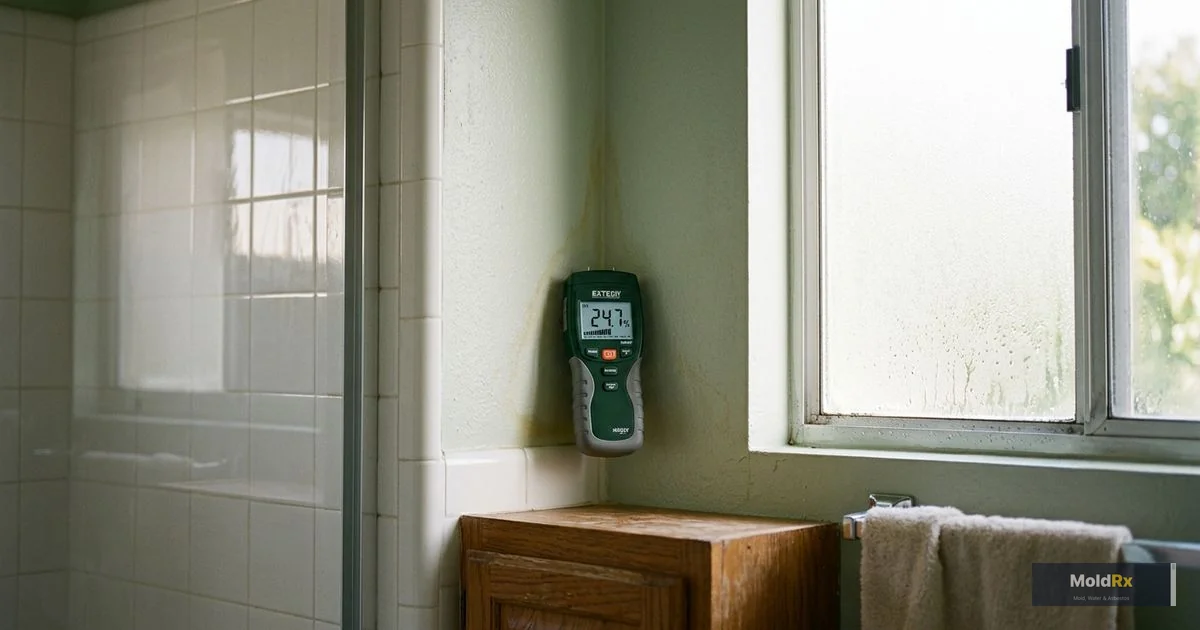
A garage is essentially an unconditioned or semi-conditioned box attached to your house. It doesn't get the benefit of your HVAC system, it opens directly to the outdoors every time the door rolls up, and it's built on a concrete slab that stays in direct contact with the soil beneath it. Each of these characteristics contributes to mold growth.
Concrete Slab Moisture
Concrete is porous. Moisture from the soil beneath and around your garage slab migrates upward through the concrete via capillary action — a process called moisture vapor transmission. This happens continuously, whether or not it has rained recently. In garages without a vapor barrier beneath the slab (common in older construction throughout Orange County, Riverside County, and San Bernardino County), moisture wicks through the concrete and evaporates at the surface. You may not see standing water, but the humidity at floor level stays elevated.
This is why cardboard boxes stored directly on a garage floor eventually get soft and grow mold — the moisture is coming up through the concrete, not down from the air.
Poor Ventilation
Most residential garages have no mechanical ventilation — no exhaust fan, no return air duct, no HVAC supply register. The only air exchange happens when the garage door opens and closes. In between, humid air sits still, allowing moisture to accumulate on surfaces without drying. Even garages with a side door or windows rarely get meaningful cross-ventilation because the geometry of the space doesn't promote airflow when the door is closed.
Temperature Cycling and Condensation
Garages experience wider temperature swings than any other part of your home. An uninsulated garage in the Inland Empire can exceed 100 degrees on a summer afternoon and drop 30 to 40 degrees overnight. These swings produce condensation. When warm, humid air contacts cooler surfaces — the concrete slab, metal tools, exterior walls — moisture condenses and collects on those surfaces. This cycle repeats daily, keeping surfaces damp enough for mold to grow.
Water Heaters, Laundry Hookups, and Plumbing
Many Southern California garages house the water heater, and some include laundry hookups. Both introduce moisture and plumbing into a space with no ventilation to handle it. A slow leak from a corroded fitting, a loose supply line, or a dripping T&P valve adds water directly to an enclosed space. A water heater leak that goes unnoticed for weeks can saturate surrounding drywall, framing, and the slab, creating a concentrated mold problem.
Stored Cardboard, Fabric, and Organic Materials
The garage is where organic materials go to sit indefinitely. Cardboard boxes, old clothing, fabric holiday decorations, sports equipment bags, camping gear, books, photo albums, luggage, and furniture all provide cellulose and organic nutrients that mold feeds on. Stack those materials on a concrete floor that's transmitting moisture, in a space with no ventilation and daily condensation cycles, and you've created ideal conditions for mold colonization on your belongings.
Where Garage Mold Shows Up
Mold in a garage doesn't always appear where you'd expect. Knowing the common locations helps you catch it early.
Concrete Floor and Lower Walls
The garage floor is the most common location because it's the primary moisture source. Mold on concrete appears as dark discoloration — black, green, or gray patches — particularly along edges where the floor meets the wall, in corners, and beneath stored items. The areas you can't see — under shelving units, behind stacked boxes, beneath a workbench — are the areas most likely to have growth. Lower wall sections, especially the bottom 12 inches of drywall, are also common sites where moisture wicks up from the slab.
Drywall Above the Firewall
In attached garages, building code requires a fire-rated separation wall (firewall) between the garage and the living space. This wall is finished with drywall — one of mold's preferred food sources. Mold on the firewall often develops behind items stored against the wall, where airflow is blocked and moisture gets trapped. If you've ever moved a shelf away from your garage wall and found dark staining or fuzzy growth behind it, that's the mechanism at work.
Ceiling and Attic Access
Garage ceilings — particularly in two-story homes where the garage ceiling is the floor of the room above — can develop mold if there's a moisture source from the living space (a bathroom leak above, condensation from HVAC ducts running through the space) or if the attic access hatch allows hot, humid attic air to migrate into the garage. Staining or discoloration on the garage ceiling, especially near plumbing runs or the attic access panel, warrants investigation.
Stored Belongings
Cardboard boxes absorb moisture from the concrete and the air, and they're composed entirely of cellulose — mold food. Clothing, fabric, leather, paper, and photographs are all susceptible. The first sign is often a musty smell when you open a box, followed by visible discoloration or fuzzy growth on items inside.
Water Heater Closets and Alcoves
If your water heater is in an enclosed closet or alcove, check the surrounding surfaces regularly. The combination of heat, moisture from the tank, limited airflow, and nearby drywall makes these spaces frequent mold sites. Look at the base of the drywall, the floor beneath the heater, and any plumbing penetrations.
Signs of Garage Mold
Some garage mold is visible. Much of it isn't — at least not until you move stored items or look behind things. Here are the signs to watch for.
Musty or Earthy Odor
A persistent musty smell — especially one that hits you when you open the door from the house — is one of the most reliable early indicators. The odor comes from microbial volatile organic compounds (MVOCs) that mold produces as it metabolizes organic material. If the smell is stronger on humid days or after rain, mold is the likely source.
Visible Discoloration
Dark spots, patches, or streaks on concrete, drywall, wood framing, or stored items. Mold on concrete often looks like dirt or staining, so it's overlooked. On drywall, it appears as dark circles or spreading patches. On wood, it may be black, green, white, or gray.
Staining or Warping on Drywall
Drywall with water stains, bubbling paint, warping, or a soft texture when pressed has absorbed moisture — and where drywall has been wet, mold is either present or imminent. Pay attention to the lower 12 to 24 inches of garage drywall and any area near plumbing.
Condensation on Surfaces
Regular condensation on the garage floor, walls, or metal surfaces indicates humidity levels high enough to support mold. If water droplets form on the concrete floor on cool mornings, or if metal tools and shelving are consistently damp, the garage is too humid.
Allergic Reactions When Entering the Garage
If you sneeze, get congested, or experience itchy eyes when spending time in the garage — and symptoms clear up when you leave — elevated mold spore levels are a plausible explanation.
Protecting Stored Belongings from Garage Mold
The garage is where people store things they want to keep but don't use daily — and those belongings are often the first casualties of garage mold.
Elevate everything off the floor. Wire shelving, plastic pallets, or storage racks that keep items at least 4 to 6 inches above the concrete prevent direct contact with slab moisture and allow air to circulate underneath.
Replace cardboard with sealed plastic. Cardboard absorbs moisture, feeds mold, and breaks down in humid environments. Sealed plastic bins protect contents from moisture and airborne spores. For vulnerable items — documents, photographs, clothing — use bins with gasket seals.
Don't store items against walls. Leave a 2 to 3 inch gap between stored items and all walls to allow air circulation and prevent trapped moisture.
Keep irreplaceable items inside the house. Family photos, legal documents, and heirloom textiles belong in your conditioned living space. If you must store them in the garage, use sealed containers with desiccant packets.
DIY Cleaning for Small Surface Mold on Concrete
Small areas of surface mold on the garage floor or unpainted concrete walls can be cleaned by the homeowner — provided the affected area is limited, the mold hasn't spread to drywall or porous materials, and you take appropriate precautions.
Safety first. Wear an N95 respirator, rubber gloves, and eye protection. Open the garage door fully before you start and keep it open throughout cleaning and for at least an hour afterward.
Cleaning concrete surfaces. Scrub the affected area with a stiff-bristle brush and a solution of one cup of borax dissolved in one gallon of warm water. Borax is effective against mold, doesn't produce toxic fumes, and leaves a residual that inhibits regrowth. Rinse and allow the area to dry completely.
Do not use bleach on concrete. Bleach is largely ineffective on porous surfaces. It kills surface mold but doesn't penetrate the pores where mold roots, and the water content actually promotes regrowth.
Address the moisture. Cleaning mold without fixing the moisture source means it comes back. If the mold grew because of slab moisture, condensation, or poor ventilation, those conditions need to change.
When Professional Help Is Needed
DIY cleaning has clear limits. Professional mold remediation is appropriate — and often necessary — in the following situations:
The affected area exceeds 10 square feet. The EPA's general guideline for DIY mold cleanup is 10 square feet or less. Beyond that, professional containment, equipment, and expertise are needed.
Mold is growing on drywall, wood framing, or insulation. These are porous materials that allow mold to grow beneath the surface. Affected drywall is removed and replaced, not cleaned. Contaminated insulation is disposed of. Wood framing is treated in place if structurally sound, or replaced if compromised.
The moisture source is unresolved. If you don't know where the moisture is coming from, professional assessment is needed before cleanup makes sense. Removing mold without fixing the water problem means the mold will return.
You can smell mold but can't find it. Hidden growth behind drywall, inside wall cavities, or beneath floor coatings requires professional mold testing with air and surface sampling to confirm. Learn more about how professionals detect hidden mold.
You have health concerns. If household members are experiencing respiratory symptoms or worsening asthma, professional remediation with proper containment protects occupant health during removal. This is especially important in attached garages, where the firewall connects directly to the living space.
Prevention: Keeping Garage Mold from Coming Back
Preventing garage mold is fundamentally about controlling moisture and improving airflow. Here are the strategies that work.
Improve Ventilation
The single most impactful change for most garages is improving air circulation. Options include installing a wall-mounted exhaust fan, adding passive vents near the ceiling on opposite walls, or simply opening the garage door for a period each day. A ceiling fan also helps circulate air, even without adding fresh air exchange.
Control Humidity
A portable dehumidifier is effective in garages where humidity stays consistently high — particularly during the summer marine layer season in coastal areas or during the rainy season. Target humidity below 60% relative humidity. A basic hygrometer (under $15 at any hardware store) lets you monitor conditions and know whether intervention is needed.
Seal the Concrete Floor
A penetrating concrete sealer or epoxy coating reduces moisture vapor transmission through the slab — the primary moisture source in most garages. Choose a product rated for moisture vapor control, not just a decorative coating.
Manage Water Intrusion at the Door
Worn or cracked garage door threshold seals allow rainwater to enter beneath the door. Replace damaged seals and ensure the driveway slopes away from the garage opening. If water pools at the entrance during rain, a trench drain across the driveway apron can intercept it.
Inspect Plumbing Regularly
If your garage houses a water heater, laundry hookups, or plumbing runs, inspect visible fittings and connections at least twice a year. Look for corrosion, dripping, and mineral deposits that indicate slow leaks. Replace rubber supply lines proactively with braided stainless steel.
Maintain Drainage and Grading
The ground around the garage should slope away from the foundation. Downspouts should discharge at least 4 to 6 feet from the garage. Irrigation systems should not spray the garage walls or adjacent foundation.
Follow a Prevention Checklist
Ongoing prevention works best as a routine rather than a one-time effort. A mold prevention checklist for Southern California homes can help you stay ahead of seasonal moisture changes and catch developing problems early.
Garage Mold: 10 FAQs
Is mold in the garage dangerous?
It can be, particularly if the garage is attached to your home. Every time you open the door between the house and the garage, air exchanges between the two spaces — carrying spores with it. Mold spores are respiratory irritants that can trigger allergies, asthma attacks, and other symptoms.
What causes mold on my garage floor?
The most common cause is moisture vapor transmission — soil moisture wicking upward through the porous concrete slab and evaporating at the surface. Poor ventilation and items stored directly on the floor compound the problem by trapping that moisture. Rainwater intrusion under the garage door and plumbing leaks are also frequent causes.
Can I just paint over mold in my garage?
No. Paint does not kill mold — it covers it. Mold will continue to grow beneath the paint film, eventually breaking through and creating a worse problem. Mold must be cleaned or removed before any painting. On porous surfaces like drywall that have been colonized, the material itself needs to be replaced, not painted.
Why does my garage smell musty even though I don't see mold?
Mold may be growing in locations you can't easily see: behind drywall, beneath floor coatings, inside wall cavities, behind or beneath stored items, or in the water heater closet. The musty odor comes from MVOCs that mold produces as it grows — and the smell can permeate the space even when the mold itself is hidden. Professional testing can locate the source.
Is white stuff on my garage concrete mold or something else?
It could be mold or efflorescence. Efflorescence is a white, crystalline mineral deposit left when water evaporates from concrete — it feels powdery and dissolves in water. White mold has a fuzzy or cottony texture and doesn't dissolve. Professional testing can distinguish the two definitively.
Does insulating my garage prevent mold?
Insulation helps stabilize temperatures and reduces condensation — but it won't prevent mold if the underlying moisture sources remain unaddressed. Improperly installed insulation, particularly paper-faced batts in contact with exterior walls, can actually create mold problems by trapping moisture.
Should I worry about mold in a detached garage?
The health risk is lower than an attached garage because there's no direct air pathway into the living space. However, mold still damages the structure and destroys stored belongings. If you use the detached garage as a workshop, gym, or studio, your exposure may be substantial.
How quickly can mold grow in a garage after a water event?
Mold can begin growing on wet organic materials within 24 to 48 hours. After a water heater leak, flood, or rain intrusion, dry the space as quickly as possible — run fans, open the garage door, and use a dehumidifier. If drywall or insulation has been saturated, consider removal rather than attempting to dry in place.
Will a dehumidifier solve my garage mold problem?
A dehumidifier helps control humidity but won't solve the problem alone if the underlying moisture source isn't addressed. Dehumidification works best as part of a comprehensive approach that includes sealing moisture sources, improving ventilation, and correcting water intrusion.
Can mold in my attached garage spread into the house?
Yes. The firewall between an attached garage and the living space has penetrations — the door, electrical runs, plumbing runs, and gaps at the top plate — that allow air and spore transfer. Mold spores are microscopic and travel readily on air currents. Active mold in an attached garage is, functionally, a mold source for the living space.
Stop Garage Mold Before It Spreads
Garage mold doesn't improve on its own. The moisture conditions that allow it — slab transmission, condensation, poor ventilation — are built into how garages are constructed. Left alone, the mold spreads, damages belongings, and affects air quality in the attached living space. The good news: garage mold is both treatable and preventable when the moisture source is identified and corrected early.
If you're noticing musty odors, visible discoloration, mold on stored belongings, or persistent condensation — it's worth finding out what's driving the moisture.
MoldRx coordinates professional mold testing and mold remediation throughout Orange County, Riverside County, and San Bernardino County. We'll assess your garage honestly and tell you what's needed — whether that's professional remediation, moisture corrections, or prevention steps you can handle yourself.
Call (888) 609-8907 to talk through what you're seeing, or request a free estimate online.