You found dark staining or fuzzy growth on a concrete surface — a basement wall, a garage floor, the exterior of your foundation — and you're trying to figure out what it is and how worried you should be. Maybe it appeared after a stretch of humid weather. Maybe it's been there longer than you realize, hidden behind storage or below grade.
Mold grows on concrete when moisture and organic material — dust, dirt, paint, pollen, soil particles — settle on the surface and provide food. Concrete itself isn't organic, so mold can't feed on it directly. But concrete is rarely bare. A thin layer of accumulated dust, a coat of paint, tracked-in soil, or airborne organic debris gives mold everything it needs. Combine that with concrete's porous structure and its tendency to wick moisture from the ground, and you have a surface that supports mold growth in basements, garages, crawl spaces, and on foundation walls across Southern California.
This guide covers how to identify mold on concrete versus other common look-alikes, why concrete surfaces grow mold, where the problem shows up most often, how to clean surface mold safely, when professional remediation is needed, and how to prevent it from coming back.
Mold on Concrete vs. Efflorescence: How to Tell the Difference
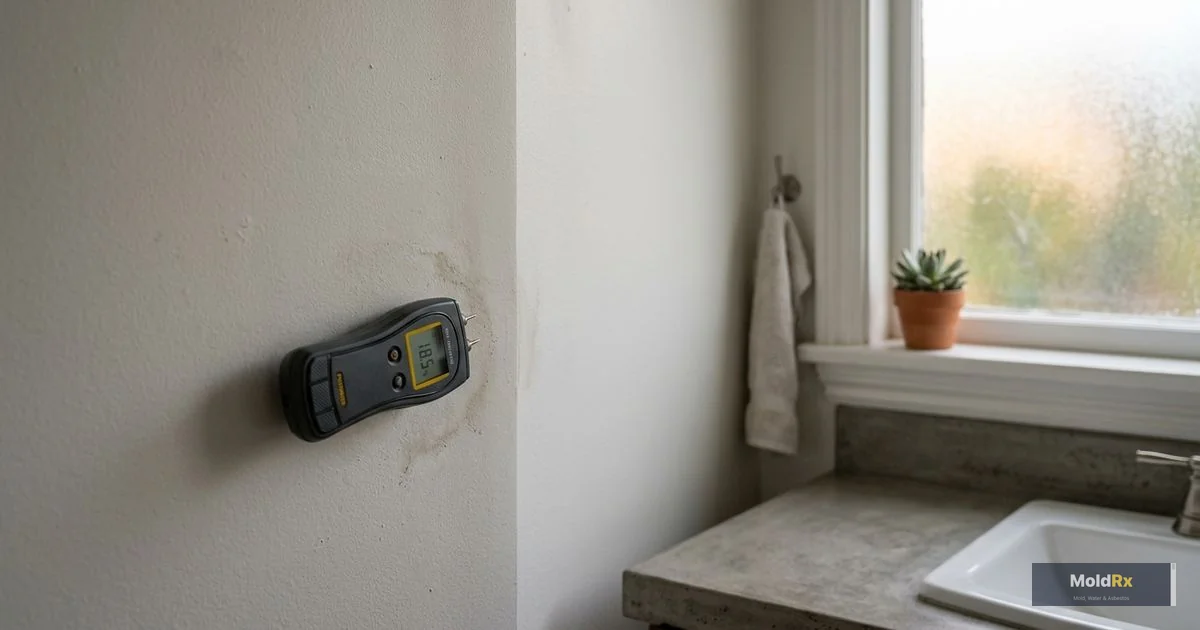
The most common misidentification on concrete surfaces is confusing mold with efflorescence. Both appear as discoloration, and both indicate a moisture problem. But they're fundamentally different.
Efflorescence is a white, chalky, crystalline mineral deposit. It forms when water moves through concrete, dissolves mineral salts, and evaporates at the surface — leaving the salts behind. It feels gritty or powdery, dissolves when you spray it with water or vinegar, and tends to follow moisture migration paths along mortar joints, at the base of walls, or in streaks where water has been wicking upward. It's not alive and doesn't require remediation.
Mold on concrete can be black, green, gray, or white. It has a fuzzy, cottony, or slightly raised texture. It doesn't dissolve in water and may feel slimy when wet. It grows in irregular patches and often produces a musty odor. White mold is frequently dismissed as mineral deposits, especially on basement walls and crawl space concrete where both conditions commonly occur.
The quick test: spray the area with water. Efflorescence dissolves or temporarily disappears. Mold stays put. Both conditions signal moisture moving through the concrete — but only mold poses a health concern and requires active cleanup.
Why Concrete Gets Moldy
Concrete seems like an unlikely mold surface. But several characteristics make it one of the more common sites for mold in residential construction.
Concrete Is Porous
Concrete is not a solid, sealed surface. It's filled with microscopic pores and capillaries that absorb and transmit water. A standard residential concrete mix has enough porosity to wick moisture continuously from the soil it contacts. This is why a basement wall or garage slab can feel damp even weeks after the last rain — water is migrating through the concrete via capillary action, a process called moisture vapor transmission.
Organic Material Accumulates on Concrete Surfaces
Mold can't digest concrete itself. But concrete surfaces are rarely clean at the microscopic level. Dust settles. Dirt gets tracked in. Pollen and organic debris blow in. Paint, adhesives, and coatings are organic compounds. This thin film of organic material is enough to sustain mold colonies — mold requires surprisingly little food when moisture is abundant.
Condensation Collects on Concrete
Concrete has high thermal mass — it changes temperature slowly. When warm, humid air contacts a cool concrete surface, condensation forms. On below-grade walls and uninsulated slabs, this keeps the surface damp enough to support mold growth even without a leak or standing water.
Poor Drainage Keeps Concrete Wet
Concrete surfaces that stay wet stay moldy. Hydrostatic pressure from saturated soil pushes water through basement walls and floor slabs. Inadequate exterior drainage — missing or clogged footer drains, poor grading, short downspout extensions — keeps the soil around your foundation saturated and maintains constant moisture pressure against the concrete.
Where Mold on Concrete Shows Up
Mold on concrete isn't random. It follows moisture, and moisture follows predictable paths in residential construction. Here's where to look.
Basement and Below-Grade Walls
Basement walls are the single most common location for mold on concrete. Below-grade walls are in direct contact with soil on the exterior side, which means they're subject to continuous moisture pressure. Water migrates through the wall, condensation forms on the interior surface, and any organic film on that surface becomes mold food.
The most vulnerable areas are the lower wall (where hydrostatic pressure is greatest), corners (where airflow is minimal), areas behind furniture pushed against the wall, and any section with visible dampness or mineral staining. If your basement has a finished wall system — framing, insulation, and drywall over the concrete — mold may be growing behind the finished wall where you can't see it, feeding on dust and the paper facing of the drywall.
Garage Floors
Garage floors grow mold for the same reason basement walls do: moisture vapor transmission through the slab. In garages, the problem is compounded by poor ventilation, temperature swings that produce condensation, and the tendency to store organic materials — cardboard boxes, clothing, sports equipment — directly on the concrete. Mold on a garage floor often appears as dark patches along edges and in corners, particularly under shelving or behind stored items where air doesn't circulate.
Foundation Exterior Walls
The exterior face of your foundation — the portion visible between the soil line and the siding — can develop mold on north-facing surfaces that receive less sunlight, near planting beds where irrigation keeps the soil wet, and where downspouts discharge too close to the foundation. Exterior foundation mold is often green or black and may be dismissed as dirt or algae. It's less of an indoor air quality concern, but it indicates moisture conditions that may also be driving mold growth on the interior side of the same wall.
Retaining Walls
Concrete or block retaining walls hold back soil and are in constant contact with ground moisture on the back side. The exposed face can develop mold — particularly at the base, where moisture pressure is highest, and at joints or cracks where water seeps through. Retaining walls adjacent to the house can contribute to elevated moisture around the foundation.
Crawl Space Concrete
In homes with crawl spaces, the concrete foundation walls and any concrete piers or supports are common mold sites. Crawl spaces combine ground moisture, limited ventilation, and cool surfaces — the exact conditions that produce mold on concrete. Because crawl spaces are rarely inspected, mold can grow extensively before it's discovered. The stack effect pulls air from the crawl space upward into the living space, carrying spores and musty odors with it.
DIY Cleaning for Surface Mold on Concrete
Small areas of surface mold on bare, unpainted concrete can be cleaned by the homeowner. This applies to limited growth on garage floors, exposed basement walls, foundation surfaces, and similar non-porous concrete — provided the mold hasn't spread to adjacent porous materials like drywall, insulation, or wood framing.
Safety Precautions
Wear an N95 respirator, rubber gloves, and eye protection. Disturbing mold releases spores into the air — protection is necessary even for small areas. If you're cleaning indoors, ventilate the space by opening windows and doors or running fans that exhaust air to the outside. If you're in a garage, open the garage door fully.
TSP (Trisodium Phosphate)
Mix half a cup of TSP in two gallons of warm water. Scrub the affected area with a stiff-bristle brush. TSP cuts through biological growth and the organic film that feeds it. Rinse thoroughly and allow the area to dry completely. TSP is alkaline — gloves and eye protection are essential. Check local regulations, as TSP is restricted in some areas due to its phosphate content.
Borax Solution
Dissolve one cup of borax in one gallon of warm water. Scrub with a stiff brush. Borax is effective against mold, doesn't produce toxic fumes, and leaves a residual on the surface that inhibits regrowth. You don't need to rinse borax — the residue is part of its benefit.
What Not to Use
Do not use bleach on concrete. Bleach works on non-porous surfaces like tile and glass. On porous concrete, it kills surface mold but doesn't penetrate the pores where mold roots. The water content actually adds moisture to the concrete, promoting regrowth. The surface lightens initially — then the mold returns within weeks.
Cleaning Is Not Enough by Itself
Cleaning removes what's visible. It doesn't change the conditions that allowed the mold to grow. If the concrete is wet because of moisture vapor transmission, condensation, or poor drainage, the mold will return unless the moisture source is addressed. Cleaning buys you time; moisture control provides the long-term fix.
When Professional Remediation Is Needed
Surface mold on bare concrete is one of the more manageable mold situations for homeowners. But there are clear thresholds where professional mold remediation becomes the right call.
The affected area exceeds 10 square feet. The EPA's general guideline for DIY mold cleanup is 10 square feet or less. Beyond that, professional containment, HEPA filtration, and trained technicians are needed.
Mold has spread to porous materials. If mold has migrated from the concrete to adjacent drywall, wood framing, insulation, or carpet, the scope has expanded beyond a concrete cleaning job. Porous materials with mold colonization typically require removal and replacement, not surface cleaning.
The concrete is painted or coated. Mold on painted concrete may be growing both on the surface and beneath the coating, using the paint as food. Professional assessment determines whether the coating needs to be removed before the concrete can be properly treated.
You can't identify or control the moisture source. If you don't know why the concrete is wet — or you know but can't fix it — professional assessment is the next step. Removing mold without solving the moisture problem means the mold returns.
The mold is in an enclosed or poorly ventilated space. Basement mold and crawl space mold in enclosed areas require proper containment during removal to prevent spore dispersal throughout the home.
Health symptoms are present. If anyone in the home is experiencing respiratory symptoms or worsening asthma, professional remediation with full containment is the safer approach. Professional mold testing can quantify the problem and confirm clearance after remediation.
Sealing and Prevention: Keeping Mold Off Concrete
Preventing mold on concrete comes down to two things: reducing moisture and eliminating the surface conditions mold needs to grow. Here are the strategies that address both.
Seal the Concrete
Penetrating concrete sealers — silane, siloxane, or a blend — soak into the pores and create a water-resistant barrier from within. They don't change the surface appearance and they dramatically reduce moisture vapor transmission. For garage floors and basement slabs, a penetrating sealer is one of the most cost-effective prevention measures available.
Epoxy and polyurethane floor coatings provide a surface barrier that blocks both moisture transmission and organic accumulation. Choose a product rated for moisture vapor control — decorative coatings without moisture-blocking properties won't prevent mold. For below-grade basement walls, interior waterproofing coatings (crystalline or cementitious) can reduce moisture migration. Exterior waterproofing is the most effective approach but requires excavation.
Fix the Drainage
Many concrete mold problems trace back to water management around the foundation. Ensure the soil grades away from the foundation — a minimum slope of six inches over the first ten feet. Extend downspouts at least four to six feet from the foundation wall. Clean gutters regularly so they don't overflow against the house. If your home has a French drain or footer drain system, ensure it's functioning and not clogged. For basements with chronic moisture intrusion, an interior drainage system (perimeter drain with a sump pump) may be necessary.
Control Humidity
In enclosed concrete spaces — basements, garages, crawl spaces — humidity control is essential. Target relative humidity below 60%. A portable dehumidifier handles moderate humidity issues in basements and garages. Crawl spaces may need a commercial-grade dehumidifier paired with encapsulation (vapor barrier over the ground and walls).
A basic hygrometer lets you monitor conditions and know whether your efforts are working. Place it near the concrete surface where mold has been a problem — that's where humidity is highest.
Improve Ventilation
Stagnant air allows moisture to accumulate on surfaces. In garages, install an exhaust fan or open the door periodically. In basements, ensure existing ventilation is functional and add a fan if needed. In crawl spaces, whether vented or sealed (encapsulated), the design must manage humidity effectively.
Reduce Organic Accumulation
Keep concrete surfaces clean. Sweep garage floors regularly. In basements, don't store cardboard or organic materials directly on the floor or against walls — use sealed plastic bins on elevated shelving with a gap between bins and the wall. The less organic material on the concrete, the less food mold has to work with.
Maintain Exterior Surfaces
On foundation exteriors and retaining walls, manage vegetation. Trim plants away from the foundation so air circulates and sunlight reaches the concrete. Redirect irrigation away from foundation walls. Remove soil or mulch that's been piled above the concrete foundation line.
Mold on Concrete: 10 FAQs
Can mold actually grow on concrete?
Mold doesn't feed on concrete itself — concrete is inorganic. But it grows readily on the organic material that accumulates on concrete surfaces: dust, dirt, pollen, paint, adhesive residue, and soil particles. When moisture is present, this thin organic layer is enough food for mold colonies to establish and spread.
How do I know if it's mold or efflorescence?
Spray the area with water. Efflorescence dissolves or temporarily disappears — it's a mineral salt deposit. Mold stays in place and may feel slimy when wet. Efflorescence is almost always white and powdery. Mold can be white, black, green, or gray, and has a fuzzy or slightly raised texture. If you're uncertain, professional testing provides a definitive answer.
Is mold on a basement wall dangerous?
It can be. Active mold produces spores and MVOCs (microbial volatile organic compounds) that are respiratory irritants. In a basement, these contaminants migrate upward into the living space through the stack effect, stairwells, and HVAC returns. People with allergies, asthma, or compromised immune systems are at higher risk.
Will painting over mold on concrete kill it?
No. Paint does not kill mold. It covers it. Mold will continue to grow beneath the paint film, eventually breaking through or causing the paint to peel and blister. Worse, the paint itself becomes an additional organic food source. Always clean and treat mold before applying any coating.
Can I use bleach to clean mold off concrete?
Bleach is not recommended for concrete. It's a surface disinfectant that doesn't penetrate porous materials. On concrete, bleach kills mold at the surface while the water component soaks deeper into the pores, feeding root structures and promoting regrowth. TSP or borax are better choices for concrete mold.
Why does mold keep coming back on my basement walls?
Because the moisture source hasn't been addressed. Cleaning removes visible mold but doesn't change the conditions that caused it. If moisture is migrating through the concrete from saturated soil, condensation is forming on cool wall surfaces, or drainage around the foundation is inadequate, mold will return until those conditions are corrected.
Does sealing concrete prevent mold?
A penetrating sealer significantly reduces moisture vapor transmission, which eliminates the primary moisture source in most slab and wall applications. Combined with humidity control and good drainage, sealing is one of the most effective preventive measures. It doesn't guarantee zero mold if other moisture sources exist, but it addresses the most common one.
Is mold on the outside of my foundation a concern?
Exterior foundation mold is primarily a moisture indicator — that section of the foundation is staying wet enough to support biological growth, which means conditions may also favor mold on the interior side. It warrants investigation of drainage, grading, and irrigation around the foundation.
Should I test concrete mold before cleaning it?
For small areas of surface mold on bare concrete (under 10 square feet), testing isn't typically necessary before cleaning — you know it's mold, and the remediation approach is the same regardless of species. Testing becomes valuable when the affected area is large, when mold has spread to porous materials, when health symptoms are present, or when you want clearance confirmation after remediation.
Can mold grow under a concrete slab?
Mold doesn't typically grow under the slab — the environment isn't hospitable. But moisture from beneath the slab migrates through the concrete and creates mold-friendly conditions on the top surface. Organic materials placed on the slab — carpet, cardboard, wood — can grow mold on their underside where trapped moisture can't evaporate.
Take the Moisture Out of the Equation
Mold on concrete is fundamentally a moisture problem. The concrete provides the surface, accumulated organic material provides the food, and moisture provides the final ingredient. Remove the moisture, and you remove the mold's ability to grow.
Small areas of surface mold on bare concrete can be cleaned with TSP or borax and prevented with a penetrating sealer and improved drainage. Larger problems — extensive growth, mold on adjacent porous materials, unresolved moisture intrusion — need professional assessment.
MoldRx provides professional mold testing and mold remediation throughout Orange County, Riverside County, and San Bernardino County. We'll assess your concrete mold problem honestly and tell you exactly what's needed — whether that's a targeted cleanup, a moisture correction, or full-scale remediation.
Call (888) 609-8907 to discuss what you're seeing, or request a free estimate online.