A negative mold test when you can clearly smell something musty is one of the more confusing situations homeowners face. You did the responsible thing — hired a professional, paid for air sampling, waited for lab results — and the report says your indoor spore counts are normal. But the smell is still there. Every day. In the same rooms.
Here's the short answer: a negative air test doesn't mean there's no mold in your home. It means airborne spores weren't detected at elevated levels at the specific time, location, and conditions under which the sample was collected. That's a much narrower statement than "your house is mold-free," and understanding the difference is the key to figuring out what's actually going on.
This guide explains why mold tests come back negative when mold is present, what non-mold sources produce similar odors, what additional testing strategies can uncover hidden problems, and when it makes sense to get a second opinion.
How Air Sampling Works — and Its Limits
Most residential mold testing relies on spore trap cassettes that pull a calibrated volume of air across a sticky surface for 5 to 10 minutes. The cassette goes to a lab, where an analyst identifies and counts the captured spores. The method is well-established, but it captures only what's floating in the air during those specific minutes, in that specific location. It's a snapshot, not a surveillance camera.
The musty smell you're detecting comes from microbial volatile organic compounds (MVOCs) — gases produced by active mold colonies as metabolic byproducts. MVOCs travel through wall cavities, gaps in framing, electrical outlets, and HVAC systems. They reach your nose even when very few spores are reaching the air. The smell and the spore count measure different things, and they don't always align.
Why a Mold Test Comes Back Negative When Mold Is Present
These aren't rare edge cases — they're common scenarios that experienced inspectors encounter regularly.
The Mold Is Sealed Behind Walls or Under Flooring
This is the most common reason for a false sense of security. Mold growing inside a sealed wall cavity — behind intact drywall, under vinyl flooring, inside a closed ceiling plenum — produces MVOCs that permeate through tiny gaps and reach your living space as a musty odor. But the spores themselves stay largely contained within the cavity.
Drywall can act as a physical barrier to spore dispersal while letting gases pass through. A colony growing on the paper backing inside a wall may actively produce the smell you detect while releasing few spores into room air. The air test comes back clean, but the problem is real.
This is especially common after water events that were "repaired" cosmetically — a pipe leak patched and the wall closed back up, a flood where the carpet was dried but the subfloor was never addressed. The mold established during the moisture event is still there, still producing MVOCs, but sealed behind the repair.
The Colony Is Dormant
When its moisture source is interrupted — a leak that was fixed, seasonal humidity that drops — the colony goes dormant. Dormant mold produces far fewer airborne spores but can still produce MVOCs, especially as the colony structure off-gasses.
A test taken during a dormant phase captures a misleadingly low spore count. The colony hasn't gone anywhere. If you notice the smell is intermittent or seasonal, dormancy cycles may explain why the test didn't catch it.
Samples Were Collected in the Wrong Location
If samples were taken in rooms far from the actual mold source, results may not reflect conditions in the affected area. Mold in a master bathroom wall cavity may produce a detectable smell in the adjacent bedroom but not elevate spore counts in the living room where the sample was taken.
A single indoor sample in a central room can miss a problem concentrated in a specific area. Thorough testing involves sampling in multiple rooms — particularly where odors are most noticeable — not just one or two convenient locations.
The HVAC System Was Off During Testing
When your HVAC system runs, it redistributes whatever is in the air, including spores. If the system was off during testing, airborne spore levels can be significantly lower than what you'd experience during normal conditions when the system cycles regularly.
Some mold problems are HVAC-mediated. Mold inside ductwork, on the evaporator coil, or in the air handler distributes spores only when the blower runs. If the system was idle during your test, the results reflect a building at rest — not the building you actually live in.
Testing Was Conducted During Dry Conditions
Mold colonies release more spores during and after periods of elevated humidity. A test conducted during a dry stretch captures lower spore counts than the same test would produce after a rain event or during a humid week.
If your musty smell is worse during or after rain, during humid months, or when the AC runs heavily, and your test was conducted during a dry, mild period, the results may underrepresent the actual problem.
Insufficient Sample Count
A single indoor sample plus one outdoor control is the bare minimum — and often not enough. A building with multiple zones or a musty smell that varies by location needs samples in each affected area.
Cost considerations sometimes lead to minimal sampling. One or two samples may return normal results simply because they missed the area where spore levels are elevated. The scope wasn't broad enough to characterize the whole building. Different types of mold testing serve different purposes, and understanding which ones were used helps you evaluate whether the scope was adequate.
Non-Mold Causes of Musty Odors
Before pursuing additional mold testing, consider whether the smell comes from a source a mold test wouldn't detect at all.
Dry Drain Traps
Every plumbing drain has a P-trap that holds water to block sewer gas. If a drain isn't used regularly (guest bathroom, basement floor drain, utility sink), the water evaporates and sewer gas enters the room — often described as musty or earthy. Run water in every drain for 30 seconds. If the smell disappears within a day, dry traps were the cause.
Old Carpet and Carpet Padding
Carpet installed over concrete slabs traps moisture between the padding and the slab. Over years, this moisture accumulates and creates conditions for bacterial and fungal growth that surface cleaning can't reach. If the musty smell concentrates in carpeted rooms, pull up a corner and check the padding and subfloor underneath.
Bacterial Growth in HVAC Components
Your HVAC system's evaporator coil produces condensation every cooling cycle. If the condensate drain clogs, standing water accumulates. Bacteria thrive in this environment and produce their own MVOCs — musty, sour odors distributed through ductwork every time the system runs. This won't show up on a mold spore test but can produce a persistent musty smell throughout the house that perfectly mimics a hidden mold problem.
Improperly Vented Exhaust Systems
Bathroom exhaust fans that vent into the attic instead of outside push warm, humid air into a cold attic space. The resulting condensation wets sheathing and insulation, creating conditions for microbial growth. Similarly, disconnected dryer vents push moisture-laden air into enclosed building cavities. The odor drifts into living spaces through ceiling penetrations and is difficult to locate from inside the house.
What to Do Next: Additional Testing Strategies
A single negative air test is the beginning of the investigation, not the end. If the smell persists and you've ruled out the non-mold causes above, these strategies can uncover what a standard air test missed.
Request Surface Sampling in Suspected Areas
Surface sampling — tape lifts, swabs, or bulk samples taken directly from materials — tells you what's growing on specific surfaces. If you suspect mold behind a wall based on a water stain, a soft spot, or a localized odor, a surface sample can confirm or rule out mold even when air results are normal. It requires a hypothesis about where the mold might be, which is why it's most useful after a moisture survey has identified suspect areas.
Repeat Air Testing Under Different Conditions
If your original test was conducted on a mild, dry day with the HVAC off, repeating the test under different conditions can yield very different results. Request testing after rain, during higher humidity, or while the HVAC system is running. Ask the inspector to sample in the rooms where the smell is strongest.
Conduct Comprehensive Moisture Mapping
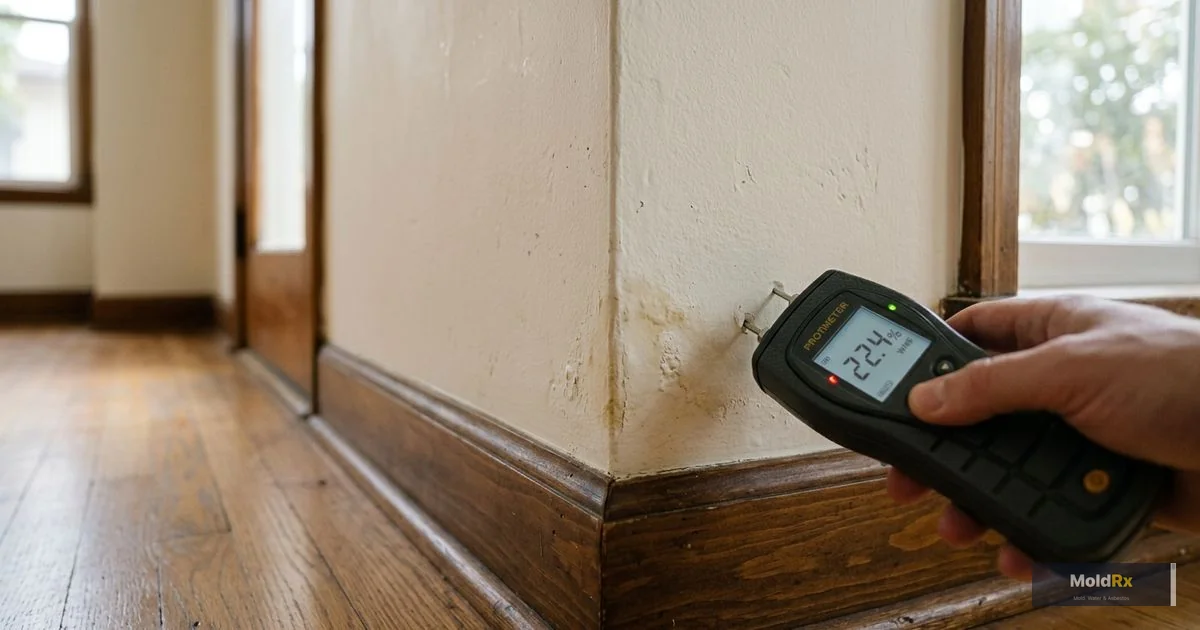
Moisture is the prerequisite for mold growth. If there's mold you can't find, there's moisture you can't find. A thorough moisture survey using pin-type and pinless moisture meters, combined with thermal imaging (infrared camera), can identify wet materials inside walls, ceilings, and floors without opening anything up.
This step is often more immediately useful than repeating air samples. Finding the moisture source tells you where to look, which then guides targeted investigation and testing.
Consider MVOC Testing
Specialized MVOC testing detects the gases that mold colonies produce — the same gases your nose is detecting. It doesn't identify mold species or spore counts, but it confirms whether biological volatile compounds are present at elevated levels. MVOC testing is particularly useful when standard air sampling repeatedly comes back clean but the smell is unmistakable.
Pursue Invasive Inspection in Targeted Areas
When moisture mapping points to a specific wall or floor assembly, a small invasive inspection — cutting a controlled opening in the drywall to look inside the cavity — provides a definitive answer. A qualified inspector will cut a small, contained opening, inspect the cavity visually, take a direct sample from inside, and close the opening. For more on this process, see our guide on signs of mold behind walls.
When to Get a Second Opinion
There's nothing wrong with questioning a test result that contradicts your direct experience. A second opinion is warranted when:
The original test used minimal sampling. If only one or two air samples were taken — especially away from where the smell is strongest — a second test with more samples in targeted locations may reveal what the first one missed.
The inspector didn't use moisture detection equipment. A mold test without a moisture survey is incomplete. A qualified inspector will always pair air sampling with moisture readings.
The inspector dismissed your concerns. If you were told the results are normal with no investigation into why the smell exists, the assessment wasn't thorough. A musty odor is a legitimate finding that warrants explanation, even when air results are normal.
You want a different testing methodology. If the first test was air-only, pursuing surface sampling, MVOC testing, or a comprehensive moisture survey through a different provider may provide complementary information. Our guide on how to find a qualified mold inspector covers what to look for.
Health symptoms persist. If household members are experiencing respiratory issues or symptoms that improve when leaving the home, a single negative air test should not close the investigation.
Negative Mold Test but Still Smell Mold: 10 FAQs
Can a mold air test be wrong?
The lab accurately reports what was captured, but the sample only represents conditions at that specific time and location. Mold sealed in wall cavities, dormant colonies, dry-weather testing, and limited sample placement can all produce normal results when mold is present. Our guide on whether mold testing can be wrong covers this in detail.
Why does my house smell musty if there's no mold?
Several non-mold sources produce musty odors: dry drain traps, bacterial growth in HVAC condensate systems, old carpet padding, improperly vented exhaust fans, and soil gas intrusion through foundation cracks. A systematic search is worth conducting before assuming the mold test missed something.
Should I get a second mold test if the first was negative?
If the smell persists and you've ruled out non-mold causes, yes — but change the approach. Request more samples in different locations, under different conditions (after rain, with the HVAC running), and ideally including surface sampling or moisture mapping. Repeating the exact same test the same way is unlikely to yield different results.
What type of mold test is most likely to find hidden mold?
No single test finds everything. The most effective approach combines multiple methods — air sampling plus moisture mapping plus targeted surface sampling. Learn more about the different types of mold testing and when each is appropriate.
Can mold be behind walls even if air quality tests are normal?
Yes. This is one of the most common scenarios behind a negative test with a persistent musty smell. Mold growing on the concealed side of drywall can produce MVOCs that pass through the wall while releasing relatively few spores into living space. Air quality may test normal even with active growth inches away.
How reliable are home mold test kits compared to professional testing?
Home mold test kits are substantially less reliable than professional testing. They lack calibrated air flow, professional lab analysis, outdoor control samples, and expert interpretation. A negative result from a home kit carries very little weight. If you're investigating a persistent musty odor, professional testing with accredited lab analysis is the appropriate level of investigation.
Does a negative mold test mean my home is safe?
A negative test means airborne spore levels were within normal range at the time and location of sampling. It does not certify the home as mold-free. If you're experiencing symptoms or detecting musty odors, a normal air test should prompt further investigation, not a conclusion that everything is fine.
How many air samples should a thorough mold test include?
A thorough test typically includes one outdoor control plus one sample per affected area, plus samples near suspected sources. For a typical single-family home with a reported musty smell, three to six indoor samples plus one outdoor control is a reasonable scope.
Will running my HVAC system affect mold test results?
Yes. The HVAC system redistributes spores from contaminated areas into rooms that would otherwise test clean — or dilutes concentrations in a stagnant room. If the musty smell is worse when the system runs, testing with the system on may be critical. Tell your inspector about this pattern so they can plan accordingly.
What should I do if I've had multiple negative tests but still smell mold?
Shift strategy from air sampling to source investigation. Commission a comprehensive moisture survey with thermal imaging. Pursue targeted invasive inspection in areas identified by the survey. Consider MVOC testing to confirm biological volatile compounds are present. If the smell is real, the source is there — it may simply require a different approach than air sampling alone.
Next Steps
A negative mold test result doesn't invalidate what your nose is telling you. It means the specific test, at that specific time and location, didn't capture elevated spore levels. That's useful information — but it's not the whole story.
If you've received a negative result but the odor persists, the most productive path forward combines additional testing strategies with systematic investigation of non-mold sources that could explain what you're experiencing.
MoldRx helps homeowners throughout Orange County, Riverside County, and San Bernardino County navigate exactly this situation. Whether you need a more comprehensive initial test, a second opinion on previous results, or a targeted investigation that goes beyond standard air sampling, we coordinate the right level of testing and remediation for what your home actually needs.
Call (888) 609-8907 to talk through your situation and your previous test results, or request a free estimate online.