A musty smell that lingers in your house — the kind that won't go away no matter how much you clean or open windows — is almost always your home telling you something is wrong. It typically means hidden moisture, active mold growth, or both, somewhere you can't see. The odor isn't coming from dust or stale air. It's coming from biological activity: mold or bacteria feeding on damp organic material behind walls, under floors, inside ductwork, or in other concealed spaces.
This guide walks through what causes musty odors, a systematic room-by-room approach to tracking down the source, non-mold explanations worth ruling out, and when it's time to bring in professional testing.
What Causes a Musty Smell in Your House?
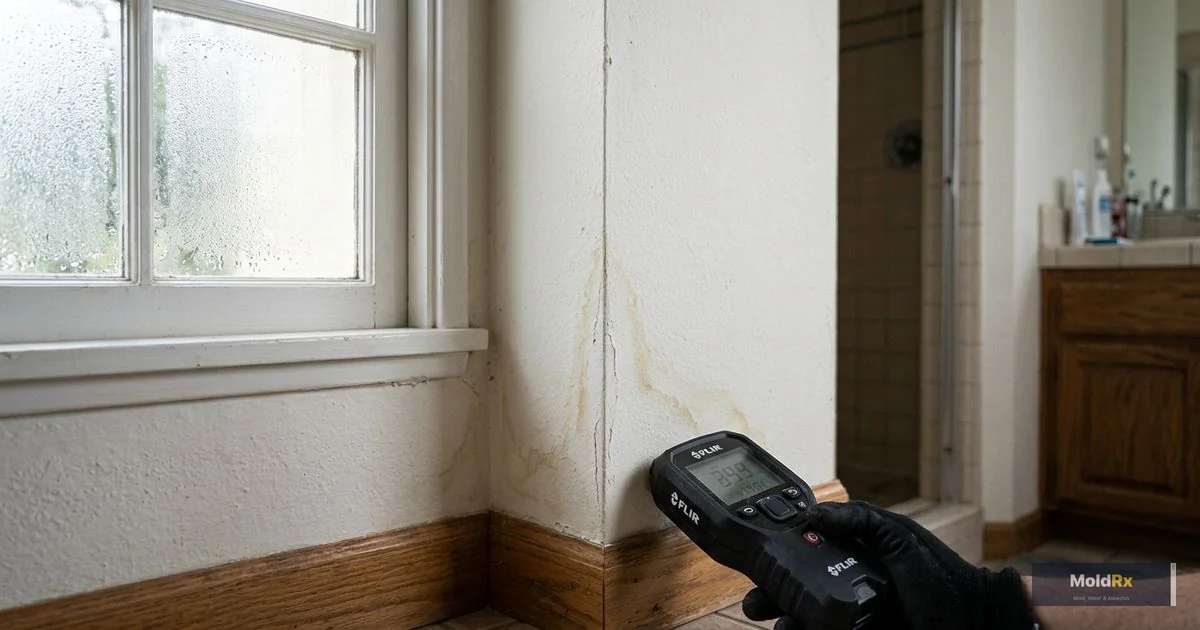
Before you start searching, it helps to understand what you're actually smelling. A musty odor isn't one thing — it's a category of smells with a few distinct causes.
Microbial Volatile Organic Compounds (MVOCs)
The most common cause of a persistent musty smell is MVOCs — gases released by mold and bacteria as metabolic byproducts. When mold colonies actively grow on damp building materials (drywall paper, wood framing, carpet backing, insulation), they produce these compounds as part of their life cycle. MVOCs are what give mold its characteristic musty, earthy, damp odor.
The critical word is "active." MVOCs mean the mold is alive and growing right now. Dead or dormant mold doesn't produce the same smell. If you can smell it, the colony is active and the moisture source feeding it is ongoing or recent.
Stagnant Water and Trapped Moisture
Standing water in drain traps, condensate pans, or enclosed spaces produces its own musty odor — from bacterial growth in the water or from damp conditions in surrounding materials. A forgotten condensate drain, a dry P-trap, or water pooling in a crawl space can all produce smells that mimic mold.
Damp Organic Material
Wet carpet, damp cardboard in a garage, wet insulation, or damp towels forgotten behind a door — any organic material that stays wet long enough will develop bacterial or fungal growth and produce a musty odor. These sources are often easier to find and fix than hidden mold, which is why it's worth checking for them first.
A Room-by-Room Search Guide
The most effective way to find a musty smell's source is systematic. Don't wander from room to room hoping the smell gets stronger somewhere. Instead, work through each area methodically, checking the specific locations where moisture problems are most likely.
Bathrooms
Bathrooms are the number one source of hidden moisture problems in residential buildings. Check these specific locations:
Behind and around the shower or tub. Failed caulk or grout allows water to wick behind the tub surround into the wall cavity with every shower. Press on the drywall adjacent to the shower — if it feels soft, moisture has been soaking into it. Look for discoloration or paint failure on the wall on the other side (hallway, closet, or adjacent bedroom).
Around the toilet base. A compromised wax ring seal lets water escape with every flush, wetting the subfloor underneath. If the floor feels spongy near the base or the toilet rocks slightly, the wax ring may have failed.
Under the sink vanity. Open the cabinet and inspect the back wall and floor. Slow drain leaks and supply line drips go unnoticed inside closed cabinets for months. Feel for dampness and check for warping of the cabinet floor.
Exhaust fan and ventilation. A bathroom without a functioning exhaust fan — or with one that vents into the attic instead of outside — traps moisture in the ceiling cavity and wall framing every time someone showers.
Kitchen
Kitchens concentrate multiple water sources in a small area, and many of the connections are hidden behind or under cabinets.
Under the kitchen sink. The single most common location for kitchen moisture problems. Supply lines, drain connections, garbage disposal fittings, and dishwasher drain hoses all converge here. Clear everything out and inspect every connection. Feel the back wall and floor for dampness.
Behind the dishwasher. Pull the kick plate and look underneath with a flashlight. Supply and drain connections can develop slow leaks that wet the floor and adjacent wall for months without any visible sign from the front.
Behind the refrigerator. If your refrigerator has an ice maker or water dispenser, there's a supply line running to the wall behind it. These connections are notorious for slow leaks. Pull the refrigerator out and check. Also check the drip pan underneath, which can accumulate stagnant water.
Laundry Room
Behind and under the washing machine. Supply hoses and drain connections are the usual suspects. Rubber supply hoses degrade over time and can develop pinhole leaks or fail at the connection. The drain hose connection to the standpipe can work loose and allow water to drip behind the machine during drain cycles.
The dryer vent. A dryer vent that's clogged, crimped, or improperly connected pushes warm, humid air into the wall cavity or room instead of outside. Over time, this condensation can create the same damp conditions that support mold growth.
Crawl Space
If your home has a crawl space, check it early — it's one of the most commonly overlooked sources. Crawl spaces are naturally prone to moisture from ground evaporation, limited ventilation, and temperature differentials.
Look for standing water, damp soil, or condensation on surfaces. Check floor joists, subfloor sheathing, and insulation for visible mold or discoloration. A musty smell in a room directly above a crawl space often traces here.
Check the vapor barrier. If a plastic barrier covers the soil, make sure it's intact. If there's no barrier, ground moisture is entering freely. Our guide on crawl space mold causes and solutions covers this in detail.
Attic
Attic mold is common and easy to miss because most homeowners rarely go up there. Look at the underside of the roof sheathing for discoloration or growth — caused by roof leaks or inadequate ventilation that lets humid air condense on the cold roof deck. Check around bathroom exhaust fan terminations — fans that vent into the attic instead of through the roof are a leading cause of attic mold. Inspect where the attic meets exterior walls, where insulation and sheathing are vulnerable to condensation.
Basement or Garage
Foundation walls. Moisture can wick through concrete foundation walls and slab edges. Look for white mineral deposits (efflorescence) on concrete surfaces — this means water has been moving through the concrete. Drywall installed directly against a foundation wall without a moisture barrier is a setup for hidden mold.
Stored items. Cardboard boxes, old furniture, papers, and fabrics stored against exterior walls or on concrete floors absorb moisture and become mold food sources. If stored items smell musty, the problem may be localized to those items — but it may also indicate broader moisture conditions in the space.
HVAC System and Ductwork
Your HVAC system circulates air through every room. If mold or moisture exists inside the system, it distributes the musty odor throughout the house — which is why HVAC sources are especially confusing. The smell seems to be everywhere and nowhere at once.
Check the air handler and evaporator coil. The evaporator coil produces condensation every time the system runs. If the condensate drain is clogged or the pan is cracked, standing water accumulates and becomes a direct source of mold and bacteria.
Inspect accessible ductwork. Look inside supply and return registers for dust buildup, discoloration, or musty odor when the system kicks on. Ducts running through unconditioned spaces can develop condensation that wets surrounding materials.
Replace the filter and check the housing. A dirty, damp filter is itself a mold source. Moisture stains or growth around the filter slot indicate a condensation issue. Our guide on mold in HVAC systems and air ducts covers when professional duct inspection is warranted.
Behind Furniture and in Closets
Large furniture pushed against exterior walls restricts airflow and creates a microclimate — cooler, more humid, with no circulation. This is a common location for mold that goes unnoticed because nobody looks behind the furniture. The same applies to closets on exterior walls, especially those adjacent to bathrooms. Check back walls and baseboards in both locations.
Non-Mold Causes of Musty Smells Worth Ruling Out
Not every musty smell is mold. Before assuming the worst, check these common sources that produce similar odors and are often easier to fix.
Dry Drain Traps
Every drain has a P-trap that holds water to block sewer gas. If a drain isn't used regularly (guest bathroom, floor drain, laundry sink), the water evaporates and sewer gas enters the room — often described as musty or stale. The fix: run water in every drain for 30 seconds every few weeks.
Old Carpet and Padding
Older carpet absorbs moisture from spills, humidity, and slab condensation over its lifetime. Even carpet that looks clean can harbor mold in the padding underneath. If the musty smell concentrates in a carpeted room, pull up a corner and check the padding and subfloor.
Poor Whole-House Ventilation
Tightly sealed homes can trap humidity indoors. Without adequate ventilation, cooking moisture, shower steam, and occupant respiration raise indoor humidity to the point where condensation forms and materials stay damp enough to grow mold. If your windows fog regularly and the whole house has a faint musty quality, ventilation may be the root cause.
Dirty HVAC Filters and Coils
A filter that hasn't been changed in months can develop a musty smell on its own — especially if condensation dampens it. Dirty evaporator coils also harbor mold and bacteria. Sometimes changing the filter and cleaning the coils resolves the smell entirely.
Water Heater Anode Rod
A deteriorating anode rod can produce a sulfur or musty smell in hot water throughout the house. If the odor is most noticeable when running hot water, this is worth checking.
When to Stop Searching and Call for Professional Mold Testing
A DIY search will find many common problems. But mold growing inside wall cavities, under flooring, or inside ductwork can't be found by looking and sniffing. There are specific situations where professional mold testing becomes the right next step.
You've checked everything accessible and the smell persists. If you've gone through the room-by-room search above, addressed anything obvious, and the musty odor is still there, the source is likely somewhere you can't see or reach.
The smell is diffuse — you can't localize it to one area. When a musty odor seems to come from everywhere (or shifts from room to room), it often indicates an HVAC-related source or mold in a central location like a crawl space that's affecting the whole house.
You or your family are experiencing unexplained health symptoms. Persistent respiratory issues, allergic reactions, headaches, or fatigue — especially symptoms that improve when you leave home and return when you come back — warrant professional investigation, not continued DIY searching.
The home has a history of water damage. Past leaks, flooding, or plumbing failures — especially events where the affected area wasn't professionally dried — may have left hidden mold behind surfaces that were closed back up.
You're buying, selling, or renting the property. A musty smell in a real estate transaction creates legitimate questions. Professional testing provides objective, documented answers.
Do I need a mold test? walks through the decision in more detail.
What Professional Air Testing Reveals That Your Nose Can't
Your nose tells you something is there. Professional air testing tells you what it is, how much of it there is, and whether your indoor levels are abnormal compared to outdoor conditions. These are different and complementary pieces of information.
Spore Identification and Quantification
Professional air sampling captures airborne particles on a calibrated cassette for laboratory analysis. The lab identifies the types of mold spores present and counts their concentration — not just whether mold exists, but which species and at what levels.
Indoor vs. Outdoor Comparison
Testing always includes outdoor control samples. If indoor spore counts are significantly elevated above outdoor levels — or if species are present indoors that aren't found outdoors — it confirms active mold growth inside the building, even if you can't see it.
Locating the Source
By sampling multiple rooms and comparing results, a professional can narrow down which area has the most significant mold activity. This guides targeted investigation using moisture meters and thermal imaging — tools that identify wet materials inside wall cavities without opening them. Our guide explains how professionals detect hidden mold behind walls and under floors.
Documentation
Lab results create a documented record for insurance claims, real estate transactions, and remediation planning. "The house smells musty" is subjective. Lab results showing indoor Aspergillus/Penicillium at three times the outdoor baseline are objective and actionable.
Musty Smell in Your House: 10 FAQs
Why does my house smell musty even though it looks clean?
Because the source is almost certainly hidden. Mold growing inside wall cavities, under flooring, inside HVAC ductwork, or in crawl spaces produces MVOCs that enter your living space through gaps, vents, and porous materials. The surfaces you can see and clean have nothing to do with what's growing in the spaces you can't see. A clean-looking house can have a significant hidden mold problem.
Can a musty smell be harmless?
Sometimes. A dry drain trap, a dirty HVAC filter, or damp items in storage can produce musty odors without posing a health risk — and the fix is straightforward. But a persistent musty smell that doesn't resolve after addressing these simple causes is not harmless. It indicates ongoing biological growth that may be producing spores and affecting indoor air quality.
Does a musty smell always mean mold?
Not always, but it's the most common cause of a persistent musty odor in a home. Other possibilities include sewer gas from dry drain traps, bacterial growth in HVAC condensate pans, off-gassing from old carpet padding, and stagnant water in hidden locations. If you've ruled out these alternatives and the smell persists, mold is the most likely explanation.
Why is the musty smell stronger on some days?
MVOCs from mold fluctuate with humidity and temperature. The smell is often stronger on humid days, after rain, during warm weather, or when the HVAC system cycles on and pushes air through affected areas. If you notice the smell intensifies at predictable times — when the AC kicks on, after it rains, in the evening when the house cools — that pattern itself is a clue about the source.
I smell something musty only in one room. What does that mean?
A localized musty smell is actually helpful — it narrows the search. The source is likely within or adjacent to that room. Check the walls, floor, ceiling, and any plumbing, HVAC components, or exterior walls in that room using the room-by-room guide above. Pay special attention to the wall cavity behind any bathroom or kitchen on the other side.
Can air fresheners or ozone generators fix a musty smell?
No. Air fresheners mask the odor. Ozone generators can temporarily reduce airborne MVOCs, but the smell returns as long as the moisture source remains. The only permanent fix is eliminating the moisture source and removing any established mold growth.
How long does it take for mold to produce a musty smell?
In favorable conditions, mold can establish in 24 to 48 hours and begin producing detectable MVOCs within days to weeks. By the time you notice a persistent musty smell, the colony has usually been growing for several weeks or more.
Should I open the wall if I think mold is behind it?
No. Cutting into drywall without containment releases concentrated spores into your living space, potentially spreading the problem throughout the home. Professional mold remediation uses sealed containment and HEPA-filtered negative air pressure to prevent this.
Can a home inspector find the source of a musty smell?
A general home inspector may note a musty odor, but they typically don't perform specialized mold testing. Locating hidden mold requires air sampling, moisture meters, and thermal imaging — tools and training beyond a standard home inspection.
Will the musty smell go away on its own?
Only if the moisture source stops — which rarely happens on its own. A one-time event may produce a temporary smell that fades as materials dry. But a persistent musty odor means the moisture source is ongoing. The mold will continue growing, the smell will worsen, and the remediation scope will expand. Early investigation saves money and limits the problem.
Next Steps
A musty smell you can't find is frustrating, but it's also informative. Your home is telling you that moisture is present somewhere it shouldn't be, and something is growing as a result. The systematic approach in this guide will help you find many common sources. For the ones you can't find — the hidden problems inside wall cavities, under floors, and inside building systems — professional testing provides the answers.
If you've searched, addressed the obvious causes, and the smell is still there, MoldRx can help determine what's going on. We coordinate professional mold testing and remediation services throughout Orange County, Riverside County, and San Bernardino County — starting with air testing that tells you objectively whether elevated mold levels are present in your home.
Call (888) 609-8907 to describe what you're experiencing, or request a free estimate online.