Orange County homes built between the 1950s and 1970s carry specific risks that newer homes simply don't. Galvanized steel and copper plumbing corroding beneath the slab. Asbestos embedded in materials that look completely harmless. Original roofing systems decades past their intended lifespan. Electrical wiring that predates modern safety standards. Foundation and slab issues that compound with every passing year.
These aren't hypothetical concerns. They're the documented, predictable consequences of age, construction practices of the era, and decades of Southern California's unique environmental stresses. And because many of these problems develop behind walls, under floors, and beneath concrete, they often go undetected until they've caused significant damage — including mold growth that can affect both the structure and the health of the people living in it.
If you own or are considering buying a home in Orange County that was built before 1980, here's what you need to understand about what's happening inside it.
Orange County's Construction Timeline
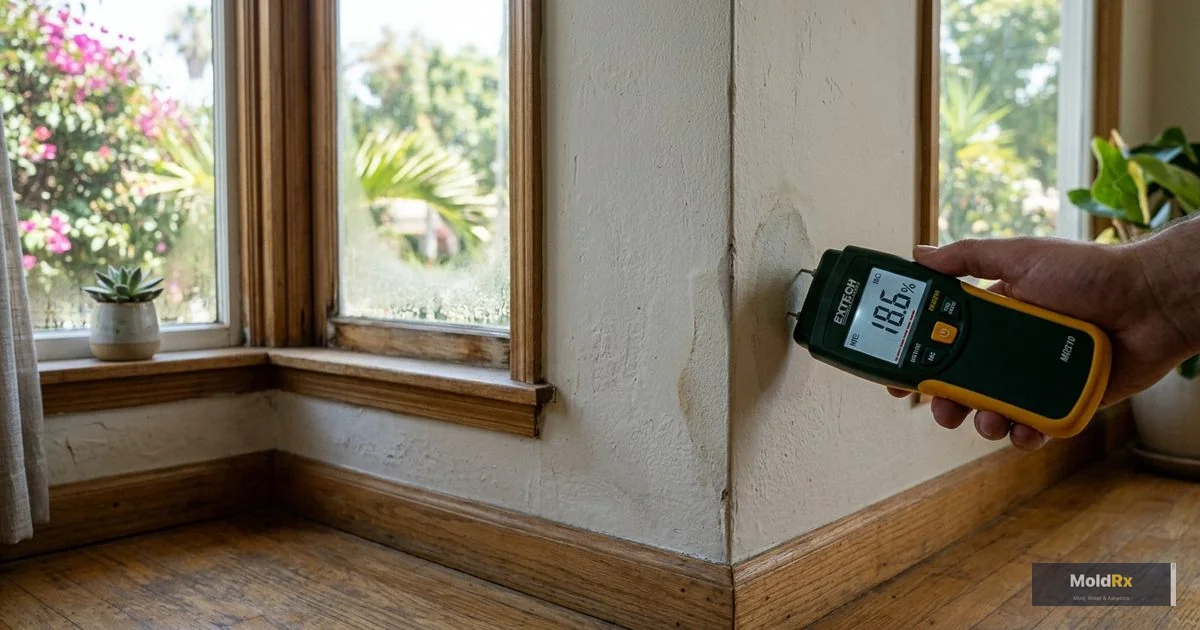
Orange County transformed from agricultural land to one of the most densely developed counties in California within roughly three decades. That explosive growth produced hundreds of thousands of homes — each carrying the materials, methods, and shortcuts of its construction era.
Pre-1950s
The oldest homes in cities like Santa Ana and Anaheim date to the early twentieth century — raised foundations, galvanized steel plumbing, knob-and-tube electrical wiring, and building materials that may include asbestos in multiple forms. Relatively few in number, but they represent the highest-risk category for accumulated infrastructure failure.
1950s: The First Building Boom
The 1950s brought the first major wave of tract housing. Cities like Anaheim, Fullerton, Orange, and Garden Grove expanded rapidly with affordable homes built on slab-on-grade foundations, copper supply lines beneath the slab, galvanized steel drain lines, single-layer building paper behind stucco, and materials that frequently contained asbestos — popcorn ceilings, floor tiles, pipe insulation, roofing compounds. These homes are now 70+ years old. Nearly every original system is at or past its functional lifespan.
1960s: Rapid Expansion
Orange County's population more than doubled. Westminster, Garden Grove, and large portions of Anaheim and Santa Ana were developed during this decade. Construction standardized around slab-on-grade foundations with copper plumbing, stucco exteriors with minimal moisture barriers, and heavy use of asbestos-containing materials. At 60+ years old, copper plumbing in these homes has entered the active pinhole corrosion zone, and asbestos-containing materials have likely been disturbed by decades of repairs.
1970s: Peak Volume, Peak Risk
The 1970s represent both the peak of OC's residential construction boom and the peak of accumulated risk. This decade sits at the intersection of two critical timelines: the tail end of the peak asbestos era (materials installed through 1978 are among the most likely to contain asbestos) and the age at which copper plumbing, original roofing, and first-generation stucco begin failing in clusters. The 1970s also introduced polybutylene (PB) plumbing in some homes — a material that proved deeply problematic.
Plumbing Risks: What's Happening Under the Slab
Plumbing failure is the single most consequential hidden risk in older Orange County homes. When pipes beneath a concrete slab leak, you can't see them. Water escapes into soil, wicks upward through concrete, and saturates flooring, baseboards, and wall cavities — creating conditions for mold growth within 24 to 48 hours that can spread for months before anyone notices.
Galvanized Steel Pipes
Homes built before the mid-1960s frequently have galvanized steel drain lines — and some have galvanized supply lines. Galvanized steel corrodes from the inside out, building up mineral deposits that reduce water flow before eventually breaching the pipe wall. In a 70-year-old OC home with original galvanized supply lines, failure isn't a question of if — it's when and how much damage occurs before detection.
Copper Pinhole Leaks
Copper became the standard supply line material in the late 1950s. Southern California's hard water — high in dissolved calcium and magnesium — causes pinhole corrosion that typically begins after 25 to 40 years, meaning homes from the 1960s and 1970s have been in the active failure zone for years.
Pinhole leaks start microscopic. The first sign is often not the leak but its consequences: a warm spot on the floor, a mysterious water bill increase, or dampness and mold along baseboards with no visible water source. Multiple pinhole leaks develop in clusters — once one section corrodes through, adjacent sections are close behind.
Polybutylene Pipes
Polybutylene plumbing, used in some homes built between 1978 and 1995, degrades when exposed to chlorine in treated water. The degradation happens internally, invisible until failure. PB pipes (gray, blue, or black with a "PB2110" stamp) are widely considered a ticking clock. Many insurers refuse to cover water damage in homes with PB plumbing. If your OC home was built in this window and still has original supply lines, verifying the pipe material is a priority.
The Mold Connection
Every plumbing failure pathway leads to the same consequence: moisture in building materials the homeowner cannot see. A slab leak saturating flooring. A galvanized pipe leak dampening a wall cavity. A failed PB fitting dripping behind drywall. In each case, mold growth conditions are established long before any visible symptom appears. Hidden water leaks are the single most common precursor to the mold problems we see in older Orange County homes.
Roofing Risks
An original roof on a 1960s OC home has been replaced at least once. But the quality of that replacement varies enormously.
Underlayment and flashing. Even when shingles or tiles are replaced, the underlayment and flashing may be reused or inadequately replaced. Degraded underlayment can fail during the intense storms that characterize Southern California's concentrated rainfall pattern, sending water into the attic and wall cavities below.
Roof-to-wall transitions. The junction between roof and exterior walls is a chronic failure point in older OC homes. Original construction may have used minimal flashing or relied on sealants that degraded decades ago.
Flat and low-slope sections. Many 1960s and 1970s OC homes have flat or low-slope roof sections over patios and additions — vulnerable to ponding water and membrane failure, and often overlooked during maintenance.
Water intrusion through any roofing failure creates mold risk in the attic, ceiling cavities, and upper wall sections where mold can grow extensively before producing visible symptoms.
Asbestos Risks: What's in Your Older OC Home
If your Orange County home was built before 1980, the question isn't whether asbestos might be present — it's where and in how many materials. California regulations presume that thermal insulation and surfacing materials in pre-1980 structures contain asbestos until laboratory testing proves otherwise.
You cannot identify asbestos-containing materials by looking at them. The fibers are microscopic. Two identical-looking floor tiles from the same era could differ — one containing asbestos, the other not. Only professional laboratory analysis can confirm or rule out asbestos.
Common Asbestos-Containing Materials
The following materials in pre-1980 homes should be presumed to contain asbestos until tested:
Popcorn ceilings. Sprayed-on acoustic texture applied before 1978 frequently contains chrysotile asbestos. Stockpiled product continued to be installed through the early 1980s. This is one of the most common asbestos-containing materials in Orange County homes from the 1950s through the 1970s.
Floor tiles and mastic. Vinyl-asbestos floor tiles — particularly the 9"x9" tiles common in kitchens, bathrooms, and utility areas — are prevalent in older OC homes. The black adhesive (mastic) beneath them is often more hazardous than the tiles themselves.
Pipe insulation. Thermal insulation on heating pipes and ductwork commonly contains asbestos and can become friable (easily crumbled) over time, releasing fibers into the air.
Stucco and cement products. Asbestos was added to stucco coatings, fiber cement siding, and cement-based roofing for fire resistance. In a stucco-dominant region, this is a widespread exposure pathway during renovation or demolition.
Drywall joint compound. Joint compound on every drywall seam and screw hole frequently contained asbestos before 1980 — one of the most pervasive applications and most commonly disturbed during renovation.
Vermiculite insulation. Some OC homes have vermiculite attic insulation from a mine contaminated with tremolite asbestos.
The Critical Rule
Do not disturb, sand, scrape, drill into, or demolish any suspect material in a pre-1980 home without testing first. Intact asbestos-containing materials in good condition generally pose minimal risk. But the moment those materials are cut, scraped, or broken, microscopic fibers become airborne. The health consequences — mesothelioma, asbestosis, lung cancer — are severe, irreversible, and may not manifest for decades.
California's SCAQMD Rule 1403 requires a thorough asbestos survey before demolition or renovation of pre-1980 structures. This is a legal requirement with significant penalties. If you're planning any renovation on an older OC home, start with an asbestos survey and professional testing.
Electrical Concerns
Electrical systems in 1950s through 1970s homes reflect the standards of their era. While electrical issues don't directly cause mold, they compound risks and create dangerous conditions during water events.
Undersized panels. Many older OC homes have 60- or 100-amp service — insufficient for modern appliance loads and air conditioning demands. Aluminum wiring (used 1965-1973) expands and contracts more than copper, creating loose connections and fire risk. Outdated protection — older homes often lack GFCIs in wet areas and AFCIs that current code requires. And when water intrusion meets outdated wiring with degraded insulation, the safety hazard is immediate.
Foundation and Slab Issues
Slab-on-grade foundations — the OC norm — take a cumulative toll from Orange County's expansive clay soils, which swell when wet and shrink when dry. Over 50 to 70 years of seasonal cycles, slabs develop cracks that can stress plumbing lines beneath and create moisture intrusion pathways.
Many 1950s and 1960s homes lack adequate vapor barriers beneath the slab. Without this barrier, ground moisture wicks upward through the concrete and into flooring materials — particularly after heavy rains. This chronic low-level moisture can support mold growth along baseboards and under flooring even without any plumbing leak.
What to Do Before Buying an Older OC Home
A standard home inspection may not evaluate for several of the risks described here. Supplement it with these assessments.
Sewer camera inspection. Reveals pipe condition beneath the slab — corrosion, root intrusion, bellying — at a fraction of the cost of a post-purchase failure.
Plumbing material identification. Determine whether the home has original copper supply lines, galvanized steel, or polybutylene. Your inspector can identify the material at water heater connections, under sinks, and at the main shutoff.
Asbestos testing. If you plan to renovate, get asbestos testing during due diligence — before you close. Discovering asbestos after purchase can significantly affect renovation budgets and timelines.
Mold inspection. A standard inspection doesn't include mold testing. If the home has musty odors, baseboard staining, or evidence of water damage, a separate mold assessment is a reasonable precaution for any pre-1980 home.
Roof history. Request documentation of the most recent replacement — including whether underlayment and flashing were replaced and whether the work was permitted.
Electrical evaluation. Have an electrician check panel capacity, wiring type (copper vs. aluminum), and modern safety devices (GFCIs, AFCIs).
What to Do If You Already Own One
You don't need to panic — but you do need to be more vigilant than the owner of a newer home.
Know your plumbing. If you have original copper supply lines from the 1960s or 1970s, those pipes are in the active pinhole corrosion window. Monitor your water bill, listen for running water when nothing is on, and check for warm spots on slab floors.
Don't disturb suspect materials. If your pre-1980 home has original popcorn ceilings, 9"x9" floor tiles, or any material you're unsure about — do not scrape, sand, or demolish without asbestos testing first. The legal and health consequences of disturbing asbestos-containing materials are severe.
Maintain your building envelope. Inspect caulk around windows annually. Keep irrigation and landscaping away from the foundation. Address stucco cracks promptly — each one is a potential entry point for moisture that leads to mold behind walls.
Track your water bill. A sustained increase of even 10 to 15 percent warrants investigation. A leak detection assessment costs a fraction of the water damage and mold remediation that follows an undetected slab leak.
Respond to water events immediately. "It'll dry out" is not a safe assumption for materials you can't see. Mold can establish itself within 24 to 48 hours in wall cavities, under flooring, and behind baseboards.
Older Homes in Orange County: 10 FAQs
What are the most common problems in Orange County homes built in the 1960s?
Copper plumbing approaching or past the pinhole corrosion threshold, asbestos in multiple building materials, original stucco with degraded moisture barriers, and aging electrical systems. These homes are 60+ years old — virtually every original system is at or near the end of its intended lifespan.
Should I worry about asbestos if I'm not renovating?
Intact, undisturbed asbestos-containing materials generally pose minimal risk. The danger arises when materials are disturbed — cut, scraped, sanded, drilled, or demolished. However, deteriorating materials (crumbling pipe insulation, damaged ceiling texture) can release fibers without intentional disturbance. Professional testing provides clarity without disturbing the material.
How do I know if my older home has a slab leak?
Warm spots on the floor, running water sounds when nothing is on, unexplained water bill increases, damp carpet, musty odors at ground level, and mold along baseboards. Multiple symptoms together strongly suggest a slab leak. Leak detection specialists can confirm using acoustic and thermal equipment without breaking into the slab.
Is mold more common in older Orange County homes?
Yes. Older homes have more moisture pathways — aging plumbing, degraded building envelopes, absent vapor barriers, and decades of wear on roofing and sealants. Homes built in the 1950s through 1970s face the highest combined risk due to aging copper plumbing, stucco with minimal moisture barriers, and slab construction.
Can I renovate my 1960s OC home myself?
Specific legal requirements apply. California requires an asbestos survey before renovation of pre-1980 structures. If asbestos is found, removal must be performed by licensed abatement professionals. Plumbing, electrical, and structural work should involve licensed professionals and permits.
What does it cost to replace all the plumbing in an older OC home?
Costs vary significantly based on home size, accessibility, and pipe material. Contact a licensed plumber for a project-specific estimate. What we can say is that a proactive repipe costs consistently less than repeated leak repairs plus the water damage restoration and mold remediation that follows undetected failures.
My older home has a musty smell. Does that mean mold?
A persistent musty odor is one of the most reliable indicators of active mold growth. In an older home, the moisture source could be a slab leak, stucco moisture intrusion, roof leak, or chronic condensation. The smell warrants professional evaluation — in a home with multiple moisture risk factors, the odds of mold are high.
Are 1980s and 1990s homes safe from these issues?
Safer, but not immune. The 1980s may still have asbestos from stockpiled materials. Polybutylene plumbing (1978-1995) has its own failure risks. Stucco installations from this period are now 30 to 45 years old with degraded sealants. And every slab-on-grade home in a hard-water area faces eventual plumbing corrosion regardless of decade.
Should I get a mold test when buying an older OC home?
Yes — especially if the home is pre-1980 with any moisture indicators. A standard inspection doesn't include mold testing. Given the plumbing, slab, and building envelope risks inherent in older OC homes, a mold test can prevent purchasing a property with a hidden remediation liability.
What's the single most important thing I can do to protect my older OC home?
Monitor for water. Most serious damage — mold, structural deterioration, foundation problems — traces back to moisture that wasn't detected in time. Watch your water bill. Listen for running water. Check baseboards near exterior walls. Respond to musty odors. The earlier you catch moisture, the smaller and less expensive the problem.
Take the Next Step
Older Orange County homes have character, location advantages, and construction quality that many newer homes lack. But they carry risks that increase with every passing year — manageable only when you know what to look for and act before small problems become large ones.
If you're seeing signs of mold, dealing with a musty smell you can't explain, concerned about water damage, or preparing for a renovation that might disturb materials you're unsure about — don't guess.
MoldRx provides professional mold testing, mold remediation, and asbestos testing throughout Orange County — including Anaheim, Santa Ana, Fullerton, Garden Grove, Orange, and Westminster. We'll evaluate your situation honestly, tell you what we find, and explain your options clearly.
Call (888) 609-8907 or request a free estimate to discuss what's going on with your home.