A tenant emails you a photo of black spots spreading across their bathroom ceiling. Another calls about a musty smell in the bedroom closet. A third submits a maintenance request for a stain on the living room wall that appeared after last week's rain.
As a property manager, your response to these complaints — how fast you act, what you document, and who you bring in — determines whether the situation resolves cleanly or becomes a legal, financial, and operational problem that grows for months. Property managers carry a distinct liability profile that individual homeowners don't face. You're managing someone else's asset, navigating landlord-tenant law, coordinating across multiple units that share walls and HVAC systems, and maintaining documentation that may need to hold up in court.
This guide covers the protocols, responsibilities, and decision frameworks that property managers need to handle mold and water damage correctly — from the moment a complaint arrives through remediation, documentation, and prevention.
Why Property Managers Face Greater Exposure Than Homeowners
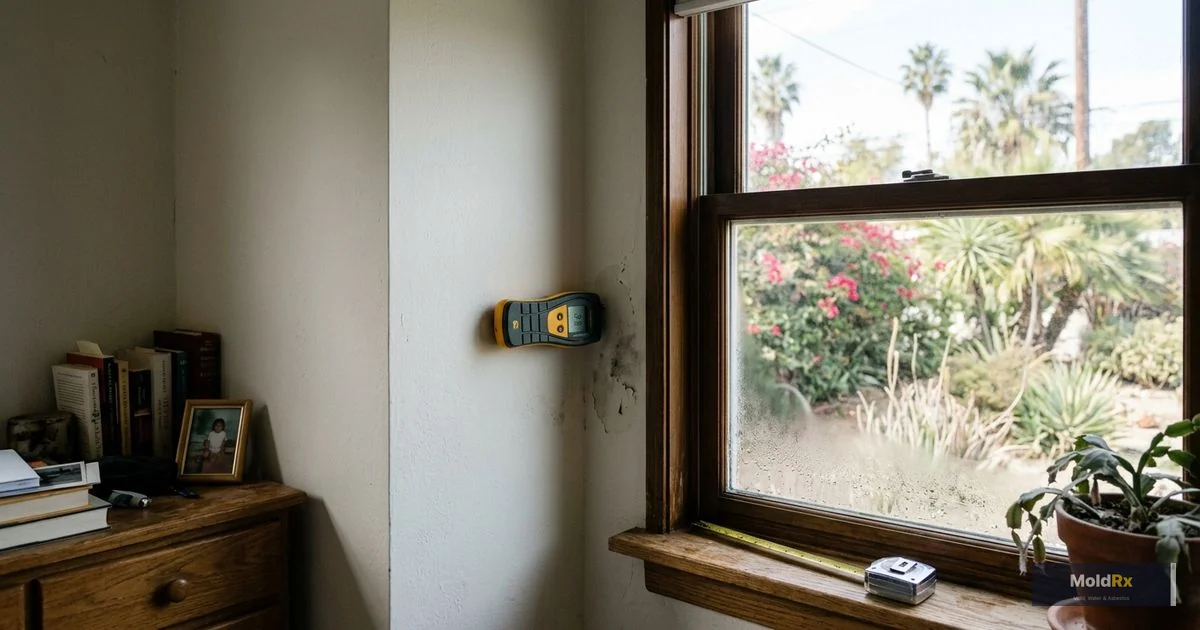
A homeowner dealing with mold has one set of problems. A property manager has several.
Legal liability flows in multiple directions. You have obligations to the tenant under California's implied warranty of habitability, obligations to the property owner whose asset you manage, and potential exposure to neighboring tenants if contamination spreads. A poorly handled mold complaint can generate claims from all three directions simultaneously.
Timelines are compressed. When a homeowner discovers mold in their own home, they decide how urgently to respond. When a tenant reports mold, California law starts a clock. Your response timeline is documented from the moment you receive notice, and that documentation becomes evidence if the situation escalates.
Multi-unit properties multiply every risk. A plumbing failure in one unit can send water into adjacent and lower units through shared walls, common plumbing stacks, and HVAC systems. What starts as a single-unit maintenance request can become a multi-unit remediation project that displaces tenants and disrupts operations across the property.
Your documentation standard is higher. Your records may be reviewed by attorneys, insurance adjusters, code enforcement officers, and property owners. Every communication, inspection finding, and remediation record needs to withstand outside scrutiny.
Tenant Complaint Response Protocol
When a tenant reports a moisture or mold concern, follow a structured protocol. The goal is to respond fast, document everything, and resolve the issue before it escalates.
Step 1: Acknowledge Within 24 Hours
Acknowledge the complaint in writing the same day you receive it, or within 24 hours at most. Your acknowledgment should confirm:
- What was reported — restate the issue in your own words
- That you take the complaint seriously
- What happens next — tell the tenant you're scheduling an inspection
- An inspection date — ideally within 48 hours of the report
This acknowledgment creates the first dated record in your response timeline. If you're using a property management platform, the ticket timestamp serves this purpose — but follow up with a direct communication to the tenant confirming next steps.
Step 2: Inspect Within 48 Hours
Send a qualified maintenance technician or property manager to the unit within 48 hours. During the inspection:
- Photograph and video the reported condition from multiple angles
- Take moisture readings with a pin or pinless moisture meter on walls, floors, and ceilings near the affected area
- Check for the moisture source — look for plumbing leaks, condensation patterns, roof intrusion, or window seal failures
- Assess the scope — check adjacent rooms, closets, and areas above and below the affected zone
- Note the affected area size — the EPA recommends professional involvement when mold exceeds approximately 10 square feet
- Ask the tenant when they first noticed the issue and whether they've observed related problems like leaks, condensation, or musty odors
Document all findings in writing with photos. This inspection report becomes a critical piece of your file.
Step 3: Classify and Escalate
Based on your inspection findings, classify the situation:
Minor / routine maintenance. Small patches of surface mold on non-porous materials (tile, glass, metal) with an identifiable and easily correctable moisture source. Your maintenance team can handle the repair and surface cleaning. Document the work completed.
Moderate / professional assessment needed. Mold on porous materials (drywall, carpet, wood), affected areas approaching or exceeding 10 square feet, moisture source not immediately identifiable, or mold in concealed locations (inside walls, under flooring). Engage a professional for assessment and remediation planning.
Urgent / health and safety concern. Extensive visible growth, tenants reporting health symptoms, mold in HVAC ductwork (which distributes spores to every room), or water damage affecting electrical systems. Prioritize tenant safety, consider temporary relocation, and engage professionals immediately.
Step 4: Communicate the Plan
Within one week of the initial report, provide the tenant with a written summary of:
- What was found during the inspection
- What the identified or suspected moisture source is
- What remediation or repair work will be performed
- The expected timeline for completing the work
- Whether the tenant needs to prepare the unit or temporarily relocate
If professional remediation is required and the timeline extends beyond 30 days, communicate that timeline with specific milestones. Under California Civil Code Section 1942, a tenant may exercise remedies — including repair-and-deduct or lease termination — if a landlord fails to address habitability issues within 30 days of written notice.
Step 5: Remediate and Verify
Complete the remediation work and document every step. For professional remediation projects, your vendor should provide:
- A written scope of work before starting
- Progress documentation during the project
- Post-remediation clearance testing by an independent party
- A final report confirming the work meets IICRC S520 standards
After remediation, conduct a follow-up inspection at 30 and 90 days to verify the problem has not returned. Document these follow-ups.
Preventive Maintenance Responsibilities
The most effective way to manage mold liability is to prevent mold conditions from developing. A structured preventive maintenance program reduces complaints, protects the property, and demonstrates due diligence if issues arise.
Plumbing
Plumbing failures are the most common source of hidden moisture that leads to mold in rental properties. Inspect all visible supply and drain lines annually in each unit. Replace washing machine hoses every 3-5 years. Check under sinks and around water heaters during every unit turnover and annual inspection — these are the most common slow-leak locations. For multi-unit properties, inspect common area plumbing quarterly, including shared laundry facilities and irrigation connections.
HVAC and Ventilation
Inadequate ventilation creates chronic moisture conditions that produce mold. Test bathroom exhaust fans during every turnover and annual inspection — verify they actually move air, not just make noise. Clean or replace HVAC filters every 1-3 months. Inspect condensate drain lines seasonally — clogged AC condensate lines are a common source of concealed water damage, particularly in Southern California's older building stock.
Building Envelope
Inspect roofs annually and after significant weather events. Check exterior walls for cracked stucco, failed caulking, and deteriorated flashing. Inspect window and door seals during turnovers. Assess grading and drainage annually — water should flow away from the building, not toward it.
Unit Turnover Protocol
Every turnover is an opportunity to catch moisture problems before they become the next tenant's complaint. Conduct a moisture survey of the unit with a moisture meter, checking walls and floors adjacent to plumbing, exterior walls, and windows. Inspect under all sinks, behind toilets, and around the water heater. Check for musty odors. Document the condition of all surfaces with photos — this baseline protects you against future claims that a condition predated the tenancy. Address any findings before the new tenant takes possession.
Documentation Best Practices
Documentation is your primary legal protection. In disputes with tenants, property owners, or insurance carriers, the party with better records almost always prevails.
Every tenant communication. Save emails, text messages, portal messages, and written notices. If a tenant reports something verbally, follow up with a written summary: "This confirms our conversation today in which you reported..."
Every inspection. Photos, moisture readings, inspector notes, and the date and time of each inspection. Include photos that show no problems alongside photos that show issues — a complete record is more credible than a selective one.
Every vendor engagement. Quotes, scopes of work, contracts, invoices, completion certificates, and clearance testing results from independent testing companies.
Every repair and its outcome. What was done, when, by whom, and what the result was. If a follow-up inspection at 30 days confirms the repair held, document that too.
Timeline evidence. Dates matter. Create a clear chronological record showing when the problem was reported, when you responded, when work began, and when it was completed. This timeline is often the most important evidence in a habitability dispute.
Maintain a per-unit file that includes all maintenance history, inspection records, and tenant communications. For insurance claim situations, organize documentation into a separate claims file that follows the insurer's requirements. Professional documentation practices for insurance claims significantly improve claim outcomes.
Multi-Unit Considerations: Shared Walls, HVAC, and Spread
Multi-unit properties present challenges that single-family rentals don't. Understanding how moisture and mold move through connected spaces is critical to managing these properties effectively.
Shared Wall Contamination
When one unit has a water event or mold condition, adjacent units that share walls are at risk. Water migrates through wall cavities along framing, insulation, and even electrical conduit pathways. Mold doesn't respect unit boundaries.
Protocol for shared-wall situations:
- When mold or water damage is confirmed in one unit, inspect the adjacent units on all sides — above, below, left, and right
- Take moisture readings on the shared wall from both sides
- If moisture is elevated in the adjacent unit, treat both units as part of the same project
- Notify all potentially affected tenants, even if their units show no visible damage — the absence of visible mold doesn't mean the wall cavity is clean
HVAC Cross-Contamination
Multi-unit properties with shared HVAC systems face a specific risk: mold in one part of the ductwork distributes spores to every connected unit every time the system runs. Even properties with individual unit HVAC systems may share return air pathways, common hallway systems, or interconnected ductwork in older buildings.
If mold is confirmed in one unit's HVAC components:
- Test air quality in connected units to determine if spore counts are elevated
- Inspect shared ductwork sections — trunk lines, plenums, and common returns
- Isolate the affected section if possible while remediation is planned
- Do not run the system if contamination in shared components is confirmed, until remediation is complete
Coordinating Multi-Unit Remediation
Remediate the source unit first, then assess and address secondary affected units — remediating downstream while the source is still contaminating wastes time and money. Containment is more complex in multi-unit settings because negative air pressure in one unit can pull contaminated air from adjacent units. Multiple tenants may need temporary relocation simultaneously, so plan early. And communicate consistently — all affected tenants should receive the same information about the scope, remediation plan, and timeline.
Vendor Selection for Commercial and Multi-Unit Properties
Choosing the right remediation vendor directly affects your liability, your timeline, and your outcome. The selection criteria for property managers go beyond what an individual homeowner needs. For a detailed evaluation framework, see our guide to choosing a mold remediation company.
Non-negotiable requirements:
- IICRC S520 certification — the recognized industry standard for mold remediation
- Multi-unit and commercial experience — ask specifically about their project history with multi-unit containment, coordinated tenant displacement, and property management documentation standards
- Independent testing protocol — the company that remediates should never be the same company that tests, before or after the work
- Written scope of work before starting — detailing materials to be removed, containment approach, timeline, and clearance criteria
- Insurance documentation support — before/during/after photos, calibrated moisture readings, and a final report that ties completed work to the original scope
Red flags: A vendor who quotes without visiting the property. A vendor who offers to test and remediate. A vendor who doesn't mention the moisture source — mold remediation without fixing the water problem is guaranteed to fail. A vendor who pressures you to sign immediately.
For property managers with sizable portfolios, establish relationships with 2-3 vetted remediation vendors before you need them. Pre-vetted vendors on call means faster response, consistent documentation quality, and competitive quotes without sacrificing urgency.
California Landlord Obligations
California law creates specific obligations for property owners and the managers who act on their behalf.
Implied Warranty of Habitability
California Civil Code Section 1941 requires landlords to maintain rental units in a condition fit for human occupation — effective waterproofing, working plumbing, adequate ventilation, and structural integrity. Mold caused by failures in any of these systems is a habitability issue. This warranty cannot be waived by lease language. An "as-is" clause is unenforceable for habitability conditions under California law.
Disclosure Obligations
If you know about a mold condition — current or historical — you must disclose it. California Civil Code Section 1102.6a addresses mold disclosure in property sales, and the principle extends to rentals under general disclosure requirements. Concealing a known condition creates substantially greater legal exposure than disclosing it transparently.
Retaliatory Action Prohibition
Civil Code Section 1942.5 prohibits retaliatory actions against tenants who report habitability issues. If a tenant reports mold and you respond with a rent increase, eviction notice, or service reduction within 180 days, there is a legal presumption that the action is retaliatory. Treat every mold complaint as legitimate until your inspection proves otherwise.
Tenant Remedies You Need to Anticipate
If you fail to address a mold condition within a reasonable time after written notice, tenants can pursue repair-and-deduct (up to one month's rent, twice per year), rent withholding, code enforcement complaints, or civil action seeking rent reduction, relocation costs, property damage, and emotional distress damages. Every one of these outcomes is more expensive than a timely, well-managed response to the original complaint.
Frequently Asked Questions
Am I liable for mold that the tenant caused?
Generally, no. If mold results from tenant behavior — disabling exhaust fans, failing to report a leak for months, creating excessive indoor humidity — the tenant bears responsibility. But you must prove causation through documentation: thorough move-in inspections, lease language requiring prompt moisture reporting and proper ventilation use, and regular inspections.
How quickly do I need to respond to a mold complaint?
California doesn't specify an exact number of days. Civil Code Section 1942 establishes a 30-day benchmark before tenants can exercise remedies like repair-and-deduct. In practice, acknowledge within 24 hours, inspect within 48 hours, and communicate your plan within one week. For urgent health and safety situations, respond the same day.
Do I need to relocate tenants during mold remediation?
It depends on the scope. If remediation requires containment and HEPA filtration in occupied areas, or if spore counts make the unit unsafe, temporary relocation is necessary. If the landlord's failure to maintain the property caused the condition, courts may require the landlord to cover relocation expenses.
Can a tenant break their lease over mold?
Yes. Civil Code Section 1942 permits a tenant to vacate and be relieved of lease obligations if the landlord fails to address a habitability issue within 30 days of written notice, or sooner if the condition is urgent. A fast, documented, professional response is your best protection against this outcome.
What if mold spreads from one unit to another?
You're responsible for addressing the condition in every affected unit. Inspect all adjacent units when mold or water damage is confirmed in any single unit, and treat interconnected contamination as a single coordinated project.
Does the property owner's insurance cover mold remediation?
Commercial property insurance typically covers mold when it results from a covered water event — a sudden pipe burst, appliance failure, or storm damage. Mold from gradual leaks, deferred maintenance, or chronic condensation is usually excluded. Your documentation of the water event's cause and timeline directly affects whether the claim is paid. See our guide on water damage insurance claims in California.
Should I include mold clauses in my leases?
Yes. You cannot waive habitability obligations, but you can include provisions requiring tenants to report moisture promptly, use exhaust fans, avoid blocking vents, maintain reasonable humidity, and allow access for inspections. These clauses support your position if a dispute arises over causation.
How do I handle a mold complaint from a tenant who is behind on rent?
Exactly the same as from a current tenant. The habitability obligation exists independently of rent payment status. Failing to address a mold complaint because the tenant owes rent can be construed as retaliatory. Handle the mold complaint on its own merits and address the rent issue through the appropriate separate process.
What records should I keep and for how long?
Keep all maintenance records, remediation documentation, tenant communications, and vendor files for a minimum of five years after the tenancy ends or the issue is resolved — whichever is later. Mold-related claims can surface years after remediation, particularly if a former tenant attributes health effects to their tenancy.
When should I bring in a professional versus handling it in-house?
Your maintenance team can handle minor surface mold on non-porous materials when the moisture source is obvious. Call professionals when mold is on porous materials, exceeds 10 square feet, appears in concealed locations or HVAC systems, or when a tenant reports health symptoms. The cost of proper mold remediation is consistently less than the cost of a failed remediation.
Protect Your Properties and Your Tenants
Mold and water damage don't resolve themselves, and in a property management context, they don't stay contained. Moisture migrates. Mold spreads. Complaints escalate. Liability compounds. Every week of delay increases the remediation scope, the tenant's grievance, and the legal exposure.
MoldRx works with property managers throughout Southern California on mold remediation and water damage restoration projects ranging from single-unit repairs to multi-unit coordinated remediation. We understand the documentation standards property managers need, the coordination that multi-unit work requires, and the urgency that tenant-occupied properties demand.
If you're managing a property with a mold or water damage concern — or you want to establish a vendor relationship before you need one — request an estimate or call (888) 609-8907 to discuss your situation.