Santa Ana winds are not just a fire risk. They're the beginning of a damage cycle that can affect your home in ways you didn't expect — weeks or months after the winds themselves have died down.
Here's what most people miss: Santa Ana events create a three-phase damage sequence. First, the wind itself damages building envelopes — lifting roof materials, cracking stucco, breaking seals around windows and doors. Second, wind-driven fires generate enormous volumes of fire suppression water that saturates everything the flames didn't consume. Third, when normal weather returns, marine air brings moisture back to compromised structures, and the next rain event sends water cascading through burn scars into neighborhoods below.
Each phase creates its own water damage and mold risk. And because the phases unfold over weeks or months, homeowners often don't connect the mold they find in February to the Santa Ana event that happened in October.
What Santa Ana Winds Actually Do to Buildings
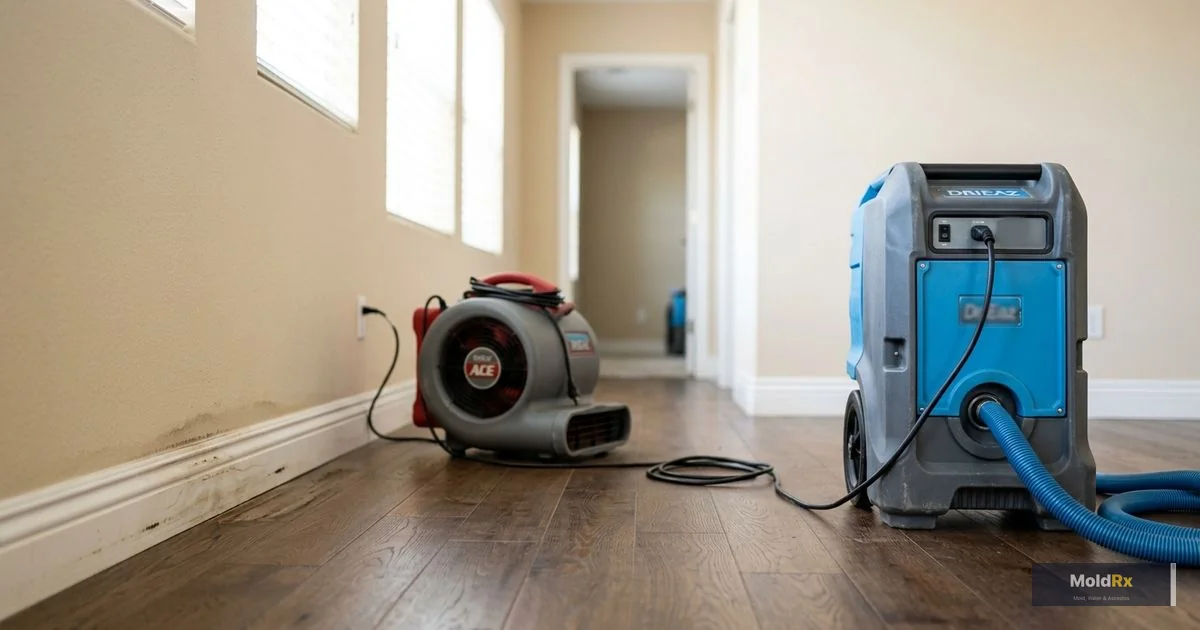
Santa Ana winds are hot, dry, offshore winds that accelerate through mountain passes and canyons into coastal Southern California. Sustained speeds of 40 to 60 mph are common, with gusts exceeding 80 to 100 mph in foothill and canyon communities. Relative humidity drops below 10%, sometimes below 5%.
That combination creates structural damage most homeowners underestimate because it doesn't look catastrophic.
Roof Damage
Santa Ana gusts lift and loosen roofing materials. Asphalt shingles get peeled back at edges and ridges. Tile roofs — common throughout Orange County, Riverside County, and San Bernardino County — lose individual tiles, and the underlayment beneath exposed tiles degrades rapidly in the sun. Flat roofs on mid-century and commercial buildings develop lifted seams and compromised flashing.
The problem is that this damage isn't always visible from the ground. A missing tile or lifted shingle may not produce an immediate leak. But the building envelope is now compromised. When rain arrives weeks or months later, water enters where it didn't before.
Stucco and Siding Damage
Southern California homes are predominantly stucco-clad. Santa Ana winds drive debris — branches, gravel, fence fragments — into exterior walls at high velocity. Hairline cracks become wider cracks. Existing stucco damage around windows and transitions gets worse. Caulk and sealants that were already deteriorating get stressed beyond their remaining capacity.
Stucco damage from wind events is insidious because stucco already tends to trap moisture behind walls when compromised. A crack that was borderline before a Santa Ana event becomes an active moisture pathway after one.
Window and Door Seal Failure
Sustained wind pressure flexes window frames and door assemblies. Weatherstripping compresses unevenly, creating gaps. Caulk around window and door penetrations — already a weak point in most SoCal homes — cracks or separates. Sliding glass doors common in Southern California homes are particularly vulnerable to seal degradation under sustained wind pressure.
These seal failures may not be obvious. You might not notice the draft. But the next rain will find those gaps.
The Drying Effect Creates a False Sense of Security
Here's the counterintuitive part: Santa Ana winds are so dry that they can actually mask the damage they cause. Any existing moisture in building materials gets pulled out during the event. Homes feel exceptionally dry afterward. Homeowners assume everything is fine because nothing feels wet, nothing smells musty, and the sun is shining.
But the building envelope has been weakened. Every compromised seal, cracked stucco section, and lifted roofing element is a future moisture entry point — and a future mold site. The next moisture source will exploit every new vulnerability the wind created.
Phase Two: Fire and Fire Suppression Water
Santa Ana winds are Southern California's primary wildfire driver. The combination of extreme heat, single-digit humidity, and high winds turns any ignition source into a fast-moving fire. Communities along the wildland-urban interface — foothill cities in Riverside County, canyon neighborhoods, hillside developments — face the most direct risk.
But the fire itself is only part of the story. What comes after the fire creates water damage and mold conditions that persist far longer than the flames.
Fire Suppression Water Volume
Fighting a wildfire requires staggering volumes of water. A single engine company flows 500 to 1,500 gallons per minute. Large operations use aerial drops of thousands of gallons per pass, multiple ground crews running hose lines simultaneously, and suppression efforts continuing hours or days after visible flames are gone.
Homes that survive a fire often sustain significant water damage from suppression efforts. Water floods through broken windows, open eaves, and structural gaps — saturating attic insulation, soaking through ceilings, pooling on floors, and penetrating wall cavities from above.
This is not clean water. Fire suppression water picks up ash, soot, chemical retardants, melted materials, and debris — what the restoration industry classifies as Category 2 or Category 3 contamination. Standard drying alone cannot address it. Materials saturated by fire suppression water often require removal rather than restoration.
Smoke, Soot, and Ash Contamination
Even homes that escape direct flame contact get affected by smoke and ash. Santa Ana winds drive particulate matter miles from the fire front. Ash settles on roofs, enters through HVAC systems, and penetrates any opening in the building envelope — including new openings created by the wind event itself.
When rain contacts ash deposits on a structure, it creates an acidic slurry that accelerates corrosion and material degradation. Ash-contaminated water entering wall cavities or settling under flooring is both a moisture source for mold and a chemical contaminant that causes ongoing damage.
The Overlooked Problem: Homes That "Survived" the Fire
The homes that get the least attention after a fire are the ones that didn't burn — but sustained smoke, ash, and suppression water exposure. Homeowners return to find their home standing and assume the worst is over. But inside the building envelope, fire suppression water is saturating materials. Ash has infiltrated the HVAC system. Soot particles have settled on every surface and penetrated into soft materials.
Without professional assessment and remediation, these homes develop mold within the same 24 to 48 hour timeline as any other water damage event. The contamination from suppression water and ash means mold colonization is accompanied by chemical contamination — making remediation more complex. Homes saturated by fire suppression water need professional water damage restoration immediately. Not in a few days, not after the insurance adjuster visits. The biological clock starts when the water arrives.
Phase Three: Post-Fire Water Damage
The third phase begins when normal weather patterns return. This can happen days after a fire or months later, but the mechanism is the same: moisture returns to an area where the landscape and building envelopes have been compromised.
Rain on Burn Scars
Fire strips vegetation and bakes soil into a hydrophobic (water-repellent) layer. Healthy soil absorbs rainfall. Burn-scarred soil rejects it. The result is dramatically increased surface runoff — studies show runoff volumes on burn scars can increase by 10 to 40 times compared to pre-fire conditions.
This matters for every home downhill from a burn area. Post-fire debris flows and flooding have devastated Southern California communities repeatedly. But even moderate rain on burn scars sends elevated water volumes into drainage channels, streets, and neighborhoods that weren't designed for that volume.
Homes below burn scars face flooding, mud intrusion, and water infiltration at scales far exceeding normal storm events — mirroring full flood conditions with the added complication of ash and chemical contamination in the water. The rainy season following a major Santa Ana fire event is when this risk peaks — and it can persist for two to five years until vegetation re-establishes and soil structure recovers.
The Marine Layer Returns
When the offshore flow ends, the onshore marine layer returns — bringing humidity levels of 60% to 85% back to coastal and near-coastal areas. This humidity shift hits buildings with freshly compromised envelopes. Wind-cracked stucco, lifted roofing, and separated window seals now face sustained moisture from humid marine air. Condensation forms on materials that were bone-dry during the Santa Ana event.
For homes that also absorbed fire suppression water, the return of humid air slows drying of already-saturated materials — extending the window for mold colonization significantly.
Condensation Cycle in Damaged Buildings
After a Santa Ana event — with or without fire involvement — daily temperature and humidity cycles create persistent condensation in compromised buildings. During the day, solar heating drives moisture outward. At night, temperatures drop and moisture condenses on cooler surfaces inside wall cavities, on roof sheathing, and on ductwork. In a healthy building, this cycle is manageable. In a wind-damaged building, it's cumulative — each cycle adds moisture to materials that can't dry properly.
This is how homes develop mold problems weeks or months after a Santa Ana event without any obvious water intrusion. By the time homeowners notice signs of mold behind walls — musty odors, paint bubbling, discoloration — the growth can be extensive. The damage is invisible, gradual, and directly traceable to envelope damage that happened during the wind event.
What to Do After Each Type of Damage
After Santa Ana Wind Damage (No Fire)
Immediately: Walk the exterior and check for missing roofing materials, new stucco cracks, separated caulk around windows and doors, displaced flashing, and damaged vents or soffits. Check the attic for daylight penetration or displaced insulation. Document everything with photos for insurance.
Within one week: Have a roofer inspect from roof level — damage invisible from the ground may be obvious up top. Re-caulk separated seals around windows, doors, and utility penetrations. Tarp any obvious roof damage.
Before the next rain: Complete permanent repairs to all identified envelope damage — temporary patches fail under sustained rain. Clear gutters and downspouts of wind-deposited debris. Ensure drainage moves water away from the foundation.
After Fire Exposure (Structure Survived)
First 24 hours: Do not re-enter until cleared by fire authorities. Once cleared, assess for standing water from suppression efforts — if found, call for emergency water damage restoration immediately. Do not run the HVAC system; it will distribute ash, soot, and mold spores throughout the home.
Within 48 hours: Begin professional water extraction and structural drying. Have the HVAC system inspected and cleaned before operating it. Remove ash and soot from exterior surfaces before rain washes contaminants into the building envelope.
Within one to two weeks: Complete moisture mapping to identify all areas affected by suppression water, including inside wall cavities and above ceilings. Remove and replace porous materials (drywall, insulation, carpet) saturated by contaminated water. Document damage thoroughly with photos, moisture readings, and professional assessments for insurance.
After Post-Fire Rain or Flooding
Immediately: Extract standing water as fast as possible — every hour counts for the mold timeline. Move contents away from wet materials. Begin ventilation and dehumidification if professional help isn't immediately available.
Within 48 hours: Professional extraction and drying should be underway. Post-fire flood water is contaminated (Category 3) and requires professional handling. Remove all porous materials that contacted flood water: carpet, pad, drywall below the flood line, insulation. Apply antimicrobial treatment to structural materials that will remain in place.
Ongoing: Monitor for mold growth in the weeks following extraction. Maintain dehumidification until all moisture readings return to normal. Consider professional mold testing two to four weeks after the event to catch hidden growth early.
The Compounding Problem: Multiple Phases Hit the Same Home
The worst outcomes happen when phases compound. A home sustains envelope damage from Santa Ana winds, then gets exposed to smoke and fire suppression water, then the rainy season arrives with burn scars uphill, then the marine layer returns. Each phase finds a structure less capable of managing moisture than the phase before.
This compounding effect is why the immediate response matters at every phase. Addressing wind damage before rain arrives. Extracting suppression water before mold colonizes. Drying flood-affected materials before humidity stalls evaporation. Each intervention breaks the chain and prevents the next phase from being worse than it needed to be.
Southern California Communities Most Affected
Foothill and canyon communities face the full three-phase cycle. Communities in Riverside County bordering the Cleveland and San Bernardino National Forests experience the most intense Santa Ana winds as they accelerate through canyons and passes — and the highest fire risk and post-fire debris flow exposure.
Inland Empire cities in San Bernardino County and inland Riverside County face strong winds, significant fire risk in mountain-adjacent areas, and the thermal cycling and condensation issues that follow. Homes here often have the stucco-over-slab construction already vulnerable to hidden moisture problems.
Coastal communities in Orange County may not face the strongest winds or direct fire exposure, but they sit at the end of the humidity phase. When marine air returns, these homes absorb the highest ambient moisture in the region. Wind-damaged envelopes in coastal areas face weeks or months of elevated humidity penetrating through compromised seals and stucco.
Santa Ana Winds and Home Damage: 10 FAQs
Can Santa Ana winds cause water damage even without fire?
Yes. Wind damage to the building envelope — cracked stucco, lifted roofing, separated window seals — creates pathways for water to enter during subsequent rain events. The water damage may not appear until weeks after the wind event, making it difficult to connect to the original cause.
How long after a fire does mold start growing from suppression water?
The same timeline as any water damage event: 24 to 48 hours. Fire suppression water often accelerates the process because it carries contaminants — ash, chemical retardants, organic debris — that provide additional nutrients for mold and bacteria.
My home wasn't in the fire zone but got covered in ash. Is that a mold risk?
Ash itself isn't a mold food source, but it creates problems when it gets wet. Ash on a roof or around the foundation that contacts rain becomes an acidic slurry that can penetrate the building envelope and damage materials. Wet ash on building materials also creates conditions where mold can establish. Remove ash deposits before rain arrives.
Should I run my HVAC after a nearby fire?
Not until the system has been inspected and the filters, coils, and ductwork have been cleaned. Ash and smoke particulates get drawn into HVAC systems during fire events. Running the system distributes those contaminants throughout your home and into areas where they mix with moisture, creating both air quality problems and mold risk in ductwork.
How do I know if fire suppression water affected areas I can't see?
Moisture detection equipment — including infrared thermal cameras and penetrating moisture meters — can identify water behind walls, above ceilings, and beneath flooring without destructive investigation. If your home was near active fire suppression operations, professional moisture mapping is the only way to confirm whether hidden areas were affected.
My home is below a burn scar. How many rainy seasons am I at risk?
Burn scar hydrophobicity and increased runoff risk typically persist for two to five years, depending on fire intensity, soil type, and vegetation recovery. The first rainy season after a fire is the highest risk, but the second and third can still produce significant flooding, especially during intense atmospheric river events.
Can I prevent mold after fire suppression water enters my home?
Yes — if you act within the first 24 to 48 hours. Immediate water extraction, removal of saturated porous materials, antimicrobial treatment, and professional structural drying can prevent mold colonization. The key is speed. Every hour of delay reduces the probability of a mold-free outcome.
Does homeowner's insurance cover mold from Santa Ana wind damage?
It depends on the policy and the cause chain. Mold resulting from a covered peril — wind damage leading to rain intrusion, fire suppression water damage — may be covered. Mold from gradual condensation is harder to get covered. Document every phase of damage thoroughly and file claims promptly.
What's the difference between cleaning up after a fire and cleaning up after water damage?
Fire recovery involves both simultaneously — soot, ash, and smoke odor remediation alongside water extraction and drying. The contamination level means more materials require removal rather than restoration, and chemical residues from fire and suppression agents require specialized protocols. A qualified restoration company handles both dimensions.
Should I get a mold test after a Santa Ana event even if I don't see damage?
If your home is in a fire-affected area, received suppression water, or is downhill from a burn scar, yes. If your home only experienced wind, a test isn't necessary immediately — but inspect the envelope and make repairs before rain. If you notice musty odors, unexplained moisture, or respiratory symptoms in the weeks following, professional mold testing provides objective answers.
Don't Let the Damage Cycle Compound
Santa Ana wind events are a fact of life in Southern California. The wind itself, the fires it drives, the suppression water, and the moisture that follows — each creates conditions for water damage and mold. The homeowners who recover cleanly are the ones who understand the full cycle and intervene at each phase instead of waiting for visible damage to force their hand.
If your home has been affected by Santa Ana winds, fire exposure, suppression water, or post-fire flooding, the response you choose now determines whether you're dealing with a repair or a remediation.
MoldRx provides professional water damage restoration, emergency services, and mold remediation throughout Orange County, Riverside County, and San Bernardino County. We understand the full Santa Ana damage cycle and respond to every phase — from immediate water extraction to long-term mold prevention.
Call (888) 609-8907 or request a free estimate to get professional guidance on your situation.