A Complete Guide for Property Owners in Southern California
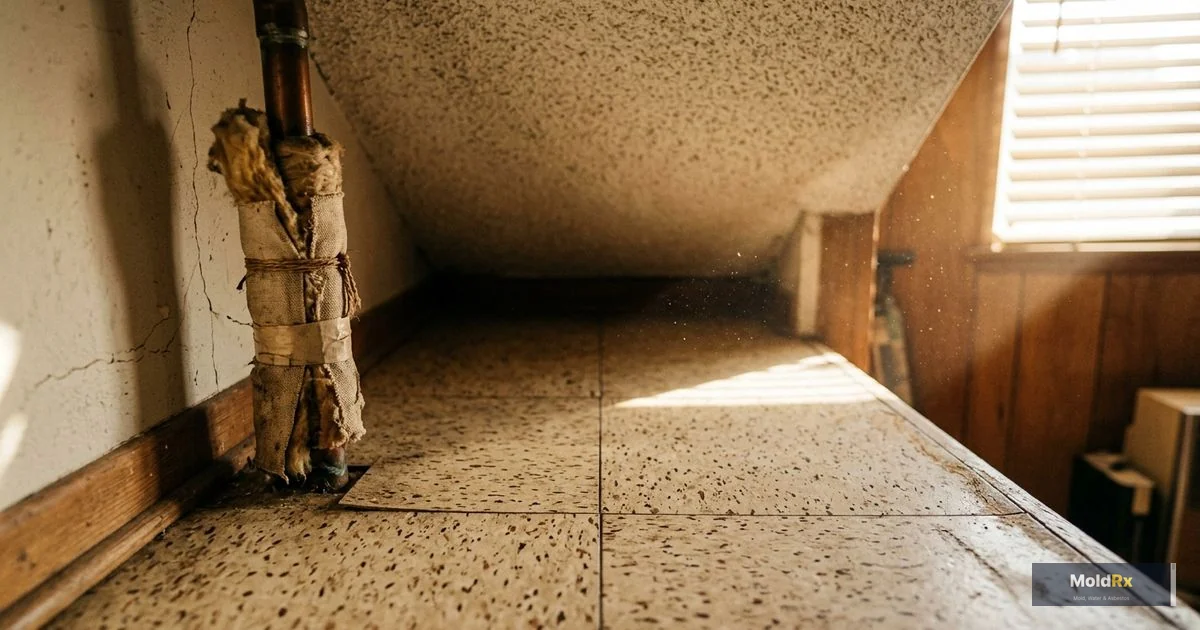
SCAQMD Rule 1403 requires a professional asbestos survey and the proper removal of all asbestos-containing materials before any demolition or renovation project in the South Coast Air Basin. If you own property in Los Angeles County, Orange County, Riverside County, or San Bernardino County and you're planning to tear down, gut, or significantly renovate a structure, this rule applies to you — and the penalties for ignoring it are severe.
Rule 1403 is not new. It has been in effect since 1989, administered by the South Coast Air Quality Management District (SCAQMD). Its purpose is straightforward: prevent asbestos fibers from being released into the air during construction activities that disturb building materials. Because asbestos was used in thousands of building products from the 1930s through the late 1970s, demolition and renovation are the most common activities that release these fibers — fibers that cause irreversible lung disease, cancer, and death.
Here's what you need to know about Rule 1403 before your project begins.
Who Rule 1403 Applies To
Rule 1403 applies to the owner or operator of any demolition or renovation activity within the South Coast Air Quality Management District's jurisdiction. That jurisdiction covers all of Orange County, the non-desert portions of Los Angeles County, the non-desert portions of San Bernardino County, and the western portion of Riverside County.
The rule's definition of responsibility is broad:
Property owners bear primary compliance responsibility — whether you're doing the work yourself, hiring a general contractor, or working through a developer.
Operators — general contractors, demolition contractors, and project managers directing the work — can be held independently liable for violations.
Facility managers and tenants in commercial and industrial settings may share compliance obligations, particularly regarding notification and survey requirements.
Rule 1403 does not distinguish based on property type. It applies to commercial buildings, industrial facilities, apartment complexes, condominiums, public buildings, and single-family residences when demolition is involved. For renovation, the rule primarily targets commercial, industrial, and multi-unit residential projects — but Cal/OSHA requirements extend asbestos survey obligations to virtually all pre-1980 residential renovation work where contractors are involved.
The practical takeaway: if you're planning any demolition or significant renovation on a pre-1980 structure in the South Coast Air Basin, assume Rule 1403 applies until you've confirmed otherwise with a qualified professional.
Notification Requirements
Before you begin any demolition or renovation that could disturb asbestos-containing materials, Rule 1403 requires written notification to SCAQMD. This is not a formality — it's a legal prerequisite that must be completed within specific timeframes.
When to Notify
Demolition projects require notification at least 10 working days before the start of demolition. This applies to all demolitions regardless of whether asbestos has been found, because the survey must be completed and submitted as part of the notification package.
Renovation projects involving regulated amounts of asbestos-containing material (more than 100 square feet of surfacing material, more than 100 linear feet of thermal insulation, or more than one glove bag of pipe insulation) also require 10 working days' advance notification.
Emergency renovations — situations where equipment failure or structural damage creates an immediate hazard — allow for notification within 24 hours after the discovery. However, the emergency exception is narrow and does not apply to planned renovation work that was simply scheduled too aggressively.
What the Notification Must Include
The notification package must include the property address, scheduled start and completion dates, type of operation, owner/operator contact information, asbestos removal contractor name, pre-project survey results, types and quantities of ACM identified, removal methods, waste transport route, and the name and location of the certified disposal facility.
If the survey found no asbestos-containing materials, the notification must still be filed for demolition projects — along with the survey report confirming negative results.
Amendments
If project dates change, additional ACM is discovered, or the scope changes materially, you must file an amended notification with SCAQMD before proceeding. Starting work under conditions different from those described in your notification is a violation.
Survey Requirements
The asbestos survey is the foundation of Rule 1403 compliance. Without it, nothing else in the process can proceed legally or safely.
Who Can Perform the Survey
Rule 1403 requires that the asbestos survey be conducted by a Certified Asbestos Consultant (CAC) or a Certified Site Surveillance Technician (CSST) working under a CAC's supervision. These certifications are issued by California's Division of Occupational Safety and Health (DOSH) and require specific training, examination, and continuing education.
The inspector must be independent of the abatement contractor who will perform any subsequent removal. This separation prevents conflicts of interest — the person telling you what needs to come out should not be the same person profiting from taking it out.
What the Survey Covers
The survey must identify all asbestos-containing materials that will be disturbed by the planned demolition or renovation. For demolition projects, this means a comprehensive survey of the entire structure — every building material that could contain asbestos must be sampled and tested, from popcorn ceilings and floor tiles to pipe insulation and roofing. For renovation projects, the survey scope matches the renovation scope: every material within the project area that will be disturbed must be assessed.
The inspector collects physical samples from each homogeneous area — a zone where the same material was applied at the same time and likely has the same composition throughout. SCAQMD generally requires a minimum of three samples per homogeneous area for surfacing materials. Each sample is sealed, labeled, and tracked through chain-of-custody documentation.
Laboratory Analysis
Samples are analyzed by an NVLAP-accredited laboratory using polarized light microscopy (PLM), the EPA-recommended method for bulk material analysis. The lab determines whether asbestos is present, what type (chrysotile, amosite, crocidolite, or others), and at what concentration. Under both federal and California regulations, materials containing more than 1% asbestos are classified as asbestos-containing material (ACM) and are subject to the full requirements of Rule 1403.
For a detailed walkthrough of the survey process, see our guide on asbestos surveys before renovation in California.
Removal Requirements
When the survey identifies asbestos-containing materials that will be disturbed, those materials must be removed before general demolition or renovation begins. Rule 1403 specifies how.
Removal before demolition. All regulated asbestos-containing material (RACM) must be removed prior to any activity that would break up, dislodge, or disturb it. Demolishing a building with asbestos still in place is a serious violation with consequences that go well beyond fines.
Wet methods are mandatory. Materials must be adequately wetted — saturated with amended water using low-pressure sprayers — before and during removal to prevent visible emissions. Dry removal is explicitly prohibited.
No visible emissions. Rule 1403 establishes a strict no visible emissions standard throughout removal, handling, loading, transport, and disposal. No dust, debris, or fiber emissions may cross the property line or enter the ambient air.
Containment and engineering controls. Achieving the no-visible-emissions standard requires proper containment: sealed polyethylene sheeting, negative air pressure with HEPA filtration, and decontamination units for workers. These requirements are reinforced by Cal/OSHA and EPA NESHAP. For a detailed description of the process, see what happens during professional asbestos removal.
Licensed contractors only. California requires asbestos removal by contractors holding a C-22 asbestos abatement license. Workers must complete Cal/OSHA-required training and medical surveillance. Attempting removal yourself — or hiring an unlicensed contractor — violates state law and creates catastrophic liability exposure.
Disposal Requirements
Asbestos waste cannot go in a dumpster, a standard construction debris container, or a municipal landfill. Rule 1403 imposes specific requirements for every stage of the waste stream.
Packaging. All asbestos-containing waste must be sealed in leak-tight containers while still wet — double-bagged in labeled 6-mil polyethylene disposal bags for smaller materials, wrapped in 6-mil poly sheeting for larger items. Every container must bear OSHA-required warning labels.
Transport. Waste must be transported in enclosed vehicles or under tarps to prevent material from becoming airborne. Loads must be covered, sealed, and secured.
Waste manifest. A waste manifest must accompany every load from your property to the disposal facility. This legal document tracks who generated the waste, who transported it, and where it was deposited — creating a chain of custody that protects you as the property owner. Keep copies permanently.
Certified disposal facilities. Asbestos waste must go to a facility specifically permitted for asbestos acceptance — in California, a Class II or Class III landfill with an asbestos waste permit. The disposal facility signs the manifest, completing the chain of custody.
Record-Keeping Requirements
Rule 1403 requires that records be maintained and available for SCAQMD inspection — sometimes years after the project is completed. As a property owner, permanently maintain: the asbestos survey report with lab results, a copy of the SCAQMD notification and any amendments, the abatement contractor's scope of work and project logs, air monitoring data, all waste manifests with disposal facility signatures, independent clearance testing reports, and photographs documenting conditions before, during, and after removal.
These records also matter for real estate transactions, insurance claims, and future work on the property. A complete compliance file demonstrates that you handled asbestos responsibly and in accordance with the law.
Penalties for Violating Rule 1403
SCAQMD takes Rule 1403 violations seriously, and the penalty structure reflects that. Enforcement comes from multiple agencies simultaneously, and penalties stack.
SCAQMD civil penalties can reach $75,000 per day for each violation. Common triggers include failing to conduct a survey, failing to notify before starting work, beginning demolition before ACM is removed, performing dry removal, producing visible emissions, and improper disposal. SCAQMD conducts both scheduled and unannounced inspections throughout the South Coast Air Basin.
EPA NESHAP penalties can exceed $100,000 per day for significant violations. Federal enforcement is most common in large-scale demolition, public health exposure, or willful non-compliance cases.
Cal/OSHA penalties reach $25,000 per violation for serious asbestos safety violations — and substantially more for willful or repeat violations.
Stop-work orders halt all construction activity — not just abatement — until the violation is resolved. For property owners on tight timelines, this means weeks or months of delay while emergency decontamination and corrective abatement are completed.
Criminal penalties are possible for knowing and willful violations under both state and federal law, carrying potential imprisonment in addition to fines.
Long-term civil liability may be the most significant risk. Because asbestos-related diseases have latency periods of 10 to 50 years, a single incident of uncontrolled fiber release can generate personal injury claims decades after the project is completed. Asbestos personal injury verdicts regularly reach seven and eight figures.
How Rule 1403 Works with Cal/OSHA and EPA NESHAP
Rule 1403 does not operate in isolation. It is one layer of a three-part regulatory framework, and understanding how the layers interact explains why compliance is not optional at any level.
EPA NESHAP (Federal) — The National Emission Standards for Hazardous Air Pollutants for asbestos establish baseline federal requirements: pre-demolition inspections, notification, wet removal methods, no visible emissions, and proper disposal. EPA NESHAP applies nationwide.
SCAQMD Rule 1403 (Regional) — Rule 1403 is the South Coast Air Quality Management District's local implementation of EPA NESHAP. It mirrors the federal requirements and in some cases is more stringent — particularly regarding notification timelines, survey thoroughness, and enforcement. SCAQMD is the primary enforcement body in the South Coast Air Basin.
Cal/OSHA (State) — Cal/OSHA Title 8, Section 1529 governs worker exposure to asbestos. While Rule 1403 focuses on preventing emissions into ambient air, Cal/OSHA focuses on protecting workers during construction. It requires employers — including contractors you hire — to identify asbestos hazards before workers are exposed, and it mandates training, medical surveillance, and respiratory protection. Cal/OSHA also presumes that thermal insulation and surfacing materials in pre-1980 buildings contain asbestos until testing proves otherwise — effectively extending survey requirements to residential renovation projects that might not fall directly under Rule 1403.
These layers overlap deliberately. Complying with Rule 1403 alone does not satisfy Cal/OSHA, and vice versa. The good news: if you hire qualified professionals — a certified inspector and a licensed C-22 abatement contractor — they handle operational compliance across all three layers as standard practice. Your primary responsibility as the property owner is ensuring the survey is done, the notification is filed, and qualified professionals are performing the work.
What Property Owners Need to Do: Practical Steps
Knowing the regulations matters, but knowing what to do with that knowledge is what actually protects you. Here is the sequence for any property owner planning demolition or renovation on a structure that could contain asbestos.
Step 1: Determine whether your building could contain asbestos. If the structure was built before 1980, the answer is almost certainly yes. Buildings from 1980 to 1990 may also contain asbestos, because existing product stockpiles continued to be installed after the 1978 EPA ban. Understanding the indicators that your property may contain asbestos is a good starting point.
Step 2: Commission a professional asbestos survey. Hire a Certified Asbestos Consultant (CAC) or CSST to conduct a thorough asbestos survey. For demolition, the survey covers the entire structure. For renovation, it covers all materials that will be disturbed. Call (888) 609-8907 to get connected with a certified inspector. Do not rely on your general contractor's assessment, a home inspector's opinion, or a DIY test kit — none satisfy Rule 1403 requirements.
Step 3: Review the survey results. The report identifies which materials contain asbestos, what type, at what concentration, and where they're located. If no ACM is found, you still need the report for your SCAQMD notification and compliance file. If ACM is identified, the report determines the scope of abatement needed.
Step 4: Hire a licensed abatement contractor. If removal is required, hire a C-22 licensed contractor. Review their scope of work carefully — it should specify exactly which materials are being removed, the methods, containment plans, disposal arrangements, and timeline. The contractor typically handles the SCAQMD notification, but verify it has been filed and retain a copy.
Step 5: Ensure independent clearance testing. After removal, clearance testing must be performed by a party independent of the abatement contractor — visual inspection plus air monitoring to confirm fiber levels are below EPA standards.
Step 6: Maintain your compliance file. Permanently store all documentation: survey report, SCAQMD notification, scope of work, air monitoring data, waste manifests, clearance reports, and photographs. This file is your proof of compliance and your protection against future liability.
10 Frequently Asked Questions
1. Does SCAQMD Rule 1403 apply to single-family homes?
Rule 1403 applies to demolition of all structures, including single-family residences. For renovation, its primary application is to commercial, industrial, and multi-unit residential buildings — but Cal/OSHA requirements extend survey obligations to single-family home renovations whenever a licensed contractor is involved.
2. What is the South Coast Air Basin?
The geographic area under SCAQMD jurisdiction: all of Orange County, the non-desert portions of Los Angeles and San Bernardino Counties, and western Riverside County. If your property is in this region, Rule 1403 applies.
3. How far in advance must I notify SCAQMD?
10 working days before the start of demolition or asbestos removal. Emergency renovations may allow 24-hour notification, but the exception is narrowly defined and does not cover planned projects that were simply scheduled too aggressively.
4. What happens if no asbestos is found in the survey?
You can proceed after filing the required SCAQMD notification (for demolition). Keep the survey report permanently — it documents compliance and protects you if questions arise later.
5. Can I demolish a building without an asbestos survey?
No. Rule 1403 requires a survey before any demolition, regardless of building age. Proceeding without one triggers the full range of SCAQMD, EPA, and Cal/OSHA penalties.
6. Who pays for the asbestos survey and removal — the owner or the contractor?
The property owner is responsible for Rule 1403 compliance costs. Commercial contracts may allocate costs between parties, but the regulatory obligation falls on the owner or operator.
7. What if asbestos is discovered during demolition that the survey missed?
All work stops immediately. The area is secured, a qualified professional assesses the situation, an amended notification is filed with SCAQMD, and the material must be properly removed before demolition resumes.
8. How long does the entire Rule 1403 compliance process take?
Three to six weeks typically: survey scheduling and completion (one to two weeks), the 10-working-day notification period, the removal process (days to weeks depending on scope), and clearance testing (one to three days). Planning the survey early prevents bottlenecks.
9. Does Rule 1403 apply to roofing projects?
Yes, if roofing materials contain asbestos — common in pre-1980 buildings with cement shingle or built-up roofing. The same survey, notification, wet removal, and disposal requirements apply. Some roofing contractors are unaware of these requirements, which creates liability for the property owner.
10. What is the difference between friable and non-friable asbestos under Rule 1403?
Friable ACM can be crumbled by hand pressure, readily releasing fibers. Non-friable materials — like intact floor tiles, cement siding, or roofing shingles — are bound in a matrix that resists fiber release under normal conditions. However, Rule 1403 regulates both categories when demolition or renovation will disturb them, because non-friable materials become friable when cut, sanded, ground, or demolished.
Don't Let Rule 1403 Catch You Off Guard
Rule 1403 compliance is not the obstacle to your project — it's the process that keeps your project from becoming a regulatory nightmare, a health hazard, and a financial catastrophe. The survey, notification, and professional removal process exists because asbestos exposure causes diseases that are irreversible, incurable, and fatal. The regulations are strict because the consequences of non-compliance extend far beyond fines.
The good news is that compliance is straightforward when you work with qualified professionals from the beginning. A certified inspector identifies what you're dealing with. A licensed contractor removes it safely. An independent monitor confirms the work was done right. And you end up with a clean property and a documented compliance file.
MoldRx coordinates professional asbestos testing and asbestos removal services throughout Orange County, Riverside County, and San Bernardino County. We work with California-certified inspectors and licensed C-22 abatement contractors who handle Rule 1403 compliance as a matter of standard practice — from survey through clearance.
Call (888) 609-8907 to talk to a real person about your demolition or renovation project. Or request a free estimate online and we'll get back to you promptly. We'll tell you exactly what your project requires — and what it doesn't — so you can move forward with confidence.