People assume mold is a problem for humid climates — the Southeast, the Pacific Northwest, anywhere it rains constantly. Southern California, with its sunshine and low annual rainfall, seems like the last place you'd worry about mold.
That assumption is wrong. Coastal humidity, concentrated rainfall that overwhelms structures, stucco exteriors that trap moisture behind walls, slab-on-grade construction sitting on hard-water plumbing, and HVAC condensation in desert communities all create conditions where mold thrives. And because homeowners here don't expect it, they're slower to recognize the signs, slower to respond, and more likely to discover an advanced problem instead of a manageable one.
The Dry Climate Myth
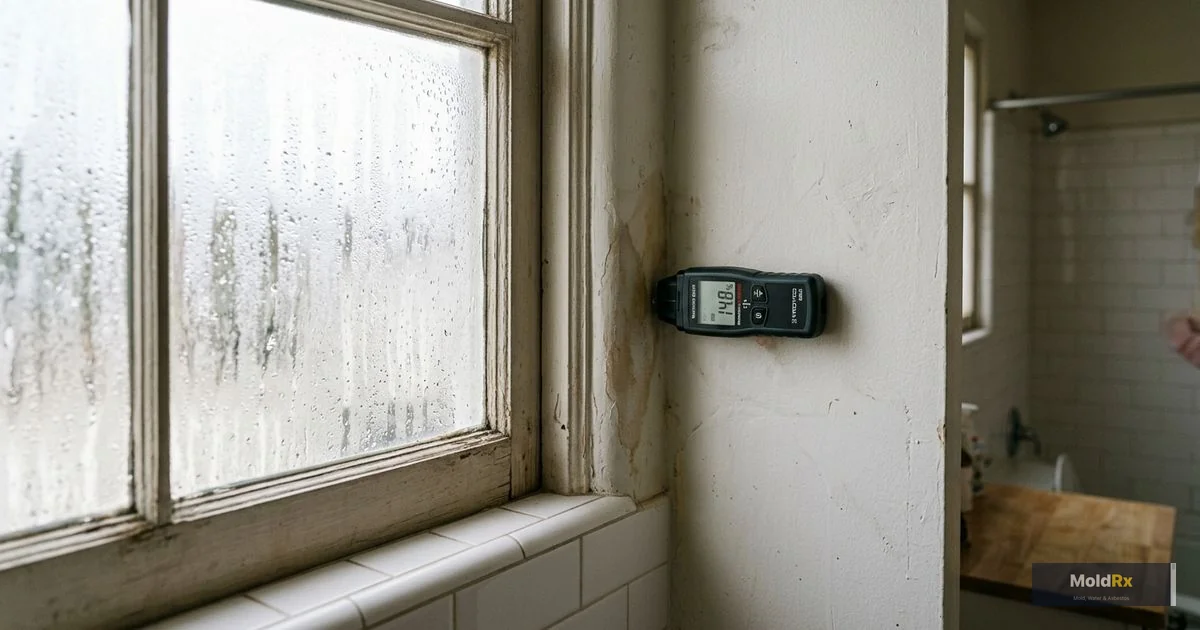
Southern California averages 12 to 15 inches of rain per year, compared to 50 in Atlanta or 37 in Seattle. That sounds like a major advantage against mold. But annual rainfall totals tell a misleading story.
Mold doesn't need it to rain all year. It needs moisture on building materials for more than 24 to 48 hours. A single plumbing leak, a few days of rain, or persistent condensation behind a wall provides more than enough. What matters is whether moisture reaches building materials and whether it dries before mold can colonize. In Southern California, the answer to both questions creates more mold problems than homeowners expect.
The dry climate also creates a dangerous blind spot: people here don't look for mold because they don't think it can happen. A homeowner in Florida checks behind the bathroom vanity. A homeowner in Irvine or Riverside assumes they're safe. That delayed recognition means mold problems in SoCal homes are frequently more advanced by the time they're discovered.
Five SoCal-Specific Mold Risk Factors
Mold in Southern California isn't caused by one thing. It's caused by a convergence of climate patterns, construction practices, and infrastructure characteristics that are unique to this region. Understanding each one explains why mold is far more common here than the weather would suggest.
1. Coastal Humidity Is Higher Than People Think
Coastal areas from San Clemente to Huntington Beach regularly experience relative humidity levels of 70% to 85% — particularly during morning and evening hours and throughout the summer marine layer season. May through September brings "May Gray" and "June Gloom" — weeks of persistent coastal fog that keeps humidity elevated. Homes within a few miles of the ocean sit in this moisture-rich environment for months at a time.
That sustained humidity penetrates building envelopes. It condenses on cooler surfaces inside exterior walls, accumulates in poorly ventilated spaces, and provides the chronic moisture that supports mold growth. Bathrooms and kitchens already produce significant indoor moisture — add ambient coastal humidity, and the interior environment can rival traditionally "humid" climates.
Homes in Newport Beach, Laguna Beach, Dana Point, and Costa Mesa are not immune to mold. They're among the most susceptible in the region.
2. Concentrated Rainfall Overwhelms Structures
Southern California doesn't get much rain — but when it rains, it rains hard. The region's precipitation is heavily concentrated into a few months (November through March) and often arrives in intense storms rather than gentle, sustained rainfall. Atmospheric rivers can dump several inches in a single day — sometimes more in a 48-hour window than the region typically sees in a month.
This pattern matters because SoCal homes aren't built for heavy rain the way homes in high-rainfall climates are. Flashing details, waterproofing, and drainage systems are often adequate for light rain but overwhelmed by intense storms. Water finds its way behind stucco, through window and door penetrations, into roof-to-wall transitions, and into any gap or deterioration in the building envelope.
After the rain stops, the sun comes out, everything looks dry on the surface — but inside wall cavities, under flooring, and behind exterior cladding, materials that absorbed water during the storm may not dry for days or weeks. That interior moisture is invisible, and the dry conditions outside make homeowners assume the problem resolved itself. It didn't.
The seasonal cycle also creates cumulative damage over years. Caulk and sealants degrade, flashing loosens, stucco develops hairline cracks. Each storm finds its way deeper into the building envelope than the last, creating an escalating mold risk that builds year after year.
3. Stucco Traps Moisture Behind Walls
Stucco is the dominant exterior cladding in Southern California — the overwhelming majority of homes in Orange County, Riverside County, and San Bernardino County are finished in stucco, often applied over sheathing with only a thin layer of building paper as a moisture barrier.
Stucco is porous. It absorbs rain, irrigation overspray, and ambient moisture. Under ideal conditions — proper drainage planes, flashing at windows and transitions, weep screeds at the base — it dries outward before moisture reaches the wall cavity.
In practice, many SoCal homes — particularly those built during the construction booms of the 1970s through early 2000s — have stucco installations with compromised or missing drainage planes, inadequate flashing around windows and doors, weep screeds buried by landscaping or hardscape, and cracks from settling or seismic movement.
When stucco absorbs moisture and can't dry outward fast enough, moisture migrates inward — through degraded building paper, into the sheathing, framing, and insulation. This is where mold grows: on the hidden side of building materials, inside the wall cavity, invisible from both the interior and exterior of the home.
What makes stucco-related mold problems particularly insidious is duration. A leak through a stucco wall doesn't announce itself the way a roof leak does. There's no ceiling stain, no dripping water. Instead, moisture slowly saturates wall cavity materials over months or years. By the time the homeowner notices signs of mold behind walls — a musty smell, paint bubbling, discoloration at a baseboard — the problem behind the stucco can be extensive.
4. Slab-on-Grade Construction and Hard Water Create a Hidden Moisture Source
The vast majority of Southern California homes are built on slab-on-grade foundations — the concrete slab sits directly on the ground, with no basement or crawl space beneath. Plumbing supply and drain lines run through or beneath this slab.
This creates two intersecting mold risks.
First, slab leaks are endemic to this region. Hard water — high in dissolved calcium and magnesium — causes pinhole corrosion in the copper pipes running under the slab. Once corrosion breaches the pipe wall, water escapes under the foundation and migrates upward into flooring materials, baseboards, and lower wall cavities. Because slab leaks are hidden beneath concrete, they often run for weeks or months before detection — more than enough time for mold to establish itself.
Second, the slab itself can wick moisture. Even without a plumbing leak, concrete slabs transmit ground moisture into the home — particularly in older homes where vapor barriers beneath the slab are absent or degraded. This is more pronounced after heavy rains when soil moisture increases.
Inland areas like Corona, Temecula, Murrieta, and communities throughout the Inland Empire tend to have harder water than coastal cities, making pinhole corrosion and slab leaks even more common. The combination of hard water, copper pipes, expansive soils, and slab construction makes this one of the highest-risk regions for slab-leak-related mold in the country.
5. HVAC Condensation in Desert and Inland Communities
Desert and inland communities face a different mold vector: air conditioning. When outdoor temperatures push past 100 degrees for weeks — common in Palm Springs, Palm Desert, Indio, Cathedral City, Redlands, and the high desert cities of Victorville and Hesperia — AC runs nearly continuously from May through October.
That constant cooling creates temperature differentials between conditioned interior air and hot exterior surfaces. Condensation forms on ductwork running through hot attics, on the backside of exterior walls, inside wall cavities where insulation is insufficient, and around HVAC penetrations. In attics exceeding 140 degrees in SoCal summers, imperfectly sealed duct connections sweat profusely.
HVAC systems also produce condensate during normal operation. When condensate drain lines clog or crack — common with aging systems — water overflows into surrounding materials. A condensate leak in an attic or closet can saturate drywall and insulation for weeks before anyone notices.
Homeowners see 110 degrees and single-digit humidity outside and assume mold is impossible. Meanwhile, their air conditioning is creating a condensation factory inside the building envelope.
Regional Breakdown: Where SoCal Mold Shows Up
Mold risk in Southern California isn't uniform. The specific factors driving mold growth shift based on where in the region you live.
Coastal Orange County
Primary risk factors: coastal humidity, marine layer moisture, stucco moisture intrusion, aging construction stock.
Homes from San Clemente through Dana Point, Laguna Beach, Newport Beach, Costa Mesa, and Huntington Beach sit in the highest ambient humidity zone. Marine layer moisture penetrates building envelopes, particularly in homes with compromised stucco, aging windows, or poor ventilation. The most common mold locations: exterior wall cavities, bathroom walls, and spaces around windows where condensation accumulates.
Inland Empire
Primary risk factors: slab leaks, hard water, expansive soils, concentrated rainfall, stucco trapping moisture.
Riverside County and San Bernardino County homes face the full combination of slab-on-grade construction, some of the hardest water in the region, expansive clay soils, and stucco exteriors. Cities like Riverside, Corona, Rancho Cucamonga, Ontario, Fontana, Temecula, and Murrieta see high rates of slab-leak-related mold and stucco moisture intrusion. Most common locations: beneath flooring and at wall bases (slab leaks), inside exterior wall cavities (stucco and rain intrusion), and in attic spaces (HVAC condensation).
Desert Communities
Primary risk factors: HVAC condensation, extreme temperature differentials, aging infrastructure in older resort and retirement communities.
The Coachella Valley and high desert experience the most extreme temperature differentials in the region. Air conditioning runs for extended seasons and creates persistent condensation risk throughout the building envelope. Many desert communities also have older housing stock — 1960s and 1970s construction in Palm Springs, Palm Desert, and Cathedral City — with outdated insulation, aging HVAC systems, and plumbing nearing or past its expected lifespan.
The most common mold locations in desert homes: around HVAC systems and ductwork (condensation), in attic spaces, and in bathrooms where ventilation is often inadequate for the moisture load.
Construction Era Risks: When Your Home Was Built Matters
The decade your Southern California home was built significantly affects its mold vulnerability. Millions of existing homes were built under older standards, and each era carries its own risks.
Pre-1960s: No vapor barrier under the slab, galvanized steel plumbing that corrodes from the inside out, minimal insulation, single-pane windows. Mold risk comes from aging infrastructure and decades of deferred maintenance on the building envelope.
1960s-1970s: Slab-on-grade construction with copper plumbing became the standard. Stucco dominant, single-layer building paper as the moisture barrier. These homes are now 50 to 65 years old — the copper plumbing is at or past the onset of pinhole corrosion, making them among the highest-risk for slab leaks and the resulting mold.
1980s-1990s: Rapid development prioritized volume. Stucco installations frequently cut corners on drainage planes and flashing. These homes are 30 to 45 years old — old enough for caulk, sealants, and building paper to have degraded, but not old enough that most owners have replaced them.
2000s: Improved materials in some cases (PEX plumbing resists corrosion) but continued stucco-centric exteriors with varying moisture management quality. Some developments used synthetic stucco (EIFS) that proved problematic for moisture trapping.
2010s and later: Modern codes require improved moisture barriers and drainage planes behind stucco. Better moisture management overall — but tight, energy-efficient building envelopes can trap moisture if ventilation is inadequate. No era is immune.
What Southern California Homeowners Should Do
Understanding that your SoCal home is vulnerable to mold is the first step. Here's what that knowledge should translate into.
Know Your Home's Specific Risk Profile
Start with the basics: when was your home built, what type of plumbing does it have, is the exterior stucco, is it built on a slab? Cross-reference that with your location — coastal humidity zone, inland hard-water zone, or desert temperature-differential zone. This tells you which risk factors apply most directly to your property.
Watch for Early Warning Signs
Signs of mold behind walls include musty odors that persist or recur, paint bubbling or peeling on exterior walls, discoloration at baseboards, warping or soft spots in drywall, and allergy or respiratory symptoms that improve when you leave home. In SoCal specifically, also watch for warm spots on slab floors (indicating a possible slab leak), water bill increases with no change in usage, stucco cracks developing near windows and transitions, and condensation on ductwork or around HVAC components.
Don't Ignore Water Events
When a pipe bursts, rain leaks in, or an appliance fails, the instinct to clean up the visible water and move on is strong — especially in a dry climate where "it'll dry out" feels like a reasonable assumption. But mold can begin growing within 24 to 48 hours if materials don't dry thoroughly, including inside wall cavities and beneath flooring where you can't see. Treating water events seriously — with proper drying and, when needed, professional water damage restoration — prevents the vastly more expensive mold remediation that follows.
Maintain Your Building Envelope
For stucco homes: inspect caulk around windows and doors annually, keep landscaping and irrigation away from the foundation, ensure weep screeds aren't buried, and address stucco cracks promptly. For all homes: maintain your roof, clean gutters, and ensure drainage moves water away from the foundation.
Get Professional Assessment When Something Seems Off
Southern California homeowners tend to dismiss early mold indicators because they don't believe mold is possible in their climate. A musty smell, recurring stains, unexplained allergy symptoms, or any evidence of hidden moisture warrants professional evaluation. Mold testing provides objective data about whether mold is present, and catching a problem early means smaller scope, lower cost, and less disruption.
Southern California Mold: 10 FAQs
Do Southern California homes really get mold?
Yes — frequently. Mold is among the most common issues addressed by restoration companies throughout Orange County, Riverside County, and San Bernardino County. The dry climate reputation leads to underestimation, not absence.
What types of mold are most common in SoCal homes?
The same species found nationwide: Aspergillus, Penicillium, and Cladosporium are the most prevalent. Stachybotrys chartarum (often called "black mold") occurs wherever cellulose-based materials like drywall remain wet for extended periods. The type matters less than the moisture conditions allowing growth.
Is mold worse near the coast or inland?
Different, not necessarily worse. Coastal homes face persistent humidity. Inland homes face slab leaks, hard water, and concentrated rain events. Desert homes face HVAC condensation. Each microclimate has its own dominant risk factors. No part of Southern California is immune.
Can mold grow in a house that's never had a leak?
Yes. Condensation, high indoor humidity from cooking and showering without adequate ventilation, and ambient moisture penetrating through exterior walls or slabs can all provide enough moisture for mold growth — without any plumbing failure or water event.
How do I know if my stucco is letting moisture in?
Look for staining or discoloration on interior walls (especially below windows), musty odors near exterior walls, paint failure on the interior side of exterior walls, and visible stucco cracks on the outside. A professional moisture assessment using meters and thermal imaging can confirm moisture inside the wall cavity without destructive investigation.
Should I worry about mold when buying a home in Southern California?
Yes. A standard home inspection may not evaluate for hidden mold. If the home has stucco exterior, slab-on-grade construction, original copper plumbing, or any water damage history, requesting a professional mold test as part of the purchase process is a reasonable precaution.
Does running the AC help prevent mold?
It can, if the system functions properly. Air conditioning lowers indoor humidity, which helps keep materials dry. But an oversized system that short-cycles won't dehumidify effectively, and a system with leaking ductwork or a clogged condensate line can actually introduce moisture.
My home smells musty only during certain seasons. Is that mold?
Likely yes. Mold produces volatile organic compounds that create musty odors, and the smell intensifies when conditions promote activity — rainy season, humid summer months along the coast, or when HVAC systems push air through affected cavities. A seasonal musty smell that returns year after year indicates an active colony.
Can I just run a dehumidifier instead of dealing with the mold?
A dehumidifier manages ambient humidity but doesn't address mold already established in building materials. Once mold has colonized drywall, wood, or insulation, it needs to be physically removed. A dehumidifier is part of prevention, not a substitute for remediation.
How long does it take for a small mold problem to become a big one?
It depends on the moisture source. A continuous source like a slab leak allows mold to spread steadily — what starts behind one baseboard section can reach an entire wall cavity within weeks. If the moisture source is still active, the problem is still growing.
Protect Your SoCal Home
Southern California's mold vulnerability is real, specific, and more common than the sunshine suggests. The factors driving it — coastal humidity, concentrated rainfall, stucco exteriors, slab-on-grade plumbing, and HVAC condensation — aren't going away. But the damage they cause is manageable when homeowners understand the risk and respond to early warning signs instead of assuming they're immune.
If you're seeing signs of mold, smelling something you can't explain, or dealing with water damage in your home, don't let the dry-climate assumption delay your response.
MoldRx coordinates professional mold testing and mold remediation throughout Orange County, Riverside County, and San Bernardino County — from the coast to the desert. We'll assess your situation honestly and tell you whether professional intervention is needed or whether you're fine.
Call (888) 609-8907 or request a free estimate to talk through what you're dealing with.