You know you want your home tested for mold, but when you start researching how testing works, you discover there are several methods -- each designed for different situations -- and choosing the wrong one means paying for information that doesn't answer your actual question.
There are three main types of mold testing: air sampling, surface sampling (tape lifts, swabs, and bulk samples), and ERMI testing. Air sampling tells you what's in the air you're breathing. Surface sampling identifies what's growing on a specific material. Bulk sampling analyzes the material itself. The right choice depends on what you're trying to learn. Most professional mold testing involves some combination of these methods, tailored to the situation.
This guide covers how each method works, what it can and can't tell you, and which one fits your specific situation -- whether that's tracking down a musty smell, identifying a suspicious stain, buying a home, or verifying that remediation was successful.
Air Sampling (Spore Trap Analysis)
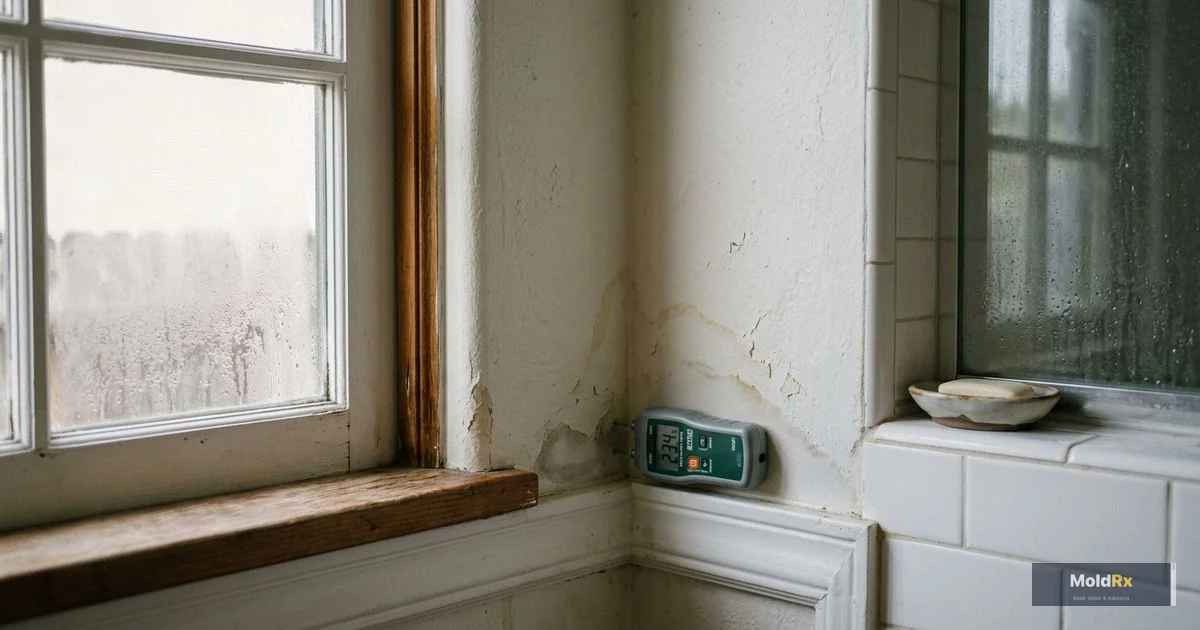
Air sampling is the most commonly used method in professional mold testing and the backbone of most indoor air quality assessments. If you hire an inspector for a general mold evaluation, this is almost certainly what they'll use.
How It Works
A calibrated pump draws a measured volume of air -- typically 75 or 150 liters -- through a collection cassette called a spore trap. The cassette contains a sticky surface that captures airborne particles, including mold spores. The pump runs at a known flow rate for a set duration, so the laboratory can calculate spore concentrations per cubic meter of air.
Samples are collected from multiple locations: rooms where you have concerns, unaffected rooms for comparison, and outside the home to establish a baseline for what's normal in the ambient environment that day. All cassettes go to an AIHA-accredited laboratory, where an analyst identifies and counts mold spores under a microscope. The result is a report listing which mold genera were found at each location and their concentrations.
What It Tells You
Air sampling answers several important questions:
Are indoor mold levels elevated compared to outdoor levels? A healthy building acts as a partial filter -- indoor spore counts should generally be lower than outdoor counts. When indoor levels exceed outdoor levels, it signals an indoor mold source.
Which mold types are present? The laboratory identifies spores to the genus level. Finding common outdoor molds like Cladosporium at levels comparable to the outdoor control is normal. Finding water-damage indicators like Stachybotrys or Chaetomium -- which rarely appear in outdoor air -- is significant regardless of the count.
Is there hidden mold you can't see? This is one of air sampling's greatest strengths. Mold growing inside wall cavities, under flooring, or behind cabinetry releases spores into the air even when the colony itself is invisible. Elevated indoor Aspergillus/Penicillium with low outdoor levels is one of the most common patterns indicating hidden mold.
Limitations
It's a snapshot in time. Each sample represents a five- to ten-minute window. Spore levels fluctuate with humidity, temperature, and air movement, so a single round of sampling can miss intermittent problems.
It can't pinpoint the source. Elevated counts tell you an indoor source exists but not whether it's in a wall, under flooring, or in the HVAC system. Air sampling identifies the problem; investigation locates it.
It can't distinguish all species. Aspergillus and Penicillium spores look nearly identical under a microscope, so they're reported as a combined group. If species-level identification matters -- for medical reasons, for example -- you'll need culture-based or PCR analysis.
Some mold types don't become airborne easily. Stachybotrys produces dense, sticky spores that cling to surfaces. A colony can exist behind a wall and not show up in every air sample. Not finding Stachybotrys doesn't guarantee it isn't there.
When to Use Air Sampling
- You smell mold but can't find the source
- You suspect hidden mold behind walls or under flooring
- You want a general assessment of indoor air quality
- You're buying or selling a home and need baseline documentation
- You need clearance testing after remediation
- Someone in your household has unexplained respiratory symptoms that improve away from home
Surface Sampling
Where air sampling captures what's floating in the environment, surface sampling examines what's actually growing on or deposited on a specific material. It's a targeted method -- you're testing a particular spot, not the room as a whole.
There are three main forms of surface sampling, each suited to different situations.
Tape Lift Sampling
A piece of clear adhesive tape is pressed against the suspect surface, peeled off, and placed on a microscope slide for laboratory analysis. Tape lifts reveal whether mold is actively growing on a surface -- indicated by the presence of hyphae (thread-like growth structures) -- or whether spores are simply deposited there from the air. This distinction matters because active growth means moisture has supported colonization at that location, while settled spores may be normal background deposition.
Tape lifts work well on smooth, accessible surfaces and are the most common surface sampling method. They're frequently used during clearance testing to verify that treated surfaces are free of residual contamination.
Swab Sampling
A sterile swab is rubbed across the suspect surface and sent to a laboratory. Swabs serve a similar purpose to tape lifts but work better on irregular, rough, or recessed surfaces where tape can't make good contact -- inside HVAC components, on rough-sawn framing, or in crevices. When cultured rather than examined microscopically, swab samples can provide species-level identification that tape lifts and spore traps cannot. If your doctor needs to know which Aspergillus species is involved, a cultured swab from the growth area can provide that answer.
Bulk Sampling
A physical piece of the suspect material -- drywall, carpet, insulation, wood -- is removed and sent to the laboratory. Bulk sampling reveals whether mold growth has penetrated below the surface, which is a critical distinction for remediation planning. Surface mold on wood framing can sometimes be cleaned; mold that has grown into the wood fibers may require removal of the material entirely. Bulk samples also provide the most reliable species identification when analyzed by culture. This method is most useful for determining whether a material can be salvaged, for construction defect investigations, and for insurance claims where detailed documentation matters.
Limitations of Surface Sampling
It can't tell you what's in the air. Surface sampling only addresses the specific spot you tested. Mold on a surface doesn't necessarily mean the air is contaminated (it might be sealed behind paint or encapsulated), and clean surfaces don't mean the air is clean (spores could be entering from elsewhere).
It requires knowing where to sample. Unlike air sampling, which can detect hidden mold by capturing airborne spores, surface sampling requires you to already have a suspect location. You can't swab a random wall and expect useful information -- the method is only as good as the inspector's ability to identify the right spots to test.
Results are location-specific. A tape lift from one square inch of framing doesn't characterize the entire wall. An experienced inspector samples strategically, but surface results should be interpreted as evidence about a particular area, not a comprehensive assessment of the building.
ERMI Testing
The Environmental Relative Moldiness Index -- ERMI -- is a specialized DNA-based mold assessment method that generates a single numerical score representing the overall "moldiness" of a home. It has devoted proponents and significant critics, and understanding what it actually is helps you decide whether it's appropriate for your situation.
What It Is and How It Works
ERMI was developed by EPA researchers in the mid-2000s as a research tool for studying the relationship between indoor mold exposure and health outcomes -- particularly childhood asthma. The method uses DNA analysis (MSQPCR) to identify and quantify 36 specific mold species in a dust sample collected by vacuuming a defined area of floor.
Those 36 species are divided into two groups: 26 associated with water-damaged buildings (Group 1) and 10 common outdoor species (Group 2). The ERMI score -- typically ranging from about -10 to 20 -- is calculated by subtracting Group 2 from Group 1. Higher numbers indicate a greater burden of water-damage-associated species. Because ERMI analyzes accumulated dust rather than a snapshot of airborne spores, it reflects mold exposure over weeks to months rather than minutes.
When It's Useful
ERMI can be valuable for screening overall mold burden in homes where chronic health concerns warrant a broader picture than a single round of air sampling can provide. Its DNA-based analysis can identify species that standard spore traps cannot distinguish, including differentiating between Aspergillus species and detecting Stachybotrys even when it's not actively releasing spores.
Limitations and Controversy
The EPA itself cautions against using ERMI for individual home assessments. The agency has stated that ERMI was developed as a research tool and has not been validated for making decisions about individual properties.
Sampling methodology varies. The original protocol specifies carpet dust collection, but many homes have hard flooring, and collection methods for hard surfaces are less standardized.
It doesn't replace air sampling. ERMI doesn't tell you which room has the problem, whether the mold is active or historical, or what current airborne spore levels are. It's a screening tool, not a diagnostic one. It costs significantly more than standard spore trap analysis and is not accepted for clearance testing.
Side-by-Side Comparison
| Air Sampling (Spore Trap) | Surface Sampling (Tape/Swab/Bulk) | ERMI | |
|---|---|---|---|
| What it detects | Airborne mold spores by genus | Mold growth and spores on specific surfaces | DNA of 36 mold species in settled dust |
| Identification level | Genus (Aspergillus/Penicillium grouped) | Genus (microscopy) or species (culture) | Species |
| Time frame represented | Minutes (snapshot) | Current surface conditions | Weeks to months (accumulated dust) |
| Relative cost | Low to moderate | Low to moderate | Higher |
| Typical turnaround | 1-3 business days | 1-3 business days (microscopy), 5-10 days (culture) | 5-10 business days |
| Best for | General air quality assessment, hidden mold detection, clearance testing | Identifying growth on known suspect areas, species ID, material evaluation | Long-term exposure screening, research, species-level identification |
| Accepted for clearance | Yes | Yes (supplemental) | No |
| Outdoor comparison | Yes (outdoor control sample) | Not applicable | Yes (built into scoring system) |
Which Type of Testing for Your Situation
Different situations call for different methods. Here's a practical guide to matching your concern to the right testing approach.
"I smell mold but can't find it."
Primary method: Air sampling. A musty odor without a visible source suggests hidden growth. Air sampling detects whether elevated mold levels exist and can indicate the general area based on which rooms show the highest counts.
"I can see something growing and want to know what it is."
Primary method: Surface sampling (tape lift or swab). If identification is the goal, go to the source. Bulk sampling is appropriate if you need to know how deeply the mold has penetrated the material.
"I'm buying a home and want to check for mold."
Primary method: Air sampling. Pre-purchase mold testing uses air sampling because it provides the broadest picture of indoor air quality and can reveal hidden problems that a visual inspection alone would miss. Surface sampling may be added if the inspector finds suspect areas. Our guide on whether you need a mold test covers the real estate testing decision in more detail.
"Remediation is finished and I need verification."
Primary method: Air sampling, supplemented by surface sampling. Clearance testing compares post-remediation air quality to outdoor baselines and unaffected areas. Surface sampling (typically tape lifts) supplements it by verifying treated materials are free of residual contamination.
"I need to know the exact species for medical reasons."
Primary method: Culture-based surface sampling or ERMI. Standard spore trap analysis cannot provide species-level identification. A cultured swab or bulk sample from the suspected growth area, or an ERMI analysis of settled dust, can identify mold to the species level.
"I have chronic symptoms and want to understand long-term exposure."
Consider: ERMI combined with air sampling. ERMI's analysis of accumulated dust provides a broader picture of mold exposure over time. Combined with air sampling for current conditions, this gives you and your healthcare provider a more complete picture.
How Many Samples Do You Need?
More samples means more data, but there's a point of diminishing returns.
For a standard residential assessment, three to five air samples is typical: one outdoor control and two to four indoor locations. Larger homes or multiple areas of concern may warrant five to eight indoor samples.
For clearance testing, you need at minimum one sample from inside the containment, one from an unaffected indoor area, and one outdoor control. The IICRC S520 standard provides guidance on appropriate sampling density for larger projects.
For surface sampling, each visible growth area or suspect location warrants its own sample.
The outdoor control is non-negotiable. Every air sampling event needs at least one outdoor sample. Without it, indoor results lack context and cannot be meaningfully interpreted. For more on interpreting the relationship between indoor and outdoor results, see our guide on how to read mold test results.
Frequently Asked Questions
What is the most common type of mold testing?
Air sampling using spore traps. It's the standard for general air quality assessments, clearance testing, and real estate transactions because it provides a quantitative comparison between indoor and outdoor environments. Most professional inspections use air sampling as the primary method, sometimes supplemented by surface samples.
Can one type of test replace all the others?
No. Each method answers a different question -- what's in the air, what's on a surface, what's penetrated into a material, or what species have accumulated over time. Using the wrong method means paying for information that doesn't address your actual concern.
What is a spore trap, and how is it different from a culture test?
A spore trap captures airborne particles on a sticky surface for microscopic identification -- counting all spores whether alive or dead (non-viable analysis). Culture testing grows living organisms on nutrient media, providing species-level identification but only counting viable spores. Spore traps are faster and less expensive; culture tests take longer but give more specific results.
Is ERMI testing better than standard air sampling?
Not better -- different. ERMI assesses long-term mold exposure through dust DNA analysis and can identify species spore traps cannot distinguish. But the EPA has stated it was not designed for individual home decisions. For most practical questions -- is there a current problem, did remediation work -- standard air sampling is more appropriate and widely accepted.
How long does it take to get mold test results?
Standard spore trap and tape lift results typically come back within one to three business days. Culture-based and ERMI analyses take five to ten business days. Rush processing is available at additional cost.
Do I need both air and surface sampling?
Not always. Air sampling alone is sufficient for general air quality assessment or clearance testing. Surface sampling alone works when you have visible growth and just want identification. When the situation is complex -- hidden mold suspected, health concerns, insurance documentation -- using both reduces the chance of missing something.
What's the difference between viable and non-viable mold testing?
Non-viable testing identifies mold by appearance under a microscope, counts all spores (living, dead, fragments), and provides genus-level identification. Viable testing grows living organisms on nutrient media for species-level identification. The choice depends on whether genus-level data is sufficient or species-level identification is needed.
Can mold testing detect mold inside walls?
Air sampling can often detect it indirectly. Mold in concealed spaces releases spores that migrate through gaps, outlets, and plumbing penetrations into the living space. Elevated indoor levels without a visible source are one of the most common indicators of hidden growth. However, well-sealed cavities may not always show up in air sampling, which is why thorough investigation includes both testing and physical inspection.
Should I use a home test kit or hire a professional?
Professional testing. Retail settle-plate kits cannot measure spore concentrations, cannot provide indoor/outdoor comparison, and are prone to false positives because mold spores are always present. If the situation warrants testing, it warrants doing it correctly.
How do I know if my inspector is using the right testing method?
A qualified inspector will explain which methods they're recommending and why before collecting samples. Key questions: Are they collecting an outdoor control? Using a calibrated pump? Sending samples to an AIHA-accredited laboratory? If the answer to any of these is no, consider a different provider.
Choose the Right Test for the Right Question
Mold testing isn't one-size-fits-all. The value of any test depends on whether it's the right method for the question you're actually asking. Air sampling excels at detecting hidden problems and establishing overall air quality. Surface sampling identifies what's growing on a specific material. Bulk sampling evaluates how deeply contamination has penetrated. ERMI provides a longer-term exposure picture. Most professional assessments combine methods strategically to give you a complete answer.
The worst outcome isn't a concerning test result -- it's spending money on the wrong type of test and ending up with information that doesn't help you make a decision.
MoldRx provides professional mold testing and remediation throughout Southern California. Whether you need a general air quality assessment, species identification for a health concern, or clearance verification after remediation, we'll recommend the testing approach that actually answers your question -- and if testing isn't necessary, we'll tell you that too.
Call (888) 609-8907 or request a free estimate to discuss which type of testing fits your situation.