If Your Attic Has Vermiculite Insulation, Assume It Contains Asbestos Until Proven Otherwise
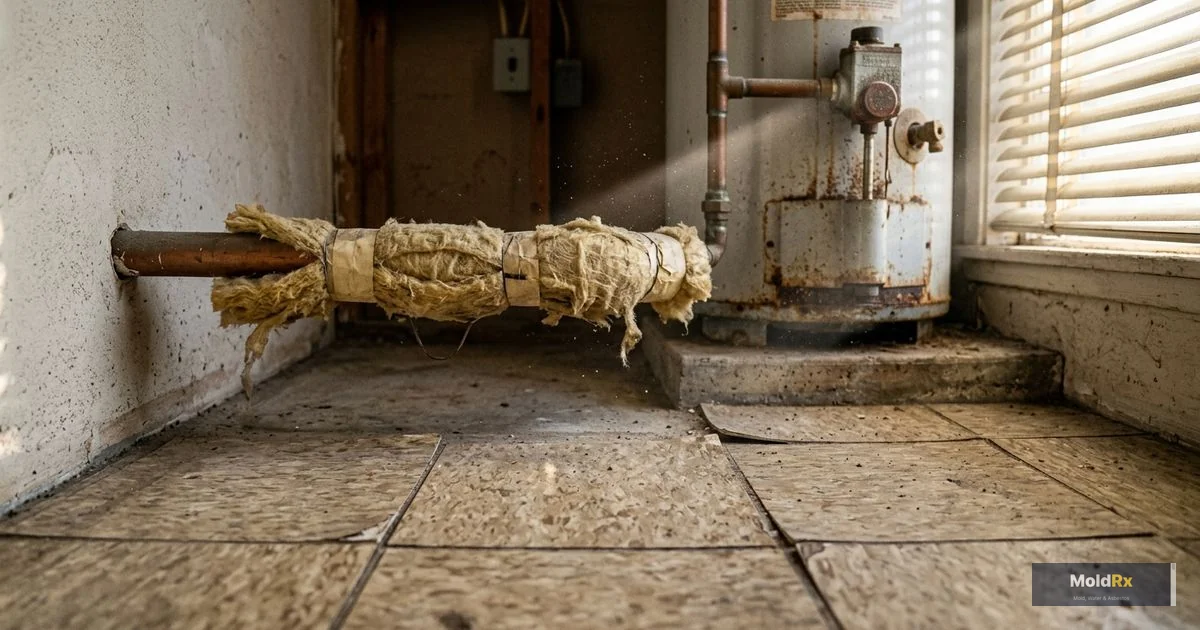
Here is the bottom line: if your attic contains loose-fill vermiculite insulation — the small, accordion-like granules that look like grayish-gold pebbles — you should treat it as asbestos-containing material until professional laboratory testing proves otherwise. Roughly 70% of all vermiculite sold in the United States between the 1920s and 1990 came from a single mine near Libby, Montana, and that mine was contaminated with tremolite asbestos, one of the most hazardous forms of the mineral.
That is the EPA's own assessment — not a worst-case estimate. The EPA recommends treating all vermiculite insulation as if it contains asbestos unless testing confirms otherwise.
This guide explains what vermiculite is, the Libby mine connection, how to identify it, when it becomes dangerous, and what your options are — including a federally established trust fund that may cover part of your removal costs.
What Is Vermiculite?
Vermiculite is a naturally occurring mineral. In its raw form, it looks like small, dark flakes. When heated to approximately 1,000 degrees Fahrenheit, it expands dramatically — up to 15 times its original volume — creating lightweight, fire-resistant granules with excellent insulating properties.
The expanded granules are what you find in attics. They're small — ranging from the size of a pencil eraser to about the size of a dime — with a distinctive accordion-like or layered texture. The color ranges from silver-gold to grayish-brown.
Vermiculite itself is not inherently dangerous. It's used safely in many applications, including gardening and horticulture. The problem isn't the vermiculite. The problem is what came out of the ground with it at one particular mine.
The Libby, Montana Connection
From the 1920s through 1990, a mine near Libby, Montana — owned for most of its history by W.R. Grace and Company — was the world's largest source of commercial vermiculite. It produced an estimated 80% of the world's vermiculite supply during its peak years and approximately 70% of all vermiculite ever sold in the United States.
The vermiculite ore body at Libby was geologically intertwined with a deposit of tremolite asbestos — a particularly hazardous amphibole form of asbestos. Unlike chrysotile (the most common commercial asbestos), tremolite fibers are especially sharp, durable, and biopersistent. They resist the body's attempts to break them down even more stubbornly than chrysotile.
The contamination was not a trace impurity. Testing of Libby vermiculite has found asbestos concentrations ranging from less than 1% to over 26% by weight depending on the batch, with multiple amphibole types present.
The consequences for Libby were devastating — hundreds of residents developed asbestos-related diseases, and the town was declared an EPA Superfund site in 1999 and a federal public health emergency in 2009. But the contamination didn't stay in Libby. The mine's vermiculite was shipped to processing plants across the country and sold under multiple brand names. It went into millions of homes.
Zonolite: The Brand Name You Need to Know
The most widely recognized brand of vermiculite attic insulation from the Libby mine was Zonolite. If you find bags, packaging, or any reference to "Zonolite" in connection with your attic insulation, that product originated from the Libby mine and should be presumed to contain asbestos.
However, the absence of Zonolite branding does not mean your vermiculite is safe. Libby vermiculite was distributed through numerous processing plants and sold under various names. The EPA's guidance is clear: all vermiculite insulation should be assumed to contain asbestos unless tested and proven otherwise, because the Libby mine's output dominated the market for decades.
How to Identify Vermiculite Insulation in Your Attic
Vermiculite attic insulation has a distinctive appearance that sets it apart from other types of loose-fill insulation. Knowing what to look for — and what not to do once you find it — is critical.
What It Looks Like
Vermiculite insulation appears as a layer of small, loose granules covering the attic floor between and over the ceiling joists. The granules are roughly pebble-sized — typically one-eighth inch to one-half inch — with a layered, accordion-like structure. They look like tiny, flattened, folded pieces of mica.
The color is most commonly a mix of silver, gold, gray, and brown tones. Some granules may appear almost metallic. Aged vermiculite may be dusty, darker than its original color, or partially broken down into smaller fragments.
How It Differs from Other Loose-Fill Insulation
Fiberglass loose-fill is fluffy, cotton-candy-like material, usually pink, yellow, or white. It looks nothing like vermiculite's distinct pebble-like granules.
Cellulose loose-fill appears as gray, dense, shredded material — like ground-up newspaper (which is essentially what it is). It's fibrous and fluffy, not granular.
Perlite is the most commonly confused material. Perlite granules are small and lightweight like vermiculite, but they are bright white, round, and lack the layered accordion texture. Vermiculite is distinctly darker and more angular.
What Not to Do
If you see material matching this description, do not touch it, walk through it, disturb it, or attempt to collect a sample yourself. Do not sweep it, vacuum it, or try to bag it. Every disturbance of asbestos-containing vermiculite releases microscopic fibers that can remain airborne for hours and cause irreversible lung disease.
Visual identification tells you testing is needed. Only professional laboratory testing can confirm whether asbestos is present.
When Vermiculite Insulation Becomes Dangerous
Vermiculite insulation that contains asbestos follows the same fundamental rule as all asbestos-containing materials: it is most dangerous when disturbed. Understanding what constitutes disturbance helps you avoid accidentally creating a hazard. For a broader understanding of when asbestos poses health risks, see our guide on whether asbestos is dangerous.
Renovation and Remodeling
Any attic project that disturbs vermiculite is high-risk — adding new insulation on top, installing flooring or storage platforms, converting attic space, running electrical or data cables, and installing recessed lighting that penetrates the attic floor.
California law requires an asbestos survey before renovation work on pre-1980 structures. If your attic contains vermiculite, any planned work triggers this requirement.
HVAC System Work
This is one of the most overlooked risk scenarios. If your HVAC system has components in the attic — air handlers, ductwork, junction boxes — any maintenance, repair, or replacement work can disturb vermiculite insulation. Fibers released during routine service can enter the duct system and circulate throughout the house.
Leaky ductwork running through vermiculite insulation is a particular concern. If ducts have gaps or deteriorated seals, the HVAC system's pressure dynamics can draw contaminated dust into the airflow and distribute it to every room — even without anyone physically disturbing the insulation.
Entering the Attic and Natural Deterioration
Simply walking through an attic that contains vermiculite insulation disturbs the material. Homeowners who regularly access their attic for storage are repeatedly exposing themselves to potential asbestos fibers.
Over decades, vermiculite granules also break down on their own. Temperature cycling, moisture, and gravity create fine dust that can contain concentrated asbestos fibers. This dust migrates through gaps in the ceiling below — light fixtures, attic hatches, recessed can lights, and any other penetration in the ceiling plane — entering your living spaces even without active disturbance.
The Testing Process
If you've identified what appears to be vermiculite insulation in your attic, professional testing is the responsible next step.
A certified asbestos inspector will collect multiple samples from different locations in the attic using wet techniques and proper containment protocols — because asbestos concentration can vary within a single batch of vermiculite. Do not attempt to collect samples yourself. DIY sampling releases fibers, exposes you to potential asbestos without respiratory protection, and produces results that won't satisfy California regulatory requirements.
Samples are sent to an NVLAP-accredited laboratory for analysis using polarized light microscopy (PLM) and, in some cases, transmission electron microscopy (TEM) for more sensitive detection. Materials containing more than 1% asbestos are classified as asbestos-containing material under both federal and California regulations.
If testing confirms asbestos, the results will identify the type present (typically tremolite if the vermiculite originated from Libby) and the approximate concentration. If testing shows no asbestos, the insulation can be treated as non-hazardous — though you should retain the laboratory report for any future renovation or property sale.
Your Options If Asbestos Is Confirmed
When testing confirms that your vermiculite insulation contains asbestos, you have three primary paths forward. The right choice depends on the insulation's condition, your plans for the attic space, and your long-term goals for the property.
Option 1: Leave It Undisturbed and Manage in Place
If the insulation is in stable condition and you have no plans to disturb it, leaving it in place is a legitimate and EPA-supported option. Management in place means sealing the attic hatch to minimize air exchange, ensuring no gaps exist in the ceiling plane around light fixtures and electrical boxes, ensuring HVAC ductwork is properly sealed, and posting clear warnings at attic access points.
This approach requires vigilance. Anyone who accesses the attic for any reason — pest control, cable installation, roofing contractors, HVAC technicians — must be informed of the asbestos hazard before entering.
Option 2: Professional Removal
If you need to use the attic space, plan to renovate, have deteriorating insulation that's migrating into living spaces, or simply want the material out of your home permanently, professional asbestos removal is the definitive solution.
Removal must be performed by a California-licensed C-22 asbestos abatement contractor. The process involves full containment with sealed plastic sheeting, negative air pressure with HEPA filtration, careful removal using industrial vacuum equipment and wet methods, air monitoring throughout, proper disposal as regulated asbestos-containing material, and post-removal clearance testing by an independent monitor.
This is never a DIY project. The health effects of asbestos exposure are irreversible, and improper removal contaminates your entire home. For details on the professional process, see our guide on what happens during asbestos removal.
Option 3: The Zonolite Attic Insulation Trust
Many California homeowners don't know this exists. As part of W.R. Grace and Company's bankruptcy, the Zonolite Attic Insulation (ZAI) Trust was established to reimburse homeowners for costs related to vermiculite insulation removal.
Eligibility — The trust covers homeowners (not commercial property owners) whose attics contain vermiculite insulation from the Libby mine. You do not need to prove your specific insulation came from Libby — the trust uses a claims process to evaluate eligibility.
What it covers — The trust reimburses a portion of professional removal costs. It does not cover 100%, and the reimbursement amount varies based on available funds and claim volume.
The process — You file a claim through the trust's website (www.zonoliteatticinsulation.com) with documentation of the insulation, the removal work performed, and costs. Claims require proof that a licensed professional performed the work using proper abatement procedures.
Important timing note — File promptly after removal. The trust has specific deadlines and documentation requirements. Your abatement contractor should be familiar with the trust's process.
The ZAI Trust doesn't eliminate the cost of removal, but it can offset a meaningful portion.
California-Specific Considerations
California homeowners face one of the strictest regulatory environments in the nation for asbestos-containing materials.
Cal/OSHA presumption — California regulations presume that thermal insulation in pre-1980 buildings contains asbestos until testing proves otherwise. Vermiculite attic insulation falls squarely within this presumption.
SCAQMD Rule 1403 — In the South Coast Air Quality Management District — covering Orange County, Los Angeles County, Riverside County, and San Bernardino County — Rule 1403 requires an asbestos survey before renovation or demolition work. Any project that would disturb vermiculite insulation triggers this requirement.
Contractor licensing — Removal must be performed by a C-22 licensed asbestos abatement contractor. General contractors, insulation contractors, and handymen are not authorized to perform this work.
Disposal — Asbestos-containing vermiculite must be wetted, double-bagged in labeled 6-mil polyethylene bags, transported by a licensed hazardous waste hauler, and disposed of at an approved facility.
Real estate disclosure — California law requires sellers to disclose known material defects, including known asbestos-containing materials. If you know your attic contains vermiculite insulation — tested or untested — this is disclosable information.
California's housing boom from the 1940s through the 1970s coincided with the Libby mine's peak production years. Vermiculite was actively marketed as an energy-efficient, fire-resistant attic upgrade, and it was poured into homes across the state during these decades. For a broader overview of where asbestos hides in older California homes, see our room-by-room guide.
Vermiculite was also sometimes added later — during the 1970s and 1980s energy conservation push — to homes originally built without it. A home built in the 1950s might have had vermiculite added in 1975. If your home was built before 1990 and has loose-fill granular insulation in the attic that you haven't identified, it's worth a visual check from the attic hatch — without entering the space — to see whether vermiculite might be present.
10 Frequently Asked Questions
1. How do I know if the insulation in my attic is vermiculite?
Vermiculite appears as small, loose, pebble-like granules with a layered or accordion-like texture, colored silver-gold to grayish-brown. It looks nothing like fluffy fiberglass or shredded cellulose. You can often see it from the attic hatch without entering. If you're uncertain, a professional inspector can identify the material during an asbestos testing visit.
2. Is all vermiculite insulation contaminated with asbestos?
Not all — but the majority is suspect. Approximately 70% of vermiculite sold in the United States came from the Libby, Montana mine, which was contaminated with tremolite asbestos. Because there's no way to determine the source of your vermiculite by looking at it, the EPA recommends treating all vermiculite insulation as if it contains asbestos unless laboratory testing confirms otherwise.
3. Can I just put new insulation on top of the vermiculite?
This is strongly discouraged. Adding insulation on top requires working directly over and around the vermiculite — which disturbs it and releases potential asbestos fibers. It also buries the material, making future testing or removal more difficult and expensive. Have the vermiculite tested first and address it properly before adding new insulation.
4. Is it safe to go into my attic if it has vermiculite insulation?
Every entry risks disturbing the material and releasing potential asbestos fibers. The EPA recommends minimizing attic access when vermiculite is present. If you must enter briefly, avoid walking on or through the vermiculite and minimize your time. For any sustained work, professional assessment is necessary first.
5. My vermiculite insulation has been there for 40 years without any problems. Why worry now?
Two reasons. First, vermiculite degrades over time — granules break down into fine dust that can migrate through ceiling penetrations into your living space without active disturbance. Second, any future work in or around the attic — HVAC service, roof repair, renovation, pest control — creates a disturbance risk. Knowing what you're dealing with before a problem occurs is far better than discovering it during an emergency.
6. What is the Zonolite Attic Insulation Trust, and am I eligible?
The ZAI Trust was established during W.R. Grace and Company's bankruptcy to reimburse homeowners for costs associated with removing Libby mine vermiculite insulation from their attics. If you are a homeowner with vermiculite attic insulation that is professionally removed by a licensed abatement contractor, you may be eligible for partial reimbursement. Claims are filed through the trust's website with documentation of the insulation and removal costs.
7. Can my HVAC technician work in the attic if vermiculite is present?
An HVAC technician working in the attic will disturb vermiculite and potentially release asbestos fibers — exposing themselves and potentially introducing fibers into the duct system. Cal/OSHA requires workers be protected from asbestos exposure. Testing should be completed before any HVAC work proceeds in an attic with vermiculite.
8. How much does vermiculite insulation testing cost?
We don't publish pricing because scope varies — attic size, accessibility, and number of samples all affect cost. Call (888) 609-8907 for an honest assessment. Testing is always a fraction of the cost of dealing with improperly disturbed vermiculite.
9. Does vermiculite insulation affect my home's resale value?
Undisclosed vermiculite insulation can complicate a real estate transaction. California requires disclosure of known material defects, and a buyer's inspector may identify vermiculite during the inspection. Having testing results — and documentation of professional removal if applicable — demonstrates responsible ownership and is far less likely to derail negotiations than unaddressed insulation.
10. Can I remove vermiculite insulation myself to save money?
No. DIY removal exposes your household to carcinogenic fibers, contaminates your home, and violates California's asbestos abatement regulations. The health effects are irreversible and may not appear for decades. Professional removal by a licensed C-22 contractor is the only safe and legal approach — and the ZAI Trust may reimburse a portion of the cost.
Test Before You Touch
Vermiculite attic insulation is completely manageable when handled correctly — and potentially devastating when handled carelessly. The difference is almost always whether a homeowner got professional testing before anything was disturbed.
If you've seen granular, pebble-like insulation in your attic, the path forward is straightforward: don't touch it and get it tested. If you know it's vermiculite, assume it contains asbestos, don't disturb it, and get professional confirmation.
MoldRx coordinates professional asbestos testing and asbestos removal services throughout Orange County, Riverside County, and San Bernardino County. Our vetted specialists are California-certified, use NVLAP-accredited laboratories, and give you honest guidance about whether testing is necessary and what your results mean.
Call (888) 609-8907 to talk to a real person about your attic insulation. Or request a free estimate online and we'll get back to you promptly. No scripts, no pressure — just the answers you need to make a safe, informed decision about your home.