The water damage industry classifies all water intrusion events into three categories: Category 1 (clean water) from sanitary sources like broken supply lines, Category 2 (gray water) from sources carrying contaminants like washing machine overflows, and Category 3 (black water) from grossly contaminated sources like sewage backups and floodwater. These categories — defined by the IICRC S500 Standard and Reference Guide for Professional Water Damage Restoration — determine the health risks you face, the protocols required for safe restoration, the equipment needed, and ultimately the scope and cost of getting your property back to normal.
The category is not a technicality. It determines what materials can be saved, what must be removed, what protective equipment is required, and how long the process takes. Getting this wrong puts your health at risk and can turn a manageable restoration into a much larger problem.
Category 1: Clean Water
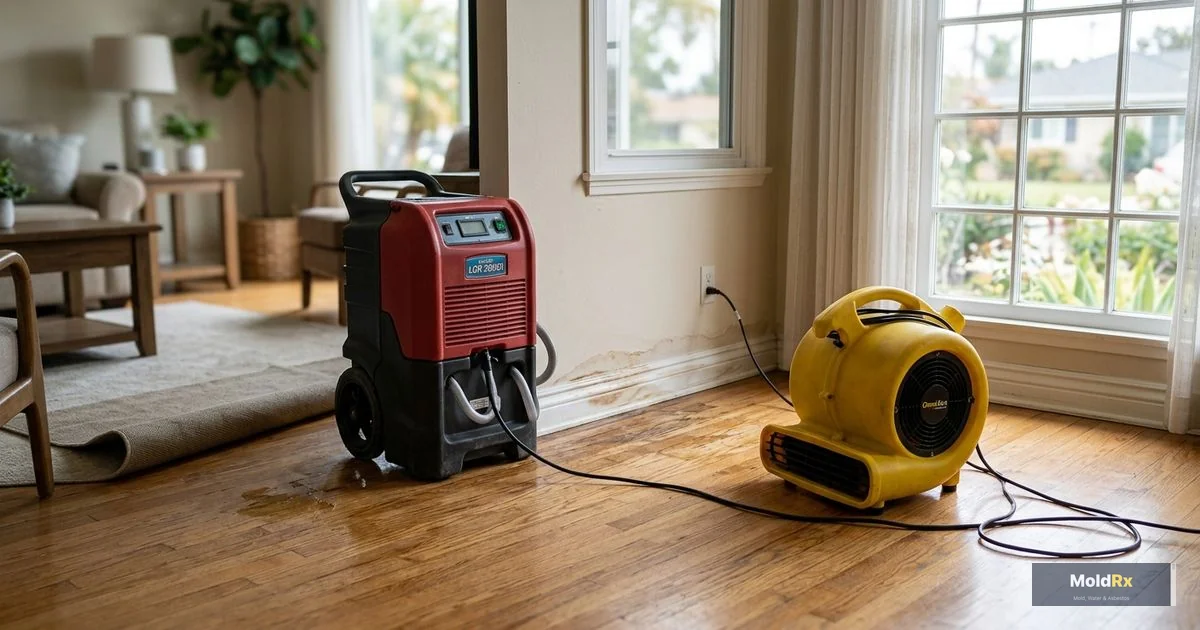
Category 1 water originates from a sanitary source and poses no substantial risk from dermal, ingestion, or inhalation exposure at the time of the loss. This is the most straightforward category to deal with, but "clean" does not mean "harmless" — it means the water itself is not contaminated. The damage it causes to your property is still real and still requires proper response.
Common Sources
- Broken water supply lines — the copper or PEX lines that feed your sinks, toilets, refrigerators, and other fixtures
- Falling rainwater entering through a roof leak or failed flashing (before it contacts stored materials or insulation)
- Toilet tank overflow — specifically the tank (which holds clean supply water), not the bowl
- Tub or sink overflow from a faucet left running, where the water is from the supply line only
- Melting ice or snow entering through windows, doors, or structural openings
Health Risks
Category 1 water is considered safe to contact at the time of the event. Healthy adults face minimal health risk from exposure. However, Category 1 water does not stay Category 1 forever. The moment clean water contacts building materials, it begins picking up contaminants from dust, bacteria on surfaces, chemicals in adhesives, and organic material in drywall and carpet. Left unaddressed, Category 1 water can escalate to Category 2 within 24 to 48 hours.
What Restoration Looks Like
Category 1 events are the most straightforward to restore when addressed quickly. Standard protocols include water extraction with commercial-grade equipment, structural drying with industrial dehumidifiers and air movers, moisture monitoring with professional meters and thermal imaging, and antimicrobial treatment to prevent mold growth during drying.
The salvage potential is highest with Category 1 — most building materials (drywall, carpet, padding, insulation) can often be dried in place rather than removed, significantly reducing cost and disruption.
The key is speed. A clean water event addressed within the first 24 hours is the best-case scenario in water damage restoration. Wait too long, and you lose that advantage — not because the damage gets worse (though it does), but because the category itself escalates.
Category 2: Gray Water
Category 2 water contains significant contamination and has the potential to cause discomfort or illness if contacted or consumed. It carries chemical, biological, or physical contaminants that make it materially different from clean water — and that difference changes everything about how restoration professionals handle the affected area.
Common Sources
- Washing machine overflows — discharge water contains detergents, dirt, body oils, and bacteria
- Dishwasher leaks and overflows — water contains food particles, grease, and bacteria
- Toilet overflow with urine — a bowl overflow without fecal matter (urine alone qualifies as Category 2; fecal contamination elevates to Category 3)
- Sump pump failures — groundwater in sump pits may contain soil bacteria and dissolved contaminants
- HVAC condensation overflows — condensate can harbor Legionella and other bacteria, especially in poorly maintained systems
- Aquarium breaks — water containing fish waste, bacteria, and chemical treatments
Health Risks
Gray water presents real health risks that clean water does not. Contaminants can cause skin irritation, gastrointestinal illness if ingested, respiratory irritation from airborne contaminants, and allergic reactions. Children, elderly individuals, immunocompromised persons, and those with respiratory conditions face elevated risk. This is not a situation where you want to be mopping up without protection.
What Restoration Looks Like
Category 2 restoration is more involved than Category 1, with additional protocols to address contamination. Technicians wear PPE during all contact with affected materials. Carpet padding, some insulation, and other highly porous materials that absorbed gray water typically cannot be decontaminated and must be removed. Carpet itself can sometimes be professionally cleaned and saved if addressed quickly. All affected surfaces receive professional-grade antimicrobial treatment — not just as prevention (as in Category 1) but as active decontamination. HEPA-filtered air scrubbers may be deployed to remove airborne contaminants.
The critical distinction from Category 1: you cannot simply dry gray water in place and move on. The contaminants remain even after the water evaporates. Materials must be either decontaminated or removed — and the right approach depends on the material type, contamination level, and how long it has been wet.
Category 3: Black Water
Category 3 water is grossly contaminated. It contains pathogenic agents, toxins, or other harmful substances that create serious illness or death potential if exposed. This is the most dangerous and most complex category of water damage — and the one that absolutely requires professional intervention with specialized protocols.
Common Sources
- Sewage backups — raw sewage contains bacteria (E. coli, Salmonella), viruses (Hepatitis A, Norovirus), parasites, and other pathogens
- Toilet overflows involving fecal matter — any toilet overflow with solid waste is automatically Category 3
- Floodwater from outside — all exterior flooding is Category 3 regardless of how "clean" it appears, because it has contacted soil, debris, pesticides, animal waste, and unknown contaminants
- Rising groundwater entering through foundation walls or slab cracks
- Standing water that has remained stagnant — even water that started as Category 1 or 2 can become Category 3 if it remains stagnant long enough to support significant microbial growth (generally 48 to 72 hours, depending on conditions)
Health Risks
Black water is a biohazard. The risks include serious bacterial infections, viral illness (including Hepatitis A), parasitic infections, respiratory illness from airborne pathogens, wound infections from any skin contact, and long-term effects from chemical toxins and heavy metals in floodwater.
Black water events are the reason emergency services exist in this industry. The health risk to occupants is immediate, and every hour of exposure increases it.
What Restoration Looks Like
Category 3 restoration follows biohazard protocols. This is not an enhanced version of Category 1 or 2 — it is a fundamentally different process:
- Full PPE — technicians wear Tyvek suits, respirators, gloves, and eye protection throughout the project
- All porous materials are removed — drywall, carpet, padding, insulation, particleboard, and any porous material that contacted black water must be cut out, bagged, and disposed of per local regulations. These materials cannot be cleaned or saved
- Hard surfaces are decontaminated with hospital-grade antimicrobials before any drying equipment is set up
- Containment barriers prevent cross-contamination of unaffected areas
- HEPA air filtration runs continuously to capture airborne pathogens
- Structural drying begins only after contaminated materials are removed and surfaces are decontaminated
- Disposal follows regulated protocols — contaminated materials are bagged, labeled, and disposed of per health department requirements
The scope difference is dramatic. A burst supply line that soaks 200 square feet of carpet might require extraction, drying, and antimicrobial treatment. A sewage backup affecting the same 200 square feet requires removal of all carpet, padding, the lower 12 to 24 inches of drywall, all affected insulation, decontamination of hard surfaces, HEPA filtration, structural drying — and then reconstruction of everything that was removed.
How Categories Affect Timeline, Equipment, and Cost
Understanding the categories explains why two water damage projects that look similar on the surface can have very different scopes.
Timeline: A typical Category 1 event in a single room takes approximately 3 to 5 days from extraction to verified dry. Category 2 events in the same space may take 4 to 7 days — the additional time comes from material removal and decontamination. Category 3 events can take 5 to 10 days or longer, and the reconstruction phase afterward adds days to weeks beyond the restoration itself.
Equipment: Category 1 uses standard commercial restoration equipment — extractors, dehumidifiers, air movers, and moisture meters. Category 2 adds HEPA air scrubbers and antimicrobial application equipment. Category 3 requires full biohazard PPE, containment materials (poly sheeting, negative air machines), and specialized disposal protocols.
Material salvage: This is where the category makes the biggest financial difference. Category 1 allows most materials to be dried in place. Category 2 requires removal of carpet padding and some porous materials, though carpet and drywall may be salvageable with professional treatment. Category 3 requires removal of all porous materials that contacted the water — no exceptions.
Insurance: Category 1 events from sudden, accidental causes are typically covered under standard homeowner's policies. Category 2 and 3 events may involve additional coverage questions — particularly exterior flooding, which requires separate flood insurance. Regardless of category, professional documentation is essential for claim processing.
Category Escalation: How Clean Water Becomes Dangerous
One of the most important concepts in water damage restoration — and one of the most misunderstood by property owners — is that water categories are not static. They escalate with time.
How Category 1 Becomes Category 2
Clean water begins picking up contaminants the moment it contacts building materials — dust, bacteria, chemicals in adhesives, and organic material in drywall and carpet. Under the IICRC S500 standard, Category 1 water that is not extracted and dried within approximately 24 to 48 hours should be reclassified as Category 2.
A simple broken supply line that floods your hallway on Monday morning can become a Category 2 situation by Wednesday if you haven't brought in professional equipment. Materials that could have been dried in place now need decontamination or removal. The scope expanded not because of new water, but because of time.
How Category 2 Becomes Category 3
Category 2 water that remains stagnant continues to support microbial growth. After approximately 48 to 72 hours — depending on temperature and conditions — Category 2 water can escalate to Category 3. At that point, biohazard protocols apply.
A washing machine overflow (Category 2) left unaddressed for three days may be treated as a black water event — with all the material removal, biohazard protocols, and increased scope that entails.
The Practical Consequence
Every hour you wait potentially escalates the category. A Category 1 event addressed on day one might cost a fraction of what the same event costs on day four — not just because more drying is needed, but because the category has changed and the entire protocol has changed with it.
This is why we tell every caller the same thing: act now. Learn what to do in the first 24 hours after water damage and how fast mold grows after water damage. The clock is running on both mold growth and category escalation — and both work against you.
The IICRC S500 Standard
The IICRC (Institute of Inspection, Cleaning and Restoration Certification) is the nonprofit body that sets standards for the restoration industry. The S500 Standard and Reference Guide for Professional Water Damage Restoration is the authoritative document that defines water damage categories, establishes protocols for each, and sets the professional standard of care.
When a restoration company follows IICRC S500 protocols, it means they classify water damage correctly, apply the appropriate response for that category, use proper equipment, monitor drying with professional instruments, and document everything. MoldRx's vetted professionals follow IICRC S500 protocols on every water damage restoration project.
This matters to you because insurance companies reference IICRC standards when evaluating claims, the category-specific protocols exist to protect your health, and for property managers and landlords, restoration performed to IICRC standards demonstrates due diligence.
Water Damage Category FAQs
How do I know what category my water damage is?
Start with the source. Clean supply line (broken pipe, ice maker line, toilet tank) is likely Category 1. Appliance discharge (washing machine, dishwasher) is Category 2. Sewage, fecal matter, or exterior floodwater is Category 3. Time also matters — clean water left sitting for more than 48 hours may have escalated. A professional team will classify the water on-site. If you're unsure, call (888) 609-8907 and describe what happened.
Can Category 1 water damage still cause mold?
Absolutely. The water category and mold growth are related but separate issues. Category 1 (clean) water creates the same moisture conditions for mold growth as contaminated water. Mold spores need moisture, warmth, and an organic food source — and Category 1 water on drywall or carpet provides all three. If Category 1 water is not extracted and materials are not dried within 24 to 48 hours, mold can begin growing regardless of how clean the water was.
Is it safe to clean up gray water myself?
For very small spills on hard, non-porous surfaces — such as a minor washing machine leak on a tile floor, caught immediately — you can clean it up yourself with gloves, disinfectant, and thorough drying. For anything that has reached carpet, drywall, or other porous materials, or any gray water event that covers a significant area, professional restoration is the safer choice. Gray water contaminants are not visible, and DIY cleanup of porous materials is rarely adequate to address them.
What makes floodwater automatically Category 3?
Exterior floodwater is classified as Category 3 regardless of its appearance because of what it has contacted before reaching your property — soil bacteria, animal waste, pesticides, petroleum products, sewage from overwhelmed municipal systems, and debris. Even clear-looking floodwater has contacted the ground and carries contaminants that make it unsafe.
How quickly does Category 1 water escalate to Category 2?
The IICRC S500 standard indicates that Category 1 water should be reclassified as Category 2 if it has not been properly extracted and affected materials have not begun drying within approximately 24 to 48 hours. This timeline can be shorter in warm environments with high organic content, or longer in cold, clean conditions — but 48 hours is the general threshold that restoration professionals use.
Does my insurance treat different water categories differently?
Insurance coverage depends on the source and cause of the water damage, not the category number itself — but the category directly affects the claim amount because it determines the restoration scope. A Category 1 burst pipe typically involves extraction and drying. The same square footage affected by a Category 3 sewage backup involves material demolition, biohazard remediation, decontamination, drying, and reconstruction. The scope is larger, so the claim is larger. Separate flood insurance is typically required for Category 3 events caused by exterior flooding.
Can contaminated materials be cleaned instead of removed?
It depends on the material and the category. Non-porous materials (concrete, metal, glass, hard plastic, sealed wood) can be cleaned and disinfected in Category 2 and Category 3 events. Semi-porous materials (wood studs, some engineered products) can sometimes be cleaned in Category 2 events depending on contamination level. Porous materials (drywall, carpet padding, insulation, fabric, paper) that have absorbed Category 3 water cannot be adequately decontaminated and must be removed — there is no cleaning protocol that reliably eliminates pathogens from these materials.
What happens if my restoration company treats Category 3 water damage like Category 1?
This is a serious problem. If contaminated porous materials are simply dried in place without removal and decontamination, you are left with pathogens and toxins embedded in your building materials — creating ongoing health risks, persistent odors, and eventual mold growth. It also exposes you to liability if you're a landlord or property manager. Always verify that your restoration company follows IICRC S500 category-specific protocols.
Should I evacuate my home during a Category 3 water damage event?
Yes, if the affected area is significant or involves sewage or exterior floodwater. Category 3 water contains pathogens dangerous to inhale, ingest, or contact through skin — especially for children, elderly individuals, pregnant women, and immunocompromised persons. Leave the space until professional remediation is complete. Your restoration team will advise when it is safe to return.
How do I prevent water damage from escalating categories?
Act immediately. The single most effective thing you can do is reduce the time water sits in contact with building materials. Stop the water source, remove standing water as fast as you can, increase ventilation, and call for professional water damage restoration within the first 24 hours. The faster proper extraction and drying begin, the more likely the water stays at its original category — and the more material can be saved rather than removed.
Protect Your Property — and Your Health
Understanding water damage categories is not academic. It determines whether your restoration is a straightforward drying project or a biohazard remediation, which materials can be saved and which must be torn out, and the health risks your family faces while the damage persists.
The one factor you control is time. Every hour gives that water the chance to escalate. You've taken the right step by understanding what you're dealing with. The next step is making sure it gets handled correctly.
Call (888) 609-8907 to speak with a real person at MoldRx about your water damage situation. We'll help you understand the category you're likely dealing with, what response is appropriate, and how to protect your property from further damage. Or request a free estimate online — no pressure, no obligation, just honest guidance from a family-owned company that does things right.
Water Damage Restoration | Emergency Services | Mold Removal | Mold Testing | All Services | Service Areas