Standard homeowner's insurance policies in California cover sudden, accidental water damage — a burst pipe, a failed water heater, an overflowing washing machine. They do not cover gradual leaks, deferred maintenance, or flood events. That single distinction determines the outcome of more water damage claims than any other factor.
If you're dealing with water damage right now, the most important thing to understand is this: your actions in the first 24 to 48 hours affect both the physical damage to your property and the financial outcome of your insurance claim. How you document, how quickly you respond, and whether you engage qualified professionals all influence what your insurer ultimately covers.
Here's what California homeowners need to know about coverage, the claims process, documentation, denial risks, mold-specific coverage, and how professional restoration supports your claim.
What's Typically Covered Under California Homeowner's Insurance
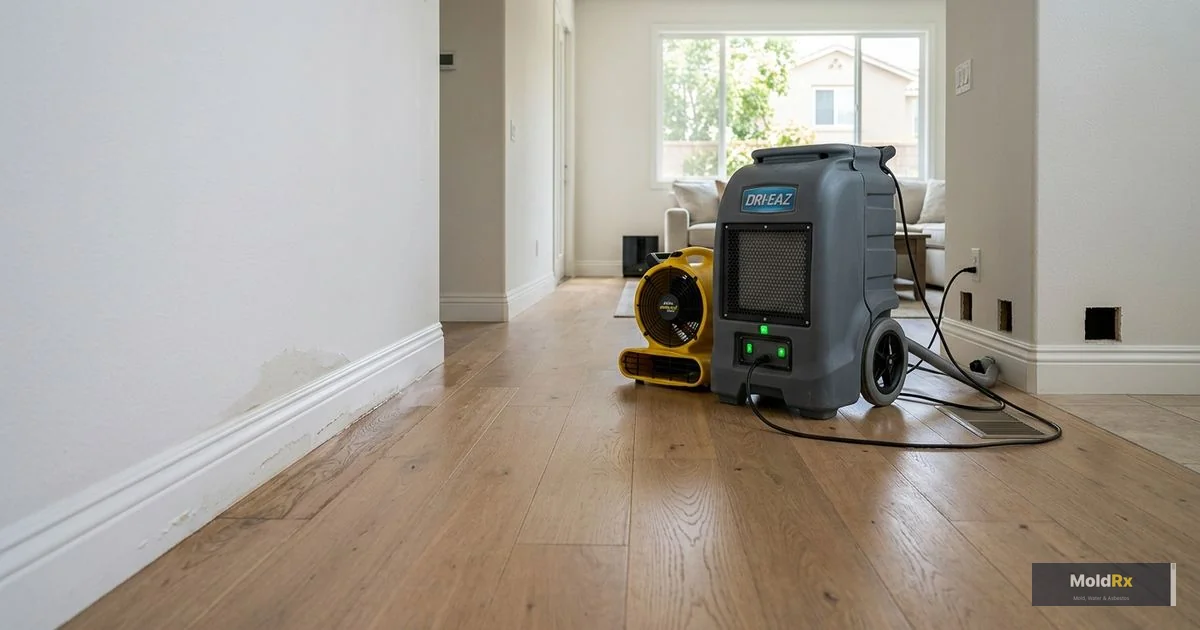
California homeowner's policies — whether HO-3, HO-5, or HO-6 (condo) — generally cover water damage that is sudden, accidental, and originates from inside the home. The key word is sudden. If the damage happened unexpectedly and wasn't the result of neglect, your policy almost certainly covers it.
Covered water damage typically includes:
- Burst or frozen pipes — sudden pipe failures due to pressure, corrosion, or temperature
- Appliance failures — water heater ruptures, washing machine hose bursts, dishwasher malfunctions, refrigerator line leaks
- Accidental overflow — a bathtub or sink left running that overflows
- Sudden roof leaks — damage from a storm or fallen tree that breaches the roof (the resulting water damage inside the home, not the roof repair itself, which falls under a different coverage section)
- Accidental discharge from plumbing or HVAC systems — a supply line that fails, a condensate line that breaks
Most policies cover both structural damage (drywall, flooring, framing) and personal property damage (furniture, electronics, clothing), plus the cost of professional water extraction, structural drying, and restoration. Additional living expenses (ALE) are also typically covered — if you can't live in your home during restoration, your policy usually pays for temporary housing, meals, and other necessary costs above your normal expenses.
What's Typically NOT Covered
The exclusions are where most claim disputes happen. Understanding them before you file prevents surprises.
Gradual or long-term leaks. A pipe dripping behind your wall for months, a slow leak under the kitchen sink, a toilet seeping at its base — these are maintenance issues, not sudden events. This is the single most common exclusion applied to water damage claims in California.
Deferred maintenance. If the damage resulted from a condition you knew about and didn't address — a deteriorating roof, aging plumbing, a broken window seal — your insurer can deny the claim. Homeowner's insurance covers unexpected events, not predictable consequences of neglected upkeep.
Flood damage. Standard policies do not cover flooding — water entering from outside due to rising rivers, storm surge, or heavy rain overwhelming drainage. Flood coverage requires a separate policy through the NFIP or a private flood insurer. This catches many California homeowners off guard, especially in areas prone to atmospheric rivers and post-wildfire mudflows.
Sewer and drain backup. Water backing up through your sewer line, drains, or sump pump is excluded under most standard policies. Many California insurers offer a sewer/drain backup endorsement that can be added for additional premium — without it, sewage backup damage comes out of your pocket.
Ground seepage. Water entering through the foundation from saturated soil or a high water table is typically excluded. A slab leak caused by a sudden pipe failure may be covered, but water migrating through the foundation from outside generally is not.
Mold from neglect. While mold resulting from a covered water event is often covered (with limits), mold that grew because of ongoing moisture problems or failure to remediate water damage promptly is excluded. More on this below.
How to File a Water Damage Insurance Claim: Step by Step
Following this sequence correctly protects both your property and your financial recovery. If you're in the middle of an active water event, see our guide on what to do in the first 24 hours after water damage for the immediate response steps.
Step 1: Mitigate the Damage Immediately
Your policy requires you to take reasonable steps to prevent further damage. This is not optional — failure to mitigate can reduce or void your claim. Shut off the water source, remove standing water, move belongings out of harm's way, and begin drying efforts. You do not need to wait for your adjuster's permission to start mitigation.
Document everything as you go (photos, video, written timeline), but do not delay mitigation to wait for an adjuster's visit. If the adjuster asks why you started cleanup before they arrived, the answer is simple: your policy required it.
Step 2: Notify Your Insurance Company Promptly
Call your insurer as soon as practical — ideally within the first 24 hours. Most California policies require "prompt" notification, and delays give adjusters a reason to question the timeline. Have your policy number, the date and time the damage was discovered, and a brief description of the water source and affected areas ready. Ask for a claim number and your assigned adjuster's contact information. Understand that they cannot tell you to stop mitigating active damage.
Step 3: Document Everything Thoroughly
Documentation is the foundation of a successful claim. The more evidence you provide, the less room there is for dispute. This is discussed in detail in the next section, but the short version: photograph and video everything, keep a written timeline, save all receipts, and preserve damaged materials until your adjuster has documented them.
Step 4: Get a Professional Assessment
Contact a qualified water damage restoration company for a professional assessment and scope of work. Even if you're handling initial cleanup yourself, professional documentation — moisture readings, thermal imaging, equipment logs, drying reports — provides the objective data adjusters need to approve claims. You have the right to choose your own restoration company in California. Your insurer may recommend a preferred vendor, but you are not required to use them.
Step 5: Meet With Your Adjuster
Your insurance company will send an adjuster to inspect the damage. During their visit, walk them through the affected areas, show your pre-cleanup photos and video, provide your written timeline, share the restoration company's scope of work and moisture documentation, and point out damage they might miss — behind walls, under cabinets, in adjacent rooms. Be factual and cooperative. Stick to what happened, when, and what you've done about it.
Step 6: Review Your Settlement
Your adjuster will prepare a damage estimate and settlement offer. Review it against your restoration company's scope. If there's a significant gap, you can request a re-inspection with additional documentation, invoke your policy's appraisal clause (most California policies include one), file a complaint with the California Department of Insurance, or consult a public adjuster who represents your interests for a percentage of the settlement.
Documentation Tips That Protect Your Claim
Adjusters approve claims based on evidence. The more complete and objective your documentation, the smoother the process and the stronger your settlement.
Photograph and video everything before cleanup. Walk through every affected area and record video showing water levels, the source of intrusion, and all damaged materials. Take wide shots of each room plus close-ups of specific damage. Include a ruler or tape measure next to water lines on walls for scale. If you can identify the source — a burst pipe, failed fitting, ruptured hose — photograph it. This evidence supports the "sudden and accidental" classification your coverage requires.
Continue documenting throughout restoration. Before and after shots of material removal, equipment placement, and drying progress demonstrate proper mitigation.
Get professional moisture documentation. This is the single most valuable evidence for your claim. Restoration companies provide initial moisture readings, moisture maps, daily drying logs, equipment inventories, thermal imaging, and final verification readings. This transforms the conversation from subjective ("it was really wet") to objective ("the drywall measured 92% moisture content on day one and 4% on day five") — giving adjusters the data they need to approve scope and costs.
Maintain a written timeline and save all receipts. Log every action from the moment you discovered the damage, with dates and times. Save receipts for equipment rentals, cleaning supplies, hotel stays, meals, and anything else related to the event. Your policy's ALE coverage reimburses costs above your normal expenses, but only with receipts.
Inventory damaged personal property. List damaged items with descriptions, approximate ages, and estimated replacement costs. Photograph items before disposal — your policy pays either actual cash value or replacement cost depending on your coverage type, and documentation supports either calculation.
Common Reasons Water Damage Claims Get Denied
The damage was gradual, not sudden. This is the number one denial reason. If your insurer determines that damage developed over weeks or months, the claim falls outside coverage. Evidence that hurts you: layered water stains indicating repeated wetting, established mold growth, and plumber findings of long-term corrosion. Evidence that helps: a clear sudden event, no prior water issues in the area, and prompt discovery followed by immediate action.
Failure to mitigate. Your policy requires you to take reasonable steps to prevent additional damage. If you discovered a leak on Monday and didn't start cleanup until Thursday, your insurer can reduce the claim by the damage that occurred during the delay.
Maintenance neglect. If the damage resulted from a condition reasonable maintenance would have prevented — a decades-old water heater you never inspected, visibly cracked washing machine hoses, a known roof issue — the claim can be denied on maintenance grounds.
Lack of documentation. Claims with thin documentation are easier to dispute and underpay. If you cleaned up before photographing or discarded materials before the adjuster saw them, the settlement often reflects the gap.
Policy exclusions and sub-limits. Sewer backup without the endorsement, flood damage without a flood policy, ground seepage — review your policy now, before you need it. Some policies also cap water damage coverage at specific limits.
Mold Coverage After Water Damage: What California Policies Include
Mold is where water damage insurance claims get complicated. California has specific regulations around mold coverage, and the details matter.
Most California homeowner's policies cover mold that results from a covered water event — but with a sub-limit. This means if a burst pipe (covered event) causes water damage that leads to mold because materials couldn't be dried quickly enough, the mold remediation is covered up to your policy's mold sub-limit. Common sub-limits range from $5,000 to $10,000 on standard policies, though some policies offer higher limits or additional mold endorsements.
Mold from non-covered events is excluded. If mold grew because of a gradual leak (not covered), flood damage (not covered under standard policy), or long-term humidity issues (maintenance), the resulting mold is also not covered.
Mold from failure to mitigate is excluded. If you had a covered water event but didn't dry the property promptly, and mold developed as a result, your insurer can argue the mold was caused by your failure to mitigate — not by the water event itself. This is one of the strongest arguments for engaging professional water damage restoration immediately: proper drying prevents mold, and if mold develops despite documented professional drying, that documentation proves you met your duty to mitigate.
The timeline matters. Mold appearing within days of a covered water event is clearly connected to the covered loss. Mold discovered weeks or months later is harder to tie to the original event. Prompt professional assessment strengthens the causal link your claim needs. For the science behind this timeline, see our guide on how water damage leads to mold.
Review your declarations page for your specific mold sub-limit. If you want higher coverage, ask your agent about mold endorsements — California Insurance Code requires insurers to clearly disclose mold coverage limits and exclusions.
How Professional Restoration Documentation Supports Your Claim
Professional water damage restoration isn't just about drying your property — it produces the documentation that makes insurance claims work.
Moisture readings establish the full scope — including water behind walls, under floors, and in adjacent rooms the adjuster might not check during a single visit. This objective data justifies the complete scope of work and prevents underpayment.
Drying logs demonstrate proper mitigation. If mold develops despite documented professional drying, you have evidence that you met your duty to mitigate — shifting the burden away from you and toward your coverage.
Equipment and photo documentation justify costs. Professional restorers log every piece of equipment with placement locations, run times, and dates, and photograph conditions before, during, and after restoration. This gives adjusters line-item justification for approval.
The scope of work provides a professional estimate. When the restoration company's scope and the adjuster's estimate align, settlements move quickly. When they differ, the restoration company's scope — backed by moisture data — provides the basis for negotiation.
Working With Your Insurance Adjuster
The adjuster works for your insurance company — not against you, but not for you either. Their job is to evaluate damage and apply policy language to the facts of your loss. How you interact with them influences the outcome.
Be responsive, organized, and factual. Return calls promptly, have documentation ready when requested, and describe what happened accurately. Don't minimize and don't exaggerate. If you don't know how long the water was present, say so rather than guessing. Credibility matters.
Keep records of all communication. Document every phone call (date, time, who you spoke with, what was discussed), save every email, and keep copies of everything you submit. If a dispute arises later, contemporaneous records are your best protection.
Don't accept an offer you believe is inadequate without review. Requesting reconsideration with a supplemental estimate from your restoration company is standard practice. If the gap remains, you can invoke your policy's appraisal clause or consult a public adjuster.
Frequently Asked Questions
Does homeowner's insurance cover water damage in California?
Yes — standard California homeowner's policies cover water damage that is sudden and accidental, originating from inside the home. This includes burst pipes, appliance failures, accidental overflows, and sudden plumbing discharges. Gradual leaks, flood damage, sewer backup (without an endorsement), and maintenance-related damage are typically excluded.
How long do I have to file a water damage insurance claim in California?
California law requires insurers to accept claims filed within a reasonable time, but most policies specify a prompt notification requirement — typically interpreted as within days, not weeks. File as soon as possible after discovering the damage. Delays can give your insurer grounds to question the timeline, reduce the claim, or deny coverage.
Does insurance cover mold from water damage?
Most California policies cover mold resulting from a covered water event, subject to a mold sub-limit — commonly $5,000 to $10,000. Mold from gradual leaks, flooding, or failure to mitigate is excluded. Professional drying documentation proves you took proper steps, strengthening mold-related coverage if mold develops despite those efforts.
What if my insurance company denies my water damage claim?
Request a formal written explanation, then explore your options: provide additional documentation and request reconsideration, invoke your policy's appraisal clause, file a complaint with the California Department of Insurance, hire a public adjuster, or consult an insurance dispute attorney. Denials are not always final.
Does insurance cover water damage from a slow leak?
Generally, no. A slow leak causing damage over weeks or months is considered a maintenance issue. However, if a slow leak caused sudden, hidden damage discovered all at once — and you can demonstrate you had no way to know about it — there may be a coverage argument. The specific language of your policy matters here.
Do I need to get my insurance company's approval before starting cleanup?
No. Your policy requires you to mitigate damage promptly. You should notify your insurer as soon as practical, but you do not need to wait for adjuster approval before beginning water extraction, drying, or other mitigation steps. Document everything as you go and keep all receipts.
Can I choose my own restoration company, or do I have to use my insurer's preferred vendor?
You have the right to choose your own contractor in California. Your insurer may suggest a preferred vendor, but you cannot be required to use them. Select based on qualifications, response time, and your comfort level.
What's the difference between actual cash value and replacement cost coverage?
Actual cash value (ACV) pays the depreciated value — what damaged property was worth accounting for age and wear. Replacement cost value (RCV) pays what it costs to replace with new, equivalent items. RCV policies initially pay ACV and reimburse the difference once replacement is complete. RCV provides significantly better coverage for water damage claims.
How much does my deductible affect a water damage claim?
Your deductible is subtracted from the claim payment. If your damage totals $15,000 and your deductible is $1,000, your insurer pays $14,000. For small claims that barely exceed your deductible, consider whether filing is worth the potential impact on your premiums. Some insurers raise rates or decline renewal after claims, even covered ones.
Will filing a water damage claim raise my insurance premiums?
It can. A single claim may not affect rates significantly, but multiple claims within a few years can lead to premium increases or non-renewal. California's Proposition 103 requires that rating factors be actuarially justified. This is a practical consideration, not a reason to avoid filing legitimate claims — but it's worth understanding.
Protect Your Property and Your Claim
Water damage insurance claims work best when homeowners act quickly, document thoroughly, and engage professionals who understand both restoration and the claims process. Proper mitigation protects your property. Proper documentation protects your payout.
MoldRx coordinates water damage restoration services throughout Orange County, Riverside County, and San Bernardino County — including the moisture mapping, drying logs, and scope documentation that adjusters need to approve claims fully and fairly.
Call (888) 609-8907 or request a free estimate to talk with a MoldRx specialist about your situation. Honest guidance on your damage, your coverage, and the steps that protect both your property and your claim.
Water Damage Restoration → · Mold Removal → · Mold Testing → · Free Estimate →