A Step-by-Step Guide to the Asbestos Abatement Process
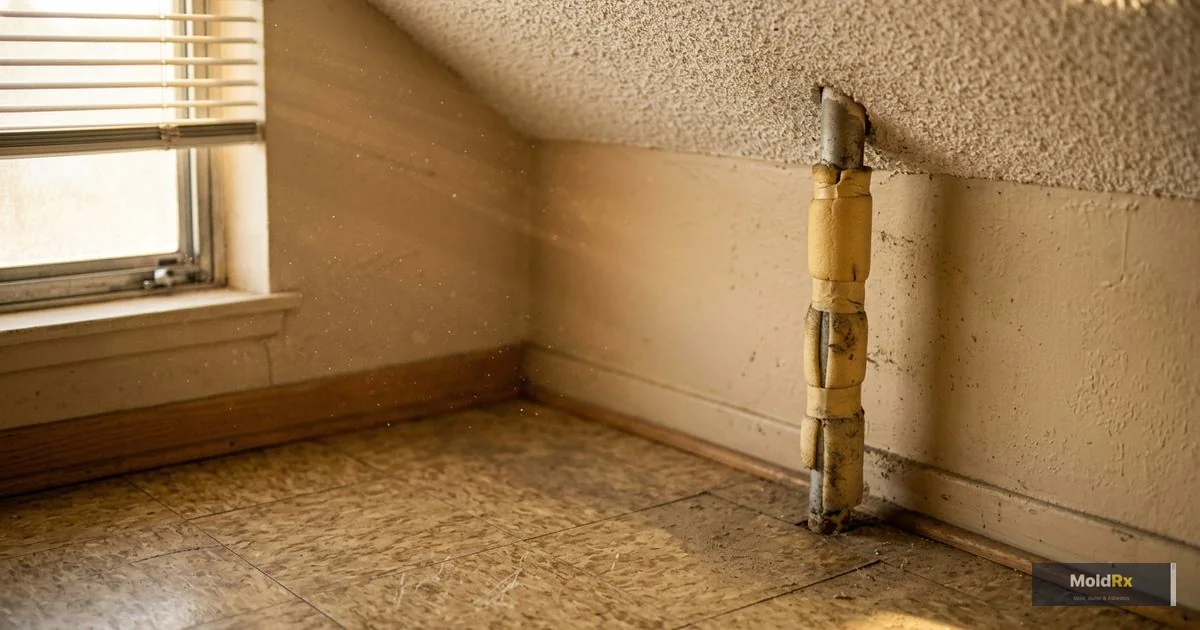
Professional asbestos removal follows a regulated, multi-step process governed by EPA NESHAP regulations, OSHA standard 1926.1101, and California's Cal/OSHA requirements. It is not a demolition job or a cleanup. It is a controlled hazardous materials operation with engineered containment, continuous air monitoring, and a legally documented chain of custody from your property to a certified disposal facility.
If you've received test results confirming asbestos or an asbestos survey has identified materials that need to come out before renovation, understanding what happens during abatement can help you prepare, ask the right questions, and recognize whether the work is being done correctly.
Phase 1: Pre-Abatement Survey and Planning
Professional asbestos removal starts well before anyone puts on a respirator.
Asbestos Survey and Laboratory Testing
Before removal begins, a certified asbestos consultant or site surveillance technician surveys the property, collecting bulk samples and sending them to an NVLAP-accredited laboratory for analysis using polarized light microscopy (PLM) or transmission electron microscopy (TEM).
The survey identifies which materials contain asbestos, what type is present (chrysotile, amosite, crocidolite, or others), the fiber concentration, and the material's condition. This information determines the scope of work, safety protocols, and required regulatory notifications.
If you've already had asbestos testing performed, your abatement contractor uses those results to develop the removal plan. If testing hasn't been done, it must be completed first. No legitimate contractor will begin work without laboratory-confirmed results.
Regulatory Notification
California and federal regulations require advance notification before abatement begins. In Southern California, this means filing with the South Coast Air Quality Management District (SCAQMD) under Rule 1403 at least 10 working days before the start of any project involving more than 100 square feet of regulated material.
The notification includes the project location, the type and quantity of materials to be removed, scheduled dates, removal methods, transport route, and disposal site. SCAQMD has the authority to inspect the project at any point and frequently does.
Project Planning and Scope of Work
Based on survey results and regulatory requirements, the abatement contractor develops a detailed scope of work specifying exactly which materials will be removed, the containment and engineering controls, worker protection requirements, air monitoring locations, waste handling procedures, and the project timeline.
You should receive and review this scope of work before signing any contract. It should be specific, not vague. Phrases like "remove asbestos as needed" are red flags. A proper scope of work names the exact materials, quantities, locations, and methods.
Phase 2: Containment and Setup
Once planning is complete, the crew prepares the work area by creating a sealed, controlled environment.
Isolation and Containment Barrier Construction
Before containment barriers go up, the crew isolates the work zone. HVAC systems serving the work area are shut down or sealed to prevent fiber migration through ductwork. Supply and return registers are sealed with polyethylene sheeting and tape. Movable contents are removed; anything that stays is covered and sealed.
The work area is then enclosed using 6-mil polyethylene sheeting thick enough to resist tearing. Walls, floors, and ceilings within the zone are covered, with seams overlapped and sealed to create an airtight enclosure.
For full-scale projects, the containment includes a decontamination unit — a series of three connected chambers that workers pass through when entering and exiting. These include a clean room (for suiting up), a shower room (for decontamination), and an equipment room. This prevents workers from carrying fibers into clean areas of the building. Critical barriers are inspected visually and sometimes smoke-tested to verify the enclosure is airtight before work begins.
Negative Air Pressure
Negative air machines — industrial HEPA-filtered air handling units — create and maintain negative air pressure within the containment zone. This means air flows into the containment from outside, never the other way around. If any breach occurs in the barrier, air moves inward rather than allowing contaminated air to escape. You may notice the plastic sheeting pulling slightly inward — that is the negative pressure working as intended.
EPA NESHAP and OSHA regulations require negative pressure throughout the entire abatement process. Pressure differentials are monitored continuously, and machines run 24 hours a day until clearance testing is complete. Exhaust passes through HEPA filters before being vented, ensuring discharged air is clean.
Phase 3: The Removal Process
With containment established and verified, the actual removal begins. This phase looks nothing like standard demolition.
Wet Methods
Every legitimate asbestos removal operation uses wet methods. Materials are thoroughly saturated with amended water — water mixed with a surfactant that helps it penetrate the material — before and during removal. It is applied using low-pressure sprayers to avoid disturbing fibers.
Wetting is not optional. It is required by EPA NESHAP regulations and is the single most effective method for preventing fiber release. Dry removal is explicitly prohibited under federal law. A dry, dusty removal site is an immediate violation and a serious health hazard. Materials must remain wet throughout the entire process, with workers re-wetting as needed during handling, bagging, and transport.
Hand Removal and Careful Handling
Materials are removed by hand wherever possible. Power tools are avoided because they generate significantly more dust and fiber release. When power tools must be used, they are equipped with HEPA-filtered vacuum attachments to capture fibers at the point of generation.
Workers use hand tools to carefully separate materials from substrates. Popcorn ceilings are scraped wet. Floor tiles and their adhesive (often more hazardous than the tile itself) are pried up carefully rather than broken apart. Pipe insulation is removed in intact sections whenever possible.
The pace is deliberate. Faster removal means more disturbance, more airborne fibers, and more risk. Crews work methodically, section by section, keeping materials wet and intact.
Continuous Air Monitoring
Air monitoring runs throughout the removal process to verify containment integrity. Samples are collected at several locations: inside the containment zone (worker exposure), immediately outside the barrier (containment integrity), and at the building perimeter (confirming no fiber migration to occupied spaces).
If monitoring detects elevated fiber levels outside the containment, work stops immediately. The breach is identified and repaired, and work does not resume until integrity is confirmed.
Worker Protection
Abatement workers operate in full personal protective equipment: powered air-purifying respirators (PAPRs) or supplied-air respirators with HEPA cartridges (not standard dust masks), disposable full-body coveralls, gloves, boot covers, and sealed goggles. All disposable equipment is treated as asbestos waste.
Workers pass through the decontamination unit every time they exit the containment zone — removing protective equipment, showering, and dressing in clean clothing before re-entering the building. OSHA 1926.1101 also requires medical surveillance for abatement workers, including periodic pulmonary function testing and chest X-rays.
Phase 4: Cleanup and Disposal
Once materials are physically removed, systematic decontamination begins.
HEPA Vacuuming and Wet Wiping
All surfaces within the containment — walls, floors, ceilings, structural members — are HEPA vacuumed and wet wiped. Standard shop vacuums cannot be used; they lack filters capable of capturing asbestos fibers and would redistribute contamination. HEPA vacuums capture particles down to 0.3 microns with 99.97% efficiency.
The cleanup involves multiple passes: initial HEPA vacuuming, wet wiping with clean water, and a second HEPA vacuum after surfaces dry. The goal is removing all visible residue and reducing airborne fiber concentrations to background levels.
Waste Packaging and Labeling
All asbestos-containing waste — removed materials, plastic sheeting, disposable PPE, HEPA vacuum bags, and cleaning rags — is double-bagged in labeled 6-mil polyethylene disposal bags. Larger items are wrapped in 6-mil poly sheeting and sealed. Every bag is labeled with OSHA-required asbestos warning labels. This labeling is a regulatory requirement, not a suggestion.
Manifested Transport to Certified Disposal Facilities
Asbestos waste cannot go in a dumpster or standard landfill. It must be transported under a waste manifest — a legal document tracking the waste from your property through transport to a certified disposal facility. The manifest creates a chain of custody documenting who generated the waste, who transported it, and where it was disposed of. You should receive copies for your records. In California, disposal facilities must be specifically permitted to accept asbestos-containing waste.
Phase 5: Clearance Testing
Clearance testing provides objective, laboratory-confirmed evidence that the abatement was successful and the work area is safe for reoccupancy.
Independent Third-Party Testing
Clearance testing should be performed by a party independent of the abatement contractor — typically a certified industrial hygienist (CIH), certified asbestos consultant (CAC), or environmental consulting firm that did not perform the removal work. The entity verifying the work should have no financial interest in whether the project passes or fails.
Visual Inspection and Air Monitoring
Before air samples are collected, the project monitor conducts a thorough visual inspection. Every surface within the containment zone is examined for visible dust, debris, or residue. If the area does not pass visual inspection, it is cleaned again before sampling proceeds.
Air samples are then collected while containment and negative air machines are still running. Aggressive sampling techniques — fans or leaf blowers to disturb surfaces and resuspend any remaining fibers — create worst-case conditions during sampling. Two primary analytical methods are used:
Phase contrast microscopy (PCM) counts all fibers in the sample. The EPA clearance standard is 0.01 fibers per cubic centimeter (f/cc).
Transmission electron microscopy (TEM) identifies specific fiber types, distinguishing asbestos from non-asbestos fibers. TEM provides the most definitive results and is required for certain project types, including schools under the Asbestos Hazard Emergency Response Act (AHERA).
If the area fails clearance, additional cleaning is performed and testing repeated. The containment stays in place until the area passes. There are no shortcuts.
Phase 6: Post-Abatement Documentation and Area Release
Once the work area passes both visual inspection and air monitoring, the containment is dismantled and the area is released for reoccupancy and reconstruction.
Documentation Package
You should receive a complete documentation package serving as your permanent record of regulatory compliance. This typically includes:
- Pre-abatement survey and laboratory test results
- Scope of work
- SCAQMD notification proof
- Daily project logs and air monitoring data
- Waste manifest copies (chain-of-custody from your property to the disposal facility)
- Independent clearance report
- Before, during, and after photographs
Keep this documentation permanently. It is important for insurance claims, real estate transactions, future renovation work, and regulatory compliance.
Area Release and Reconstruction
With clearance confirmed, plastic sheeting comes down, HVAC systems are restored, and the space is released for reconstruction. Your general contractor can then proceed with installing new drywall, insulation, flooring, or other replacement materials. Reconstruction never begins before clearance — closing up walls before testing could seal undetected contamination inside the building envelope.
What Homeowners Should Expect During the Process
Here's what the experience typically looks like from the homeowner's perspective.
Timeline
A straightforward single-area project — such as removing asbestos-containing popcorn ceiling from one room — might take 3 to 5 days from setup through clearance. Larger projects involving multiple materials or areas can take one to three weeks. That timeline includes the SCAQMD notification period (10 working days), containment setup, removal, cleanup, clearance testing (24 to 48 hours for PCM results, longer for TEM), and dismantling. If a contractor tells you a significant project will be done in a day, ask more questions.
Can You Stay in Your Home?
For small, well-contained projects in isolated areas, you may be able to remain in unaffected portions of the house. For larger projects — or when the work area shares HVAC systems with living spaces, involves bedrooms, or affects kitchens and bathrooms — temporary relocation is usually recommended, especially for households with young children, elderly occupants, or anyone with respiratory conditions. When in doubt, relocating is the safer choice.
Noise and Disruption
Asbestos removal is less noisy than typical construction because power tools are minimized. However, the constant hum of negative air machines runs 24 hours a day. Containment barriers will block access to portions of your home, and you will see workers in full protective gear entering and exiting through the decontamination unit. The visual impact can be unsettling, but these are indicators that the work is being done correctly.
Communication
Expect clear communication throughout: scope of work explained before it begins, daily progress updates, immediate notification of unexpected conditions, and a walkthrough of clearance results at completion. If your contractor is difficult to reach or unwilling to share air monitoring results, those are serious concerns.
Frequently Asked Questions
How long does asbestos removal take?
Residential projects typically take 3 to 5 days for a single-area removal and one to three weeks for larger, multi-area projects. The timeline includes the regulatory notification period, containment setup, removal, cleanup, and clearance testing. Your abatement contractor should provide a project-specific estimate based on your survey results.
Is asbestos removal dangerous for the homeowner?
Not when performed by licensed professionals using proper containment and wet removal methods. The negative pressure containment system prevents fibers from migrating to occupied areas of the home. The danger exists when asbestos is disturbed without these controls — which is why DIY removal is never appropriate and is illegal in California for regulated quantities.
Can I remove asbestos myself?
No. California law requires that asbestos removal be performed by licensed abatement contractors. Beyond the legal requirement, the health risks of improper removal are serious, cumulative, and irreversible. Asbestos fibers are invisible, remain airborne for hours, and cause diseases — including mesothelioma, asbestosis, and lung cancer — with latency periods of 10 to 50 years. Learn more: Is Asbestos Dangerous?
Do I need to leave my home during asbestos removal?
It depends on the scope and location of the work. For small, well-contained projects in isolated areas, you may be able to stay. For larger projects or work near bedrooms, kitchens, or shared HVAC systems, temporary relocation is usually recommended. Your abatement contractor should advise you based on your specific situation.
How do I know the removal was done properly?
Independent clearance testing by a third party not affiliated with the abatement contractor provides objective verification. Clearance involves a visual inspection and air monitoring using PCM or TEM analysis. The work area must meet EPA clearance standards before containment is removed and the space is released for reoccupancy.
What happens if clearance testing fails?
The containment stays in place, additional cleaning is performed, and clearance testing is repeated. This cycle continues until the area meets clearance standards. A reputable abatement contractor includes re-cleaning and re-testing in their project scope because the goal is a clean area, not a fast exit.
How much does asbestos removal cost?
Costs vary significantly based on the type and quantity of materials being removed, the accessibility of the work area, the complexity of containment required, and the specific project conditions. MoldRx provides free estimates based on your specific situation. We do not publish generic pricing because accurate estimates require understanding what you're actually dealing with.
What is the difference between asbestos removal and encapsulation?
Removal physically takes the asbestos-containing material out of your property. Encapsulation applies a sealant over intact material to prevent fiber release, leaving the material in place. Encapsulation is only appropriate for intact, undisturbed materials in good condition that will not be affected by future renovation or demolition. Damaged, deteriorating, or soon-to-be-disturbed materials require removal.
Will my homeowner's insurance cover asbestos removal?
Most standard homeowner's insurance policies do not cover asbestos removal as a standalone service. However, if asbestos removal is necessary as part of a covered claim — such as water damage that compromised asbestos-containing materials — some policies may include it. Check with your insurance provider about your specific coverage.
Do I need an asbestos survey before renovation?
Yes. California requires an asbestos survey before renovation or demolition of pre-1980 structures. SCAQMD Rule 1403 and Cal/OSHA enforce this requirement, and penalties for non-compliance are severe. The survey must be performed by a certified asbestos consultant or site surveillance technician.
Schedule a Professional Assessment
MoldRx coordinates professional asbestos removal services throughout Orange County, Riverside County, and San Bernardino County. Our licensed abatement professionals follow EPA NESHAP, OSHA 1926.1101, and Cal/OSHA protocols on every project — with independent clearance testing to verify the work was done right.
If you have confirmed or suspected asbestos in your property and need honest guidance about what removal involves, request a free estimate or call (888) 609-8907 to talk to a real person about your situation. No scripts, no pressure — just straightforward answers from a family-owned company that has built its reputation on doing things correctly.