You've noticed something — a stain, a smell, a suspicion — and you're trying to figure out whether paying for professional mold testing makes sense or whether you should skip it and go straight to cleanup.
The honest answer: if you can see mold, you usually don't need to test before removing it. But there are specific situations where testing saves you money, protects your health, gives you legal documentation, or prevents you from gutting a wall that didn't need gutting. The difference between a smart testing investment and a wasted one comes down to what question you're actually trying to answer.
This guide covers both sides — when mold testing earns its cost and when that money is better spent on remediation or prevention.
When Mold Testing IS Worth It
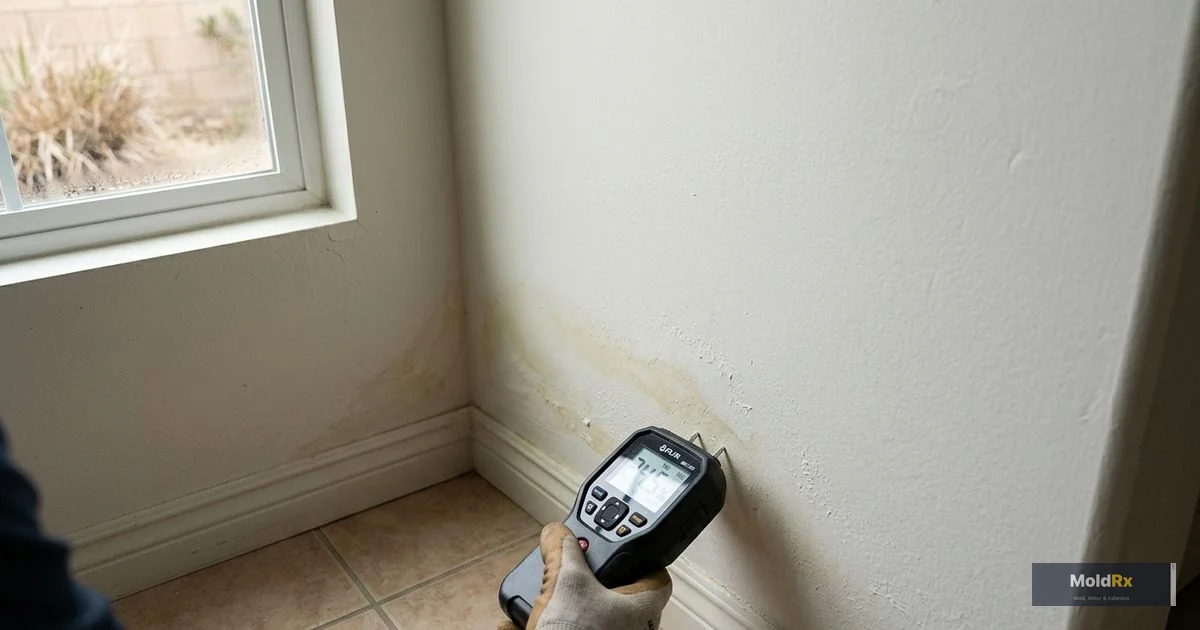
These are the situations where professional testing provides information you can't get any other way — information that changes what you do next, saves you money, or protects you legally.
1. You Suspect Hidden Mold but Can't Find It
A persistent musty smell. Allergic symptoms that get worse at home. A water event months ago that still feels off. These are classic signs of hidden mold growing behind walls, under flooring, or inside HVAC systems — places you can't see without tearing things apart.
Air sampling can detect whether elevated mold levels exist and sometimes narrow down which rooms are affected — before you start opening walls. Without testing, you're guessing — and guessing means either ignoring a real problem or spending money on demolition you didn't need.
Why it's worth it: Testing confirms a hidden problem exists (or rules it out) before you commit to expensive investigative work.
2. Someone in Your Household Has Unexplained Health Symptoms
Respiratory issues, chronic congestion, headaches, or allergic reactions that seem worse at home and improve when you leave — these patterns suggest your indoor environment may be a contributing factor. Professional air sampling establishes whether your indoor mold levels are abnormal. If they are, you have actionable information. If levels are normal, you've ruled out one possibility and can focus elsewhere. Either way, you have data instead of speculation.
Why it's worth it: Testing gives your healthcare provider objective environmental data. It's also documentation if the problem turns out to be related to a landlord's negligence or a construction defect. Learn more about what science says about mold and health.
3. Post-Remediation Clearance Testing
This is the single most valuable use of mold testing. After mold remediation, clearance testing verifies the work was actually successful. An independent inspector takes air and surface samples inside the containment zone, compares them to outdoor baselines, and determines whether spore levels have returned to normal.
Without clearance testing, you're trusting that remediation worked based on how things look — and mold problems that look solved aren't always solved. Three months later the smell returns because the source wasn't fully addressed.
Why it's worth it: Clearance testing catches incomplete remediation before you've sealed the problem back inside a wall. Any reputable remediation company welcomes independent clearance testing — if one resists it, that's a red flag.
4. Real Estate Transactions
Whether you're buying or selling, mold testing during a transaction provides objective documentation that protects both parties.
For buyers: A general home inspector may note visible mold or musty odors, but they typically don't conduct laboratory-confirmed testing. Professional air sampling before closing tells you whether the home has elevated mold levels — including hidden contamination the visual inspection missed. Our guide on mold during home inspections covers the full process.
For sellers: Proactive testing before listing demonstrates the home is clean or that issues were professionally remediated. This prevents deals from collapsing during the contingency period.
Why it's worth it: Laboratory results carry weight that visual observations don't. In a transaction involving hundreds of thousands of dollars, a few hundred dollars of testing protects your investment.
5. Insurance Claims and Legal Documentation
If you're filing an insurance claim for water damage and suspect mold has developed, or if you're in a dispute with a landlord, builder, or seller, professional testing creates a documented record that holds up.
Insurance adjusters and attorneys work with evidence, not observations. A laboratory report showing specific spore types, concentrations, and comparison to outdoor baselines is evidence. "I could see mold on the wall" is an observation.
Why it's worth it: Testing creates a paper trail — what existed, when, and at what levels. If there's any chance your situation will involve insurance or legal proceedings, test early.
6. Baseline Testing Before Major Renovation
If you're planning a significant renovation in a home with a history of water issues — or an older home where you're unsure what's behind the walls — baseline mold testing before construction establishes a record of pre-existing conditions.
This matters for two reasons. First, if renovation uncovers hidden mold, documentation showing it existed before the contractor's work prevents disputes about who caused the problem. Second, baseline data tells you whether mold needs to be addressed while the area is already torn apart — rather than being sealed back in during the build.
Why it's worth it: Discovering mold during renovation is far less expensive than discovering it after. Baseline testing turns an unpleasant surprise into a planned line item.
7. After Water Damage When You're Not Sure Mold Developed
You had a leak three weeks ago. The water was cleaned up, everything seemed dry. But now you're second-guessing whether moisture reached places you couldn't see and whether mold has started growing in a wall cavity or under the flooring.
Air sampling can answer this without tearing anything apart. Normal levels mean peace of mind. Elevated levels mean you've caught a developing problem early — when remediation scope and cost are at their smallest.
Why it's worth it: Catching mold growth at three weeks is far cheaper than discovering it at six months.
8. Peace of Mind With Actual Data Behind It
Sometimes the value of testing is ending the uncertainty. A professional test either confirms there's a problem — which you can now address — or confirms there isn't one — which lets you stop worrying. This is worth it only if you'll actually trust and act on the results. If a clean result won't give you peace of mind, the issue may not be something testing can solve.
Why it's worth it: Anxiety about a problem you can't confirm or deny is its own cost. Data resolves it in either direction.
When Mold Testing Is NOT Necessary
Here's where we tell you when not to spend money on our service. We'd rather be honest about this and earn your trust than push testing on every homeowner who calls.
Visible Mold You're Going to Remove Anyway
If you can see mold growing on your bathroom ceiling or along a wall — and you already know it needs to be cleaned up or remediated — testing to confirm "yes, that's mold" adds cost without changing the outcome. The next step is addressing it, not documenting it.
The exception is when you need documentation for insurance or legal purposes, or when the visible mold might indicate a larger hidden problem that changes whether it's a DIY job or requires professional remediation. But for straightforward visible mold where the plan is already "clean it up and fix the moisture source," testing is unnecessary.
Species Identification That Won't Change the Protocol
Homeowners often want to know whether their mold is "the dangerous kind" — specifically, whether it's Stachybotrys chartarum, commonly called black mold. The concern is understandable, but in most cases, identifying the exact species doesn't change what you need to do.
Remediation protocol is determined by the size of the affected area, the type of materials involved, and the extent of contamination — not the species. A 20-square-foot patch of Aspergillus on drywall gets the same treatment as Stachybotrys on drywall: containment, HEPA air filtration, removal of affected materials, and clearance testing.
If your doctor needs species identification for medical reasons, that's a different story. But "I want to know if it's black mold" doesn't usually justify the cost when the remediation plan is the same either way.
Confirming What You Can Already See
This is the most common scenario where testing wastes money. You can see mold on the wall. You know there's a moisture problem. A test will tell you: there's mold, and there's a moisture problem. You've paid for a report that tells you what your eyes told you for free.
Put that money toward fixing the problem — addressing the moisture source and remediating the mold.
DIY Test Kits (Almost Always)
Hardware store mold test kits — the petri dish or settle-plate variety — are rarely worth the $10-50 they cost. Because mold spores are present in every indoor environment, these kits almost always grow mold. A "positive" result tells you mold spores exist in your home, which is true of every home on the planet.
These kits can't compare indoor to outdoor levels, can't quantify spore concentrations, and can't identify what you're dealing with. If you're concerned enough to test, professional testing with calibrated equipment and accredited laboratory analysis is the only method that produces results you can actually interpret and act on.
Routine Testing "Just in Case"
If you have no symptoms, no smell, no visible mold, no history of water damage, and no specific reason to suspect a problem — routine testing as a preventive measure is generally not necessary. Your money is better spent on moisture prevention: fixing leaks promptly, maintaining proper ventilation, and monitoring humidity levels. Mold needs moisture to grow. If your home is dry and well-maintained, testing without a specific concern is looking for a problem that likely doesn't exist.
The Honest MoldRx Position
We coordinate mold testing as one of our core services. Here's how we actually operate:
We'll tell you when you don't need testing. If you call and describe visible mold on bathroom tile you plan to clean, we'll tell you to clean it and save your money. If you describe mold on drywall that clearly needs remediation, we'll tell you to skip testing and put the budget toward the work itself.
We'll recommend testing when it actually serves you. Musty smell you can't locate, symptoms that might be mold-related, a real estate transaction, post-remediation verification — these are situations where testing provides genuine value, and we'll explain exactly what you'll learn and why it matters.
We use independent, accredited laboratories. Every sample goes to an AIHA-accredited lab. The results include quantified spore counts, species identification, and indoor/outdoor comparison. We don't use in-house labs, and we don't interpret results in ways that manufacture urgency.
We separate testing from remediation recommendations. Testing is information. What you do with it is your decision. We'll explain what the results mean and outline your options, but we won't use a test report as a sales tool.
This means we sometimes talk people out of paying us. That's fine. A customer who trusts us because we were honest is a customer who calls us when they do need something — and who refers their friends.
How to Decide: A Quick Framework
Walk through these questions in order:
Can you see mold?
- Yes, and it's small (under 10 square feet on non-porous surfaces) -- clean it yourself, fix the moisture source, monitor for recurrence. No testing needed.
- Yes, and it's large or on porous materials -- proceed to remediation. Testing the visible mold isn't necessary unless you need documentation for insurance or legal purposes.
- No, but you smell it or suspect it -- testing is likely worth it. Air sampling can detect hidden mold without opening walls.
Do you have health symptoms that might be mold-related?
- Yes -- testing provides data for you and your healthcare provider. Worth it.
- No -- proceed based on visible evidence and smell.
Are you involved in a real estate transaction, insurance claim, or legal matter?
- Yes -- test. Documentation matters in all three contexts.
- No -- the decision depends on the other factors above.
Have you had recent water damage?
- Yes, and you're not sure it was fully dried -- testing can catch early mold growth. Worth it.
- Yes, but it was professionally dried with moisture verification -- test only if symptoms or odors develop later.
Did you just complete mold remediation?
- Always get clearance testing. No exceptions.
Frequently Asked Questions
Is mold testing worth the money?
It depends entirely on your situation. Testing is a strong investment when you suspect hidden mold, have unexplained health symptoms, need documentation for real estate or insurance, or need to verify remediation. It's not worth it when you can already see the mold and don't need documentation. The right question isn't "is testing worth it" in the abstract -- it's "does testing change what I'm going to do next?"
Can I skip mold testing and go straight to removal?
In many cases, yes. If mold is visible and you've decided to address it, testing adds cost without changing the plan. However, air sampling before remediation can reveal whether the problem extends beyond what you can see -- hidden mold in wall cavities or HVAC systems that would otherwise be missed. And clearance testing after remediation should never be skipped.
When is mold testing not necessary?
Testing is generally unnecessary when you have small visible mold on non-porous surfaces you can clean yourself, when species identification won't change the remediation protocol, when you're using a DIY test kit that can't provide meaningful data, or when you have no specific reason to suspect a problem.
How much does professional mold testing cost?
Costs vary based on the number of samples and the type of testing required. Rather than quoting a range that may not apply to your situation, contact us for a free estimate based on your specific needs. We'll tell you what testing we'd recommend and why -- and if testing isn't necessary, we'll tell you that instead.
Should I test for mold before buying a house?
Professional mold testing before closing is one of the strongest uses of testing. A general home inspector may note visible concerns, but laboratory air sampling can detect hidden contamination that a visual inspection misses. A few hundred dollars of testing provides documentation that protects an investment worth hundreds of thousands. Read our full guide on mold during home inspections.
Do I need to test after water damage?
Not always. If the damage was professionally dried with moisture verification, mold is unlikely to develop. But if the cleanup was DIY, the area may not have fully dried, or if you notice odors or symptoms weeks later, testing can determine whether mold growth has started in concealed spaces. Catching it early is significantly less expensive than catching it late.
Is a home mold test kit accurate?
Retail settle-plate kits are not accurate in any meaningful sense. They confirm mold spores exist in the air -- which they do in every home -- but cannot quantify concentrations or compare indoor to outdoor levels. Professional testing with calibrated equipment and accredited laboratory analysis is the only method that produces actionable information.
Do I need mold testing if I can see mold?
Usually not. If you can see mold, you already know there's a problem. The exceptions: you need documentation for insurance or legal purposes, you suspect the visible growth is the tip of a larger hidden problem, or your doctor needs species identification. Otherwise, put the testing budget toward remediation.
What's the difference between mold testing and mold inspection?
A mold inspection is a visual and physical assessment -- looking for signs of mold, moisture, and conditions that promote growth. Mold testing involves collecting samples and sending them to a laboratory for analysis. An inspection tells you what the assessor can see on-site. Testing tells you what's in the air and on surfaces at a microscopic level. A good mold professional typically combines both.
How often should I test for mold?
Routine mold testing is not necessary for most homeowners. Test when you have a specific concern: after water damage, when you notice odors or symptoms, before a real estate transaction, or after remediation. If you have a history of moisture problems, an annual check may be worthwhile. But the best ongoing investment is moisture prevention -- fixing leaks, ventilating properly, and maintaining appropriate humidity levels.
The Bottom Line
Mold testing is a tool. Its value depends on whether you're using it for the right job. When testing answers a question you can't answer any other way — is there hidden mold, is my air quality affecting my health, did remediation work, is this home safe to buy — it's one of the best investments a homeowner can make. When testing confirms something you already know or produces information that won't change your next step, that money is better spent elsewhere.
If you're not sure which category your situation falls into, call us. We'll give you an honest answer — even if that answer is "you don't need us right now."
Call (888) 609-8907 or request a free estimate to talk through your situation. If testing isn't the right move, we'll tell you.