Remediation is done. Clearance testing passed. The walls are back up and life has returned to normal. So why would you ever need to test for mold again?
The short answer: clearance testing happens immediately after remediation to verify the work was successful, but retesting weeks or months later is a separate decision with different triggers. You should retest if symptoms return, musty odors develop, a new water event occurs, you're entering a real estate transaction, or conditions in the home have changed significantly since the original project. If none of those apply and clearance passed cleanly, retesting isn't necessary.
Understanding the difference between clearance testing and follow-up retesting -- and knowing when each one matters -- keeps you from spending money you don't need to spend while making sure you catch problems that actually require attention.
Clearance Testing vs. Follow-Up Retesting
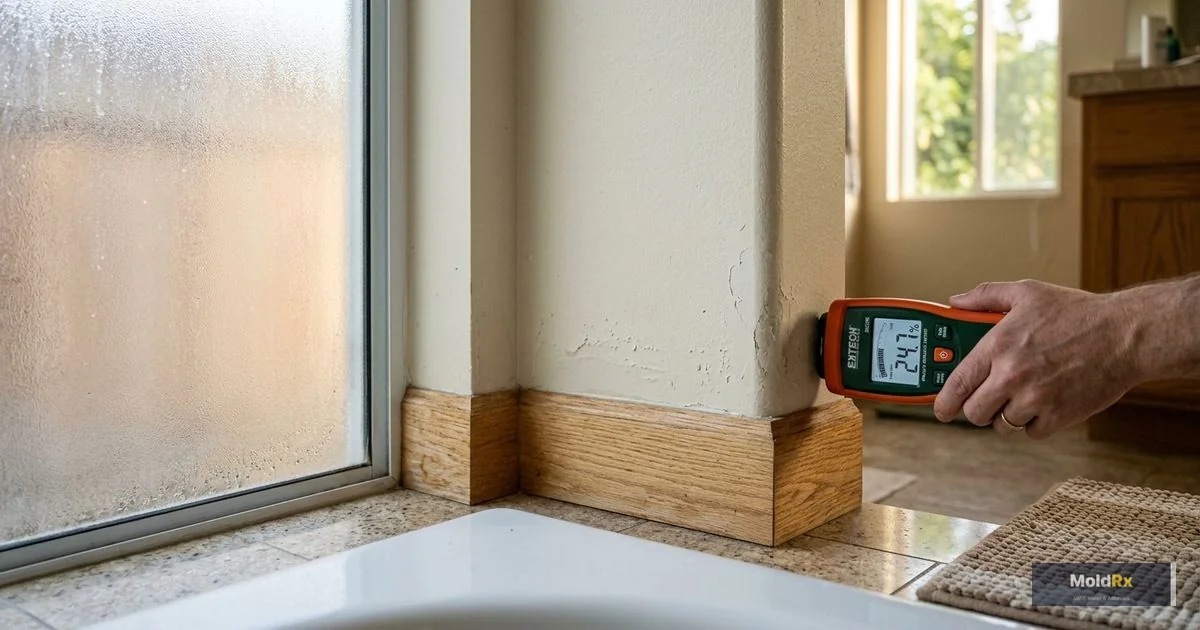
These two types of testing serve entirely different purposes, and conflating them leads to confusion. Let's separate them clearly.
Clearance Testing
Clearance testing happens immediately after remediation, while containment is still in place and before any reconstruction begins. An independent inspector collects air samples, surface samples, and moisture readings from the remediated area and compares them against outdoor and unaffected indoor baselines. If the results show that spore levels and types in the work area are comparable to or lower than those controls, the project passes.
Clearance testing is a one-time verification event tied to a specific remediation project. It answers a binary question: did this remediation succeed? Once it passes and reconstruction is complete, clearance testing for that project is finished.
Follow-Up Retesting
Follow-up retesting is something different. It's a new round of mold testing conducted weeks, months, or even years after the original project -- not to re-evaluate the remediation that already passed clearance, but to assess whether current conditions in the home are still clean.
Retesting answers a forward-looking question: is the indoor environment still free of elevated mold contamination right now? It treats the home as it exists today, not as it existed during the remediation project.
The distinction matters because retesting results don't retroactively invalidate a clearance test that passed. If you retest six months later and find elevated mold levels, that doesn't mean the original remediation failed. It means something changed -- a new moisture event, a different area of contamination, or environmental conditions that allowed regrowth.
When Retesting Is Recommended
Not every home that went through remediation needs follow-up testing. But several situations make retesting a smart decision.
Symptoms Return
This is the most common reason homeowners retest. You felt better after remediation -- the respiratory irritation eased, the headaches stopped, the allergic reactions calmed down. Then, weeks or months later, symptoms start creeping back.
Returning symptoms don't automatically mean mold has returned. Seasonal allergies, HVAC issues, dust accumulation, and other indoor air quality factors can produce similar reactions. But when symptoms follow the same pattern you experienced before remediation, testing is the fastest way to rule mold in or out.
What to do: Schedule professional air sampling in the areas where you spend the most time and in any space adjacent to the original remediation zone. Compare results to outdoor baselines. If mold types associated with water damage -- Stachybotrys, Chaetomium, certain Aspergillus species -- show up at elevated levels, you have a new problem to investigate.
Musty or Earthy Odors Develop
Mold produces microbial volatile organic compounds (mVOCs) as it metabolizes building materials. These compounds create that distinctive musty smell most people associate with mold growth. If you start detecting that odor in the home -- especially near the area that was previously remediated -- it deserves investigation.
A musty odor doesn't guarantee active mold growth. Residual odor can sometimes linger in porous materials even after successful remediation. But if the smell is new or intensifying rather than fading, it suggests active biological activity somewhere.
What to do: Don't wait to see if it goes away. Air sampling and a visual inspection by a qualified inspector can determine whether the odor corresponds to elevated spore levels. If the previously remediated area is the source, that's a clear indication that something has changed since clearance.
A New Water Event Occurs
This is the most straightforward trigger for retesting. Mold needs moisture to grow. If the home experiences a new water intrusion event -- a plumbing leak, roof damage, flooding, appliance failure, or even sustained high humidity from an HVAC malfunction -- the risk of mold reestablishing itself increases immediately.
This is especially true if the new water event affects the same area that was previously remediated. Building materials that were treated and dried during remediation can support new mold growth within 24 to 48 hours of re-wetting, just like any other material.
What to do: Address the water source immediately. Dry affected materials within 24 to 48 hours. If you're unable to dry everything quickly or if the water intrusion was significant, schedule testing within a week or two of the event to establish whether mold has begun developing. Our guide on why mold keeps coming back explains the relationship between unresolved moisture and recurrent contamination in detail.
A Real Estate Transaction Requires Documentation
If you're selling a home that previously had mold remediation, buyers and their lenders may request current mold testing -- even if you have clearance documentation from the original project. This is reasonable. Clearance testing documents the condition of the home at a specific point in time. A buyer wants to know the condition now.
Similarly, if you're buying a home where mold remediation was performed by the previous owner, requesting current testing protects you. The original clearance report tells you the remediation passed, but it doesn't tell you what's happened in the home since then.
What to do: Schedule professional air sampling that covers the previously remediated area and the rest of the home. A clean report, combined with the original clearance documentation, gives all parties strong evidence that the home is in good condition. This is straightforward due diligence that can prevent disputes and protect the transaction.
Significant Environmental Changes
Sometimes conditions in the home change in ways that affect moisture and ventilation, which are the two factors that most directly influence mold risk. Examples include:
- HVAC system changes or failures -- a new system, a malfunctioning dehumidifier, or ductwork modifications that alter airflow patterns
- Occupancy changes -- the home sat vacant for an extended period (reduced climate control) or occupancy increased significantly (more humidity from cooking, bathing, and breathing)
- Seasonal shifts in a problem area -- the home has a known trouble spot like a basement or crawl space that becomes more humid during certain seasons
- Construction or renovation -- work that opens wall cavities, changes drainage patterns, or modifies the building envelope
These changes don't guarantee mold growth, but they alter the conditions that were in place when clearance passed. If you're uncertain whether the home's environment is still controlled, testing removes the guesswork.
Peace of Mind After a Difficult Project
Some homeowners simply want confirmation that everything is still clean. If the original mold problem was severe, caused health issues, or was a stressful experience, there's nothing wrong with retesting at the six-month or one-year mark for your own peace of mind.
This isn't medically or structurally necessary if clearance passed and no new triggers have appeared. But anxiety about mold recurrence is real, and a clean test result at the six-month mark can put that anxiety to rest more effectively than anything else.
When Retesting Is NOT Necessary
Testing costs money, and unnecessary testing wastes it. Here are the situations where retesting adds no value.
Clearance Passed and Nothing Has Changed
If your remediation passed clearance testing with clean results, the moisture source was repaired, humidity is controlled, and you have no symptoms, odors, or new water events -- there is no reason to retest. A clean clearance result combined with stable conditions is exactly the outcome the process is designed to produce.
Mold doesn't spontaneously generate. It requires a moisture source, a food source (organic building materials), and time. If moisture is controlled, the cycle can't restart.
No New Moisture Events
This bears repeating because it's the single most important variable. Mold growth requires moisture. If no new water intrusion, plumbing failure, flooding, or sustained humidity problem has occurred since remediation, the probability of mold reestablishing in the remediated area is very low.
Routine mold testing "just because" -- absent any triggering condition -- is not recommended by the EPA, the IICRC, or any major industry body. Testing should be driven by specific concerns, not by a calendar.
Minor Cosmetic Issues That Aren't Mold
Discoloration on surfaces, staining from previous water damage, or dust accumulation can look concerning but don't necessarily indicate active mold growth. If you see something that concerns you visually, start with a visual inspection by a qualified professional before jumping to full air sampling. Many surface concerns can be evaluated quickly without laboratory testing.
The Remediation Company Offers "Free Retesting"
Be cautious here. If the company that performed your remediation offers complimentary follow-up testing, remember the same principle that applies to clearance testing: the company that did the work should not be the company that tests the results. An offer of free retesting from the remediator may be well-intentioned, but it carries the same conflict of interest that makes independent clearance testing essential in the first place.
If someone is going to retest, it should be an independent third party -- the same standard we follow for clearance. If you're unsure how to evaluate a remediation company's practices, our guide on how to choose a mold remediation company covers the key criteria.
What Follow-Up Retesting Involves
Follow-up retesting uses the same sampling methods as initial mold testing, adapted for the specific concern that triggered it.
Air Sampling
The inspector places spore trap cassettes in strategic locations throughout the home -- typically in the previously remediated area, in other occupied spaces, and outdoors for a control baseline. Each cassette collects a measured volume of air, capturing airborne particles for laboratory analysis.
The laboratory identifies mold types and calculates spore concentrations per cubic meter. Results from indoor samples are compared against the outdoor control and against each other to determine whether any space shows elevated levels or unusual mold types.
Surface Sampling (When Indicated)
If the concern involves a specific area -- visible discoloration, a suspected problem behind a wall, or a surface that was previously treated -- the inspector may collect tape lift or swab samples from that location. Surface sampling is especially useful when air results are borderline or when the inspector suspects a localized issue that might not produce enough airborne spores to register in an air sample.
Moisture Assessment
Any competent inspector will check moisture levels as part of a retest, even if moisture isn't the primary concern. Elevated moisture in building materials is both a leading indicator of potential mold growth and a diagnostic tool for identifying the source of a suspected problem. Moisture meters and thermal imaging can reveal hidden leaks or condensation that hasn't produced visible damage yet.
The Report
You'll receive a laboratory report listing every sample location, the mold types identified, raw spore counts, and concentrations. The inspector's summary should explain what the results mean in the context of your specific situation -- whether levels are normal, elevated, or concerning, and what action (if any) is recommended.
For a detailed breakdown of how to read these results, see our guide on understanding clearance testing, which walks through the key numbers and what passing and failing results look like.
How to Interpret Retest Results
Retest results require slightly different interpretation than clearance results because the context is different. Here's what to look for.
Clean Results
If air samples from the previously remediated area show spore types and concentrations that are comparable to or lower than outdoor and unaffected indoor controls, and no water-damage indicator species are elevated, the home is clean. The remediation held, no new contamination has developed, and no further action is needed.
Elevated Results in the Previously Remediated Area
If the remediated area shows elevated spore counts or water-damage indicator species that aren't present at similar levels in the outdoor or control samples, something has changed. This doesn't mean the original remediation failed -- it means a new problem has developed, most likely driven by a new or recurring moisture source.
Next step: Investigate the moisture source. A thorough inspection of the area -- potentially including opening wall cavities if the suspected source is concealed -- is necessary to identify what's feeding the new growth. Once the source is found and fixed, a new round of remediation may be required, followed by its own clearance testing.
Elevated Results in a Different Area
Sometimes retesting reveals mold contamination in a part of the home that wasn't involved in the original remediation. This is a separate issue -- not a failure of the previous project but a new condition that requires its own assessment and response.
This actually happens more often than you might expect. The original remediation focused on the area where contamination was identified. If another area of the home has its own moisture problem -- an undetected slow leak, condensation in a different wall cavity, or humidity issues in a crawl space -- mold can develop there independently.
Borderline Results
Sometimes results fall into a gray area -- spore counts slightly above outdoor levels, or low counts of a water-damage indicator species. In these cases, the inspector's professional judgment matters. They may recommend monitoring with a follow-up test in 30 to 60 days, targeted surface sampling to investigate further, or a moisture evaluation to determine whether conditions support active growth.
Borderline results don't always mean you need remediation. They mean you need more information.
Preventing the Need for Retesting
The best retest is the one you never need. After mold remediation, the most effective thing you can do is maintain the conditions that prevent regrowth.
Control humidity. Keep indoor relative humidity below 60% -- ideally between 30% and 50%. Use dehumidifiers in basements, crawl spaces, and other moisture-prone areas. Monitor with a hygrometer.
Maintain ventilation. Run bathroom and kitchen exhaust fans during and after moisture-generating activities. Ensure the HVAC system is properly maintained and that air circulates through all areas of the home, including closets and low-traffic rooms.
Fix water problems immediately. A small plumbing leak or a minor roof drip can produce a mold problem within 48 hours. Address water intrusion the day you discover it -- not the day it becomes convenient.
Inspect annually. Walk through moisture-prone areas of the home at least once a year -- under sinks, around water heaters, in the attic, in the crawl space, and around windows. Look for water staining, condensation, musty odors, or visible growth. Catching a moisture problem early is infinitely easier than dealing with the mold it produces.
Our guide on preventing mold after remediation provides a detailed maintenance checklist and long-term strategy for keeping your home clean.
Frequently Asked Questions
How long after remediation should I wait to retest?
If you have a specific concern -- returning symptoms, a new water event, or a musty odor -- test as soon as that concern arises. If you want a general "wellness check" for peace of mind, three to six months after remediation is a reasonable timeframe. It's long enough for any hidden moisture problem to manifest but early enough to catch it before it becomes a major issue.
Is follow-up retesting the same as clearance testing?
No. Clearance testing happens immediately after remediation, before reconstruction, while containment is still up. It verifies that the specific remediation project was successful. Follow-up retesting happens later and evaluates the current condition of the home -- it's not tied to a specific remediation event.
Do I need to retest if I feel fine and nothing has changed?
No. If clearance passed, the moisture source was repaired, and you have no symptoms, no odors, and no new water events, retesting is unnecessary. Your money is better spent on preventive maintenance like humidity monitoring and annual inspections.
Can I use a home test kit for retesting?
No. Retail mold test kits use settle plates that cannot quantify spore concentrations, identify specific mold types accurately, or provide the comparative analysis against control samples that professional testing delivers. They produce results that are unreliable and unactionable. Professional testing with calibrated equipment and accredited laboratory analysis is the only method that provides meaningful data.
Will my insurance cover retesting?
Typically not. Insurance covers mold testing and remediation when it's part of a covered claim -- usually related to a specific water damage event. Follow-up retesting months later, absent a new covered event, is generally considered a maintenance expense. However, if a new water event triggers the retest and that event is covered under your policy, the associated testing may be covered as part of that new claim.
What if retesting shows mold in a different area than the original problem?
That's a separate issue requiring its own assessment. The original remediation addressed the area where contamination was found. New contamination in a different area means a different moisture source is at work. An inspector can evaluate the scope and recommend next steps. This situation underscores why maintaining the entire home -- not just the previously remediated area -- matters.
Should the same inspector who did clearance testing do the retest?
It's not required, but it can be helpful. An inspector who conducted the original clearance has context -- they know what the baseline looked like, what mold types were present before remediation, and what the remediated area's conditions were when it passed. That context can make it easier to interpret new results. What matters most is that the inspector is independent and qualified.
How much does retesting cost?
Costs vary based on the number of samples collected and the size of the area being evaluated. A focused retest of a single previously remediated area requires fewer samples than a whole-home evaluation. Call us at (888) 609-8907 to discuss your specific situation -- we can help you determine whether retesting is warranted and what scope makes sense.
What if I smell mold but retesting comes back clean?
A clean air sample doesn't necessarily mean there's no mold -- it means airborne spore levels at the time of sampling were within normal range. Mold growing in a concealed space may not release enough spores into the air to register on a standard air sample. If you're still smelling something, surface sampling, moisture mapping, and possibly a more invasive investigation (opening wall cavities, scoping through small access points) may be needed to find the source.
Is there a government requirement to retest after remediation?
No federal regulation requires follow-up retesting after mold remediation in residential properties. Some states and local jurisdictions have requirements for clearance testing immediately after remediation, but ongoing retesting mandates are rare. The decision to retest is driven by conditions in the home, not by regulation.
Know When to Test -- and When Not To
Mold retesting after remediation is not about routine maintenance or checking a box. It's a targeted response to specific conditions that suggest something may have changed. When symptoms return, odors develop, water events occur, or a transaction demands documentation, retesting gives you the facts you need to act. When none of those conditions exist, your time and money are better spent on prevention.
If you're unsure whether your situation warrants retesting -- or if you need mold remediation or mold testing for a new concern -- MoldRx can help you figure out the right next step.
Call (888) 609-8907 or request a free estimate to get started.