Mold Removal in Loma Linda, CA — MoldRx
IICRC-Certified Mold Removal Professionals Serving Loma Linda and San Bernardino County
Loma Linda is one of only five Blue Zones on the planet — a community recognized worldwide for longevity and health-conscious living. When mold shows up in a Loma Linda home, the stakes feel different. You've built a life around clean air and healthy habits. Hidden mold undermines all of it. MoldRx only sends vetted, IICRC-certified mold removal professionals who follow IICRC S520/R520 remediation standards and EPA federal mold guidance — specialists who work Loma Linda and San Bernardino County every week.
Request your free estimate — we'll assess your property and give you straight answers.
Why Mold Grows in Loma Linda Homes
Loma Linda sits at roughly 1,300 feet elevation in the western San Bernardino Valley, about 60 miles east of Los Angeles. Incorporated in 1970, the city covers 7.6 square miles and is home to approximately 25,200 residents. The name means "Beautiful Hill" in Spanish — fitting for a city of gentle rolling terrain between San Timoteo Canyon to the south and the San Bernardino Mountains to the north. Loma Linda is anchored by Loma Linda University and its medical center, treating more than 1.5 million outpatients annually. The city's large Seventh-day Adventist community, research campus, and mix of mid-century homes and medical-campus housing create conditions where aging construction and inland climate quietly feed mold behind walls, under cabinets, and inside HVAC ductwork.
Inland Heat-Humidity Cycles and Condensation
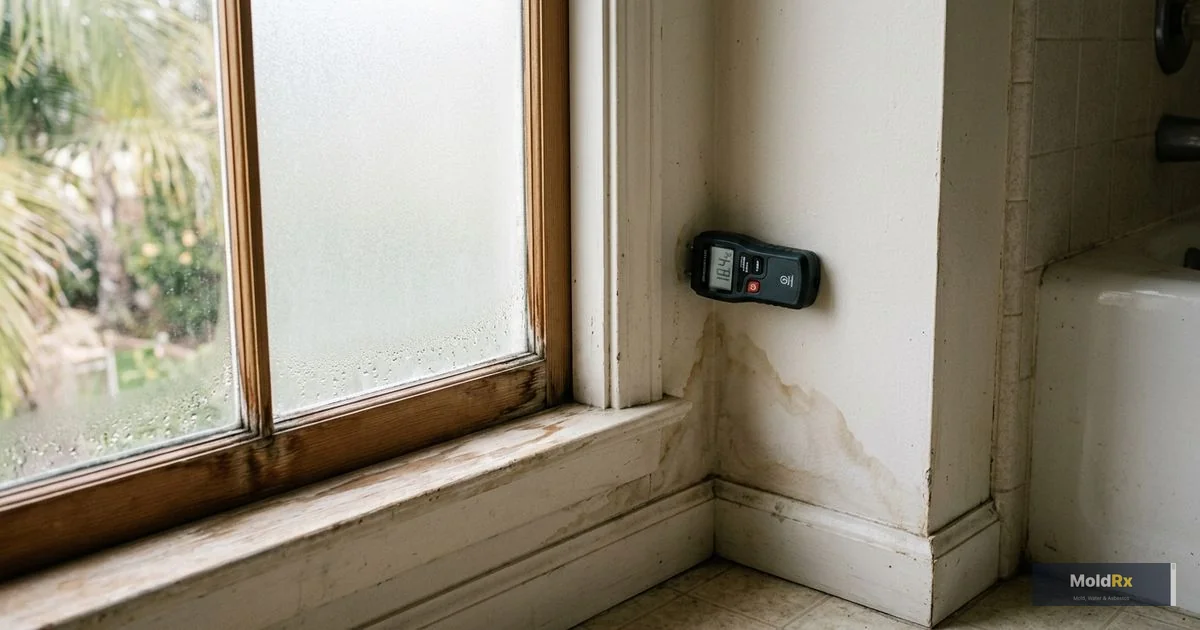
Loma Linda's semi-arid Mediterranean climate pushes summer highs into the mid-90s while winter nights drop into the low 40s. That 50-degree daily swing generates condensation on interior walls, around window frames, and inside poorly insulated attic spaces. Annual rainfall averages around 13 inches concentrated between November and March. Relative humidity cycles between roughly 40% and 56% — with March mornings pushing above 55%. At 1,300 feet, the city sits in a valley pocket where overnight marine moisture pools against the foothills, creating dew-point conditions in crawl spaces, garages, and attic cavities. Per IICRC S520 guidelines and EPA 402-K-01-001, mold colonizes within 24 to 48 hours once conditions are right.
San Timoteo Canyon Drainage and Terrain Moisture
Loma Linda's southern boundary follows the San Timoteo Canyon — a significant drainage corridor channeling seasonal runoff from the surrounding hills. Homes near San Timoteo Canyon Road and Barton Road south of campus sit on alluvial soil deposited by decades of canyon wash. That soil retains more subsurface moisture than typical suburban lots, migrating upward through slab foundations and feeding mold colonies beneath finished flooring. Properties near the Canyon Ranch development and along Redlands Boulevard toward the canyon are particularly vulnerable.
Santa Ana Winds and Rapid Humidity Swings
Santa Ana winds sweep across Loma Linda multiple times between October and March, driving humidity to single digits. When the winds stop, moisture rebounds sharply — creating condensation events throughout the home. Santa Ana conditions also push fine dust and post-fire ash into every gap in the building envelope. That debris absorbs moisture during the rebound, creating a nutrient-rich film inside wall cavities that mold colonizes quickly. The wind itself loosens roofing, cracks stucco, and opens gaps around windows — creating moisture entry points that persist long after the event.
Loma Linda's Aging and Mixed Housing Stock
Much of Loma Linda's residential development occurred between the 1950s and the 1970s as the city grew around the expanding university campus. Homes along Anderson Street, Campus Street, and Prospect Avenue carry original galvanized plumbing, aging HVAC systems, and construction that predates modern moisture-barrier standards. Homes near the medical campus served as faculty and staff housing — decades of turnover mean deferred maintenance is common. Newer developments including Canyon Ranch and areas near Mountain View Avenue use builder-grade materials now 15 to 25 years old, entering the window where plumbing fittings degrade and window seals fail. The result: mold vectors spanning every era of Loma Linda's construction history.
Signs You Need Professional Mold Removal
Not every dark spot requires a remediation crew. But certain signs indicate the problem has moved beyond what household cleaning can address.
Visible Growth Beyond a Small Area
EPA 402-K-01-001 uses 10 square feet as a threshold — contamination exceeding that warrants professional remediation. In Loma Linda homes, growth commonly appears along baseboards near exterior walls, inside bathroom cabinets, around HVAC registers, and in garages where slab moisture meets stored materials. Older campus-area homes with partially below-grade foundations are especially prone.
Persistent Musty Odor Without Visible Mold
If the smell returns after cleaning, mold is likely growing in a concealed space — behind drywall, under flooring, or within HVAC ductwork. Loma Linda homes near San Timoteo Canyon are particularly prone to under-slab moisture that feeds hidden mold with no visible sign. A professional inspection with moisture mapping locates the source without unnecessary demolition.
Recurring Mold After Previous Cleanup
Mold that keeps coming back means the moisture source was never resolved. Surface cleaning kills what's visible but does nothing about the colony behind the surface or the water feeding it. In Loma Linda, recurrence is common when canyon drainage or condensation from aging HVAC systems wasn't identified as the root cause. If you've cleaned the same area more than once, the underlying condition needs professional diagnosis.
Water Damage History
Any previous water event — slab leak, roof leak, failed water heater — can leave residual moisture that supports mold for months. Loma Linda's canyon-adjacent homes experience drainage intrusion that flatland properties don't face. If water intrusion was not dried within the 24-to-48-hour IICRC S520 window, a mold assessment is warranted.
Health Symptoms That Worsen Indoors
Nasal congestion, eye irritation, persistent cough, or worsening asthma that improves when you leave the house may indicate mold exposure. The CDC notes that mold can cause respiratory symptoms in healthy individuals and more severe reactions in those with existing conditions. Combined with any signs above, these symptoms justify professional evaluation.
Health Risks of Mold Exposure
Mold exposure is a legitimate health concern backed by federal agency guidance — and in a community built around longevity, the stakes are especially meaningful. The EPA reports that inhaling mold spores can cause sneezing, runny nose, red eyes, and skin rash. The CDC identifies coughing, wheezing, and throat irritation. The World Health Organization's Guidelines for Indoor Air Quality: Dampness and Mould links prolonged exposure to respiratory infections, asthma development in children, and exacerbation of existing respiratory disease.
Why Indoor Air Quality Matters More in a Blue Zone
Loma Linda's Blue Zone designation is rooted in Adventist Health Studies conducted by the University since 1958 — research showing Adventist men live 7.3 years longer and women 4.4 years longer than other Californians. But longevity research also shows that environmental exposures matter. The WHO guidelines identify dampness and mold as independent risk factors for respiratory disease — eroding the health advantages this community has spent generations building.
Populations at Higher Risk
- Elderly residents — Loma Linda's Blue Zone demographics mean a significant population of older adults living into their 90s and beyond. Weakened immune function increases susceptibility to respiratory infections that mold exposure can facilitate.
- Children — Developing respiratory systems are more susceptible to mold-related irritation. The WHO guidelines specifically identify children as a vulnerable population. University-affiliated housing includes many households with young children.
- Individuals with asthma or allergies — Mold is a known asthma trigger. Loma Linda's Inland Empire location already elevates seasonal allergy burden — foothill pollen and dust combine with indoor mold exposure to compound respiratory stress.
- Immunocompromised individuals — With Loma Linda University Medical Center serving as a Level I trauma center, the surrounding community includes patients undergoing treatment and organ transplant recipients who face elevated risk of fungal infections.
The goal is not to create alarm — it's to explain why timely remediation matters in a community that takes health this seriously.
When DIY Mold Removal Isn't Enough
For small surface mold on non-porous materials, EPA guidance allows homeowner cleanup. But several conditions require professional intervention:
- Contamination exceeding 10 square feet — EPA 402-K-01-001 recommends professional remediation at this threshold
- Mold inside HVAC systems or ductwork — Central air circulates spores throughout the house. NADCA (National Air Duct Cleaners Association) standards apply
- Structural involvement — Mold behind drywall or inside wall cavities requires containment and HEPA filtration homeowners can't safely perform
- Toxic species suspected — Species like Stachybotrys chartarum produce mycotoxins requiring IICRC S520-compliant procedures and PPE beyond hardware-store equipment
- Water category 2 or 3 involvement — Sewage, gray water, or contaminated flooding per IICRC S500 requires professional protocols
- Insurance or real estate documentation needed — Professional remediation generates the records insurers, lenders, and buyers require
When in doubt, a professional assessment tells you whether the situation warrants full remediation or a simpler cleanup. That assessment is part of our free estimate.
How We Remove Mold in Loma Linda Properties
Every remediation follows IICRC S520 standards and the companion ANSI/IICRC R520 Reference Guide — the industry benchmarks recognized by insurers, public health agencies, and courts. Our professionals also adhere to Cal/OSHA Title 8 regulations for worker and occupant safety.
1. Inspection and Moisture Mapping
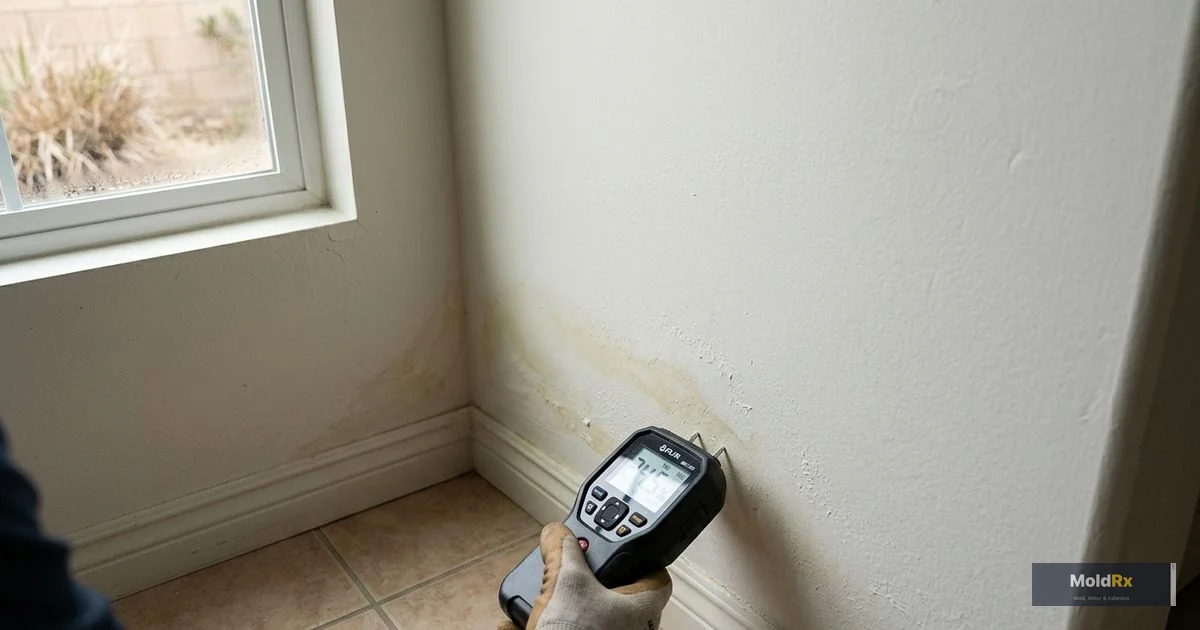
Our specialists map the full scope following EPA 402-K-01-001 assessment protocols. In Loma Linda, that means checking HVAC ductwork in aging campus-area homes, inspecting under-slab moisture from San Timoteo Canyon drainage, examining wall cavities where condensation accumulates, and evaluating foundation moisture on sloped southern lots. You'll know exactly what we're dealing with before work begins.
2. Containment
Physical barriers and negative air pressure isolate the affected area per IICRC S520 Condition 2 and 3 containment protocols. HEPA air scrubbers capture airborne spores down to 0.3 microns, preventing cross-contamination — critical in households with elderly residents, children, or immunocompromised members that the CDC, EPA, and WHO guidelines identify as more vulnerable.
3. Removal and Treatment
Mold-damaged materials — drywall, insulation, carpet padding, porous surfaces — are removed following IICRC S520 procedures and Cal/OSHA Title 8 §5155 exposure limits. Remaining structural surfaces are treated with EPA-registered antimicrobial solutions that eliminate residual spores and inhibit regrowth.
4. Moisture Correction
Removing mold without fixing the water source guarantees it returns. Our specialists identify the underlying cause — canyon alluvial moisture saturating a slab, a failed joint in 1960s galvanized plumbing, inadequate bathroom exhaust, condensation from single-pane windows, or drainage grading that directs runoff toward the foundation. You'll get specific guidance on what needs to change.
5. Post-Remediation Verification
Affected areas are checked against IICRC S520 Condition 1 (normal fungal ecology) clearance standards. You receive full documentation — scope of work, materials removed, treatments applied, moisture readings, and verification results — meeting the evidentiary standards insurers and real estate professionals require.
Mold Removal vs. Mold Remediation: What's the Difference?
The terms get used interchangeably, but they describe different scopes.
Mold removal is the hands-on work: cutting out contaminated drywall, HEPA-vacuuming surfaces, applying antimicrobial treatments. It addresses the mold that's already there.
Mold remediation is the complete IICRC S520 process: assessment, containment, removal, moisture correction, and post-remediation verification. It addresses the mold and the conditions that caused it, returning the space to Condition 1 (normal fungal ecology).
When MoldRx sends professionals to your Loma Linda property, they perform full remediation. Canyon drainage gets traced, condensation sources identified, aging plumbing flagged. Any company offering "mold removal" without addressing the moisture source is selling a temporary fix.
Preventing Mold After Remediation
Once remediation is complete, the right maintenance keeps mold from returning. These prevention measures are calibrated for Loma Linda's inland valley climate and housing conditions:
Control Indoor Humidity
The EPA recommends maintaining indoor humidity between 30% and 50%. Loma Linda's outdoor humidity fluctuates between 40% and 56%, with higher spikes during winter mornings. Use a standalone hygrometer to monitor conditions. Run bathroom exhaust fans during and for 30 minutes after showers. A dehumidifier may be necessary in closets against exterior walls and ground-floor rooms in older campus-area homes.
Address Condensation Zones
Loma Linda's temperature differential creates condensation on exterior walls, single-pane windows (standard in 1950s-1970s construction), metal pipes, and poorly insulated attics. Upgrade to double-pane windows, improve attic insulation, and wrap cold water pipes. Focus on north-facing walls and any wall where the exterior grade sits higher than the interior floor level.
Manage Drainage Around Foundations
For homes near San Timoteo Canyon and the Canyon Ranch area, keep drainage swales and retaining wall weep holes clear. Grade landscaping away from the foundation. Ensure gutters and downspouts discharge at least six feet from the foundation wall. Persistent dampness along baseboards warrants a moisture assessment before mold establishes.
Fix Water Intrusion Promptly
Address roof leaks, plumbing drips, water heater failures, and slab moisture within 24 to 48 hours — the IICRC S520 window before mold colonization begins. Loma Linda's winter storms overwhelm aging gutters on mid-century homes. The faster you eliminate standing water, the lower your risk.
Schedule Periodic Inspections
An annual moisture inspection catches developing problems before they become remediation projects. Especially valuable for pre-1980 campus-area homes with aging plumbing, canyon-adjacent foundations, and properties where deferred maintenance has compounded moisture risk.
What Sets MoldRx Apart
-
Straight talk, not sales talk. If your situation is smaller than you feared, we'll tell you. We don't manufacture problems to inflate a job.
-
Licensed, insured, IICRC-certified. Our vetted professionals hold IICRC certifications, carry CSLB (Contractors State License Board) licensing, and maintain insurance required for remediation in San Bernardino County.
-
Full documentation on every job. Detailed records of work completed, materials removed, treatments applied, and moisture readings — protecting you with insurers and in real estate transactions.
-
Family-owned accountability. MoldRx is not a call center. We only send vetted remediation professionals we stand behind.
Get your free estimate — no obligations, no pressure. Just a clear picture of your situation.
Loma Linda Neighborhoods We Serve
MoldRx provides mold removal across every neighborhood in Loma Linda — ZIP codes 92350, 92354, and 92357 — including residential, commercial, and multi-family properties.
-
University / Campus District — The core of Loma Linda surrounding the University and Medical Center along Anderson Street, Campus Street, and Stewart Street. Faculty and staff housing from the 1950s-1970s with original plumbing, minimal moisture barriers, and decades of tenant turnover. Aging HVAC systems and irrigation-fed campus landscaping elevating ground moisture make this the city's most consistent source of remediation calls.
-
North Loma Linda / Beaumont Avenue Corridor — Neighborhoods north of Barton Road along Beaumont Avenue toward the San Bernardino border. A mix of 1960s-1970s single-family homes and multi-family units with galvanized plumbing, aging flat roofs, and mature tree roots encroaching on water lines.
-
Barton Road Corridor — The commercial and residential spine running east-west through city center. Housing dates from the 1960s-1980s with builder-grade stucco and original window seals. Proximity to commercial irrigation runoff contributes to exterior moisture intrusion.
-
South Loma Linda / San Timoteo Canyon Edge — Properties near San Timoteo Canyon Road and the Canyon Ranch development. Alluvial soil retains elevated subsurface moisture. Newer Canyon Ranch homes (2,100-4,000 sq ft, 2010s-2020s) sit on graded lots where cut-and-fill construction channels water toward foundations.
-
Prospect Avenue / Mountain View — Eastern neighborhoods transitioning toward Redlands, homes from the 1970s-1990s. Higher elevation and foothill drainage increase condensation risk. Polybutylene plumbing from 1980s construction produces slow, hidden leaks mold thrives on.
-
West Loma Linda / Colton Border — Western edge near the Colton and Grand Terrace boundaries. Older 1950s-1960s stock with deferred maintenance — aged roofing, original ductwork, poor drainage grading. Multi-family rentals are particularly prone to mold from delayed leak repairs.
Nearby Communities We Also Serve
Our vetted professionals also cover surrounding San Bernardino County communities:
- Redlands — East of Loma Linda, with historic citrus-era homes and comparable foothill drainage
- Highland — North along the San Bernardino Mountain base, sharing canyon drainage and elevation exposure
- San Bernardino — County seat northwest of Loma Linda, with similar climate and older housing stock
- Grand Terrace — Southwest neighbor with hillside drainage and graded-lot construction
- Colton — Western neighbor sharing the San Bernardino Valley floor and aging infrastructure
Related Services in Loma Linda
Mold rarely exists in isolation. If you're dealing with water damage, need testing before remediation, or own a pre-1980s property that may contain asbestos, we cover those too:
→ All remediation services in Loma Linda
Frequently Asked Questions
How long does mold remediation take in Loma Linda?
Most projects take 2 to 5 days. A single-room bathroom issue may wrap in a day. Multi-room remediation involving slab moisture or HVAC contamination can take a week or longer. We'll give you a realistic timeline after assessment.
Do I need mold testing before removal starts?
If mold is visible, testing isn't always required — the priority is removal and moisture correction. Testing becomes valuable when you suspect hidden mold, need insurance documentation, or are in a real estate transaction.
Will my homeowner's insurance cover mold removal?
It depends on the cause. Mold from a sudden covered event — like a burst pipe — is often covered. Mold from long-term deferred maintenance typically is not. Our documentation supports legitimate claims with clear evidence of cause, scope, and work performed.
Can I stay home during remediation?
Usually, yes. Containment and HEPA filtration keep spores isolated from living areas. For larger projects or if anyone has asthma or a compromised immune system, we may recommend temporary relocation during the most intensive phases.
Does Loma Linda's canyon proximity affect mold risk?
It does. San Timoteo Canyon channels seasonal runoff along the city's southern edge, and alluvial soil retains subsurface moisture that standard construction doesn't account for. Properties near the canyon and in graded canyon-edge developments experience elevated foundation moisture we encounter regularly.
How do I know if I have mold behind my walls?
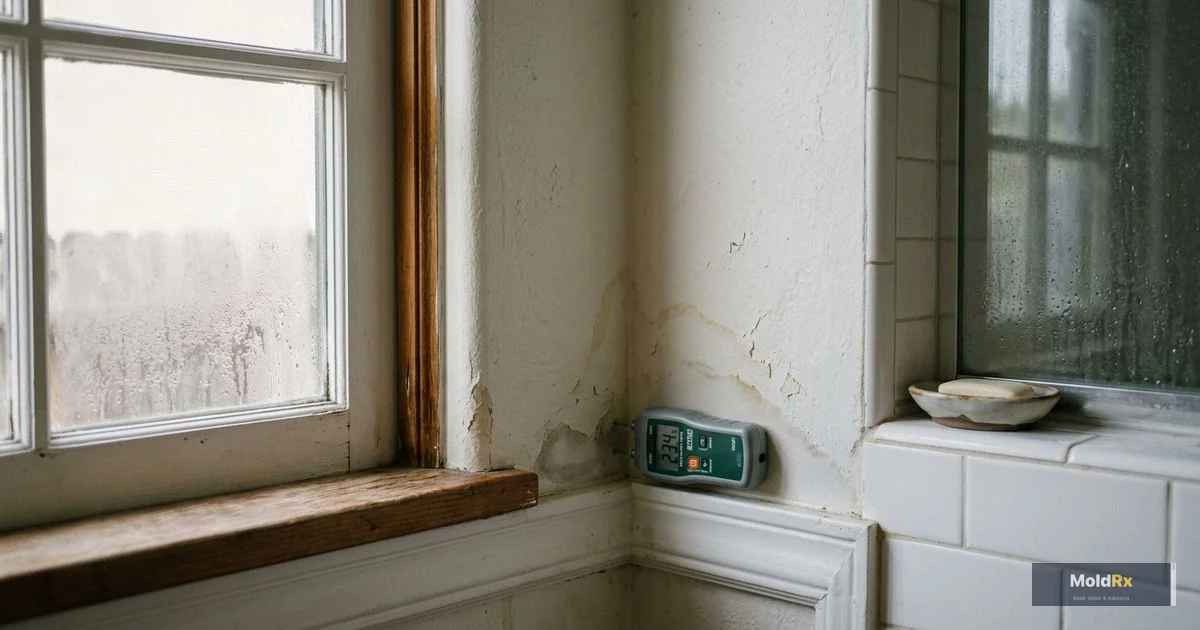
Persistent musty smell, water staining on walls or ceilings, peeling paint, and worsening allergy symptoms indoors. In Loma Linda, check baseboards near exterior walls in mid-century campus housing, bathrooms without exhaust fans, and anywhere plumbing runs through walls. Moisture mapping confirms what's there without demolition.
What's the difference between mold removal and mold remediation?
Removal is the physical elimination of mold growth. Remediation is the complete IICRC S520 process — assessment, containment, removal, moisture correction, and verification. MoldRx professionals perform full remediation on every job.
Is black mold more dangerous than other types?
Stachybotrys chartarum (black mold) produces mycotoxins that can cause more severe effects than common species. However, the CDC advises treating all mold the same from a remediation standpoint — the IICRC S520 protocol doesn't change based on species. Color alone doesn't identify type; lab testing is required. Regardless of species, mold exceeding 10 square feet warrants professional remediation.
Does living in a Blue Zone make indoor air quality more important?
Loma Linda's Blue Zone status reflects decades of health-conscious choices — plant-based diets, regular exercise, and avoidance of smoking and alcohol. The Adventist Health Studies show these practices add 7 to 10 years of life expectancy. But the WHO Guidelines for Indoor Air Quality makes clear that home air quality is an independent health variable. Dampness and mold exposure are linked to respiratory infections and asthma regardless of lifestyle. Protecting indoor air quality is a logical extension of the same principles that earned Loma Linda its Blue Zone designation.
How do I prepare my home for mold remediation?
Clear personal items from the affected area, ensure access paths for equipment, and secure pets away from the work zone. Don't attempt cleanup yourself before we arrive — disturbing contaminated materials spreads spores into your home's air and HVAC system. We'll provide specific instructions during assessment.
Get Mold Removal in Loma Linda
Mold spreads. The longer moisture stays unchecked — rising through a slab from canyon alluvial deposits, condensing on walls in a 1960s campus home, seeping through gaps opened by Santa Ana winds — the further it reaches into your home's structure and your family's air. In a community built around longevity, that's not something to sit on.
MoldRx only sends vetted professionals who understand Loma Linda properties — canyon drainage, aging plumbing, builder-grade failures, and inland condensation patterns. No guesswork. No runaround.
Call MoldRx for your free estimate — (888) 609-8907. Clear answers. Honest guidance. Work done right.