You noticed it on the window sill first — dark spots along the bottom edge of the frame, maybe some discoloration creeping onto the surrounding drywall. You wiped it off, and it came back within a few weeks.
Mold around windows is usually caused by condensation, failed flashing, or both — and the visible mold on the sill or frame may be the least of the problem. The window is the coldest surface in the wall assembly, making it the first place moisture condenses. It's also a penetration through the building envelope — the most likely place for rain to enter the wall cavity if flashing has failed. Either mechanism creates the sustained moisture that mold needs to grow.
Surface mold on a window sill can be cleaned. But if it keeps returning or has spread onto surrounding drywall and trim, the problem likely extends into the wall cavity. This guide explains why windows grow mold, how to distinguish a surface issue from a structural one, what makes Southern California windows particularly vulnerable, and when to call a professional.
Why Windows Are Mold Magnets
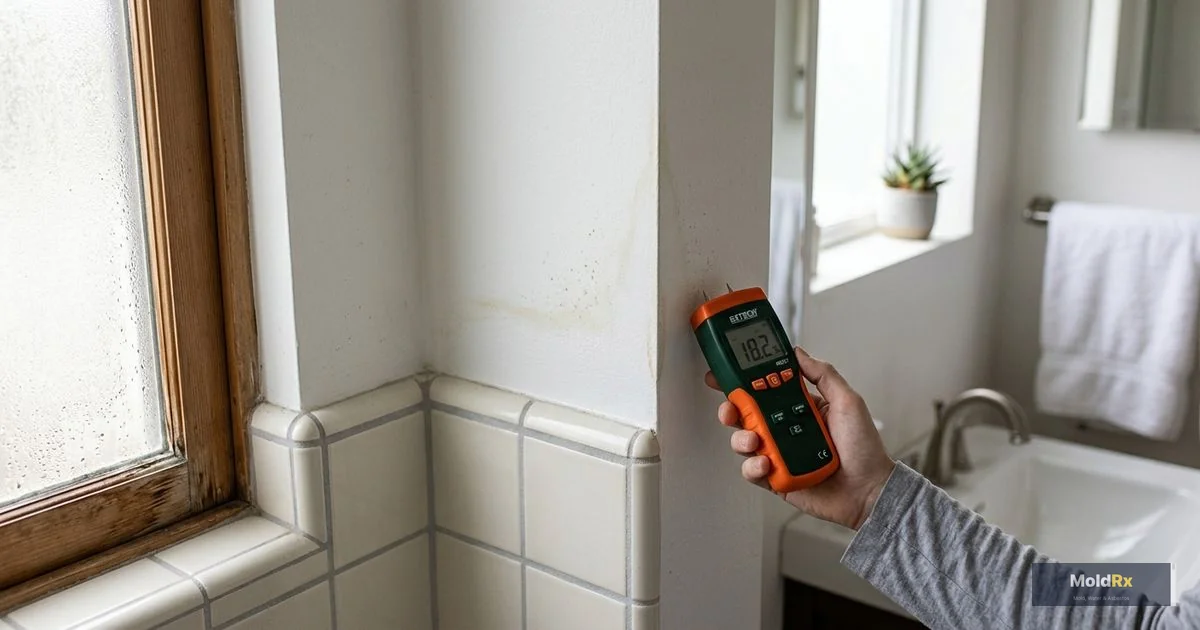
Every window in your home is a weak point in two ways: thermally and structurally. Understanding both explains why mold around windows is so common.
The Condensation Problem
Windows are the coldest surface in any wall. Glass insulates poorly — a single-pane window has an R-value of roughly 1, compared to R-13 or higher for an insulated wall. Aluminum frames conduct heat even faster. When warm, humid indoor air contacts these cold surfaces, water vapor condenses into liquid water, collects on the glass, runs down to the sill, and pools along the bottom edge of the frame.
If the sill doesn't dry completely before the next condensation cycle, moisture accumulates. Within 24 to 48 hours of sustained dampness, mold spores can germinate. The temperature differential doesn't have to be extreme — indoor air at 72 degrees and 55% relative humidity will condense on any surface below 55 degrees, and single-pane windows easily drop that low on a cool morning. Learn more in our guide to mold from condensation.
The Flashing Problem
Windows are also holes cut through the building envelope. Every window installation relies on flashing — head flashing above, pan flashing at the sill, side flashing along the jambs — to direct rain away from the wall cavity and back onto the drainage plane. When flashing fails because it was improperly installed, sealant has deteriorated, or the building has settled and opened gaps, rain enters the wall cavity through the window opening. This water saturates framing, soaks insulation, and wets the backside of interior drywall.
Flashing failure is insidious because it doesn't always produce a visible leak. Water can enter the wall cavity during rain, saturate materials, and never reach the interior surface in quantities you'd notice. There's no puddle, no drip — just slowly accumulating moisture behind the wall that feeds mold growth for months or years before any visible sign appears.
When Both Happen Together
Many window mold problems involve both mechanisms simultaneously. Condensation keeps the sill chronically damp from the inside while failed flashing lets rain wet the wall cavity from the outside. This is why window mold that "keeps coming back" after cleaning is so common — you're cleaning the surface condensation mold while a hidden moisture source behind the wall continues feeding growth you can't reach.
Surface Mold vs. Structural Mold Around Windows
The critical question isn't whether you have mold around your window — it's whether it's limited to the surface or has penetrated into structural materials and the wall cavity behind.
Surface Mold: Usually Manageable
Surface mold on a window sill, glass, or frame sits on top of non-porous surfaces and hasn't penetrated the material. Signs it's surface-level: the mold is only on glass, metal/vinyl frame, or a painted sill; it wipes off with detergent; the sill and surrounding drywall feel firm and dry; there's no musty smell; and there's no paint bubbling or discoloration on the wall around the window. Surface mold means your window is producing condensation — a ventilation and humidity issue worth addressing — but the mold itself is a cleaning task, not a remediation project.
Structural Penetration: Needs Professional Assessment
When mold has moved into surrounding drywall, wood trim, or the wall cavity behind the window, it has penetrated porous materials and established root structures that surface cleaning can't reach.
Signs it's gone deeper: mold on drywall surrounding the window (dark spots, fuzzy growth, or discoloration bleeding through paint), wood trim that feels soft or punky when pressed, paint bubbling or peeling on the wall below the window, a musty odor that intensifies after rain, mold that returns within days or weeks of cleaning, water staining on the wall below the window after rain, or drywall that feels damp compared to surrounding areas. Any of these suggests the problem has extended behind the visible surface. Learn more about identifying hidden mold behind walls.
SoCal Window Factors: Why This Problem Is Everywhere Here
Southern California has a specific combination of climate, construction history, and building materials that makes window mold remarkably common.
Marine Layer Condensation
Coastal communities from San Clemente to Long Beach experience morning humidity of 70% to 85% during the marine layer season (late spring through early fall). This humid air enters homes through open windows and the building envelope, then condenses on cool glass and frames. Homeowners who wake up to wet windows every morning during "May Gray" and "June Gloom" are watching the condensation cycle sustain mold in real time. Southern California's humidity patterns vary by microclimate, and condensation can form wherever the temperature gap is wide enough to hit the dew point.
Aluminum Single-Pane Windows in 1960s-1970s Homes
Southern California's post-war building boom produced millions of homes with aluminum-framed, single-pane windows still in place throughout Orange County, Riverside County, and San Bernardino County. Aluminum conducts heat roughly 1,500 times faster than wood, and single-pane glass provides virtually no insulation — making these windows condensation magnets that wet the sill every time humidity rises even moderately. These same homes often lack wall insulation, meaning condensation forms on drywall adjacent to the frame, not just on the glass and sill.
Stucco-to-Window Flashing
The stucco-to-window transition is one of the most failure-prone details in SoCal's dominant exterior cladding. Proper installation requires head flashing integrated with the weather-resistant barrier, pan flashing at the sill, side flashing at the jambs, and a proper sealant joint. Many homes built during the 1970s through 1990s have inadequate or missing window flashing — building paper not properly lapped, pan flashing absent, sealant cracked from decades of UV exposure.
When stucco absorbs rain and moisture migrates to the window opening, failed flashing lets it enter the wall cavity — a primary pathway for hidden moisture intrusion behind stucco. Homes that show no intrusion during light rain can leak significantly around windows during hard storms with lateral wind. Homeowners who see moisture on sills only after storms are likely dealing with water intrusion rather than condensation.
How to Clean Surface Mold on Window Sills
For mold limited to the surface of non-porous window components — glass, aluminum or vinyl frames, painted sills — here's the effective approach.
What to Use
Use plain detergent (dish soap or all-purpose cleaner) and water with a scrub brush or sponge. Detergent physically removes the mold and the organic film it's feeding on. Skip the bleach — it doesn't penetrate porous materials, produces harsh fumes in enclosed spaces, and can corrode aluminum frames. For stubborn spots, a paste of baking soda and water left for 10 to 15 minutes before scrubbing can help.
Step by Step
- Open the window for ventilation or work with a fan circulating air away from you.
- Remove loose debris from the sill track — dust, dead insects, and organic matter that feeds mold growth.
- Apply detergent solution and let it sit for 5 to 10 minutes, then scrub with a stiff brush. Use a toothbrush for frame corners and sill track crevices.
- Rinse thoroughly and dry all surfaces completely with a clean towel.
- Inspect the surrounding area. Check drywall and trim around the window for signs of spread. Press on the drywall below the window — it should feel firm and dry.
- Clean the window track. Clear any debris blocking the weep holes and dry the track completely so water drains out rather than pooling.
When DIY Cleaning Is Enough
Your cleanup is sufficient when all of the following are true:
- Mold is only on non-porous surfaces — glass, metal or vinyl frame, painted sill
- Surrounding drywall and wood trim are firm, dry, and show no discoloration
- The cleaned surfaces stay clean for more than a few weeks
- There's no musty odor near the window
- No one in the household is experiencing respiratory symptoms
When Professional Assessment Is Needed
Some window mold situations go beyond what cleaning can solve. Consider professional mold remediation when:
Mold Has Spread to Drywall or Wood Trim
Mold on the drywall beside, below, or above a window has penetrated the material — drywall with visible surface mold almost certainly has more extensive growth on its paper backing. This typically requires removal and replacement under containment. Learn more about what professional mold remediation involves.
The Mold Keeps Returning
You've cleaned the sill three times and it comes back every time. That cycle means the condensation source hasn't been addressed, or there's a moisture source behind the wall that you can't reach with a scrub brush — often both. Recurring window mold is one of the most common reasons homeowners discover they have a concealed water intrusion problem.
You See Moisture After Rain (Not Just on Cool Mornings)
Water appearing around the sill after rain — as opposed to cool mornings when condensation is expected — means water is entering through the building envelope. The moisture visible on the interior is a fraction of what the wall cavity is absorbing.
The Wall Below the Window Shows Damage
Water follows gravity. Damage below the window — paint bubbling, baseboard separation, discoloration, or soft drywall — suggests water has been traveling through the wall cavity for some time. By the time visible damage appears, framing and sheathing inside the wall have likely been wet for an extended period.
Health Symptoms Are Present
If anyone in the household has respiratory symptoms that improve when they leave the house, the indoor environment needs professional assessment. Mold testing can identify whether spore levels are elevated and what species are present.
Prevention: Keeping Windows Mold-Free
Preventing mold around windows means controlling the two moisture sources that cause it: condensation and water intrusion.
Upgrade to Double-Pane Windows
Replacing single-pane aluminum windows with double-pane (insulated) windows is the most effective step for eliminating window condensation. Double-pane windows insulate two to three times better than single-pane, and vinyl or fiberglass frames don't conduct heat the way aluminum does. The interior glass surface stays closer to room temperature, dramatically reducing the temperature differential that causes condensation. It's a significant investment, but for homes with chronic window condensation it addresses the root cause rather than managing the symptom.
Maintain Caulk and Sealant
The sealant joint where the window frame meets the exterior wall is your primary defense against rain entering the wall cavity. Inspect annually for cracks, gaps, or sealant that has hardened and pulled away. Re-caulk with a high-quality exterior sealant (polyurethane or silicone-based) whenever you see deterioration. Pay particular attention to the top of the window, where water running down the wall converges — a failed joint there lets water behind the frame and into the rough opening.
Control Indoor Humidity
Keep indoor relative humidity between 30% and 50%. At 50% RH and 72 degrees, the dew point is around 52 degrees — low enough that even single-pane windows may avoid condensation most mornings. At 60% RH, condensation on poorly insulated windows becomes almost certain. Practical steps for managing humidity in your SoCal home:
- Run bathroom and kitchen exhaust fans during and after moisture-generating activities
- Use a hygrometer to monitor humidity in rooms with problem windows
- Run a dehumidifier in rooms with chronically elevated humidity, particularly during marine layer season
- Check that dryer vents terminate outdoors — vents that discharge into garages or crawl spaces add enormous moisture loads
Improve Ventilation and Manage Condensation
Stagnant air against a cold window condenses faster than moving air. Don't block windows with heavy drapes that trap humid air against the glass — leave a gap at the bottom for air movement. Run ceiling fans on low to circulate air, especially in bedrooms where windows are closed all night.
If your windows produce condensation regularly, wipe them down each morning with a microfiber cloth or squeegee. It takes 30 seconds per window and prevents the daily accumulation that sustains mold growth. Focus on the sill and the bottom edge of the glass where water pools. This is management, not a solution — the solution is eliminating condensation through window upgrades and humidity control — but daily wiping prevents mold from establishing while you address the root cause.
Mold Around Windows FAQs
Is black mold around windows dangerous?
The color of mold doesn't reliably indicate its species or toxicity. Many common window molds appear dark or black without being particularly harmful. What matters more is the extent of growth, the materials it has colonized, and whether anyone has symptoms. Mold limited to a sill surface is a different concern than mold that has spread into the wall cavity. If you're unsure, professional mold testing can identify the species and assess air quality.
Why do only some of my windows have mold?
Different windows have different condensation profiles. North-facing windows stay cooler because they receive less sunlight. Windows in higher-humidity rooms — bathrooms, kitchens, bedrooms with doors closed at night — see more condensation. Single-pane condenses more than double-pane. If only certain windows have mold, those windows are likely colder, in more humid rooms, or both.
Can I just paint over the mold on my window frame?
No. Paint conceals mold temporarily but doesn't stop growth — it will eventually blister and peel as the mold expands underneath. Clean the mold first, address the moisture source, let the surface dry completely, then repaint with a mold-resistant primer and paint.
Does window condensation always mean I have a mold problem?
Not necessarily. Occasional condensation on cold mornings or after cooking is normal. It becomes a mold risk when it occurs daily, pools on the sill, and surfaces don't dry completely between episodes. Windows that fog briefly and dry within an hour or two are unlikely to sustain mold growth. A sill that's wet every morning and never fully dries is a problem.
My window leaks during heavy rain. Is that causing the mold?
Very likely. Water entering around a window during rain is a flashing or sealant failure. The visible water on the sill is only what made it all the way through — the wall cavity is absorbing moisture you can't see. Rain-related window leaks need professional assessment to identify the intrusion pathway and evaluate the wall cavity. Don't just caulk the interior — the moisture source is on the exterior side.
Will a dehumidifier stop mold around my windows?
A dehumidifier reduces indoor humidity, raising the threshold for condensation. It can help in rooms with chronically elevated humidity, but it doesn't fix flashing failures or replace proper ventilation. Think of it as one tool in a broader strategy that includes humidity management, window upgrades, and building envelope maintenance.
Should I replace the window or just clean the mold?
That depends on the cause. Condensation mold on a single-pane or aluminum window often warrants a double-pane upgrade that eliminates the root cause. Failed flashing may not require window replacement, but the flashing and surrounding wall cavity need professional attention. If the frame itself is rotted or deformed, replacement is necessary regardless.
How do I know if mold around my window has gotten into the wall?
Look for a musty smell that persists after cleaning visible mold, paint bubbling on the surrounding wall, drywall that feels soft or damp, staining below the window, and mold that returns quickly after cleaning. Any of these suggests growth has extended into the wall cavity. Professional assessment with thermal imaging or moisture meters can determine the extent without unnecessary demolition. Read more about signs of mold behind walls.
Is mold around windows covered by homeowners insurance?
Generally, no. Most policies exclude mold from maintenance issues, condensation, or gradual water intrusion — which covers the majority of window mold scenarios. Insurance may cover mold from a sudden accidental event (a storm that damages a window and causes immediate water intrusion), but not long-term condensation or gradually failing sealant. Check your specific policy and document everything if you believe a covered event contributed.
Can mold around windows affect the rest of the house?
Yes. Mold produces microscopic spores that travel through air currents, HVAC systems, and natural air movement between rooms. A window with active mold in the wall cavity can elevate spore counts throughout the home, which is why hidden mold behind windows can cause symptoms in rooms far from the affected window.
Take the Next Step
If the mold on your window sill wipes off easily and the surrounding wall is firm and dry, the guidance in this article can help you clean it up and prevent it from returning. Condensation management, humidity control, and basic caulk maintenance go a long way.
If the mold keeps coming back, has spread onto drywall or trim, or the wall shows any sign of damage — those are signals the problem has moved into the wall cavity where cleaning can't reach it. MoldRx coordinates professional mold remediation and mold testing with IICRC S520-certified specialists throughout Orange County, Riverside County, and San Bernardino County.
Call (888) 609-8907 to talk to a real person about what you're seeing. No scripts, no sales pitch — just honest guidance about whether your window mold needs professional attention or whether you've got this on your own. Or request a free estimate online and we'll follow up on your schedule.