That dark stuff along your shower caulk, the spots on the ceiling above the tub, the discoloration creeping along the baseboard behind the toilet — is it dangerous? Do you need a professional, or can you handle it yourself?
Here's the short answer: most bathroom mold is surface-level mildew on non-porous surfaces like tile and glass, and you can clean it yourself with detergent and water. It becomes a genuine concern when it's growing on porous materials like drywall or wood, when it covers a significant area, when it recurs after cleaning, or when household members are experiencing health symptoms. The difference between "clean it up this weekend" and "call a professional" comes down to what the mold is growing on, how much there is, and whether there's a moisture problem you haven't solved.
This guide will help you assess your specific situation, handle what you can, and recognize when it's time for professional help.
Why Bathrooms Are Mold Magnets
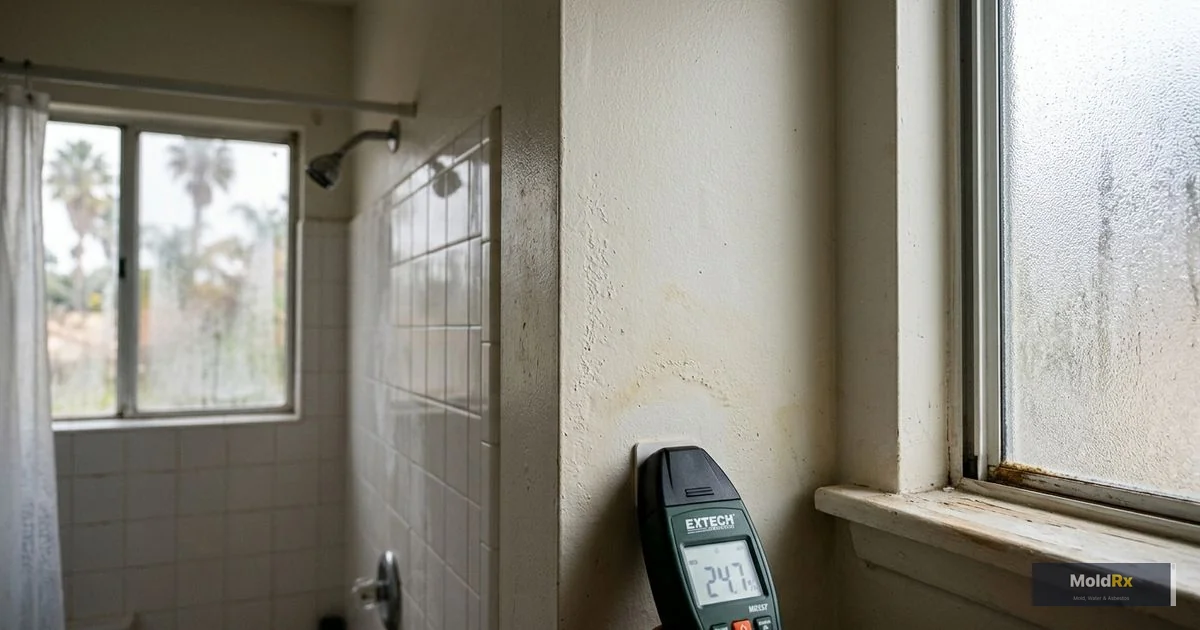
Bathrooms are the most common location for mold in any home, and the reasons are straightforward. Every shower, bath, and running faucet adds moisture to a small, enclosed space. Warm, humid air contacts cooler surfaces — mirrors, exterior walls, windows — and condenses. Soap residue, skin cells, and organic matter provide food for mold growth.
Even well-maintained bathrooms experience this cycle daily. The critical variable is whether that moisture dries out between uses or accumulates over time. A bathroom with good ventilation can handle the moisture load. A bathroom with poor ventilation, infrequent use, or an undetected leak creates conditions where mold moves from a cosmetic nuisance to a structural problem.
Types of Mold You'll Find in Bathrooms
Not all bathroom mold is the same, and the type matters less than you might think. Online searches for "black mold in bathroom" tend to create unnecessary panic. Here's what you're actually looking at.
Surface Mildew on Tile, Glass, and Fixtures
The pink, gray, or dark film on grout lines, caulk, shower doors, and tile surfaces is almost always surface mildew — the most common and least concerning type. It grows on moisture and soap residue sitting on non-porous surfaces. It looks bad, but it hasn't penetrated the material. It wipes off relatively easily and poses minimal health risk for most people.
Mold in Caulk and Grout
Grout is porous and can absorb moisture, allowing mold to grow slightly below the surface. Caulk develops mold within its material over time, especially as it ages and cracks. You'll notice this when cleaning removes mold from tile but grout or caulk lines remain dark. This isn't structurally dangerous on its own, but failed caulk also lets water behind the wall — which leads to the next category.
Mold on Drywall, Wood, and Structural Materials
This is where bathroom mold moves from a cleaning task to a real problem. Drywall absorbs moisture and provides organic material (the paper facing) that mold feeds on. Wood baseboards, vanity cabinets, and door frames are similarly vulnerable. When mold appears on these porous materials, it has likely penetrated below the visible surface — surface cleaning won't reach the root structures growing into the material itself.
Signs to watch for: Dark spots, fuzzy patches, or water stain halos on drywall walls or ceilings. Paint bubbling, peeling, or soft to the touch. Dark staining on baseboards or cabinet bases. Wood that feels soft, spongy, or warped. These conditions indicate sustained moisture exposure, and the mold you see is likely only part of what's there.
Surface Mold vs. Structural Penetration: The Critical Distinction
The single most important question when you find mold in your bathroom isn't "what color is it?" — it's "what is it growing on?"
Surface Mold (Usually DIY-Manageable)
Mold on non-porous surfaces — ceramic tile, porcelain, glass, metal fixtures, sealed stone — is sitting on top of the material. It hasn't penetrated because the material doesn't absorb moisture. This is the mold you can clean yourself, and it stays clean as long as you improve the ventilation that allowed it to grow.
Structural Penetration (Usually Needs Professional Assessment)
Mold on porous materials — drywall, wood, unsealed grout, carpet, ceiling tile, insulation — has grown into the material. By the time it's visible on the surface, root structures (hyphae) have extended into the material itself. Wiping or scrubbing removes what you can see but leaves the root system intact. The mold regrows, often within days or weeks.
This distinction is why the EPA's general guideline suggests homeowners can handle mold on hard, non-porous surfaces under about 10 square feet — and why anything beyond that, or anything on porous materials, warrants professional evaluation.
How to Clean Surface Bathroom Mold Yourself
For surface mold on tile, glass, fixtures, and other non-porous surfaces, here's what actually works — and what doesn't.
Use Detergent, Not Bleach
The most effective approach is plain detergent (dish soap or an all-purpose cleaner) and water, applied with a scrub brush or sponge. This physically removes the mold and the organic residue it's feeding on. For grout lines, use a stiff-bristled brush. For stubborn grout staining, a paste of baking soda and water left for 10-15 minutes before scrubbing can help.
Why not bleach? Bleach doesn't penetrate porous materials. The water in the solution soaks into grout and caulk while the active ingredient (sodium hypochlorite) stays on the surface — feeding the roots of mold beneath while only bleaching the visible surface white. Bleach also produces harsh fumes in enclosed spaces and can damage fixtures, colored grout, and natural stone. Detergent physically removes mold rather than chemically killing it, which is what matters on surfaces you can access directly.
Step-by-Step Cleaning Process
- Ventilate the space. Open a window or run the exhaust fan.
- Apply detergent solution generously. Let it sit for 5-10 minutes.
- Scrub with a brush or sponge. Stiff bristles for grout; a sponge for smooth tile and glass.
- Rinse thoroughly and dry surfaces with a clean towel.
- Replace failed caulk. If caulk stays dark after cleaning, it needs to be removed and replaced with a mold-resistant silicone product.
- Dry everything. Run the exhaust fan for at least 30 minutes after cleaning.
When DIY Cleaning Is Sufficient
Your cleanup is likely adequate when all of the following are true:
- The mold is only on non-porous surfaces (tile, glass, porcelain, sealed countertops, fixtures)
- The affected area is less than about 10 square feet total
- The mold comes off with scrubbing and doesn't reappear within a few weeks
- No one in the household is experiencing respiratory symptoms or allergic reactions
- There are no signs of moisture damage to drywall, wood, or other structural materials
When to Call a Professional
Some bathroom mold situations go beyond what cleaning can solve. Recognizing these situations early saves time, money, and potential health consequences. Consider professional mold remediation when:
The Mold Is on Drywall or Structural Materials
Mold on bathroom drywall — walls or ceiling — has penetrated into the paper facing and potentially the gypsum core. Surface cleaning removes what you can see but leaves root structures intact. The drywall typically needs to be cut out and replaced, and what's behind it (insulation, framing) needs to be inspected. This requires containment to prevent spore spread during removal. Learn more about what happens during professional mold remediation.
The Affected Area Is Large
If mold covers more than about 10 square feet — roughly a 3x3-foot section — the scope exceeds what DIY methods can safely address. Disturbing large areas of mold without containment and HEPA filtration releases millions of spores into the air, potentially spreading the problem to other rooms.
The Mold Keeps Coming Back
You've cleaned it. It came back within weeks. You cleaned it again. It's back again. Recurring mold means one of two things: either the moisture source hasn't been addressed, or the mold has penetrated deeper than surface cleaning can reach. Often both. Professional assessment identifies the root cause — a hidden leak, inadequate ventilation, failed waterproofing, or deteriorated grout and caulk that's letting water behind the wall.
You Smell Mold but Can't See It
A persistent musty odor in your bathroom — especially one that doesn't go away after cleaning — suggests mold growing in a location you can't access: behind tile walls, inside the wall cavity, under the bathtub, beneath the vanity, or in the subfloor. Hidden mold is common in bathrooms because so many surfaces are sealed over potential moisture paths. Learn about how professionals detect hidden mold behind walls and under floors.
Health Symptoms Are Present
If anyone in your household has respiratory symptoms — coughing, wheezing, congestion — or allergic reactions that improve when they leave the house, mold exposure could be a contributing factor. This is particularly important for children, elderly family members, and anyone with asthma or a compromised immune system. Don't troubleshoot — get the environment assessed.
You're Unsure What You're Dealing With
If you can't tell whether it's surface mildew or something deeper, a professional assessment gives you clarity. Mold testing can identify elevated spore levels, species present, and whether indoor air quality has been affected. Learn more about when mold testing is and isn't worth it.
Preventing Bathroom Mold: Ventilation Is Everything
The most effective mold prevention strategy for bathrooms is controlling moisture — and that comes down to ventilation. Every other prevention measure is secondary.
Your Exhaust Fan
Your bathroom exhaust fan is the single most important mold prevention tool. Run it during every shower or bath and for at least 20-30 minutes afterward. Make sure it actually vents to the exterior — some older fans vent into the attic, which just relocates the moisture problem. Test it by holding tissue paper near the intake: if the tissue is pulled toward the fan, it's working; if it just flutters, the fan may be clogged, underpowered, or disconnected. Standard bathrooms need at least 50 CFM; larger bathrooms should have 1 CFM per square foot.
Daily Habits
- Squeegee shower walls and doors after each use to remove standing water
- Leave the shower door open or spread the curtain so surfaces dry between uses
- Hang towels to dry fully rather than leaving them bunched on hooks or the floor
- Fix drips immediately — a dripping faucet or running toilet adds constant moisture
Structural Maintenance
- Inspect grout and caulk annually and replace when you see gaps, cracks, or separation — these are the most common pathways for water behind tile
- Use mold-resistant paint on bathroom ceilings and exposed drywall surfaces
- Check for hidden leaks periodically — under the vanity, around the toilet base, and on the ceiling below second-floor bathrooms
The Hidden Leak Problem
Many bathroom mold problems that seem like ventilation issues are actually caused — or worsened — by hidden leaks. Water behind tile, under the tub, or through failed connections doesn't always announce itself with visible dripping. It slowly saturates materials behind sealed surfaces.
Common sources:
- Failed shower pan or tub surround — water seeps through deteriorated grout or caulk gaps and saturates the subfloor and framing behind the tile
- Slow supply line leaks — connections behind the wall that drip intermittently, keeping cavity materials damp with no visible sign
- Toilet wax ring failure — water from every flush seeps under the base into the subfloor, causing hidden mold and rot
- Condensation on pipes — cold supply pipes in a humid environment drip condensation onto framing and subfloor inside the wall
If you're seeing mold on baseboards, at the base of walls, or on the ceiling below an upstairs bathroom — or if you smell mold without seeing it — a hidden leak is a likely explanation. These situations need professional assessment because the moisture source must be corrected before any mold treatment will last.
Bathroom Mold FAQs
Is black mold in the bathroom dangerous?
The color of mold doesn't reliably indicate its species or toxicity. Many common bathroom molds appear dark or black — including species that are not particularly harmful. The infamous "toxic black mold" (Stachybotrys chartarum) actually requires sustained saturation of cellulose materials and is less common on bathroom surfaces than many people assume. What matters more than color is the material the mold is growing on, the extent of growth, and whether anyone is experiencing symptoms. If you're concerned, professional mold testing can identify the species present.
Can bathroom mold make you sick?
Yes, but context matters. For most healthy adults, surface mildew on bathroom tile produces minimal health effects. However, mold growing on porous materials produces more spores and can release mycotoxins that affect air quality throughout the home. People with asthma, allergies, compromised immune systems, and respiratory conditions are more vulnerable. Children and elderly family members face elevated risk. If anyone in your household has symptoms that improve when they leave the house, take that seriously.
How do I know if bathroom mold is just on the surface?
Test it with cleaning. If the mold comes off completely with detergent and a scrub brush, and doesn't return within a few weeks, it was likely surface-level. If it resists cleaning, returns quickly after cleaning, or is on a porous material like drywall or wood, it has likely penetrated below the surface. Also check the material itself — soft, spongy, or warped drywall or wood indicates moisture damage that goes deeper than the visible surface.
Does bathroom mold spread to other rooms?
It can. Mold produces microscopic spores that become airborne and travel through air currents, HVAC systems, and open doorways. A bathroom with active mold growth can elevate spore counts throughout the home, particularly if the bathroom door is typically left open or the bathroom shares ductwork with other rooms. This is one reason containment is important during professional remediation — disturbing mold without containment can dramatically accelerate spread.
Is the mold on my shower caulk a health hazard?
For most people, mold on shower caulk is a cosmetic issue rather than a health hazard. The amount of mold present and the spore production from caulk surfaces is typically low. That said, it does indicate conditions that support mold growth in your bathroom, and failed caulk may be allowing water behind the tile where more significant growth can develop. Replace stained caulk to address both the appearance and the potential for water intrusion.
Should I test for mold or just clean it?
If the mold is visible and limited to non-porous surfaces, clean it — testing just confirms what your eyes already tell you. Testing becomes valuable when you suspect hidden mold (musty smell, no visible source), when you need documentation (insurance claims, real estate transactions, post-remediation clearance), or when you want to understand whether your indoor air quality has been affected. Learn more about whether you need a mold test.
How often should I re-caulk my bathroom?
Inspect caulk annually and replace it whenever you see gaps, cracks, discoloration that won't clean, or separation from surfaces. Most bathroom caulk lasts 3-5 years depending on use and maintenance. Replacing caulk proactively is one of the simplest and cheapest ways to prevent water intrusion behind tile — which prevents the kind of hidden mold growth that leads to expensive remediation.
Will a dehumidifier prevent bathroom mold?
A dehumidifier can help in bathrooms with chronic humidity problems, but it's not a substitute for proper ventilation. An exhaust fan that vents to the exterior is more effective because it removes humid air from the space entirely, while a dehumidifier recirculates the air. If your bathroom lacks an exhaust fan or the fan is inadequate, that's the first problem to solve. A dehumidifier can supplement ventilation in particularly humid climates or bathrooms without windows.
Can I paint over bathroom mold?
No. Painting over mold doesn't kill it or stop its growth — it just hides it temporarily. Mold continues to grow under the paint, and the paint will eventually blister, peel, or discolor as the mold expands. Worse, the trapped moisture accelerates material degradation. Clean or remove the mold first, address the moisture source, let the surface dry completely, and then repaint with a mold-resistant paint.
When should I replace the drywall vs. just cleaning the surface?
If mold on drywall wipes off easily and the drywall behind it is firm, dry, and structurally sound, surface cleaning plus addressing the moisture source may be sufficient for small areas. If the drywall is soft, crumbling, water-stained through its thickness, or if the mold reappears after cleaning, the material needs to be cut out and replaced. For drywall mold covering more than a few square feet, or any situation where mold may have reached the wall cavity behind the drywall, professional remediation with containment is the appropriate response.
Take the Next Step
You know your bathroom. You know whether you're dealing with a cleaning job or something that has been getting worse. If the mold in your bathroom is on tile and caulk, the guidance in this article can help you handle it and prevent it from coming back.
If it's on drywall, covering a large area, recurring despite cleaning, or if you smell mold without seeing a source — those are signals that the problem has moved beyond what surface cleaning can fix. MoldRx coordinates professional mold remediation with IICRC S520-certified specialists throughout Orange County, Riverside County, and San Bernardino County.
Call (888) 609-8907 to talk to a real person about what you're seeing. No scripts, no sales pitch — just honest guidance about whether you need professional help or whether you've got this on your own. Or request a free estimate online and we'll follow up on your schedule.