Mold prevention is moisture control. Every mold colony in every home traces back to a water source — a leak, condensation, humidity, or intrusion. Eliminate the moisture, and mold cannot grow. It's that straightforward, and everything in this checklist follows from that single principle.
But in Southern California, the moisture sources aren't always obvious. You won't get the constant rain that makes mold an expected problem in the Southeast or Pacific Northwest. Instead, you'll get coastal humidity that rivals tropical climates, intense seasonal storms that overwhelm building envelopes, stucco that traps water in wall cavities, and HVAC systems that generate condensation in desert heat. These are the conditions that catch SoCal homeowners off guard — because they assume the dry climate protects them. It doesn't.
This guide is organized by area of the home, then by season, with Southern California-specific considerations woven throughout. Use it as a working checklist — not something to read once and forget, but a reference to revisit quarterly.
Bathroom Prevention Checklist
Bathrooms generate more indoor moisture than any other room.
Run the exhaust fan during every shower or bath — and for at least 30 minutes after. The fan needs to vent to the exterior, not into the attic. If your fan is noisy or weak, it may be undersized or obstructed. A properly functioning bath fan should clear steam within minutes of shutting off the water.
Check caulk and grout annually. Cracked or missing caulk around the tub, shower pan, and where fixtures meet walls lets water reach the substrate behind tile. Once water gets behind tile, it doesn't dry easily — and mold colonizes within 24 to 48 hours. Re-caulk proactively before you see gaps.
Inspect under the sink regularly. Supply line connections and drain fittings under vanities are common leak sources. Open the cabinet and look for moisture, staining, or warped cabinet floor material.
Wipe down shower walls after use. A squeegee removes standing water from tile and glass, reducing moisture available for mold growth on grout lines and in corners.
Check for soft spots around the toilet base. A failing wax ring allows water to seep beneath the toilet into the subfloor with every flush. If the flooring feels soft or the toilet rocks slightly, the wax ring needs replacement.
Kitchen Prevention Checklist
Kitchens combine water use, cooking steam, and enclosed cabinetry that hides leaks.
Check under the kitchen sink monthly. Supply lines, drain connections, garbage disposal fittings, and dishwasher hose connections are all potential leak points in one cabinet. Look for drips, moisture, or staining.
Run the range hood when cooking. A range hood vented to the exterior removes moisture before it condenses on walls and ceilings. Recirculating hoods filter grease but do nothing for moisture.
Inspect the dishwasher connection and door seal. Dishwashers can leak slowly at the supply line, drain hose, or door gasket. Pull the kick plate periodically and check for moisture underneath.
Check the refrigerator water line. If your fridge has an ice maker or water dispenser, the supply line can develop leaks at connection points or where plastic tubing has kinked. Pull the fridge out once or twice a year to check.
Laundry Room Prevention Checklist
Laundry rooms are small, enclosed, and handle large volumes of water — a high-risk combination.
Inspect washing machine hoses every six months. Rubber supply hoses deteriorate and are one of the most common sources of catastrophic water damage. Look for bulging or cracking. Replace rubber hoses with braided stainless steel, which last significantly longer.
Ensure the dryer is vented to the exterior. A dryer venting into the laundry room, garage, or attic pushes warm, humid air into an enclosed space. Check the vent duct annually for obstructions, lint buildup, or disconnections.
Check behind and under the washing machine. Drain hose connections and the standpipe can leak unnoticed. Move the machine periodically to inspect.
Don't leave wet laundry sitting. Clothes left in the washer breed mold and mildew within hours. Transfer promptly.
HVAC System Prevention Checklist
Your HVAC system is both a potential mold source and a mold distribution system. If mold grows inside ductwork, it spreads spores to every room every time the system runs.
Replace air filters on schedule. Dirty filters restrict airflow, causing the evaporator coil to overcool and produce excess condensation that overflows drain pans. In dusty SoCal environments — especially Riverside County and San Bernardino County — filters may need replacement more frequently than the manufacturer recommends.
Inspect the condensate drain line quarterly. This line can clog with algae, mold, or debris, causing water to back up and overflow into the air handler or surrounding materials. Flush with a cup of distilled white vinegar or bleach quarterly.
Check the drain pan for standing water. The pan under the evaporator coil should be dry during normal operation. Standing water means a clogged drain — and an active mold incubator.
Schedule professional HVAC maintenance annually. Have the evaporator coil cleaned, the drain system checked, and ductwork inspected. In Southern California, AC systems run hard for six or more months per year, making annual service essential.
Consider duct sealing. Ductwork in unconditioned spaces (attics, crawl spaces) develops leaks that pull humid air into the system, creating condensation inside the ducts. Sealing eliminates these entry points.
Attic Prevention Checklist
SoCal attics can reach 150 degrees or more in summer. Temperature swings create condensation, and any roof penetration is a potential water entry point.
Inspect the attic after every significant rain. Look for water stains on the underside of roof sheathing, around penetrations (vents, plumbing stacks, chimneys), and along valleys. Even small, intermittent roof leaks sustain mold growth on sheathing and framing.
Verify exhaust fans vent to the exterior. Exhaust fans that terminate in the attic instead of through the roof dump warm, humid air directly into the space. This is one of the most common causes of attic mold. Each fan should have its own duct running to a dedicated roof cap.
Check attic ventilation. Proper ventilation requires balanced intake (soffit vents) and exhaust (ridge or roof vents). Blocked soffit vents — from insulation, paint, or debris — trap moisture.
Look for daylight around penetrations. If you see daylight around plumbing vents or electrical conduits, water can enter the same gaps. Seal with appropriate roofing sealant or flashing.
Crawl Space Prevention Checklist
Homes with raised foundations and crawl spaces face specific mold challenges — the space sits directly on the ground, creating a continuous soil moisture source beneath the living area.
Install or inspect the vapor barrier. A polyethylene barrier covering 100% of the crawl space floor is the most important moisture control here. It should overlap at seams by at least 12 inches and extend up foundation walls. Inspect annually for tears or displacement.
Check crawl space ventilation. Foundation vents should be clear of debris and obstructions. In coastal areas with high ambient humidity, sealed crawl spaces with mechanical dehumidification sometimes outperform passive ventilation.
Inspect for plumbing leaks. Many homes route supply and drain lines through the crawl space. Check for dripping connections, corroded fittings, or staining on framing. Even small leaks here create outsized problems because the enclosed environment prevents drying.
Ensure drainage moves water away from the foundation. Grading should slope away from the house, and downspouts should discharge at least four to six feet from the foundation.
Exterior and Drainage Prevention Checklist
The building envelope — the boundary between inside and outside — is your primary defense against water intrusion. In Southern California, the dominant exterior material is stucco, and the dominant drainage challenge is managing intense but infrequent rainfall.
Inspect stucco for cracks annually. Stucco develops hairline cracks from settling, seismic activity, and temperature cycling. Seal cracks promptly with elastomeric caulk. Pay special attention to areas around windows, doors, and where stucco meets different materials.
Check weep screeds. The weep screed at the base of stucco walls allows trapped moisture to drain. Landscaping, mulch, or hardscape covering the weep screed blocks drainage and traps moisture in the wall cavity. Maintain at least two inches of clearance.
Inspect window and door caulking. Failed caulk allows rain to enter wall cavities at penetration points. Re-caulk every three to five years or whenever you see separation or gaps.
Clean gutters and downspouts before rainy season. SoCal gutters may sit dry for months, then need to handle intense rainfall. Verify downspouts discharge water well away from the foundation.
Grade the landscape away from the home. Soil should slope away from the foundation at a minimum of six inches over the first ten feet. Negative grading channels rainwater toward the foundation.
Manage irrigation carefully. Sprinkler heads aimed at exterior walls repeatedly wet the stucco, and that water migrates inward over time. Drip irrigation too close to the foundation saturates soil around and under the slab. Audit your system annually — no heads should spray the house, and all irrigation should be at least 18 inches from the foundation.
Garage Prevention Checklist
Garages are semi-conditioned spaces that often share walls with the living area. Water intrusion in the garage can migrate into adjacent rooms.
Check the garage floor for signs of water intrusion. Water stains, efflorescence (white mineral deposits) on the slab, or standing water after rain can indicate drainage problems or slab leaks. If you store items against shared walls, move them periodically to check for moisture or mold on the wall behind them.
Inspect the water heater and any plumbing in the garage. Tank water heaters eventually corrode and leak. Check the area around the base for rust, moisture, or standing water. Know the age of your water heater — most tank heaters last 8 to 12 years, and proactive replacement before failure prevents water damage.
Check the weather seal at the garage door. A damaged or missing bottom seal allows rainwater to enter during storms. Side and top seals that are deteriorated allow wind-driven rain into the space.
Seasonal Checklist: Rainy Season Prep (October-November)
Southern California's rainy season runs roughly from November through March. Preparing before the rain starts prevents the damage that leads to mold growth.
- Clean gutters and downspouts. Remove all debris and verify water flows freely through the entire system.
- Inspect the roof. Check for damaged, missing, or lifted shingles or tiles. Inspect flashing around chimneys, vents, skylights, and wall-to-roof transitions. Address any issues before the first storm.
- Re-caulk as needed. Check all exterior caulk around windows, doors, and penetrations. Replace any that's cracked, separated, or missing.
- Check stucco for new cracks. Seal any cracks that developed over the summer.
- Verify drainage. Confirm grading slopes away from the foundation, downspout extensions are in place, and any French drains or area drains are clear.
- Trim vegetation away from the house. Plants touching exterior walls hold moisture against the surface and can block weep screeds. Maintain at least 12 inches of clearance between landscaping and the home's exterior.
- Redirect irrigation away from the structure. Audit every sprinkler zone to confirm no heads spray the house or saturate soil near the foundation.
Seasonal Checklist: Post-Rain Inspection (After Each Major Storm)
After any significant rainfall, a quick inspection catches water intrusion before mold has time to establish.
- Walk the exterior. Look for standing water against the foundation, saturated areas near walls, or gutter overflow evidence.
- Check the attic. Look for fresh water stains, dripping, or moisture on the underside of the roof sheathing.
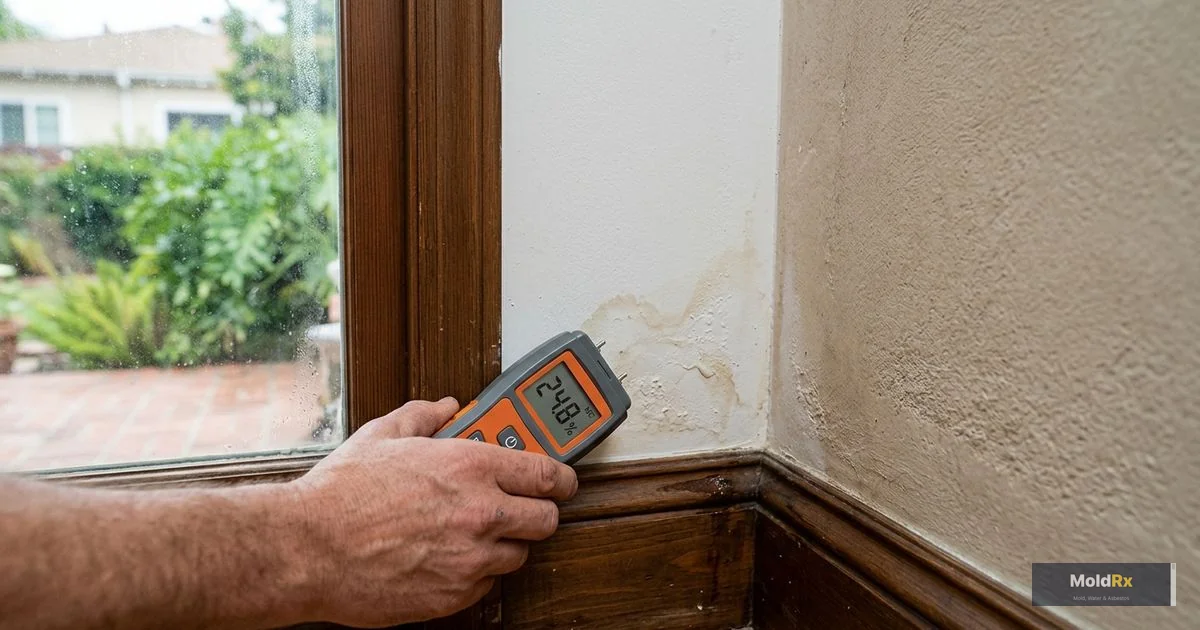
- Inspect ceilings and walls in every room. New stains, bubbling paint, or damp spots after a storm indicate water intrusion that needs immediate attention.
- Check windows and doors. Run your hand along the interior side of window frames and door thresholds. Moisture here indicates weatherproofing failure.
- Look in the crawl space (if applicable). Check for standing water, fresh moisture on the vapor barrier, or wet framing. After heavy rain, ground moisture increases significantly.
- Monitor for musty odors over the following days. Mold growth from storm-related moisture may not produce odors immediately. If a musty smell develops in the days following a storm, investigate promptly.
Seasonal Checklist: Summer HVAC Maintenance (April-May)
Before the heavy cooling season, ensure your AC system won't become a mold factory during the months it runs continuously.
- Replace the air filter. Start the cooling season with a fresh filter. Plan to replace it every 30 to 60 days during peak summer use.
- Clear the condensate drain line. Flush with vinegar or bleach. Test by running the system and verifying water flows freely from the drain line termination point.
- Inspect the drain pan. Clean any residue and verify the pan drains completely.
- Schedule professional HVAC service. Have the evaporator coil cleaned, refrigerant levels checked, and the entire system inspected before it runs full-time for six months.
- Check visible ductwork in the attic or crawl space. Look for disconnected joints, crushed flex duct, or condensation on duct surfaces. Damaged ductwork in unconditioned spaces is a major condensation and mold risk.
SoCal-Specific Prevention Tips
Beyond the room-by-room and seasonal checklists, these considerations are specific to Southern California's climate and building environment.
Monitor Indoor Humidity
Keep indoor relative humidity below 60% — ideally between 30% and 50%. A digital hygrometer (under $15 at any hardware store) lets you monitor in real time. Place one in the most humid area of your home.
In coastal communities, indoor humidity can climb above 70% during marine layer season without any internal moisture source. If your home consistently runs above 60%, a whole-house dehumidifier or portable unit is worth the investment.
Know Your Stucco
Stucco is the dominant cladding in this region, and moisture trapped behind stucco is one of the most common causes of hidden mold in SoCal homes. Many homes built during the 1970s through early 2000s have compromised drainage planes, inadequate flashing, and weep screeds buried by landscape changes.
Look closely at window and door perimeters, roof-to-wall transitions, and the base of walls. If you see staining, efflorescence, or soft spots on interior walls that share an exterior stucco wall, the cavity may already be compromised.
Know Your Home's Construction
Know whether your home is slab-on-grade or raised foundation. Know where your plumbing runs. Know the age of your water heater, HVAC system, and roof. This knowledge lets you anticipate problems instead of reacting to them.
If you've recently purchased a home, review the inspection report for noted moisture issues. If the inspection was cursory — many are — consider a mold inspection focused specifically on moisture conditions.
Frequently Asked Questions
Is mold really a problem in Southern California? It's so dry here.
Yes. Coastal humidity, concentrated rainfall, stucco that traps moisture, HVAC condensation, and plumbing leaks all create conditions for mold growth. Many SoCal homeowners discover mold precisely because they weren't looking for it. Read more about why Southern California homes are more vulnerable than people expect.
What humidity level causes mold growth?
Sustained relative humidity above 60% creates favorable conditions. Above 70%, risk increases significantly. Mold colonizes materials within 24 to 48 hours of sustained moisture exposure. Coastal SoCal communities regularly exceed these thresholds during marine layer season.
How often should I check my home for mold risk factors?
Quarterly: before rainy season (October-November), after rainy season (March-April), before heavy AC use (April-May), and during fall transition. High-risk areas like under sinks, around toilets, and the HVAC drain system warrant monthly checks.
What's the most common cause of mold in Southern California homes?
Plumbing leaks and HVAC condensation. Hidden water leaks go undetected for weeks or months, saturating building materials. Poorly maintained HVAC systems generate condensation that feeds mold inside ductwork and air handlers.
Do I need a dehumidifier in Southern California?
It depends on location. Homes near the coast, homes with poor ventilation, and homes with crawl spaces often benefit. Monitor with a hygrometer first — if humidity consistently exceeds 60%, a dehumidifier is worthwhile.
Can landscaping cause mold in my house?
Yes. Irrigation sprinklers that spray exterior walls, drip lines against the foundation, vegetation touching the house, and mulch piled against the weep screed all introduce or trap moisture against building materials.
Should I close or open my crawl space vents?
In drier inland areas, open vents usually work. In humid coastal areas, open vents can introduce more moisture than they remove. Some homes perform better with sealed crawl spaces and mechanical dehumidification. A crawl space assessment can determine the right approach.
How do I know if my stucco is trapping moisture?
Interior wall stains with no obvious interior water source, soft drywall on exterior walls, musty odors near exterior walls, and efflorescence (white deposits) on the stucco surface. Professional evaluation with a moisture meter or infrared camera can confirm without destructive testing.
What should I do if I find mold despite following this checklist?
Surface mold on non-porous surfaces (tile, glass) can be cleaned. Mold on porous materials, mold over 10 square feet, mold in HVAC systems, or mold you can smell but can't see warrants professional assessment. Always fix the moisture source first — cleaning without fixing the water problem guarantees it comes back.
Does homeowner's insurance cover mold prevention?
Generally, no. Insurance may cover mold from sudden, accidental events (burst pipe), but not from maintenance issues, gradual leaks, or humidity. Prevention is the homeowner's responsibility — and far less expensive than remediation.
When Prevention Isn't Enough
Even diligent homeowners can end up with mold. A hidden pipe leak behind a wall, a slow roof leak that activates only during driving rain, or a construction defect that's been trapping moisture for years — some moisture problems aren't catchable through routine inspection.
If you've found mold, suspect hidden mold, or want a professional assessment of your home's moisture conditions, MoldRx provides mold testing and coordinates mold remediation throughout Orange County, Riverside County, and San Bernardino County.
Request a free estimate or call (888) 609-8907 for honest guidance about your situation. Whether you need a full remediation plan or just want someone to confirm your home is in good shape, we'll tell you what we actually find — not what generates the biggest project.