The Short Answer
IICRC S520 is the industry standard for professional mold remediation in the United States. If a company's technicians don't hold this certification, you should ask why — and you should probably keep looking.
But S520 alone doesn't tell you everything. A properly qualified mold remediation company should also hold water damage restoration credentials, carry appropriate insurance, and meet your state's licensing requirements. Certifications establish a baseline of training and competence. They don't guarantee perfect work, but they significantly reduce the odds of hiring someone who doesn't know what they're doing.
This guide walks through every certification, license, and insurance requirement you should verify before signing a contract — what each one means, why it matters, and how to check whether a company actually has it.
The Certifications That Matter
Not all certifications are created equal. Some represent rigorous training and examination. Others are marketing tools with low bars for entry. Here's what to look for and what each credential actually proves.
IICRC S520: Standard for Professional Mold Remediation
The IICRC (Institute of Inspection, Cleaning and Restoration Certification) publishes the S520 standard, which is the most widely referenced guideline for mold remediation in the country. It covers the full scope of professional mold work: assessment procedures, containment protocols, removal techniques, worker safety, clearance criteria, and documentation requirements.
When a technician holds IICRC S520 certification, it means they have completed a formal training course covering these protocols and passed a proctored examination. The certification requires continuing education credits to maintain, so it's not a one-time credential that someone earns and forgets about.
Why it matters: IICRC S520 is the standard that insurance adjusters, industrial hygienists, and public health agencies reference when evaluating whether remediation work was performed correctly. If you file an insurance claim, the adjuster will very likely compare the work against S520 criteria. If the remediation didn't follow these protocols, your claim could be denied or reduced.
This is the single most important certification to verify. If a company can't tell you what IICRC S520 is, that tells you everything you need to know about their qualifications.
IICRC WRT: Water Damage Restoration Technician
Mold doesn't appear without moisture. Every mold problem is, at its root, a moisture problem — which means the technicians remediating your mold need to understand water damage, drying science, and moisture detection at a professional level.
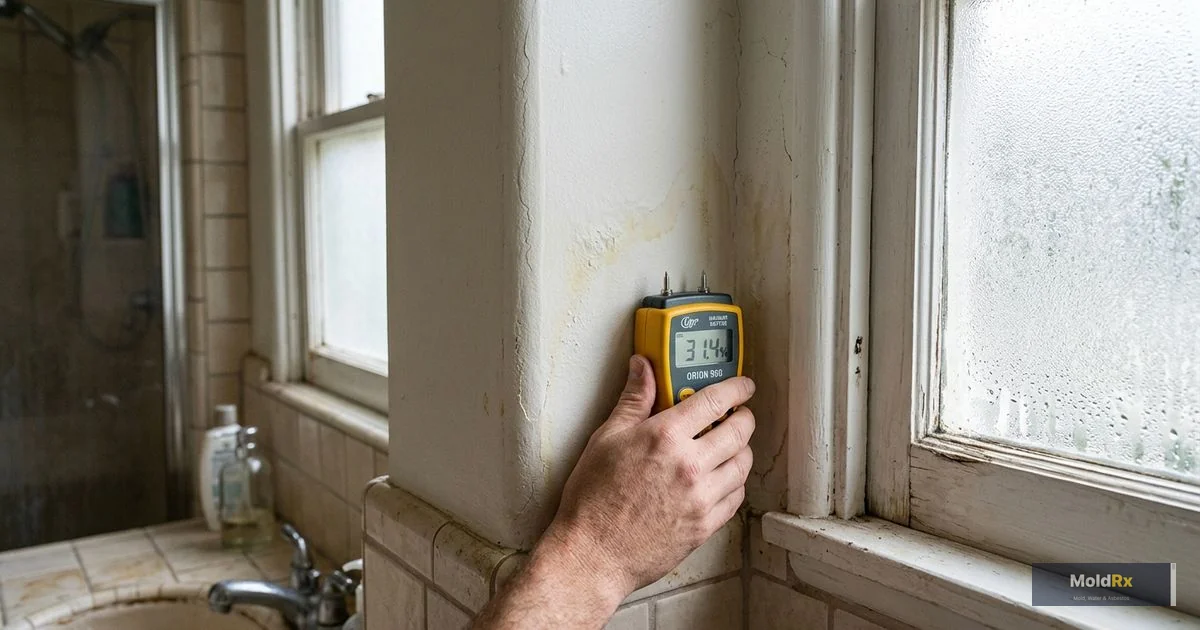
The IICRC WRT (Water Damage Restoration Technician) certification covers exactly this: identifying water sources, classifying water damage, establishing drying goals, using moisture meters and thermal imaging, and understanding how moisture moves through building materials. A technician who holds both S520 and WRT can address both the contamination and the underlying water damage that caused it.
Why it matters: A company that remediates mold without understanding moisture dynamics is treating the symptom while ignoring the disease. The mold will return. WRT-certified technicians know how to find, measure, and correct the moisture conditions that allow mold to grow in the first place. When you see both S520 and WRT on a company's credentials, it indicates they understand the complete problem — not just the visible part.
ACAC: American Council for Accredited Certification
The ACAC (formerly the American Indoor Air Quality Council) offers several certifications relevant to mold work, including the CMRS (Council-certified Microbial Remediation Supervisor) and the CMA (Council-certified Mold Assessor). These are third-party certifications that require examination, documented experience, and continuing education.
ACAC certifications are particularly significant on the assessment and inspection side. A company that holds ACAC credentials in addition to IICRC certifications has invested in training beyond the baseline standard.
Why it matters: ACAC certification adds a layer of credibility, especially for companies involved in both assessment and remediation oversight. It demonstrates a commitment to the indoor environmental quality profession that goes beyond the minimum. That said, ACAC certification is less common than IICRC certification and is not a substitute for S520 — it's a supplement to it.
RIA: Restoration Industry Association
The RIA is a trade association for the restoration industry that offers its own certification programs, including the CR (Certified Restorer) designation. CR certification requires documented field experience, comprehensive examination, and adherence to a code of ethics. It covers a broad range of restoration disciplines, including water, fire, and mold.
Why it matters: The CR designation from the RIA indicates senior-level expertise across the restoration industry. It's not mold-specific, but it signals that the individual has significant experience and has been evaluated against industry standards. If a company's project managers or senior technicians hold CR designations, it indicates an investment in professional development that fly-by-night operators don't make.
MICRO: Mold Inspection Consulting and Remediation Organization
MICRO offers the CMR (Certified Mold Remediator) and related certifications focused specifically on mold remediation. These certifications require training courses and examinations that cover mold biology, remediation procedures, safety protocols, and industry standards.
Why it matters: MICRO certifications are mold-specific and demonstrate focused expertise. Like ACAC, MICRO credentials are a valuable supplement to IICRC certification rather than a replacement. A company that holds certifications from multiple organizations has invested more heavily in training and credentialing than one that holds only a single certification.
State Licensing: What California Requires
Licensing requirements for mold remediation vary significantly from state to state. Some states have specific mold remediation licenses. Others, including California, take a different approach.
In California, there is no state-specific mold remediation license. However, that does not mean anyone can legally perform the work without any credentials. Here's what the state requires:
Contractor's license. If a mold remediation project involves any structural work — removing drywall, insulation, flooring, or other building components, which most remediation projects do — the company must hold a valid California Contractor's State License. The most common license classifications for remediation companies are C-21 (Building Moving/Demolition) or B (General Building Contractor). You can verify any California contractor's license status, including active insurance and bond information, through the Contractors State License Board (CSLB).
Business licensing. Mold remediation companies must hold valid business licenses in the cities and counties where they operate.
Lead and asbestos considerations. In older homes, mold remediation may disturb materials that contain lead paint or asbestos. California has strict regulations for both. A qualified remediation company should be aware of these requirements and either hold the appropriate certifications (EPA RRP for lead, DOSH-certified for asbestos) or coordinate with specialists when these materials may be present.
What California doesn't require but should still matter to you: The state doesn't mandate IICRC certification for mold remediation. That's a gap in regulation, not a signal that certification is unnecessary. The absence of a state mandate makes it even more important for you as a homeowner to verify certifications independently. A company can legally perform mold work in California without IICRC S520 training — but that doesn't mean you should hire them.
Insurance Requirements: Non-Negotiable
Insurance isn't a certification, but it's equally important — and the consequences of hiring an uninsured company can be financially devastating. Here's what every mold remediation company should carry.
General Liability Insurance
General liability (GL) insurance protects you, the property owner, if the remediation work causes damage to your home. Mold remediation involves containment barriers, material removal, HEPA filtration, and antimicrobial application — any of which can cause secondary damage if something goes wrong. A company's GL policy covers property damage, third-party injuries, and related legal costs.
What to verify: Ask for a certificate of insurance (COI) and confirm that the policy is current. The coverage limits should be appropriate for the scope of your project — for residential work, $1 million per occurrence is a reasonable minimum.
Workers' Compensation Insurance
If a remediation technician is injured while working in your home and the company doesn't carry workers' compensation insurance, you could be personally liable for their medical bills, lost wages, and related costs. This is not hypothetical — mold remediation involves physical labor in confined spaces, handling contaminated materials, and working with chemicals.
What to verify: Ask to see the workers' comp certificate of insurance. Verify that it's current and covers all employees working on your project. Some companies use subcontractors — if they do, verify that the subcontractors also carry workers' comp.
Pollution Liability Insurance
Some remediation companies carry pollution liability insurance, which covers claims specifically related to the release, dispersal, or mitigation of pollutants — including mold. This is a specialized policy that goes beyond standard general liability coverage.
What to verify: Pollution liability coverage is less common than GL and workers' comp, but it's a strong indicator of a company that takes its professional responsibilities seriously. If a company carries this coverage, it signals confidence and professionalism.
What Certifications Actually Prove — and What They Don't
Certifications are important. They're also limited. Understanding what they tell you and what they can't tell you will help you make a more informed decision.
What certifications prove
- The technician has been trained. IICRC S520 certification means the person has completed a formal course covering mold remediation protocols and passed an examination. They know what containment is, why it matters, and how to implement it.
- The company invests in professional development. Certifications cost money and time. Continuing education requirements mean ongoing investment. Companies that maintain multiple certifications are signaling that they take their profession seriously.
- The work has a reference standard. When a certified company remediates mold, their work can be evaluated against the standards they're certified in. This gives you, your insurance company, and any independent tester a benchmark for measuring the quality of the work.
- There's accountability. Certifying bodies have ethics requirements and complaint processes. If a certified company performs substandard work, you have recourse through the certifying organization in addition to standard legal remedies.
What certifications don't prove
- That every job will be done perfectly. Certification establishes knowledge, not execution. A certified technician can still have a bad day, cut a corner, or make a mistake.
- That the company has experience with your specific situation. A newly certified technician has training but may lack real-world experience. Ask how many projects the company has completed, and how many were similar in scope to yours.
- That the cheapest certified company is the best choice. Certification is a baseline, not a ranking. Two IICRC-certified companies can deliver very different levels of service, communication, and documentation.
- That an uncertified company is necessarily incompetent. Some experienced professionals do excellent work without formal certification. However, without certification, you have no third-party validation of their training — you're relying entirely on their word and their reputation. That's a higher-risk proposition.
Red Flags: When Credentials Don't Add Up
Once you know what to look for, it becomes easier to spot companies that are misrepresenting their qualifications. Watch for these warning signs.
They claim certification but can't produce proof
Any legitimate certification comes with documentation — a certificate, a wallet card, a verifiable listing in the certifying organization's directory. If a company says they're IICRC-certified but can't show you the certificate or provide a registration number you can look up, treat the claim with skepticism. Certification is easy to verify if it actually exists.
The certification is expired
Certifications have expiration dates. IICRC certifications require continuing education credits for renewal. An expired certification means the individual hasn't maintained their training — and it means they're not currently certified, regardless of what they once were. Ask when the certification was last renewed.
They list certifications that don't exist
Some companies invent impressive-sounding credentials or list organizational memberships as certifications. "Certified Mold Expert" is not a recognized certification from any major certifying body. "Member of the Indoor Air Quality Association" is a membership, not a certification — anyone who pays the dues can join. Look for specific certifications from specific organizations: IICRC S520, IICRC WRT, ACAC CMRS, RIA CR.
They have certifications but no insurance
Certification and insurance serve different purposes. A company can be IICRC-certified and still lack general liability insurance or workers' compensation coverage. Both are necessary. Don't let one substitute for the other.
They get defensive when you ask questions
A qualified, confident company welcomes questions about their credentials. They're proud of their certifications and happy to show them. If asking about certifications triggers defensiveness, evasion, or hostility, that reaction is telling you more than any credential ever could.
How to Verify a Company's Certifications
You don't have to take anyone's word for it. Every major certification can be verified independently.
IICRC certifications. Search the IICRC's online directory at iicrc.org. You can search by company name or individual technician name. The listing will show which certifications are active and when they expire.
ACAC certifications. The ACAC maintains a public directory of certified professionals at acac.org. Search by name or location.
RIA certifications. The Restoration Industry Association lists certified restorers in their online directory at restorationindustry.org.
California contractor's license. Verify license status, classification, insurance, and bond information through the California Contractors State License Board at cslb.ca.gov.
Insurance. Request a certificate of insurance (COI) directly from the company. You can also call the insurance company listed on the COI to confirm the policy is active. Don't just look at the document — verify it.
What verification looks like in practice: Before you sign a contract, you should have confirmed the company's IICRC certification status online, reviewed their certificate of insurance, verified their contractor's license with the CSLB, and checked online reviews. This process takes 15 to 20 minutes. That's a small investment of time to ensure you're hiring a qualified, insured, accountable professional.
Frequently Asked Questions
What is the most important certification for a mold remediation company?
IICRC S520 (Standard for Professional Mold Remediation) is the most widely recognized and most important certification. It is the standard referenced by insurance companies, public health agencies, and industrial hygienists. If a company holds only one mold-related certification, this is the one that matters most.
Is IICRC certification required by law?
In most states, including California, IICRC certification is not legally required to perform mold remediation. However, the absence of a legal mandate does not diminish its importance. IICRC S520 represents the consensus industry standard, and work performed outside this standard may not satisfy insurance claims, real estate transactions, or third-party evaluations.
What is the difference between IICRC S520 and IICRC WRT?
S520 covers mold remediation specifically — containment, removal, verification, and safety protocols for mold-contaminated environments. WRT covers water damage restoration — moisture detection, drying science, water classification, and structural drying. Since mold is always caused by moisture, both certifications are relevant. A company that holds both can address the full scope of the problem.
Can a mold remediation company also do mold testing?
They can, but they shouldn't — at least not for your project. Industry best practice requires that testing and remediation be performed by separate companies to eliminate the conflict of interest that exists when the same company profits from both finding the problem and declaring it resolved. A reputable remediation company will recommend an independent testing firm rather than offering to do both.
How do I know if a mold certification is legitimate?
Legitimate certifications come from recognized organizations — IICRC, ACAC, RIA, MICRO — and can be verified through each organization's public directory. If a company lists a certification you don't recognize, search for the certifying organization. If the organization doesn't have a public verification directory, requires only payment (no examination or training), or doesn't appear in search results from established industry sources, the certification may not be meaningful.
Does a company need a California contractor's license for mold remediation?
If the remediation project involves removing or disturbing building components — drywall, insulation, flooring, cabinetry — a California contractor's license is required. Since most mold remediation projects involve removal of contaminated materials, most projects require a licensed contractor. Verify license status through the California Contractors State License Board.
What insurance should a mold remediation company carry?
At minimum: general liability insurance and workers' compensation insurance. General liability protects your property if the work causes damage. Workers' compensation protects you from liability if a worker is injured in your home. Some companies also carry pollution liability insurance, which covers claims related to pollutant release or mitigation. Ask for certificates of insurance and verify they are current.
What happens if I hire an uncertified company and the work fails?
You have fewer options. Without certification, the work can't be evaluated against an industry standard, which weakens any insurance claim or legal argument. The company has no obligation to a certifying body's ethics requirements. And if the failed remediation spread contamination or caused additional damage, the cost to correct it may exceed the original project. Hiring certified professionals is both a quality decision and a risk management decision.
How often do mold remediation certifications need to be renewed?
IICRC certifications must be renewed on a regular cycle, typically every three to five years depending on the credential. Renewal requires documented continuing education credits, which ensures that certified professionals stay current with evolving industry standards and practices. Ask the company when their certifications were last renewed.
Should I verify certifications myself, or just trust the company?
Verify them yourself. It takes 15 to 20 minutes, and any reputable company will be happy to provide the information you need to do it. Choosing the right company means confirming that what they claim matches what the certifying organizations and licensing boards have on record. Trust, in this context, should be earned through verification — not assumed.
Hire a Company That Can Back Up Its Credentials
Certifications, licenses, and insurance aren't just boxes to check — they're the foundation of accountability. A company that holds IICRC S520 and WRT certifications, carries proper insurance, maintains a valid contractor's license, and can point you to verifiable records of all of it is a company that has invested in doing this work the right way.
If you're looking for mold remediation or mold testing in Southern California and want to work with a company that welcomes your questions about credentials, call (888) 609-8907 or request a free estimate online. We'll tell you exactly what certifications we hold, show you the documentation, and explain how our process meets the standards those certifications represent.