Professional Mold Removal and Remediation
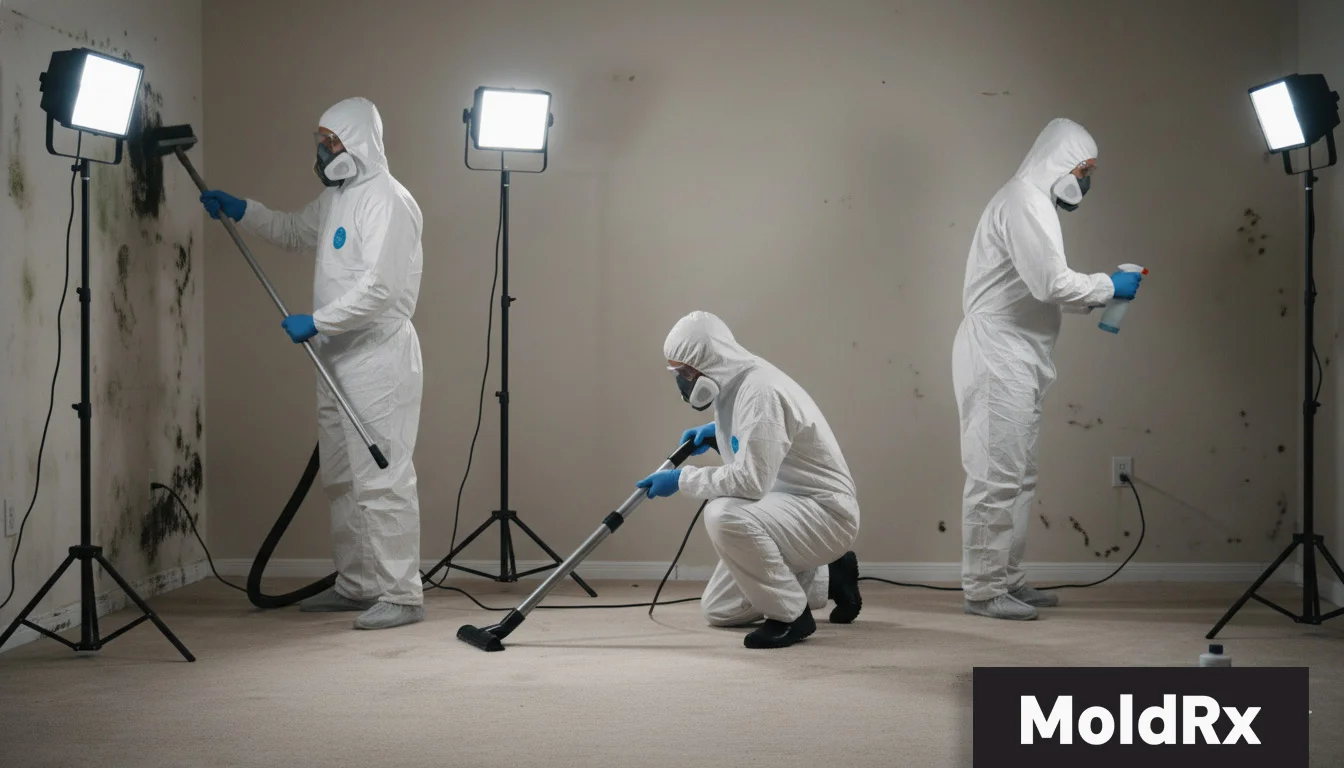
Mold removal is the process of identifying, containing, and eliminating mold from your property — including the materials it has colonized and the moisture source feeding it. MoldRx provides full-service mold remediation across Orange County, Riverside County, and San Bernardino County through vetted, IICRC S520-certified professionals who follow established containment, removal, and verification protocols on every project.
If you're dealing with visible mold, a persistent musty odor, or mold discovered during an inspection or renovation — the most important thing you can do is act quickly and choose someone who will handle it right the first time. Mold can double its colonized area every 24 to 48 hours under favorable conditions. Every day you wait increases the scope of the work and the amount of material that may need to be removed.
Call (888) 609-8907 to talk to a real person about your situation. No scripts, no pressure — just honest guidance from a family-owned company that has built its reputation on doing things the right way.
What Mold Removal Actually Involves
Professional mold removal — more accurately called mold remediation — goes well beyond wiping visible mold off a surface. Mold is a living organism that grows into the materials it colonizes. By the time you see it on drywall, it has already sent root structures (hyphae) into the paper facing, the gypsum core, and potentially the framing behind it. Surface cleaning doesn't reach these roots, and the mold will regrow within days or weeks.
Proper remediation addresses three things simultaneously:
- The mold itself — physical removal of contaminated materials and treatment of salvageable surfaces
- The airborne spores — containment and HEPA filtration to prevent cross-contamination during removal
- The moisture source — identification and correction of whatever created the conditions for growth
If any one of these three is missed, the problem comes back. That's why professional remediation exists — it's a coordinated process, not a cleaning task.
What It Includes
- Containment — Physical barriers (polyethylene sheeting) and negative air pressure isolate the work area so spores don't spread to unaffected rooms during removal
- HEPA air filtration — Air scrubbers with HEPA filters capture airborne spores down to 0.3 microns throughout the entire remediation process
- Material removal — Contaminated porous materials (drywall, insulation, carpet padding, ceiling tile) are cut out, bagged in 6-mil poly, and disposed of properly
- Surface treatment — Salvageable non-porous and semi-porous surfaces are HEPA-vacuumed, cleaned, and treated with antimicrobial solutions
- Moisture source correction — The leak, condensation issue, ventilation failure, or drainage problem that caused the mold is identified and addressed
- Clearance testing — Post-remediation air sampling compares indoor spore counts against outdoor baselines to verify the space has been returned to normal conditions
What It Does Not Include
- Surface cleaning with bleach or store-bought sprays (these treat symptoms, not the problem)
- Removal without containment (this spreads spores throughout the property)
- Remediation without moisture correction (guarantees recurrence)
- "Mold-proofing" or permanent mold prevention (no such thing exists — mold prevention is moisture control)
When You Need Professional Mold Remediation
Not every mold situation requires professional remediation. Small amounts of surface mold on non-porous materials — a patch on bathroom tile, mildew on a shower door — can often be cleaned with detergent and water. The EPA's general guideline is that homeowners can handle areas under 10 square feet on hard, non-porous surfaces.
Professional remediation becomes necessary when:
The Scope Exceeds DIY Capability
- Mold covers more than 10 square feet — or you suspect the visible mold is only part of a larger colony behind walls, under flooring, or above ceilings
- Mold is on porous materials — drywall, insulation, carpet, ceiling tile, unfinished wood. These materials can't be effectively cleaned; they need to be removed
- Mold is inside HVAC systems — contaminated ductwork spreads spores to every room connected to the system every time it runs. Improper cleaning makes this worse
- The moisture source is structural — foundation cracks, roof leaks, failed plumbing behind walls, grading issues. These require professional diagnosis and repair
Health or Safety Concerns Exist
- Occupants are experiencing respiratory symptoms, allergic reactions, or persistent headaches that improve when they leave the property
- Anyone in the household has a compromised immune system, chronic respiratory condition, or mold sensitivity
- The mold resulted from sewage backup or Category 3 water (contaminated/black water) — biohazard protocols apply
Documentation Is Required
- You're filing an insurance claim for mold damage from a covered event (burst pipe, appliance failure, storm damage)
- You're buying or selling a property and need clearance documentation for the transaction
- You're a landlord or property manager who needs documentation for tenant communication, liability protection, or regulatory compliance
You've Already Tried DIY and It Came Back
If you've cleaned visible mold and it returned within weeks, the moisture source hasn't been addressed, or mold has penetrated deeper into the material than surface cleaning can reach. Professional remediation identifies and corrects the root cause.
Warning Signs That Indicate Mold
Some situations are obvious — you can see it. Others aren't.
What you might see:
- Visible mold growth in any color (black, green, white, gray, brown, orange) on walls, ceilings, floors, or building materials
- Water stains or discoloration on walls or ceilings — especially around bathrooms, kitchens, windows, or HVAC vents
- Paint bubbling, wallpaper peeling, or surfaces warping — indicates moisture trapped behind the surface
What you might smell:
- A persistent musty, earthy, or damp odor — often the first sign of hidden mold growing behind walls, under floors, or in crawl spaces and attics
What you might feel:
- Respiratory symptoms (coughing, wheezing, congestion, shortness of breath) that improve when you leave the property
- Allergic reactions (itchy eyes, runny nose, skin irritation, headaches) without another clear cause
- Symptoms that worsen in specific rooms or areas of the building
Situations that create mold risk:
- Any water damage not fully dried within 24 to 48 hours. Learn more about how fast mold grows after water damage
- Recent plumbing repair, roof repair, or appliance replacement that involved water intrusion
- Renovation or demolition that exposed hidden cavities — mold behind walls is common in older homes and often discovered during remodels
- A positive mold test showing elevated spore counts or identifying problematic species
What Happens If You Wait
Mold doesn't stabilize. It doesn't reach a size and stop. Under favorable conditions — moisture, warmth, and organic material (which every building has) — mold continues to colonize new material.
Within days: A single moisture event can produce visible mold growth within 24 to 48 hours. What starts as a small patch behind a leaking pipe can spread across an entire wall cavity in a week.
Within weeks: Mold that started in one area migrates to adjacent materials. Drywall contamination spreads to framing. Wall cavity mold reaches insulation. Spores become airborne and settle in ductwork, on furnishings, and in areas far from the original colony.
Within months: Structural materials begin to degrade. Wood framing loses structural integrity. Subfloor deterioration progresses. The remediation scope that would have been a contained removal of one wall section becomes a multi-room project involving structural repair.
The financial reality: Early intervention on a contained area is a fraction of the cost of remediating a problem that has spread through multiple rooms and structural systems. The scope grows with time — and so does everything that comes with it.
Why DIY Mold Removal Falls Short
If you search for mold removal advice online, you'll find endless articles recommending bleach, vinegar, hydrogen peroxide, and store-bought sprays. These approaches have three fundamental problems:
They only treat the surface. Mold grows root structures into porous materials. Bleach kills surface mold but its water content can actually feed the roots beneath. On porous materials like drywall or wood, the mold regrows — often within days.
They spread spores. Scrubbing, spraying, or disturbing mold without containment releases millions of microscopic spores into the air. These spores settle on surfaces throughout the property, seeding new colonies in areas that were previously clean. You can turn a one-room problem into a whole-house problem in a single afternoon.
They don't address the cause. Mold is a symptom of a moisture problem. If the leak, condensation, or ventilation failure that created the conditions for mold isn't identified and corrected, the mold will return no matter how thoroughly you clean the surface.
Professional remediation exists because mold removal requires containment to prevent spread, HEPA filtration to capture airborne spores, physical removal of colonized materials, and moisture source correction to prevent recurrence. These aren't optional extras — they're the minimum standard for effective remediation, as defined by the IICRC S520 standard that governs the industry.
How MoldRx Handles Mold Remediation
1. You Call — and Talk to a Real Person
When you call (888) 609-8907, you talk to someone who listens to your situation, asks the right questions, and gives you honest guidance — not a call center, not a script, not a sales pitch. We'll help you understand what you're likely dealing with and coordinate the right professional for your specific situation.
2. On-Site Assessment
A vetted remediation professional evaluates your property — visual inspection, moisture mapping, and assessment of the full scope of the problem. We identify not just where the mold is, but what caused it and how far it may have spread beyond what's visible.
3. Clear Scope of Work
Before any work begins, you'll know exactly what needs to happen: which areas are affected, what materials need to be removed, what the containment plan looks like, and what the process involves. Every question gets answered. No surprises.
4. Containment and Setup
The affected area is sealed with polyethylene sheeting barriers. Negative air pressure is established using HEPA-filtered air scrubbers to ensure spores can't migrate to clean areas. Entry and exit points are controlled. This is the step that separates professional remediation from DIY — and the step most commonly skipped by unlicensed operators.
5. Removal and Treatment
Contaminated porous materials are carefully removed and double-bagged in 6-mil poly for proper disposal. Salvageable surfaces are HEPA-vacuumed and treated with antimicrobial solutions. Air scrubbers run continuously throughout the process. The moisture source is addressed — whether that means coordinating a plumber for a pipe repair, a roofer for a leak, or recommending ventilation improvements.
6. Clearance Testing and Documentation
Post-remediation air sampling is conducted — typically by an independent third-party inspector for the most objective results. Indoor spore counts are compared against outdoor baseline levels to verify the space has been returned to normal conditions. You receive complete documentation: before/during/after photos, scope of work, clearance results, and any recommendations for ongoing prevention.
7. Final Walkthrough
We walk through the completed project with you, explain everything that was done, answer any remaining questions, and provide guidance on preventing future mold growth — including what to monitor, how to maintain proper ventilation, and when to call if you have concerns down the road.
Who We Serve
Homeowners
Whether it's mold from a slow leak you just discovered, mold found during a bathroom remodel, or a musty smell in a room with no visible source — we handle residential mold remediation of all sizes. From a contained closet removal to a whole-house remediation following a flood, every project gets the same professional protocols.
Commercial and Industrial Properties
Office buildings, retail spaces, warehouses, medical facilities, restaurants, and multi-tenant buildings all face mold risks — and the stakes are different. Tenant health, business continuity, liability documentation, and regulatory compliance add complexity that residential projects don't have. We adjust our process for commercial timelines, after-hours scheduling, tenant notification requirements, and the documentation packages commercial property owners need.
Property Managers and Landlords
Tenant mold complaints require fast, professional response — both for tenant health and your liability protection. We provide the documentation you need: inspection reports, scope of work, clearance testing, and complete project records. We've worked with property managers across our service area and understand the urgency and accountability your position demands.
Real Estate Professionals
Mold discovered during a home inspection can kill a deal. Whether you represent the buyer or the seller, we provide objective assessment, professional remediation, and clearance documentation that gives both parties confidence. Fast turnaround when transaction timelines are tight.
Where We Work
MoldRx provides mold removal and remediation services throughout Southern California:
- Orange County — Irvine, Anaheim, Santa Ana, Huntington Beach, Costa Mesa, Newport Beach, Fullerton, Orange, Mission Viejo, Lake Forest, and 30+ more cities
- Riverside County — Riverside, Corona, Temecula, Murrieta, Palm Springs, Palm Desert, Hemet, Moreno Valley, and 20+ more cities
- San Bernardino County — San Bernardino, Ontario, Rancho Cucamonga, Fontana, Redlands, Victorville, Upland, and 15+ more cities
Mold Removal FAQs
How do I know if I need professional mold remediation or just cleaning?
Surface mold on non-porous materials (tile, glass, metal, sealed countertops) can typically be cleaned with detergent and water. Mold on porous materials — drywall, carpet, insulation, unfinished wood — or mold covering more than about 10 square feet requires professional remediation with containment and HEPA filtration. If you're unsure, call us and describe what you're seeing — we'll tell you honestly whether you need us or not.
Is mold testing required before remediation?
Not always. If mold is visible, the priority is removal and moisture correction — not species identification. Testing becomes valuable when mold is suspected but not visible (musty odor, symptoms), when documentation is needed for insurance claims or real estate transactions, or after remediation to verify clearance. We'll recommend testing only when it will change the outcome or protect your interests. Learn more about mold testing.
How long does mold remediation take?
Most contained projects (one room or less) take 2 to 5 days. Larger projects involving multiple rooms, HVAC contamination, or structural repairs can take a week or more. Structural drying, if water damage is involved, adds 3 to 5 additional days. We provide a realistic timeline during your assessment — not an optimistic guess.
Can I stay in my home during mold remediation?
In most cases, yes — especially when containment barriers effectively isolate the work area from living spaces. For extensive projects involving multiple rooms, HVAC system contamination, or households with members who have respiratory conditions or compromised immune systems, temporary relocation during the most intensive phases may be recommended. We'll advise you based on the specific scope of your project.
What's the difference between mold removal and mold remediation?
The terms are often used interchangeably. Technically, "removal" refers to the physical act of taking out contaminated materials. "Remediation" is the broader process — identifying the moisture source, containing the area, removing contaminated materials, treating surfaces, and verifying results through clearance testing. When MoldRx says remediation, we mean the full process from diagnosis to clearance.
Does homeowner's insurance cover mold remediation?
It depends on the cause. Mold resulting from a sudden, accidental event — a burst pipe, an appliance failure, a storm breach — is typically covered under standard homeowner's policies. Mold from long-term maintenance neglect (a slow leak you didn't address, poor ventilation you never corrected) usually is not. We provide thorough documentation — moisture readings, photos, drying logs, clearance reports — to support legitimate insurance claims.
Will the mold come back after remediation?
Not if the moisture source is properly corrected. Mold recurrence after professional remediation almost always means the underlying moisture problem wasn't fully resolved. Our remediation process includes moisture source identification and correction precisely to prevent this. If you notice any signs of regrowth after our work, call us immediately.
How fast does mold grow after water damage?
Mold spores — always present in indoor and outdoor air — can begin colonizing damp materials within 24 to 48 hours of sustained moisture. In Southern California's baseline humidity, materials don't dry as quickly as you might expect. This is why rapid response to any water event is the single most effective mold prevention measure. Learn more about how fast mold grows after water damage.
What does mold smell like?
Mold produces microbial volatile organic compounds (MVOCs) that create a characteristic musty, earthy, damp odor — similar to wet cardboard or an old basement. The smell is often the first sign of hidden mold, even when nothing is visible. If you notice this smell in specific areas of your property, especially near bathrooms, kitchens, or exterior walls, it warrants investigation. Learn about how professionals detect hidden mold.
What certifications should a mold remediation company have?
For mold work, IICRC S520 certification is the industry standard — it means the company follows established protocols for containment, removal, and clearance. The company should also carry general liability insurance and workers' compensation coverage. Ask to see documentation before work begins. MoldRx professionals are IICRC S520 certified, licensed, and insured.
Get Your Free Mold Assessment
Don't wait for a small problem to become a bigger one. Call (888) 609-8907 or request a free estimate online. You'll talk to a real person who will listen to your situation, answer your questions honestly, and help you understand your options.
Mold Testing → · Water Damage Restoration → · All Services → · Service Areas → · Contact Us →