Professional Mold Testing and Indoor Air Quality Assessment
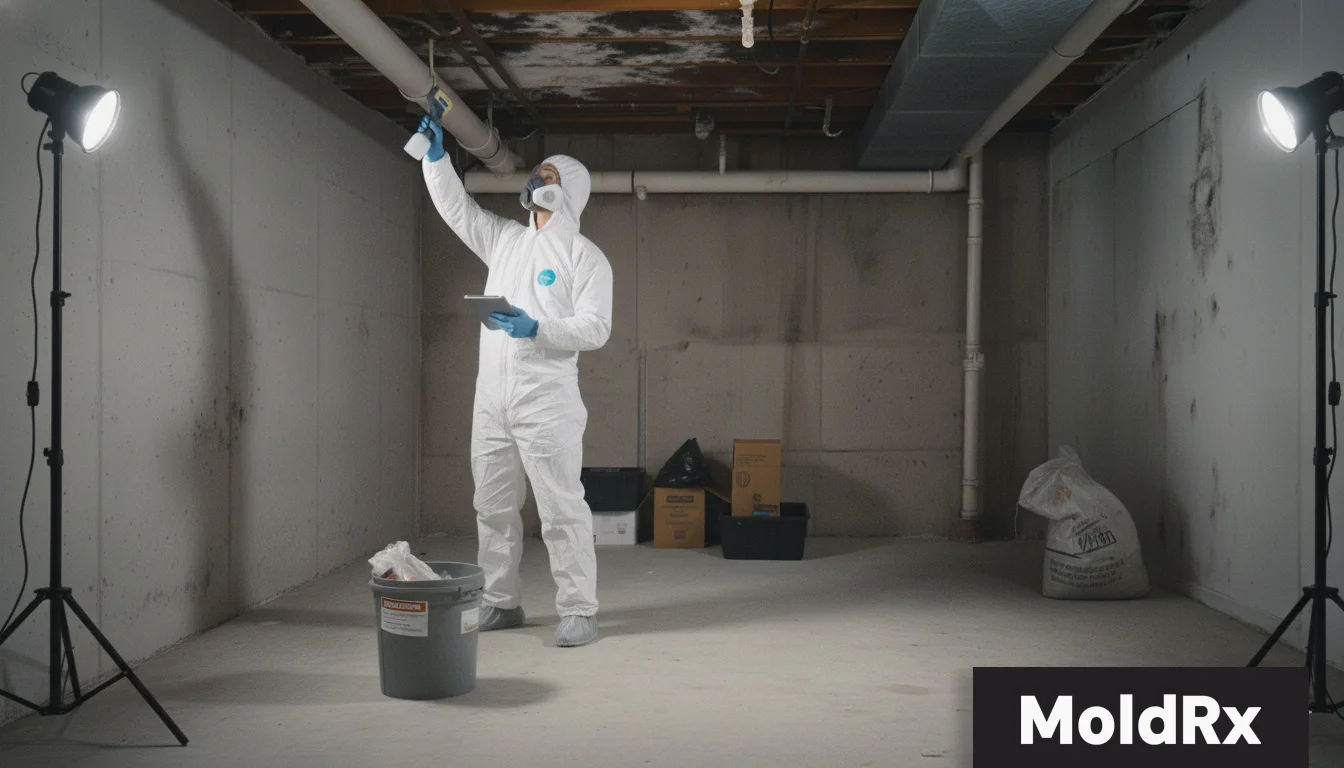
Mold testing is the process of collecting air samples, surface samples, or both from your property and having them analyzed by an accredited laboratory to determine whether mold is present, what species are involved, and whether indoor spore concentrations are elevated compared to outdoor baselines. MoldRx provides professional mold testing across Orange County, Riverside County, and San Bernardino County through vetted, certified inspectors who follow established sampling protocols and deliver results you can actually understand and act on.
If you're dealing with a musty smell you can't find, health symptoms that seem connected to your property, concerns after water damage, or a real estate transaction that needs documentation — the most important thing is getting objective answers from someone who will tell you the truth. If testing shows you don't need remediation, we'll tell you that. If it shows you do, we'll explain exactly why and what's involved.
Call (888) 609-8907 to talk to a real person about your situation. No scripts, no pressure — just honest guidance from a family-owned company that would rather give you peace of mind than sell you a service you don't need.
What Mold Testing Actually Involves
Professional mold testing goes well beyond the settle-plate kits sold at hardware stores. Those kits confirm that mold spores exist in your air — but mold spores exist in every indoor environment on earth. That tells you nothing useful. What matters is whether the types and concentrations inside your property are elevated compared to outdoor baselines, and whether species associated with water damage or health risks are present at concerning levels.
Professional testing answers those questions through controlled sampling, accredited laboratory analysis, and informed interpretation.
The Three Types of Sampling
Air sampling is the most common method. A calibrated pump draws a measured volume of air across a collection medium (usually a spore trap cassette) for a precise duration. Indoor samples are compared against outdoor baseline samples taken at the same time. This comparison is what makes the results meaningful — elevated indoor counts relative to outdoor levels indicate an active mold source inside the property.
Surface sampling collects material directly from visible growth or suspected areas using tape lifts, swabs, or bulk samples. This identifies the specific mold species present on a surface, which matters when health concerns are involved or when documentation needs to specify what was found.
Bulk sampling removes a piece of the material itself — a section of drywall, carpet, or insulation — and sends it to the lab. This determines whether mold has colonized the material, not just settled on its surface.
Not every situation requires all three methods. The inspector designs a sampling strategy around what you need to know — not around what generates the highest invoice.
What Professional Testing Includes
- Visual inspection — Systematic assessment of the property for visible mold, moisture indicators, water damage history, and conditions that promote mold growth
- Moisture assessment — Calibrated moisture meters and thermal imaging to identify hidden moisture sources and map affected areas
- Air sampling — Indoor and outdoor baseline samples collected with calibrated equipment for laboratory comparison
- Surface or bulk sampling — When warranted by findings, direct samples from suspect materials for species identification
- Accredited laboratory analysis — Samples analyzed by an independent, accredited lab that identifies species and quantifies spore counts
- Detailed reporting — A written report explaining what was found, how indoor levels compare to outdoor baselines, which species were identified, and what the results mean in plain language
- Honest recommendations — Clear next steps based on findings, whether that means remediation, moisture correction, or nothing at all
What It Does Not Include
- Guessing based on visual appearance alone (species identification requires laboratory analysis)
- Settle-plate or DIY-kit-style sampling (these lack the controls, calibration, and chain-of-custody needed for reliable results)
- Alarmist interpretation designed to generate remediation business (our inspectors tell you what the data says, period)
- "Mold-free" certifications (no property is mold-free — mold spores are everywhere; the question is whether levels are normal)
When You Need Professional Mold Testing
Not every situation requires testing. If you can see mold growing on your wall, you already know it's there — the priority is removal and moisture correction, not species identification. Testing is most valuable when you need answers that visual inspection alone can't provide.
Professional mold testing becomes the right move when:
You Suspect Mold but Can't See It
- A persistent musty, earthy, or damp odor — often the first and only sign of hidden mold growing behind walls, under floors, in crawl spaces, or inside HVAC systems. Learn about how professionals detect hidden mold behind walls and under floors
- Health symptoms that seem connected to your property — respiratory issues, allergic reactions, headaches, or fatigue that improve when you leave and return when you come back
- Multiple occupants experiencing similar symptoms — when several people in a home or building develop similar health issues, environmental factors like elevated mold levels may be involved
You've Had Water Damage
- Recent water damage from any source — even after visible water is cleaned up, mold can begin colonizing damp materials within 24 to 48 hours. Testing determines whether growth has started in hidden areas. Learn about how fast mold grows after water damage
- Past water damage with unknown extent — if your property had water damage before you owned it or before it was repaired, testing reveals whether mold problems remain
- Ongoing moisture issues — persistent humidity, condensation, or slow leaks create conditions where mold may be growing undetected for months or years. Consider water damage restoration if the moisture source is active
You Need Documentation
- Real estate transactions — buyers want objective data before committing, sellers need to resolve inspection concerns, and agents need documentation to keep deals moving
- Insurance claims — claims adjusters may require professional testing to document mold presence and extent from a covered water event
- Post-remediation clearance — after mold remediation is complete, clearance testing verifies that indoor spore counts have returned to normal conditions. Learn about what happens during mold remediation
- Landlord-tenant disputes — professional testing provides objective evidence that protects both parties
- Medical documentation — physicians investigating mold-related illness may request environmental testing to support diagnosis
You Want a Baseline or Peace of Mind
- Before buying a property — especially older homes, properties with water damage history, or homes that sat vacant
- After renovation — construction that opened wall cavities may have exposed or disturbed hidden mold
- Periodic baseline — properties with crawl spaces, older construction, or known moisture challenges benefit from baseline testing every one to two years
Wondering whether your specific situation calls for testing? Read our guide: Do I Need a Mold Test?
Warning Signs That Should Trigger a Call
Some situations are obvious — you can see growth, or water is actively intruding. Others are subtle. Here's what to watch for.
What you might smell:
- A persistent musty, earthy, or damp odor — similar to wet cardboard or an old basement. This is often the only sign of hidden mold
- An odor that comes and goes with humidity changes or HVAC operation — this suggests mold in ductwork, wall cavities, or areas affected by condensation cycles
- A smell concentrated in specific rooms, near specific walls, or in areas adjacent to bathrooms, kitchens, or exterior walls
What you might feel:
- Respiratory symptoms (coughing, wheezing, congestion, shortness of breath) that improve when you leave the property and worsen when you return
- Allergic reactions (itchy eyes, runny nose, skin irritation, recurring headaches) without another clear cause
- Symptoms that started after a water event, after moving into a new property, or after renovation work
- Multiple people in the same building experiencing similar symptoms
What you might see:
- Water stains or discoloration on walls, ceilings, or floors — especially near bathrooms, kitchens, windows, or HVAC vents
- Paint bubbling, wallpaper peeling, or surfaces warping — indicates moisture trapped behind the surface, which is where mold grows first
- Condensation on windows, pipes, or walls — chronic condensation creates the sustained moisture mold needs
Situations that create hidden mold risk:
- Any water damage not fully dried within 24 to 48 hours
- A property that sat vacant or unoccupied for an extended period
- Recent plumbing repair, roof repair, or appliance replacement that involved water intrusion
- Crawl spaces, basements, or attics with poor ventilation or known moisture history
- HVAC systems that haven't been inspected in years — contaminated ductwork spreads spores to every room the system serves
Why DIY Mold Test Kits Fall Short
Hardware stores and online retailers sell settle-plate kits that have you open a petri dish, leave it exposed, and send it to a lab. The results will tell you mold is present in your air. The problem is that this is true of every building on earth.
They lack outdoor baselines. Professional testing always compares indoor spore counts against outdoor samples taken at the same time and location. This comparison is the entire basis for determining whether indoor levels are abnormal. Without it, the results are scientifically meaningless — you have a number with no context.
They can't control sampling conditions. Professional air sampling uses calibrated pumps that draw a precise volume of air over a precise duration. Settle plates passively collect whatever lands on them, affected by air currents, room activity, and exposure time. Two plates in the same room can produce wildly different results.
They don't identify what matters. Most DIY kits identify broad mold categories at best. Professional laboratory analysis identifies specific species and quantifies concentrations — distinguishing between common background species like Cladosporium (which is everywhere and generally harmless) and water-damage indicators like Stachybotrys or Chaetomium that suggest an active moisture problem.
They create false confidence or false alarm. A "positive" result causes panic when it may mean nothing. A "negative" provides false assurance when a serious problem exists in a location the plate never sampled. Either way, you still don't have a reliable answer.
They don't hold up where it counts. Insurance adjusters, real estate parties, attorneys, and physicians require testing by certified professionals with chain-of-custody documentation and accredited lab analysis. DIY kit results don't meet these standards.
The question was never whether mold spores are in your air — they are, and always will be. The question is whether the types and concentrations inside your property indicate a problem. Answering that requires controlled sampling, accredited analysis, and professional interpretation.
How MoldRx Handles Mold Testing
1. You Call — and Talk to a Real Person
When you call (888) 609-8907, you talk to someone who listens to your situation and gives you honest guidance — not a call center, not a script, not a sales pitch. We'll help you understand whether testing makes sense, what it can and can't tell you, and what to expect. If testing isn't the right move, we'll tell you that too.
2. On-Site Inspection
A certified inspector evaluates your property — visual assessment of potential problem areas, moisture readings with calibrated meters, thermal imaging where warranted, and a thorough review of conditions that promote mold growth. An experienced inspector knows where mold hides in Southern California construction and what patterns of staining, damage, or condensation indicate.
3. Sampling Strategy
Based on your concerns and inspection findings, the inspector designs a sampling plan tailored to your specific questions. How many samples, what type, and where they're collected are all determined by what you need to know — not by a one-size-fits-all protocol. Every sampling decision has a reason, and the inspector will explain it.
4. Sample Collection
Samples are collected using calibrated, flow-verified equipment and established protocols. Outdoor baseline samples are taken at the same time as indoor samples for valid comparison. Every sample is documented, labeled, and submitted with chain-of-custody forms.
5. Laboratory Analysis
Samples go to an accredited laboratory for analysis. The lab identifies mold species present and quantifies spore counts for each. Results typically return within two to three business days. Rush processing is available when transaction timelines or health concerns require faster answers.
6. Clear Results Report
You receive a detailed report in plain language — not lab jargon. It explains what species were found, how indoor levels compare to outdoor baselines, whether concentrations are normal or elevated, and what the findings mean for your situation. If your property is fine, the report says so clearly.
7. Honest Recommendations and Next Steps
Based on results, we explain your options honestly. If levels are normal, you get peace of mind and documentation confirming it. If levels are elevated, we explain the likely source and what steps make sense — whether that means mold remediation, addressing moisture through water damage restoration, further investigation, or simply monitoring. If you don't need remediation, we tell you that. Our reputation is built on honesty, not on converting every test into a remediation project.
Who We Serve
Homeowners
Whether you're chasing a musty smell through your house, worried about air quality after a leak, or trying to figure out why your allergies are worse indoors — testing gives you answers you can act on. We test homes of every size and age, from condos to estates, and explain what we find in terms that make sense. If your home is healthy, we'll confirm it. If it's not, we'll tell you exactly what's going on and what your options are.
Commercial and Industrial Properties
Office buildings, retail spaces, warehouses, medical facilities, and multi-tenant buildings face indoor air quality concerns where the stakes are different. Employee health complaints, tenant disputes, regulatory requirements, and liability exposure add complexity that residential testing doesn't involve. We adjust for commercial scheduling, multi-zone sampling, and the documentation packages property owners and managers need.
Property Managers and Landlords
Tenant mold complaints require fast, professional response — for tenant health and your liability protection. Professional testing provides the objective data you need: documented inspection findings, accredited lab results, and clear interpretation. Whether testing confirms a problem or shows conditions are normal, you have documentation to support your response.
Real Estate Professionals
Mold concerns during a transaction can stall or kill a deal. Whether you represent the buyer or the seller, professional testing provides objective data both parties can rely on. Buyers get confidence. Sellers get documentation that resolves concerns. Agents get results to move the transaction forward. Fast turnaround when timelines are tight.
Insurance and Legal Professionals
Insurance claims, construction defect cases, landlord-tenant disputes, and medical investigations all require professionally documented testing with accredited lab results, chain-of-custody documentation, and certified inspector credentials.
Where We Work
MoldRx provides mold testing and indoor air quality assessment throughout Southern California:
- Orange County — Irvine, Anaheim, Santa Ana, Huntington Beach, Costa Mesa, Newport Beach, Fullerton, Orange, Mission Viejo, Lake Forest, and 30+ more cities
- Riverside County — Riverside, Corona, Temecula, Murrieta, Palm Springs, Palm Desert, Hemet, Moreno Valley, and 20+ more cities
- San Bernardino County — San Bernardino, Ontario, Rancho Cucamonga, Fontana, Redlands, Victorville, Upland, and 15+ more cities
Mold Testing FAQs
Do I actually need mold testing, or can I just get the mold removed?
If mold is visible, testing before remediation is usually unnecessary — you already know it's there, and the priority is removal and moisture correction. Testing becomes valuable when mold is suspected but not visible, when you need to identify specific species for health-related decisions, when documentation is required for insurance or real estate transactions, or after remediation to verify clearance. We'll tell you honestly whether testing makes sense for your situation. Read our full guide: Do I Need a Mold Test?
How is professional mold testing different from a DIY kit?
Professional testing uses calibrated equipment, collects indoor and outdoor baseline samples for valid comparison, sends samples to accredited laboratories for species identification, and includes expert interpretation. DIY kits use passive settle plates with no baseline comparison and can't control sampling conditions — they produce results that lack the scientific controls needed for meaningful conclusions or for use in insurance, real estate, or legal contexts.
What types of mold are dangerous?
Any mold can cause allergic reactions and respiratory irritation at elevated concentrations, but certain species are more strongly associated with health effects. Stachybotrys chartarum (commonly called "black mold") produces mycotoxins, but it's far less common than media coverage suggests. Aspergillus and Penicillium species are more commonly found at elevated levels and can cause significant respiratory issues. Chaetomium is a water-damage indicator that warrants attention. Professional testing identifies exactly what's present so you and your healthcare provider can make informed decisions.
How long does mold testing take?
The on-site inspection and sampling typically takes one to three hours depending on property size and number of samples. Lab analysis takes two to three business days; rush processing is available. You'll have your complete report with clear interpretation and recommendations within a few days of the inspection.
Can mold testing detect hidden mold behind walls?
Air sampling can detect elevated spore counts that indicate a hidden source even when nothing is visible. Moisture mapping with calibrated meters and thermal imaging identifies hidden moisture — the conditions that make mold growth possible. Combined, these methods point to hidden mold behind walls, under floors, or above ceilings without destructive investigation. If results indicate a likely hidden source, targeted investigation may be recommended. Learn more about how professionals detect hidden mold behind walls and under floors.
Should I get mold testing before buying a house?
If the property has any history of water damage, visible moisture indicators, musty odors, or if it sat vacant for an extended period — yes. Testing gives you objective data about indoor air quality that a standard home inspection doesn't provide. If results reveal elevated levels, you have information to negotiate repairs, request remediation before closing, or make a fully informed decision about the purchase.
Will my insurance cover mold testing?
It depends on context. If testing is part of investigating damage from a covered event — a burst pipe, appliance failure, or storm damage — many policies include it as part of the claim. Testing for general air quality concerns or pre-purchase inspections is typically not covered. We provide thorough documentation to support legitimate claims, including inspection reports, accredited lab results, and chain-of-custody records.
How often should I test for mold?
Most properties don't need routine testing. Testing is warranted when specific triggers occur: unexplained odors, health symptoms, water damage events, real estate transactions, or post-remediation clearance. Properties with known moisture challenges — crawl spaces, older construction, previous water damage — may benefit from periodic baseline testing every one to two years. If you've had remediation done, a follow-up test six months to a year later confirms conditions remain normal.
What happens if my test results show elevated mold levels?
Your report will explain exactly what was found — which species, at what concentrations, and how those levels compare to outdoor baselines. We'll identify the probable source and outline your options. If remediation is warranted, we'll explain the scope. If the source is a moisture issue that needs water damage restoration or plumbing repair, we'll identify that. If ventilation improvements or other non-invasive measures can address it, we'll say so. You get a clear picture and honest options — then you decide.
Can I be in the property during testing?
Yes. Mold testing is non-invasive and non-disruptive. The inspector will ask that windows and doors remain closed for a period before testing (typically 12 to 24 hours) to get accurate indoor readings and that HVAC systems operate normally. You can be present during the inspection — many clients prefer to walk through with the inspector to ask questions and understand what's being sampled and why.
Get Your Mold Testing Scheduled
Don't guess about mold — and don't let uncertainty keep you up at night when answers are a phone call away. If testing shows everything is fine, you get peace of mind. If it shows a problem, you get the information you need to handle it right.
Call (888) 609-8907 or request a free consultation online. You'll talk to a real person who will listen, answer your questions honestly, and help you understand whether testing is the right move. If it's not, we'll tell you that too. No pressure. No obligation. Just straightforward guidance from a company that believes the truth is always the best answer.
Mold Removal → · Water Damage Restoration → · Emergency Services → · All Services → · Service Areas → · Contact Us →