A tenant emails you about dark spots on the bathroom wall. Another calls about a musty smell after a plumbing repair. A third threatens to withhold rent unless you "prove there's no mold." Each scenario creates a decision point — and what you do next determines whether this becomes a resolved maintenance issue or an escalating legal and financial problem.
California does not require landlords to conduct routine mold testing. There is no state law mandating annual inspections, pre-tenancy testing, or periodic sampling. But the absence of a testing mandate does not mean testing is optional in practice. When tenants report mold, when water events occur, or when units turn over after moisture problems, professional mold testing is the single most protective step a landlord can take — because it creates the objective, dated, third-party documentation that determines whether you're defensible or exposed.
This guide covers when California law effectively requires testing even though no statute says so, the protocols that protect landlords at each stage, how to choose an inspector, what to do with results, and the multi-unit considerations that make testing even more critical for larger properties.
Why There's No Testing Mandate — and Why That Doesn't Help You
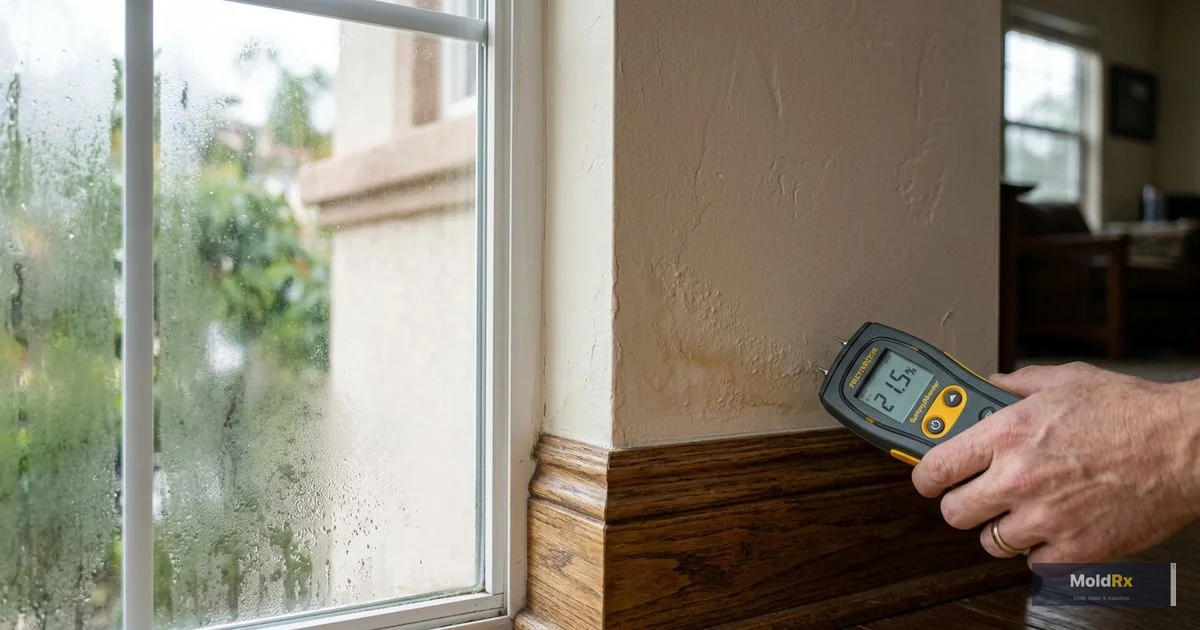
California has no statewide mold standard for residential properties. Senate Bill 655 (2001) directed the California Department of Health Services to develop permissible exposure limits, but no numeric thresholds were ever adopted. There is no California equivalent to lead paint testing requirements or asbestos survey mandates.
No state agency will fine you for not testing. But the implied warranty of habitability — California Civil Code Section 1941 — requires you to maintain rental units in a condition fit for human occupation. When a tenant reports a suspected mold condition and you fail to investigate professionally, that failure becomes evidence of negligence if the situation escalates.
Courts don't ask "Did the landlord follow the mold testing statute?" They ask: "Did the landlord respond reasonably to known or suspected conditions that could affect habitability?" Professional testing is what a reasonable response looks like.
The full legal framework — habitability obligations, disclosure requirements, tenant remedies — is covered in our guide to mold in rental properties in California. This article focuses on when and how testing fits into your management practice.
When Testing Is Effectively Required
While no statute uses the word "required" for mold testing, several common scenarios create conditions where failing to test leaves you legally exposed.
After a Tenant Complaint
When a tenant reports visible mold, a musty odor, or health symptoms they believe are mold-related, professional testing should be your default response. Here's why:
Testing establishes the objective condition. A tenant's photo of "black mold" might be mildew on tile grout or Stachybotrys on wet drywall. Professional testing tells you which. Without testing, you're guessing — and if you guess wrong, every week of delay compounds your exposure.
Testing demonstrates good faith. If this complaint becomes a legal dispute, a professional test ordered within days is the strongest evidence that you took the issue seriously. A complaint followed by weeks of inaction — or a maintenance worker wiping the surface with bleach — looks like you were trying to make the problem disappear rather than identify it.
Testing protects you when there's no mold. Sometimes a tenant sees condensation, cleaning product residue, or staining and reports it as mold. A clean professional test gives you a documented, defensible basis for communicating that remediation isn't required.
After Water Events
Any water intrusion event should trigger a testing decision: plumbing failures, roof leaks, appliance failures, flooding, or slow leaks discovered during maintenance. If the event was fully dried within 48 hours and no materials were saturated beyond surface level, testing may not be necessary. But if drying took longer, if water reached wall cavities or subfloor spaces, or if any doubt exists about completeness of drying, test.
The timing considerations for mold testing after water damage apply directly — too early produces unreliable results, too late means the problem has spread. Testing also creates the documentation trail your insurance carrier will want if you file a claim. Our guide on documenting damage for insurance claims covers the full evidence package adjusters expect.
Between Tenancies
Testing during unit turnover serves a different purpose than complaint-driven testing: it establishes a baseline condition before a new tenant takes occupancy. This baseline protects you in two directions.
Against claims from the incoming tenant. If a new tenant reports mold three months in and your pre-tenancy test showed clean conditions, you have evidence the condition developed during occupancy — potentially shifting responsibility depending on the cause.
Against hidden conditions from the prior tenancy. A departing tenant who kept furniture against a wet wall, disabled exhaust fans, or never reported a slow leak may leave behind mold you'd never catch in a visual walkthrough. Testing catches what eyes miss.
Turn testing is most important when:
- The prior tenant reported moisture issues during their tenancy
- Maintenance records show plumbing repairs, roof patches, or water-related work orders
- The visual inspection during turnover reveals staining, musty odors, or moisture damage
- The unit has a history of mold complaints across tenancies
Even when none of those triggers exist, landlords managing larger portfolios often adopt routine turn testing as standard operating procedure. The cost of a single test is trivial compared to the cost of inheriting a hidden mold condition from a prior tenancy.
Tenant Complaint Response Protocol: Testing as the First Professional Step
When a tenant reports a potential mold condition, testing fits into a structured response sequence. Property managers handling mold and water damage complaints need tight protocols — our guide for property managers covers the full operational framework. Here's where testing specifically fits.
Step 1: Acknowledge and Schedule (Within 24 Hours)
Acknowledge the complaint in writing the same day or within 24 hours. Confirm that you're scheduling a professional inspection and provide the tenant with the inspection date. Do not send a maintenance worker to "take a look" as a substitute for professional assessment. A maintenance worker's opinion that it "looks fine" or "just needs bleach" carries no weight in a dispute and may actually hurt you — it shows you were aware of the complaint and chose an inadequate response.
Step 2: Professional Testing (Within 48-72 Hours)
Engage an independent mold inspector — not your remediation contractor, not a general handyman, not your property maintenance team. Professional testing should include:
- Air sampling in the affected area and at least one unaffected area for comparison
- Outdoor control samples to establish the baseline spore environment
- Surface sampling of visible suspect growth if present
- Moisture readings of walls, floors, and ceilings in and around the complaint area
- Thermal imaging if concealed moisture is suspected
- A comprehensive written report with lab results, interpretation, moisture data, and photographs
The inspector should provide findings within 3-5 business days of sampling. That report becomes the foundation of every decision you make from this point forward.
Step 3: Communicate Results to the Tenant (Promptly After Receiving Report)
Share the testing results with the tenant in writing. This isn't legally optional — if a tenant requests test results related to their unit, withholding them creates the appearance that you're hiding something. Transparency protects you. Provide the full report, not a summary you wrote yourself.
Step 4: Act on the Results
What you do next depends entirely on what the testing found. (More on this in the section below on interpreting results.)
Choosing an Independent Inspector
The independence of your mold inspector is the factor that determines whether your testing results hold up under scrutiny. In a landlord-tenant context, biased results affect both parties — and if the testing was done by a company affiliated with your remediation contractor, a tenant's attorney will make that conflict of interest the centerpiece of their challenge.
Our detailed guide on finding a qualified mold inspector covers certification requirements, questions to ask, and red flags. The key points for landlords:
- Always separate testing from remediation. The company that tests should never be the company that remediates.
- Verify certifications. Look for ACAC or MICRO credentials — not just "years of experience."
- Confirm they use an AIHA-accredited lab for sample analysis.
- Require a complete written report — photos, moisture data, lab results with interpretation, conclusions, and recommendations.
- Keep the same inspector for consistency across your portfolio for comparable methodology and results.
What to Do With Results
Test results lead to one of two outcomes. Each has a clear protocol.
Positive Results: Remediate
If testing confirms elevated mold levels, identifies active growth, or reveals moisture conditions conducive to mold colonization, the path is straightforward:
Identify the moisture source. Mold doesn't grow without moisture. Before any remediation begins, the moisture source must be identified and corrected. Remediating mold without fixing the underlying water problem guarantees the mold comes back.
Engage a professional remediation company — one that is independent from your testing inspector. Get a scope of work based on the inspector's report. For larger projects, get multiple bids against the same scope. The remediation should follow IICRC S520 protocols, the industry standard for professional mold remediation.
Notify the tenant in writing of the findings, the remediation plan, and the timeline. If the remediation requires the tenant to vacate the unit temporarily, communicate that clearly and well in advance.
Conduct clearance testing after remediation. This is non-negotiable. Clearance testing — performed by your independent inspector, not the remediation company — confirms that the work was successful and the unit meets acceptable conditions. Without clearance testing, you have no documentation that the problem was actually resolved. For more on what clearance testing involves and why it matters, see our guide to understanding clearance testing.
Document everything. The complete file for a positive result should include: the original tenant complaint, your acknowledgment and response timeline, the initial test report, the remediation scope of work, the remediation company's completion documentation, clearance test results, and any communications with the tenant throughout the process. This file is your legal shield.
Negative Results: Document and Communicate
If testing shows normal conditions — indoor spore counts consistent with outdoor levels, no active growth identified, moisture readings within normal range — document this outcome with the same thoroughness you'd apply to a positive result.
Share the full report with the tenant. A clean test result addresses the tenant's concern with objective evidence rather than your assurance. Most tenants are genuinely concerned about their health and will be reassured by professional results.
Keep the report in your property file. If the same tenant files a future complaint, or if a future tenant raises concerns about the same area, this baseline establishes the documented condition at a specific point in time.
Address the tenant's underlying concern. A negative mold test doesn't always mean nothing needs attention. If the tenant reported a musty smell, condensation, or staining, something prompted the complaint. Investigate and address the condition even if mold isn't present — you may have a ventilation issue, a minor moisture intrusion that hasn't yet produced mold, or a cosmetic condition that still needs maintenance.
Don't dismiss the tenant. The correct response is: "We took your concern seriously, we brought in an independent professional, and the results show the unit is in good condition. Here's the full report."
Multi-Unit Testing Considerations
If you manage buildings with multiple units — apartments, condominiums, or multi-family properties — mold testing carries additional complexity that single-family landlords don't face.
Shared Systems Spread Problems
Multi-unit buildings share walls, plumbing stacks, HVAC ductwork, and structural elements. A mold condition in one unit can indicate or cause conditions in adjacent units through:
- Shared plumbing — a leak in one unit's plumbing stack can introduce moisture to walls in the unit below or beside it
- Common HVAC systems — mold in ductwork distributes spores to every unit served by that system, a concern covered in detail in our guide on mold in HVAC and air ducts
- Shared wall cavities — moisture and mold can migrate through wall assemblies between units
- Common area moisture sources — roof leaks, exterior wall failures, and foundation issues affect multiple units simultaneously
When testing identifies a problem in one unit, consider whether adjacent units need testing as well. A plumbing failure in a third-floor unit that sent water into the second floor may have also affected the first floor. Testing only the unit that complained gives you an incomplete picture.
HOA and Multi-Owner Properties
If you manage units in a condominium or HOA community, mold responsibility depends on whether the moisture source originates in common areas or individual units. Our guide on HOA mold responsibility in California covers how the Davis-Stirling Act divides these obligations. For testing purposes, coordinate with the HOA board when the moisture source may involve common elements — the association may need to participate in the testing scope and share in the cost.
Portfolio-Wide Testing Protocols
Landlords managing larger portfolios benefit from standardized protocols: the same independent inspector across all properties for consistent methodology, standard turn testing during every vacancy, annual moisture screening of common areas and high-risk zones, and centralized documentation filed by property address and unit number. Standardized protocols cost more upfront than reactive testing but catch problems early and make it much harder for any single claim to characterize your management as negligent.
Documentation That Protects Landlords
In a dispute, the landlord with comprehensive records almost always has the stronger position. Every mold-related action you take should produce a dated document.
Your file for each mold event should include: the tenant's initial complaint (date, method, content), your written acknowledgment, inspector engagement records, the full testing report, written communication of results to the tenant, remediation records if applicable (scope of work, contractor, dates, protocols), clearance testing results, documentation of the moisture source and its correction, and all follow-up communications.
Keep these records for a minimum of five years. Digital records with date-stamped files are preferable to paper.
Frequently Asked Questions
Does California law require landlords to test for mold?
No. There are no mandated testing schedules, pre-tenancy tests, or numeric mold thresholds in California law. However, the implied warranty of habitability (Civil Code Section 1941) requires landlords to investigate conditions that affect habitability — and professional testing is the standard for demonstrating a reasonable investigation.
Who pays for mold testing in a rental property?
The landlord. When a tenant reports a suspected mold condition, investigating that condition — including professional testing — is part of the landlord's maintenance obligation under the implied warranty of habitability. If a tenant independently commissions testing because the landlord failed to investigate, those costs may be recoverable from the landlord.
Can I use my remediation contractor to do the testing?
You should not. When the same company tests and remediates, they profit from finding problems that require their services — that conflict of interest undermines the credibility of results in any legal proceeding. Industry standards including IICRC S520 recommend separation of testing and remediation.
What does mold testing cost for a rental property?
Costs vary based on the number of samples, unit size, and inspection scope. For a standard rental unit, professional inspection with air and surface sampling is modest compared to the cost of remediation or litigation. Contact us for an estimate based on your specific situation.
How often should I test between tenancies?
There is no mandated frequency. Best practice is to test during every turnover when the prior tenancy involved moisture complaints, water-related maintenance, or any mold history. For landlords managing larger portfolios, routine turn testing during every vacancy — regardless of history — provides the strongest baseline documentation.
What if the tenant refuses access for testing?
Civil Code Section 1954 allows landlord entry for inspections with reasonable notice — typically 24 hours written notice during normal business hours. Mold testing in response to a complaint or suspected habitability concern qualifies. If a tenant refuses entry after proper notice, document the refusal in writing.
Can a tenant demand independent testing?
A tenant can always commission their own testing at their own expense. If the tenant's independent results contradict your results, the situation may need resolution through mediation or legal proceedings. The best way to avoid conflicting results is to use a credentialed, independent inspector whose methodology and reporting meet professional standards.
Should I test after every plumbing repair?
Not necessarily after every minor repair, but after any repair that involved water damage to building materials. A dripping faucet fixed in an afternoon probably doesn't warrant testing. A supply line failure that saturated drywall for several days before detection does. The key question is whether building materials were wet long enough for mold to establish — generally 48 hours or more.
What if a tenant tests positive for mold but I already tested negative?
Conflicting results happen, usually because of differences in timing, methodology, or the areas tested. Don't dismiss the tenant's results. Engage your independent inspector to review both reports, identify discrepancies, and potentially retest. Dismissing a tenant's positive result without investigation creates significant legal exposure.
Do I need to disclose prior mold test results to new tenants?
California law requires disclosure of known material defects. If prior testing revealed a mold condition that was subsequently remediated with clearance testing confirming successful resolution, disclose both the finding and the remediation. If prior testing was clean, you are not generally required to disclose negative results — but proactive disclosure of clean testing demonstrates transparency and can prevent future disputes.
Protect Your Properties and Your Liability Position
Mold testing isn't an expense — it's the most cost-effective protection available for landlords managing rental properties in California. A professional test after a tenant complaint costs a fraction of what a single habitability lawsuit costs. A clean turn test that establishes baseline conditions prevents disputes that can drag on for months. Documentation from proper testing and response protocols is the difference between a defensible position and an indefensible one.
MoldRx coordinates professional mold testing and mold remediation for rental property owners and managers throughout Southern California. Our network of independent inspectors understands the documentation landlords need, and our remediation specialists follow IICRC S520 protocols with reporting that holds up in disputes.
If you're a landlord dealing with a tenant mold complaint, planning a turnover inspection, or looking to establish testing protocols across your portfolio, request an estimate or call (888) 609-8907 to discuss your situation.
Latest Mold Articles
View all articlesMold Testing for Landlords: California Requirements and Best Practices
California doesn't mandate routine mold testing for landlords — but testing after tenant complaints, water events, or between tenancies protects you legally and financially. Here's when testing is required versus recommended, how to respond to tenant complaints with professional testing, what to do with results, and how proper documentation shields you from liability.
Mold Testing for Commercial Buildings: Requirements and Process
Commercial mold testing follows the same science as residential but adds complexity — larger HVAC systems, multiple zones, tenant notification, regulatory compliance, and liability documentation. Here's what building owners, facility managers, and commercial tenants need to know about when testing is required, how the process works in multi-zone commercial environments, Cal/OSHA workplace requirements, and how to maintain business continuity throughout the process.
Mold Testing After Water Damage: When to Test and What to Expect
Test for mold after water damage if materials weren't dried within 48 hours, if hidden cavities were wet, or if you smell something musty -- but testing during active drying is unreliable. Timing matters: too early gives you meaningless results, too late means damage spreads. Here's when to test, what each type of water event calls for, and what the results actually tell you.