You scheduled the home inspection. The inspector spent three hours on the property, checked hundreds of items, and handed you a 40-page report. You assume everything important has been covered.
It hasn't. Standard home inspections are visual assessments performed by generalists. They do not test for mold, they do not test for asbestos, and their ability to detect hidden water damage is limited to what's visible on the day of the inspection. In Southern California — where the housing stock skews older, stucco traps moisture behind walls, and homes built before 1980 almost certainly contain asbestos — those gaps are exactly where the most expensive surprises hide.
This checklist covers what a standard inspection misses and what you should be looking for before you close on a SoCal home.
What Standard Inspections Cover vs. What They Miss
A licensed home inspector evaluates the roof, foundation, electrical, plumbing, HVAC, water heater, windows, attic, and visible signs of damage. The operative phrase is "visible and accessible." They report what they can see from standing positions, from the attic hatch, from a crawl space entrance. They are not cutting into walls, pulling up flooring, or moving furniture.
Most standard inspections explicitly exclude three things that can cost you tens of thousands after closing:
Mold testing. Inspectors may note "suspected microbial growth" but do not take air samples, surface samples, or moisture readings. A home can have significant mold inside wall cavities or ductwork with zero visible indicators. Professional mold testing is the only way to assess what's present.
Asbestos identification. No one can identify asbestos visually — the fibers are microscopic. Inspectors may note materials that "may contain asbestos," but they won't sample them. Professional asbestos testing requires laboratory analysis of physical samples. Our guide on asbestos in older California homes covers where it hides by decade.
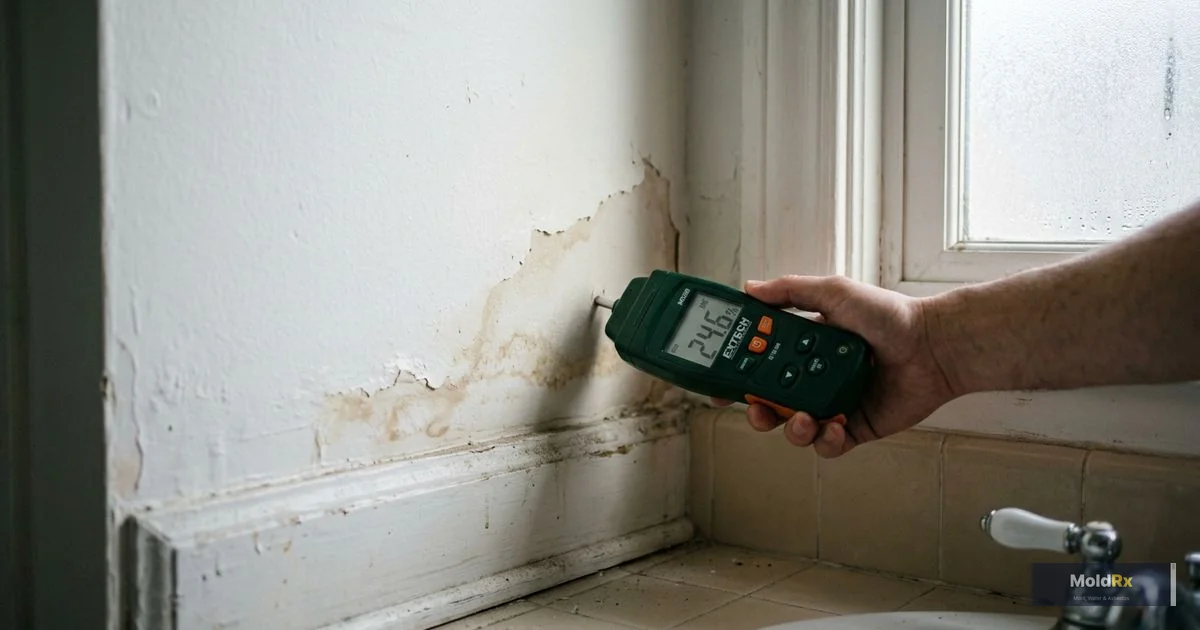
Concealed water damage. Inspectors identify visible stains and active leaks. They cannot see inside wall cavities, beneath finished flooring, or under the slab. Thermal imaging and moisture meters are needed to find hidden damage that destroys structures from the inside out.
Mold Inspection Checklist: What to Look for by Room
Even without professional testing, an informed buyer can spot red flags during a walkthrough.
Bathrooms
- Caulk around tubs and showers. Cracked, missing, or darkened caulk means chronic moisture intrusion behind tile — one of the most common mold locations in SoCal homes.
- Exhaust fan function. Bathrooms without fans, or with fans venting into the attic instead of outdoors, create chronic moisture problems.
- Soft spots near the toilet base. Suggests a failed wax seal — a common source of subfloor mold.
- Musty smell with the door closed. Close the door, wait, and breathe. Localized musty odors point to active growth.
- Under-sink cabinets. Check for warped floors, water stains, or musty smell indicating past or current leaks.
Kitchen
- Under-sink cabinet and dishwasher connection. Two of the most common leak points in the home. Look for warped or stained cabinet material.
- Refrigerator water supply line. Supply line leaks behind refrigerators go undetected for months and cause significant subfloor damage.
Attic
- Roof sheathing discoloration. Dark staining on the underside of sheathing — following roof penetrations, valleys, or edges — indicates water intrusion and is one of the most common locations for significant mold growth.
- Bathroom fan termination. Verify fans terminate outside the building envelope, not into the attic space. Fans dumping moist air into the attic are a leading cause of attic mold in Southern California.
- HVAC equipment condensation. Air handlers in attics are prone to condensation, especially in coastal SoCal. Look for water stains around equipment.
Crawl Space
- Standing water or damp soil. Any visible moisture is a red flag.
- Mold on floor joists and subfloor. White, gray, or dark growth patterns on wood indicate active or past colonization.
- Vapor barrier condition. Missing, torn, or incomplete vapor barriers allow soil moisture to migrate into the structure continuously.
General Interior
- Baseboard separation or warping. Baseboards pulling away from walls or showing water stains along the bottom edge indicate moisture wicking from the slab or leaking within the wall.
- Bubbling or peeling paint on exterior walls. Suggests moisture behind the surface — common in stucco-clad SoCal homes where moisture becomes trapped.
- Musty odors in closets. Close each closet door. Musty odors in enclosed spaces often indicate mold in the wall cavity — areas that never get airflow.
Water Damage Inspection Checklist
Water damage leads to mold within 24 to 48 hours. Every water damage finding is a potential mold finding waiting to be confirmed.
Exterior
- Stucco condition. Hairline cracks, bulging, and areas where stucco meets windows or rooflines without visible flashing are intrusion points. SoCal's stucco-heavy construction is a primary driver of hidden moisture problems.
- Grading and drainage. Soil should slope away from the foundation. Downspouts should direct water at least six feet from the structure.
- Irrigation placement. Sprinklers spraying onto exterior walls or saturating soil against the foundation are a chronic SoCal-specific moisture source.
- Weep screed visibility. The metal strip at the base of stucco walls must be visible and unobstructed. Landscaping or hardscape burying the weep screed traps moisture inside the wall system.
Roof
- Age relative to material. Tile roofs last 50+ years, but underlayment needs replacement at 20-30 years. Composition shingles last 20-30 years. Flat roofs (common on mid-century SoCal homes) require regular maintenance.
- Flashing at penetrations. Roof-to-wall transitions, chimneys, vent pipes, and skylights are all intrusion points. Deteriorated flashing is a leading source of attic water damage.
Plumbing
- Supply line material. Galvanized steel (gray, threaded) is past its lifespan in most SoCal homes. Polybutylene (gray, flexible) is failure-prone. Copper older than 40 years may be developing pinhole leaks — particularly with SoCal's hard water.
- Water meter test. Turn off all fixtures and check the meter. If it's still registering flow, there's an active leak — possibly a slab leak.
- Water heater age. Standard tank heaters last 8-12 years. One past its lifespan is a catastrophic water damage event waiting to happen.
Interior
- Ceiling stains below bathrooms. Indicates past or current leaks from above — shower pan failure, toilet seal failure, or supply line leak.
- Soft spots in flooring. Walk the entire home. Soft or spongy areas near dishwashers, toilets, sinks, and tubs indicate water-damaged subfloor.
Asbestos Inspection Checklist: By Construction Era
Asbestos cannot be identified visually. This checklist identifies materials with high probability of containing asbestos based on construction date. The only confirmation is professional laboratory testing. Never scrape, sand, drill, or disturb any suspect material.
Pre-1980 Homes: High Probability
California regulations presume certain materials in pre-1980 structures contain asbestos until testing proves otherwise. Suspect materials include:
- Textured ceilings. Popcorn ceilings applied before 1978 frequently contain chrysotile asbestos. Existing inventory was installed through the early 1980s despite the 1978 ban.
- Floor tiles and adhesive. 9"x9" vinyl-asbestos tiles were standard from the 1950s through 1970s. The black mastic adhesive also frequently contains asbestos. Learn to identify these materials.
- Pipe insulation. White or gray corrugated insulation on heating pipes or water heaters is highly likely to contain asbestos and is friable — meaning it releases fibers when disturbed.
- Duct tape and HVAC insulation. Fabric-backed tape on duct joints and duct insulation from this era frequently contain asbestos.
- Roofing materials. Cement-asbestos shingles, felt underlayment, and transite siding or chimney flues.
- Drywall joint compound. Many products through the late 1970s contained asbestos — present at every wall and ceiling joint throughout the home.
- Vermiculite insulation. Vermiculite attic insulation may contain tremolite asbestos from the contaminated Libby, Montana mine.
1980-1990 Homes: Moderate Probability
Regulatory bans occurred in the late 1970s, but existing inventory continued to be installed from stockpiles. Floor tiles, roofing, cement board, and some insulation from this period can still contain asbestos. Don't assume safety based on date alone.
Post-1990 Homes: Lower Risk, Not Zero
Some building products — certain imports, cement-based materials — still legally contain small amounts of asbestos. Testing before renovation remains prudent.
A 1965 ranch in Anaheim needs a different approach than a 1995 tract home in Rancho Cucamonga. For a detailed breakdown of risks by decade, see our guide on older homes in Orange County.
When to Order Specialized Testing
Mold Testing Is Warranted When:
- The inspection notes any mold, moisture, or water damage
- The home has musty odors, a history of water damage, or has been vacant
- The home is in a coastal SoCal humidity zone
- Signs of mold behind walls are present — staining, bubbling paint, localized odors
Asbestos Testing Is Warranted When:
- The home was built before 1990 (essential before 1980)
- You plan any renovation — California requires asbestos surveys before renovation in the SCAQMD jurisdiction
- Suspect materials are present: popcorn ceilings, 9x9 tiles, pipe insulation, vermiculite
California regulatory note: SCAQMD Rule 1403 and Cal/OSHA require asbestos surveys before demolition or renovation in Los Angeles, Orange, Riverside, and San Bernardino counties. Renovating without testing creates both regulatory and health hazards. See our SCAQMD Rule 1403 guide for details.
Water Damage Investigation Is Warranted When:
- Active leaks or water stains are present
- Plumbing materials are at or past their lifespan
- The water meter test shows unexplained flow
- Floors feel soft or spongy anywhere in the home
California Disclosure Requirements
Under Civil Code Sections 1102-1102.17, sellers must complete a Transfer Disclosure Statement (TDS) disclosing all known material facts — including mold history, water damage, known asbestos-containing materials, and previous remediation work. California also requires Natural Hazard Disclosure (NHD) covering flood zones, fire hazard zones, and other environmental factors.
Read disclosures looking for: water damage or leak history, previous mold findings and clearance documentation, asbestos testing results, insurance claims for water damage, and known defects in the roof, plumbing, or waterproofing.
Gaps in disclosure are as telling as the disclosures themselves. A 1960s home with zero mention of water issues or asbestos in six decades raises questions your specialized testing can answer. California holds sellers to what they "knew or should have known" — and buyers who discover undisclosed conditions after closing have legal recourse. For more on disclosure obligations, see our guide on mold during home inspections.
Negotiation Leverage from Testing Results
Quantified Problems Are Negotiable Problems
A general inspection saying "suspected mold observed in attic" gives the seller room to minimize. A lab report showing Stachybotrys at 3,200 spores per cubic meter — eight times the outdoor baseline — does not. The same applies to asbestos: lab results confirming chrysotile in popcorn ceilings throughout the home, combined with a professional abatement estimate, puts a concrete number on the table.
Common Approaches
Seller completes work before closing. Cleanest path. Specify licensed professionals, industry standards (IICRC S520 for mold; SCAQMD regulations for asbestos), and independent clearance testing.
Seller provides a credit. Gives the buyer control but requires detailed professional estimates before agreeing to an amount — actual costs frequently exceed initial estimates.
Price reduction. Appropriate when findings point to systemic issues — chronic moisture, aging infrastructure, multiple asbestos-containing materials requiring abatement before any renovation.
Organize every report into a single package: general inspection findings, lab results, moisture data, professional estimates, and applicable regulatory requirements. That documentation transforms your negotiation from "we want a discount" to "here is exactly what the problems are, what they cost, and what the law requires."
Frequently Asked Questions
Does a standard home inspection test for mold?
No. Inspectors may note visible mold-like growth but do not take air samples, surface samples, or moisture readings. Professional mold testing is a separate service with laboratory analysis.
Can a home inspector identify asbestos?
No. Asbestos fibers are microscopic. Only laboratory analysis of physical samples confirms whether a material contains asbestos. Asbestos testing requires an accredited lab.
Should I get specialized testing even if the general inspection was clean?
If the home was built before 1980 — yes, at minimum for asbestos. If the home has mold or water damage risk factors, professional testing catches problems a visual inspection cannot detect. A clean report means nothing was visible, not that nothing is present.
What if the seller already provided a mold or asbestos report?
Review who performed it, when, and what was tested. An asbestos survey testing two materials in a home with dozens of suspect materials is incomplete. A mold test from two years ago doesn't reflect current conditions. If it's recent, comprehensive, and independently performed, it may suffice.
Can I use a home testing kit for mold or asbestos?
Home mold kits lack controlled methodology, outdoor baseline comparison, and lab rigor. DIY asbestos sampling is discouraged because improper collection can release fibers. Professional testing is the standard that satisfies sellers, agents, lenders, and courts.
What if I find asbestos and the seller won't remediate?
Asbestos in undisturbed, good condition is not an immediate hazard. Negotiate a credit or price reduction reflecting future abatement costs. Lab results and professional estimates quantify the cost. Understand the options — including encapsulation vs. removal.
Does California require asbestos testing before buying a home?
Not as a purchase condition. But SCAQMD Rule 1403 requires surveys before any renovation or demolition in LA, Orange, Riverside, and San Bernardino counties. Testing before purchase lets you factor abatement costs into negotiation rather than discovering them after closing.
Will mold or asbestos findings affect my mortgage?
They can. FHA and VA loans are particularly sensitive — lenders may require remediation and clearance documentation before funding. Having a professional plan in place typically satisfies lender concerns.
How long do specialized tests take?
Mold testing produces lab results in two to five business days. Asbestos PLM analysis returns in one to three days with rush options. Factor these timelines into your inspection contingency.
Who pays for specialized testing during escrow?
Typically the buyer pays for testing they order. If testing reveals issues, it's common to negotiate that the seller pays for remediation and clearance. The testing cost is modest relative to the leverage it provides.
Don't Close Without Knowing What You're Buying
A standard home inspection is a starting point, not the finish line. In Southern California — where pre-1980 homes dominate entire neighborhoods, stucco masks water damage, and asbestos is statistically present in most older construction — the problems a general inspection misses are the most expensive to fix after closing.
MoldRx provides professional mold testing and asbestos testing for home buyers throughout Orange County, Riverside County, and San Bernardino County. We work within escrow timelines, deliver results that satisfy lenders and agents, and provide documentation you need to negotiate from knowledge rather than uncertainty.
If you're in escrow on a Southern California home and want to know what the general inspection missed, request an estimate or call (888) 609-8907 to schedule testing before your contingency expires.